Ryūon-ji Temple: A Soto Buddhist Administrative Centre in Japan


Site at a Glance
- Rating
- 4.3
- Popularity
- Low
- Country
- Japan
- Primary era
- Early Modern
- Eras represented
- Medieval, Early Modern
- Civilizations
- Ashikaga shogunate, Tokugawa
- Site type
- Religious
- Remains
- Monastery
On this page17 sections
History
Ryūon-ji Temple is a Soto Buddhist temple in Japan, in the town of Ogose, Saitama Prefecture. Its institutional history reaches back to 807, while its transformation into a Soto temple took place during the fifteenth century. It later became one of the Three Kantō Soto Temples, institutions entrusted by the Edo shogunate with supervising Soto temples and clerical administration.
Early religious institution
A predecessor of Ryūon-ji was established in 807, although its original name and size are unknown. Tradition attributes its foundation to a travelling monk called Rakan. The institution stood several hundred metres southeast of the present temple, at a place identified with present-day Michizawa.
From the ninth through the fifteenth century, the predecessor followed a Tendai-derived form of Shugendo. Shugendo combined mountain asceticism with elements of Buddhism, Shinto, and local sacred practices. The institution was influenced by the nearby sacred sites of Kuroyama Three Waterfalls and Mount Mitsumine, and was then known as Zuiunzan Chosho-ji.
Fifteenth-century refoundation
In 1430, Ashikaga Yoshinori, the sixth shogun of the Muromachi shogunate, became the temple’s founding patron. The Muromachi shogunate was the medieval military government that ruled much of Japan. Uesugi Mochitomo rebuilt the institution and invited a monk who was credited as its founding abbot. At this stage, the temple was converted to the Soto school of Zen Buddhism.
The temple’s formal foundation is dated to 1430 in some records, but its effective refoundation is generally placed around 1472, when Ota Dōkan and Ota Dōshin restored the institution and built its temple buildings. Both men were prominent chief retainers of the Ogigayatsu Uesugi family. The third abbot, Taiso Myoko, to whom they were devoted, is regarded as the effective founding abbot. The names of his direct teachers were later assigned retrospectively to the first and second abbots.
During the fifteenth century, the Ota family maintained a fortified position within the precinct. The fort reflected the temple’s location near the boundary of Ogigayatsu Uesugi territory and a medieval zone of military confrontation. Ryūon-ji may also have served as a centre for spreading Soto Buddhism within the Uesugi sphere of influence, although that interpretation remains inferential.
Relocation and the Edo shogunate
In 1504, the fifth abbot, Unko Shuntoku, moved the temple to its present location and changed its name to Ryūon-ji. The relocation and renaming probably formed the historical basis for the temple’s later association with a dragon. In 1590, Toyotomi Hideyoshi, who unified Japan before the Tokugawa shogunate, granted Ryūon-ji an income of 100 koku through a vermilion-seal certificate. A koku was a historical unit of rice-based land revenue.
Tokugawa Ieyasu founded the Edo shogunate in 1603. In 1612, he appointed Ryūon-ji to the office of chief administrative monk of the realm. Alongside Daichu-ji in Shimotsuke and Sonei-ji in Shimosa, it became one of the Three Kantō Soto Temples. These temples supervised approximately 15,000 Soto temples and 20,000 monks across Japan. By 1635, Ryūon-ji governed 3,947 temples and directed Soto ecclesiastical administration.
In 1646, the temple received a consultative seat in the Edo shogunate’s magistracy for temples and shrines and was granted the status of a 100,000-koku domain. In 1660, its twenty-second abbot became chief abbot of Eihei-ji, one of the Soto school’s two head temples. The shogunate subsequently established a system in which Eihei-ji’s chief abbot was selected from the abbots of the Three Kantō Soto Temples. This arrangement helped stabilize the authority of both Eihei-ji and the administrative temples.
Ryūon-ji also maintained an institutional presence in Edo. In 1678, it established a lodging temple of approximately 600 tsubo in the medicinal-garden area of Azabu. Its abbot thereafter lived in Edo while performing administrative duties. A tsubo is a traditional Japanese unit of area.
Fire, rebuilding, and later history
A fire destroyed the temple buildings in 1752. They were rebuilt in 1841, when a seven-building complex was established and the monastic study quarters were enlarged. Many trainee monks lived there, and the temple came to be described as “Little Eihei-ji,” linking it to the Soto head temple.
A second fire in 1913 destroyed the monastic study quarters and other buildings. The mountain gate, sutra repository, and Kumano Shrine survived. A sutra repository is a building used to store Buddhist scriptures and related religious texts. These surviving structures remain tangible cultural properties and provide physical evidence of the temple’s earlier layout.
Ryūon-ji’s history is also closely connected with the Ota family. Ota Dōshin died in Ogose and was buried in the temple precinct, while part of Ota Dōkan’s remains was also interred there. Their graves preserved the temple’s association with the family, a connection later regarded as one reason for Ryūon-ji’s selection as one of the Three Kantō Soto Temples.
Yamaguchi Shigenobu and the Osaka campaign
In the early Edo period, Yamaguchi Shigenobu was confined at Ryūon-ji after the Yamaguchi family was dispossessed. In 1613, Shigenobu, heir of the daimyo Yamaguchi Shigemasa, married an adopted daughter of Okubo Tadachika without authorization from the shogunate. The marriage was condemned, and the affair contributed to Okubo Tadachika’s downfall. Claims that his rival Honda Masanobu or Tokugawa Ieyasu was involved are not supported by conclusive evidence.
In 1614, Shigemasa and Shigenobu tried to reach Osaka to win military merit and restore their family’s position, but they were stopped at the Hakone barrier. Shigemasa then sent Shigenobu toward Osaka disguised as a merchant by way of the Tōsandō. A peace settlement during the campaign forced him to return to Ryūon-ji.
Shigenobu was eventually permitted to fight in the 1615 Osaka Summer Campaign. Serving in Ii Naotaka’s army at the Battle of Wakae, he killed five enemy horsemen before Kimura Shigenari killed him at the age of twenty-six. His younger brother Shigekatsu also died in the battle. Shigemasa’s service nevertheless led to the restoration of his status in 1628 as daimyo of Ushiku in Hitachi, with an income of 15,000 koku, and to his appointment as a ceremonial senior official.
In 1998, the Ogose Town Board of Education excavated Shigenobu’s grave after its stone had been reused as a foundation stone in a precinct wall. The grave was identified as a simple monument built by his father, Shigemasa, for Shigenobu’s third memorial service.
The dragon tradition
A local tradition says that the present temple site was once a deep pool inhabited by a dragon feared by local people. Unko Shuntoku subdued the creature, after which the water overflowed and created level ground that people cultivated. The temple was then moved to the site and took the name Ryūon-ji. Related versions say that Ota Dōkan invited Unko Shuntoku, that the dragon fled to Mount Arima and formed a large pond, or that it became a rainmaking dragon deity.
The tradition contains dates that conflict with the known biographies of the people involved. A version dated to 1439 would make Dōkan seven and Shuntoku one, while a version dated to 1504 places Dōkan after his death and Shuntoku already serving as an abbot elsewhere. The historically plausible elements are the temple’s conversion to Soto Buddhism by the late fifteenth century, its relocation around the time of Shuntoku’s appointment, the Ota men’s discipleship under him, and the existence of a dragon-subduing tradition. The legend is therefore understood as a later Soto adaptation of an older local tradition during the temple’s conversion and relocation.
Remains
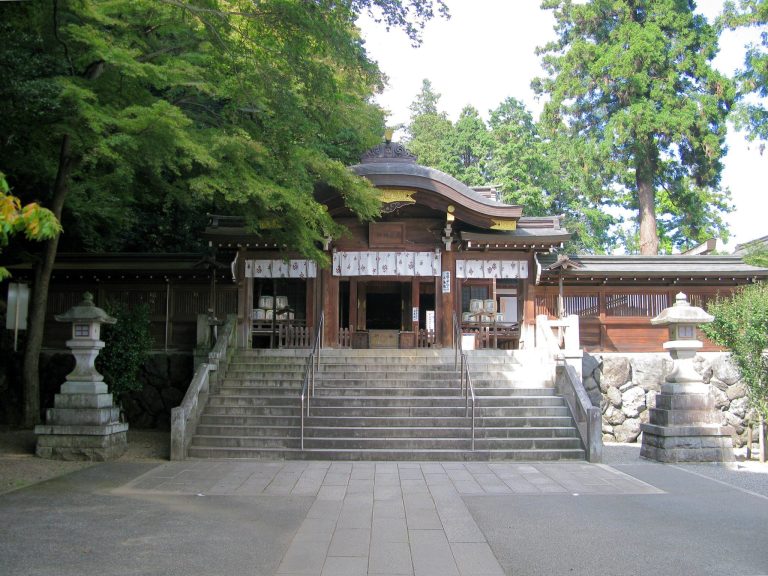
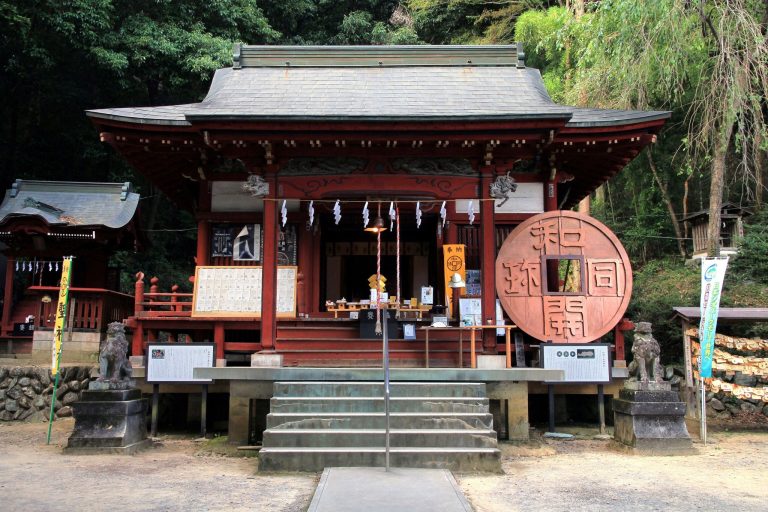
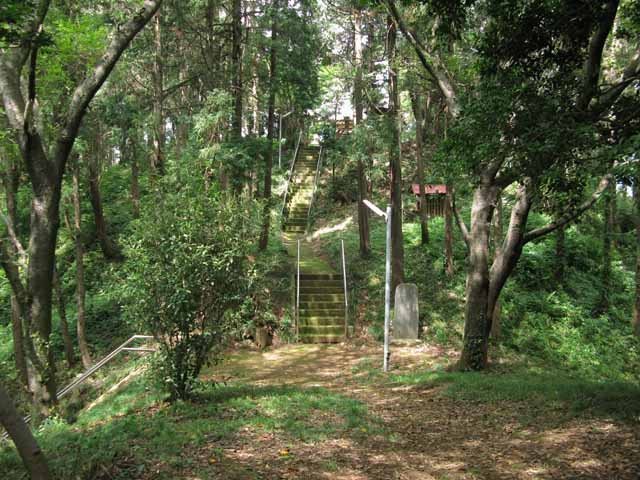
Ryūon-ji’s surviving precinct combines historic religious buildings, traces of its fortified medieval setting, and memorial monuments associated with the Ota and Yamaguchi families. The present site dates from the 1504 relocation, while the surviving buildings mainly represent the rebuilt complex established in 1841 and the structures that escaped the 1913 fire.
Historic buildings and precinct features
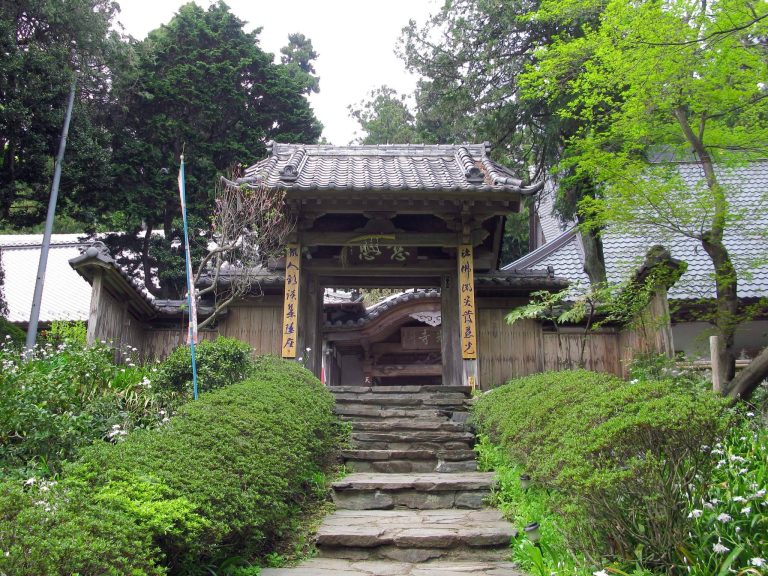
Mountain gate
The mountain gate is one of the temple buildings that survived the 1913 fire. It remains as a tangible cultural property and preserves part of the historic entrance group associated with the rebuilt precinct.
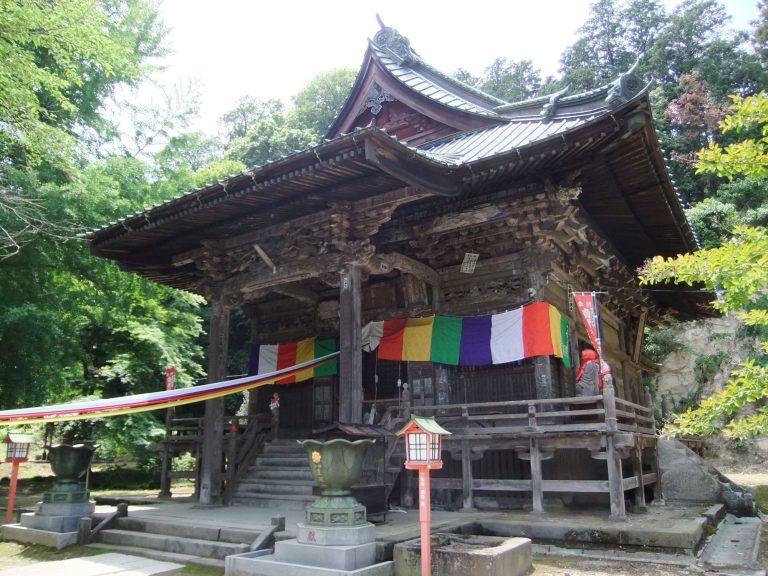
Sutra repository
The sutra repository also survived the 1913 destruction. Its function was to store Buddhist scriptures and related religious texts, and its survival contributes to the physical evidence for the temple’s religious complex.
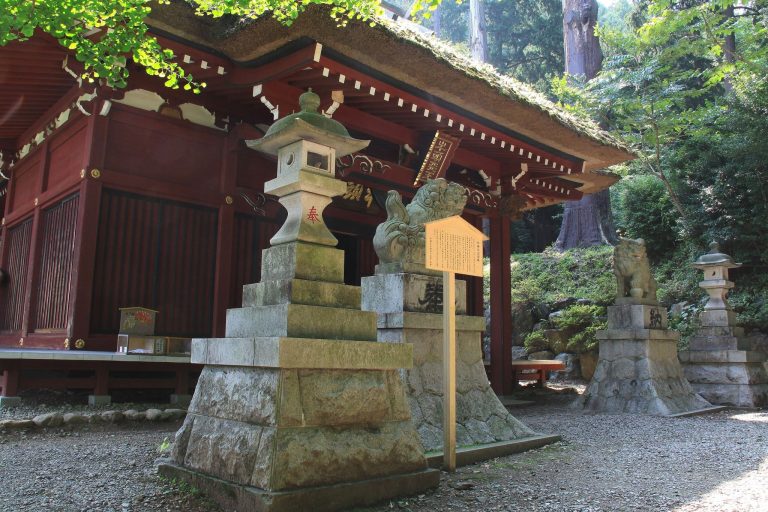
Kumano Shrine
Kumano Shrine stands among the surviving historic components of the precinct. Its survival alongside the mountain gate and sutra repository reflects the range of religious structures that remained after the fire.
Fortified precinct and memorial monuments
Medieval fort
Ota Dōshin built a fort within the temple precinct during the fifteenth century. The fort was associated with Ryūon-ji’s position near the boundary of Ogigayatsu Uesugi territory and a region of medieval military conflict. Its presence connected the religious compound with the Ota family’s political and military role.
Ota family graves
The precinct contains the grave of Ota Dōshin and a portion of Ota Dōkan’s remains. These memorials preserve the temple’s material association with the two men who restored its buildings in 1472 and helped establish its later Soto identity.
Yamaguchi Shigenobu’s grave
Yamaguchi Shigenobu’s grave is a simple monument made from an unworked natural stone. The stone was later incorporated into the foundation of a precinct wall, where it remained until its archaeological discovery in 1998. Its identification connected a reused building material with the memorial of a warrior whose life linked Ryūon-ji to the political conflicts of the early Edo period.
Site tradition and topography
The dragon tradition describes the temple’s present site as a deep pool that became level ground after its waters overflowed. This account forms part of the temple’s traditional narrative about its relocation and name. It should be understood as a legendary explanation of the site’s topography rather than as a securely established historical description.