Hijiri Shrine: A Shinto Sanctuary Linked to Japan’s Wadō Copper Offering


Site at a Glance
- Rating
- 4.2
- Popularity
- Medium
- Country
- Japan
- Primary era
- Early Modern
- External website
- Open
- Eras represented
- Early Modern
- Civilizations
- Tokugawa
- Site type
- Religious
- Remains
- Sanctuary
On this page17 sections
History
Hijiri Shrine is a Shinto sanctuary in Chichibu, Japan, traditionally founded around 708 during the reign of Emperor Genmei in connection with the Japanese court’s receipt of natural copper from Chichibu. The event led to the adoption of the Wadō era name, and the shrine became associated with metalworking, mining, sacred copper, and the early eighth-century Wadō Kaichin coins.
Foundation and the Wadō copper offering
The founding tradition begins on Mount Hauriyama, upstream along the stream now called the Wado Stream. The watercourse was formerly known as the Copper-Washing Stream, and a sacred enclosure was erected there to pray for the discovery of natural copper. The copper was treated as a sacred object, while Kanayamahiko, a Shinto kami associated with metalworking and mining, was enshrined as the principal deity.
High-purity natural copper was presented to the court on January 11, 708. In celebration, the era name was changed to Wadō. The court appointed Miyake no Maro to the Office of Coin Minting and sent him with other imperial envoys to inspect the copper mountain and supervise mining and coin production. On February 13, the sacred enclosure was moved to the present site, which was regarded as ritually pure.
The founding tradition states that 13 pieces of natural copper and two sacred stone tablets were placed in the inner sanctuary. Kanayamahiko and three other deities were enshrined there, and a male-and-female pair of copper centipede figures was deposited. Emperor Genmei was later enshrined as Genmei Kagane, after which the shrine was said to have been known as the Father-and-Mother Shrine.
The official chronicles that record the copper offering identify its origin only as Chichibu County, rather than naming the area around Hijiri Shrine. The precise discovery site therefore remains uncertain. Geological evidence indicates that the Chichibu Basin as a whole could have supplied the copper, while mining and processing remains around the shrine show that the wider area was an important center of copper production.
Later custodianship and institutional changes
The shrine passed through several recorded phases of rebuilding and alteration. In 1623, two Shinto practitioners from Kai Province, Danjo and Kageyu, were entrusted with its custodianship. In 1804, the shrine received authorization under the direct administration of the temple-and-shrine magistrate.
The shrine office was completed in 1936, when Hijiri Shrine was designated a facility entitled to receive state offerings of food and textiles. During ceremonies in 1953 marking 1,230 years since Emperor Genmei’s enshrinement, the sacred treasures were transferred back to the shrine. Two of the original copper pieces survive today.
Religious traditions and local festivals
Hijiri Shrine is popularly called the Coin Deity because of its association with Wadō Kaichin, an early eighth-century copper coin linked to the Wadō era. This connection gives the shrine a religious association with financial prosperity. An upper shrine in the Kamisato area of Kuroya is traditionally said to have been founded during the Wadō era with the same deities, while a surviving middle shrine is known as the sister shrine. Another former Hijiri Shrine stood in Misawa, in present-day Minano, until 1907.
The annual spring festival is held on April 13. It was formerly celebrated on February 13, and tradition connects the later date with the 13 households that historically served the shrine. After the spring festival, the Kuroya lion dance, also called the Kuroya Rain-Prayer Sasara, is performed. It is also presented at the November 3 festival of the subordinate Wado Izumo Shrine.
A document from 1817 records the lion dance as a rainmaking rite, while tradition places its origin at the end of the seventeenth century. Another tradition says that the sculptor Hidari Jingoro donated a dragon-head carving to the shrine, after which a lion mask was made in imitation of it. A dance teacher from Okazaki in Mikawa Province was invited to transmit 15 dances, creating an association with what is also called the Okazaki-Shimotsuma school. The lion dance became a Chichibu municipal intangible folk cultural property in 1957.
Until 1955, 108 lamps were lit from Hijiri Shrine to Akiya Shrine at the source of the Wado Stream during Akiya Shrine’s December 14 festival. In 2008, Hijiri Shrine held the Wado Festival to commemorate 1,300 years since the copper offering and the change to the Wadō era name.
The shrine and the surrounding ancient landscape
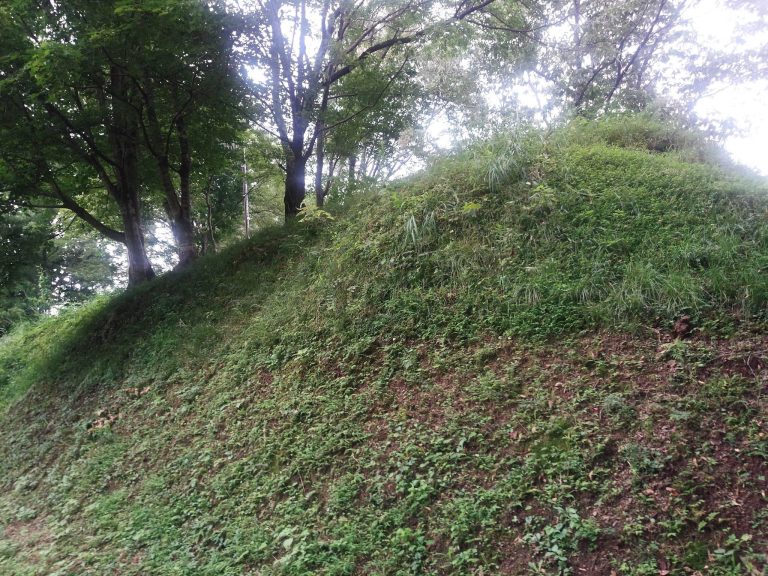
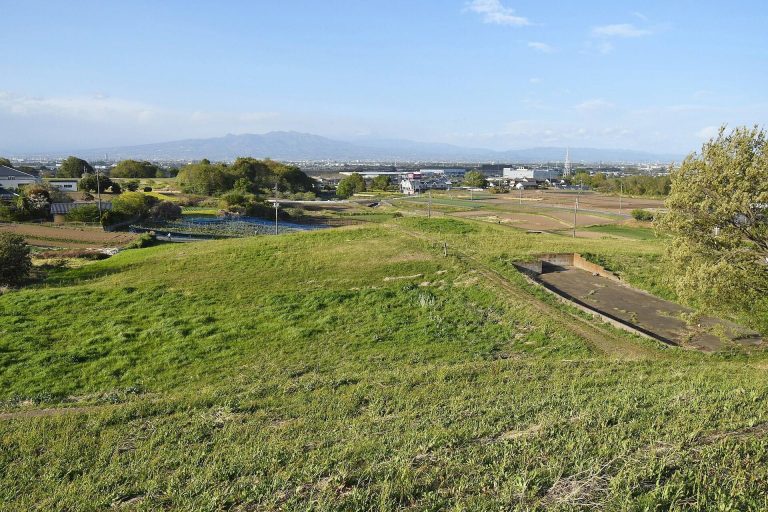
The surroundings contain archaeological evidence dating from the late seventh to early eighth centuries. The Iizuka-Maneki Kofun Group, a group of ancient Japanese burial mounds, includes 124 confirmed tombs and probably contained more than 200 before agricultural development. It is the largest kofun group in the Chichibu Basin. Some interpretations connect its burial population, possibly including clans of immigrant origin, with the discovery and mining of copper.
Wadō Kaichin coins and a warabite-hilted sword were excavated from a terrace southwest of the shrine near the confluence of the Arakawa and Yokoze rivers. About one kilometer away, the Otsuka Kofun has a substantial horizontal stone chamber, a burial chamber entered from the side. The mound is associated with an area that may have been Kuroya-go’s Ohama village in 722, and a shrine on the mound venerates the metalworking deity. The nearby Inahoyama Kofun is thought to be older, and its burial occupant has also been tentatively connected with the copper industry.
Mount Minoyama, the principal summit of the shrine’s mountain area, is associated with a tradition concerning the first governor of Chichibu. That tradition links him with Nangu Shrine in Mino, a historic center of worship connected with mining and metallurgy, and explains the relationship between the names Mino and Minoyama.
Remains
Hijiri Shrine stands at the foot of Mount Wado, a southwestern spur extending from Mount Minoyama in the northern-central Chichibu Basin. The Wado Stream descends from Mount Minoyama and flows in front of the shrine. The surviving buildings, sacred treasures, and nearby mining and burial remains together reflect the site’s religious and metallurgical associations.
Sacred treasures
Natural copper and stone tablets
The inner sanctuary traditionally held two sacred stone tablets and 13 pieces of natural copper. These objects functioned as shintai, physical objects through which a Shinto deity is ritually represented. From the Kanbun period, they were kept in the Kitayato family’s storehouse to protect them from loss. They were transferred to the shrine’s treasure storehouse in 1953, and two copper pieces survive.
The two surviving pieces differ greatly in size. One measures approximately 7 centimeters in length, 4.5 centimeters in width, and 3 centimeters in thickness, with a weight of about 450 grams. The other measures approximately 57 centimeters in length, 18 centimeters in width, and 4.5 centimeters in thickness, and weighs about 18 kilograms.
Copper centipedes
The sacred treasures also included a pair of copper centipedes traditionally said to have been presented by Emperor Genmei. One is approximately 16 centimeters long, 1 centimeter wide, and 5 millimeters thick. It weighs about 64 grams and has 21 articulated leg segments, with two segments missing. The other is approximately 15 centimeters long and weighs about 49 grams, with approximately the same width and thickness and 19 articulated leg segments.
Shrine buildings
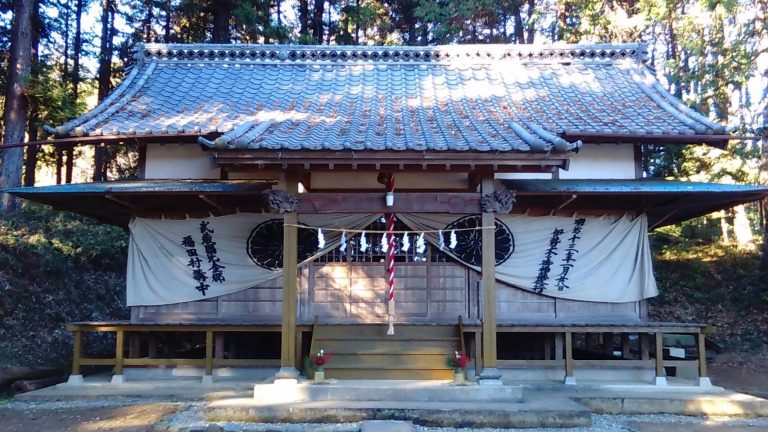
Main sanctuary
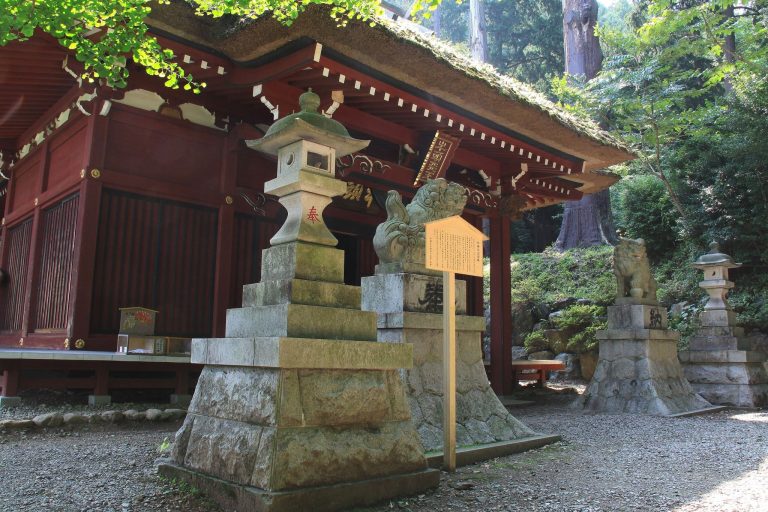
The main sanctuary is a one-bay nagare-zukuri building, a Shinto form with an extended, asymmetrical gabled roof over the front of the sanctuary. Its roof is covered with copper sheets. The structure was built between 1709 and 1710 by Ōsone Yohei, a craftsman from Ōmiya Township, for Imamiya Shrine in present-day central Chichibu. It was transferred to Hijiri Shrine in 1964.
The building preserves limited traces of Azuchi-Momoyama-period carving traditions. Its combination of period carving and mid-Edo-period construction led to its designation as a Chichibu municipal tangible cultural property in 1965.
Worship hall
The worship hall is a three-by-three-bay irimoya structure, a building with a gabled central roof section and hipped slopes. Its entrance is placed on the long side, and its roof is covered with copper sheets.
Wado Izumo Shrine
Wado Izumo Shrine stands beside the left side of the main sanctuary and enshrines Ōkuninushi-no-Mikoto, a major Shinto kami associated with land, nation-building, agriculture, and prosperity. Its annual festival is held on November 3, when the Kuroya lion dance is performed.
The shrine was created in 1964 by relocating the former main sanctuary of Hijiri Shrine, which had been completed in 1807. It is a one-bay nagare-zukuri building with a copper-sheet roof, a karahafu porch gable at the center of the front porch, and carved decorations on its side screens.
Dragon-head mask
A dragon-head mask attributed by tradition to Hidari Jingoro is associated with the origin story of the Kuroya lion dance. Hidari Jingoro is a traditional Japanese sculptor credited in folklore with carving works for prominent shrines and temples. The date of the mask has been examined through mass-spectrometric analysis.
Mining and archaeological remains
Mount Wado mining landscape
Mining remains around the shrine include medieval-to-early-modern ore-processing and smelting sites, buried fragments of ore, and place-names associated with copper production. Open-pit mining remains are protected as the Wado Mining Remains, while the Kuroya Copper Smelting Site is a municipal historic site.
Eight mine shafts also exist on the mountainside of Mount Kanayama. They are thought to date from the early modern period. Together with the Wado Stream and the surrounding mining and smelting remains, these features form the physical setting associated with the shrine’s copper traditions.
Burial mounds and excavated objects
The Iizuka-Maneki Kofun Group occupies part of the wider archaeological landscape around the shrine. The Otsuka Kofun, located about one kilometer away, contains a substantial horizontal stone chamber, while the nearby Inahoyama Kofun is considered older. Coins including Wadō Kaichin and a warabite-hilted sword were found on a terrace southwest of the shrine near the meeting of the Arakawa and Yokoze rivers.