Takanawa Great Wooden Gate: An Edo Highway Checkpoint in Japan
Site at a Glance
- Rating
- 3.8
- Popularity
- Medium
- Country
- Japan
- Primary era
- Early Modern
- Eras represented
- Early Modern
- Civilizations
- Tokugawa
- Site type
- Military
- Remains
- Gate
On this page7 sections
History
Establishment and relocation
Takanawa Great Wooden Gate was a checkpoint at the southern entrance to Edo in Japan, controlling traffic on the Tōkaidō, the principal highway between Edo and Kyoto. The Tokugawa shogunate, Japan’s military government during the Edo period, established the gate in 1616 at Shibaguchi. As Edo expanded, the gate was moved about 700 metres south in 1710, to a position just outside Shinagawa-juku, a post station on the Tōkaidō. The replacement structure was completed that year.
Checkpoint and public life
The gate regulated movement into the city, opening at dawn and closing at dusk. Although the wooden gate stopped operating in the late Edo period, the checkpoint continued to enforce shogunal rules, including restrictions on bringing weapons into Edo and on women leaving without official permission. In 1831, an official notice board was transferred there from Shibaguchi. The site became one of Edo’s six main locations for public proclamations, while the former board location became known as the former notice-board crossing.
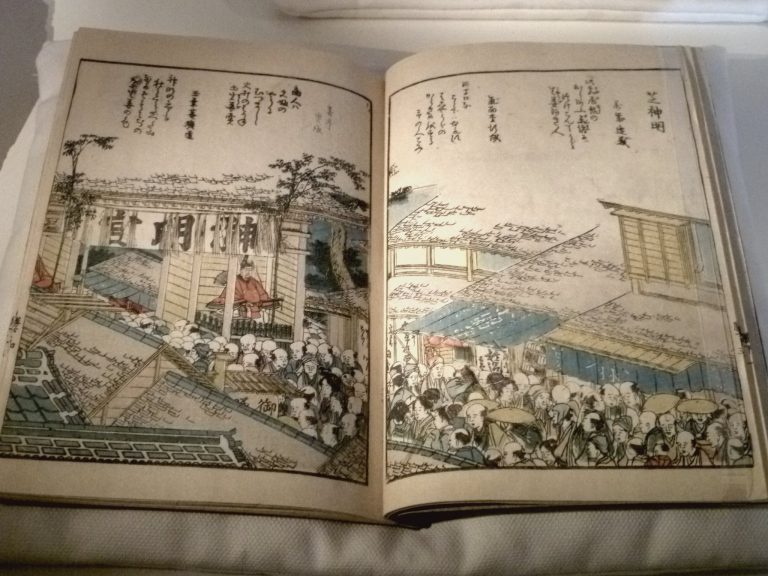
The gate was a gathering place for people seeing off travellers bound for Kyoto or going on pilgrimages to Ise. Nearby tea houses served visitors, and the stretch of coast toward Shinagawa-juku was appreciated for its views and moon watching. The gate appeared in a late-Edo illustrated guide to the city’s famous places and in landscape and travel prints by Utagawa Hiroshige. The surveyor and mapmaker Inō Tadataka is also said to have used the location as a starting point for his surveys of Japan.
Closure and preservation
After the gate’s passage-control function ended, its stone walls remained. The west wall was taken down in 1868. When the walls and paving at Yotsuya Great Gate, another Edo checkpoint, were removed in 1876, Takanawa’s remaining stonework gained added value as a remnant of the city’s transport system. It faced the threat of removal during road widening but survived. The site became a National Historic Site on 7 February 1928, following the Great Kantō Earthquake of 1923, which devastated Tokyo and the surrounding region. A marker, an inscribed plaque, and explanatory signs were installed from 1932 onward.
Remains
Gate and wall layout
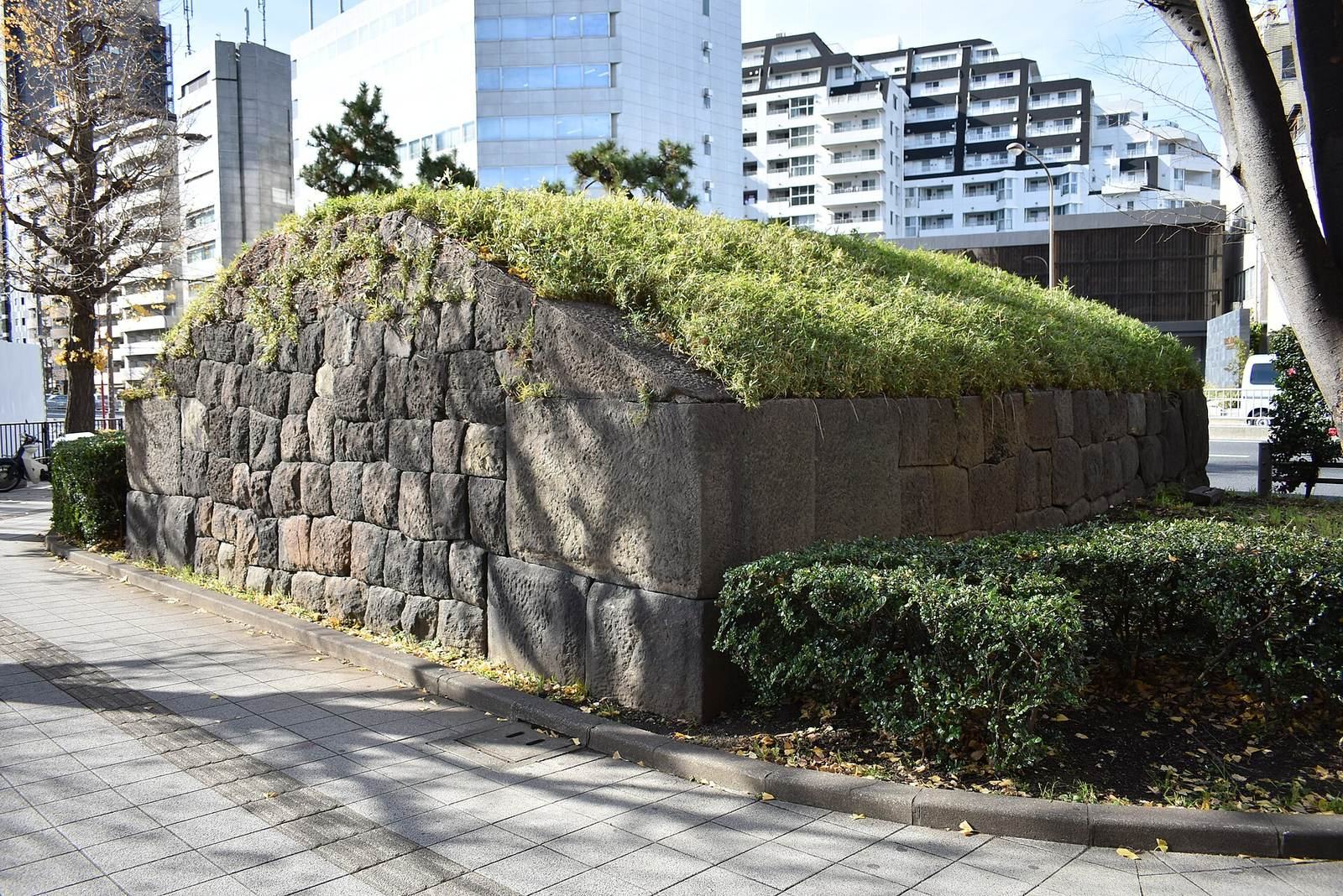
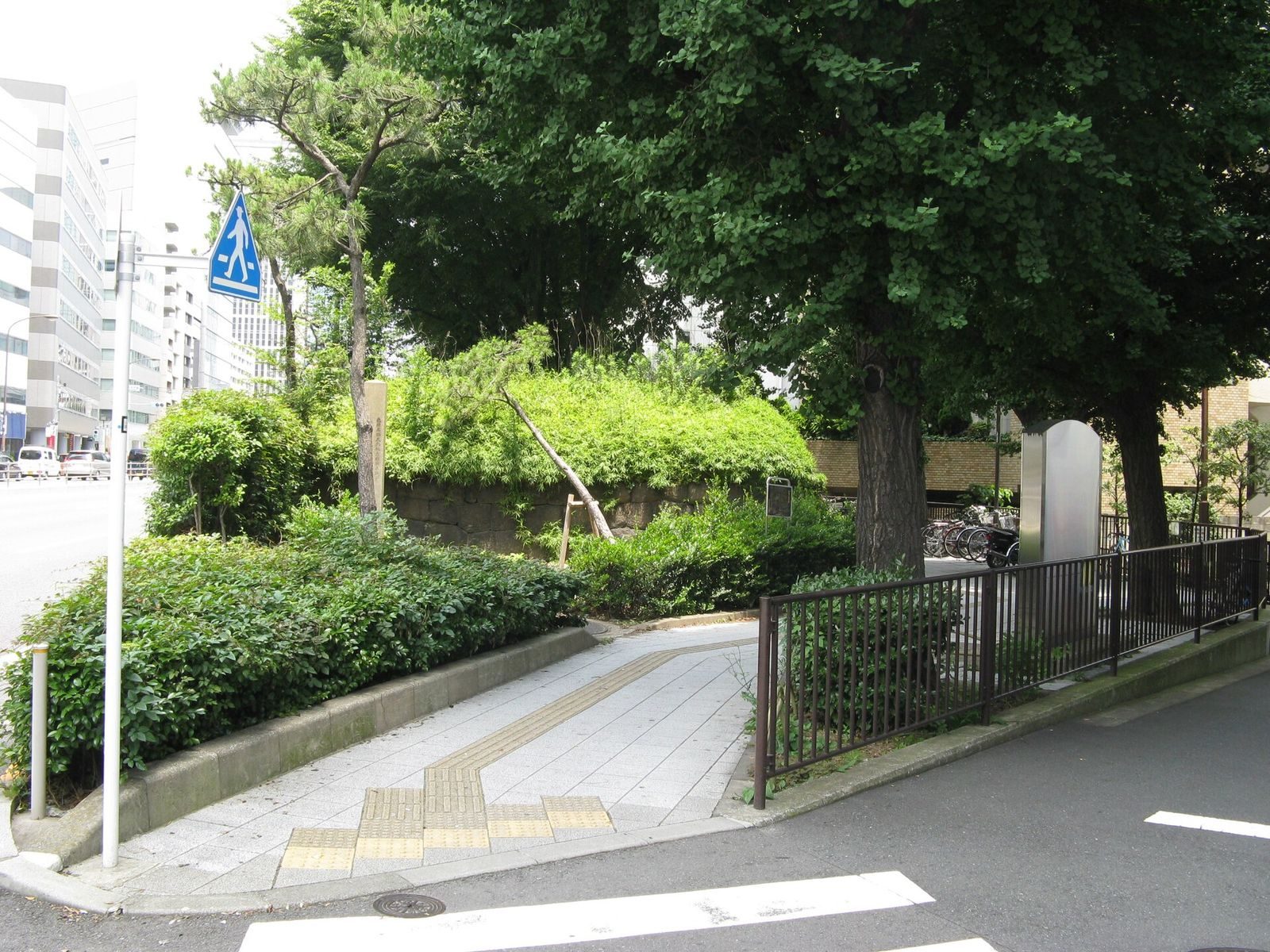
At the original Shibaguchi location, earthen ramparts flanked the highway, with the wooden gate between them. At the later site, stone walls stood on either side of a road about 10 metres wide, with a fence and black-painted wooden gate between the walls. The walls measured about 9 metres long, 7.2 metres wide, and 3 metres high. The gate structure no longer survives. The remaining feature is the eastern, seaward-side stone wall, about 5.4 metres wide, 7.3 metres long, and 3.6 metres high. Edo Bay lay to the east of the gate.
Inscription and markers
An inscribed plaque is set into the surviving wall. It describes the gate’s role in guarding entry to Edo, travellers’ preparations and farewells, and Inō Tadataka’s use of the location as a surveying base point. A marker and explanatory boards also stand at the site; one of the boards dates to 1993.