Basilica of Sts. Peter and Paul, Dillingen: A Baroque Co-Cathedral
Site at a Glance
- Rating
- 4.7
- Popularity
- Medium
- Country
- Germany
- Primary era
- Early Modern
- Eras represented
- Medieval, Early Modern, Modern
- Civilizations
- German, Holy Roman Empire
- Site type
- Religious
- Remains
- Cathedral
On this page9 sections
History
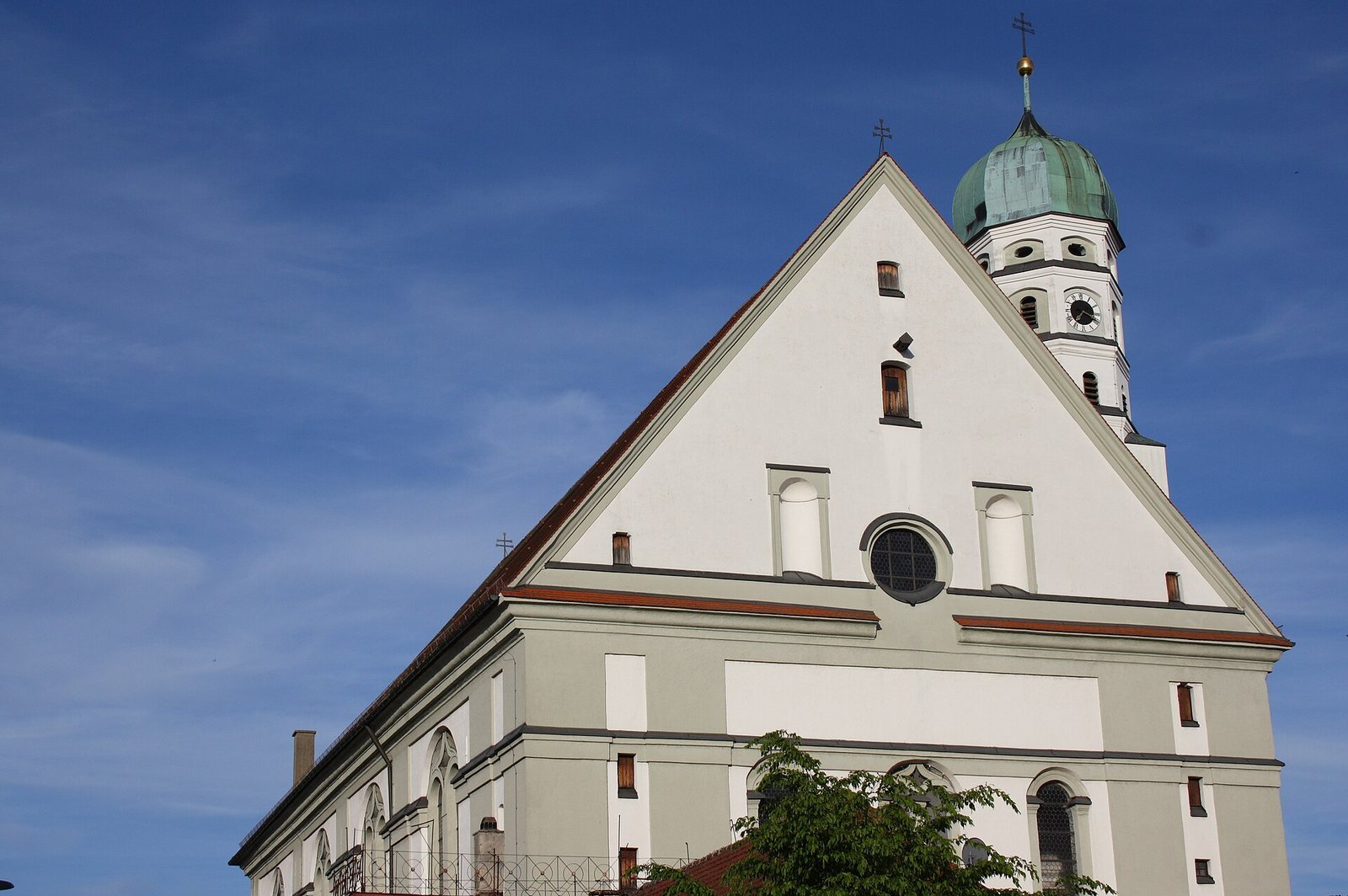
The Basilica of Sts. Peter and Paul, Dillingen, is a Catholic parish church and co-cathedral of the Diocese of Augsburg in central Dillingen an der Donau, Germany. A co-cathedral shares cathedral status within a diocese, and Augsburg’s bishops are consecrated and buried here. The present church was built between 1619 and 1628 in the Baroque style, known for dramatic, ornate forms. Dedicated to the apostle Peter, the church celebrates its liturgical feast on June 29.
Medieval church and collegiate foundation
A Romanesque church, a style associated with rounded arches and massive walls, was begun here in 1230. A Gothic church, with architectural features such as pointed arches and rib vaults, was erected around 1430. In 1498, Friedrich II of Zollern, bishop of Augsburg, established a collegiate foundation at the predecessor church. A collegiate foundation was a community of clergy organized around a church.
Rebuilding and later history
The present church was constructed on foundations associated with the earlier buildings. During the Thirty Years’ War, a major European conflict from 1618 to 1648, Swedish forces occupied Dillingen and damaged the church. Repairs were completed in 1643. The collegiate foundation was dissolved in 1803, after which the church again served as the town parish church.
Pope John Paul II granted the church the title of minor basilica on October 11, 1979. A minor basilica is an honorific title conferred by the pope. From August 2015 to April 2019, structural work stabilized walls and vaults at risk of collapse and restored the church’s interior and exterior.
Remains
Building and setting
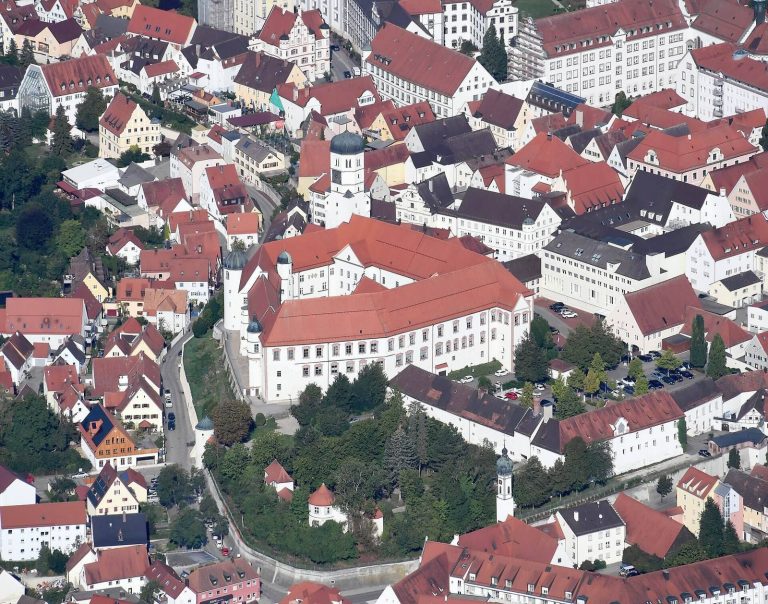
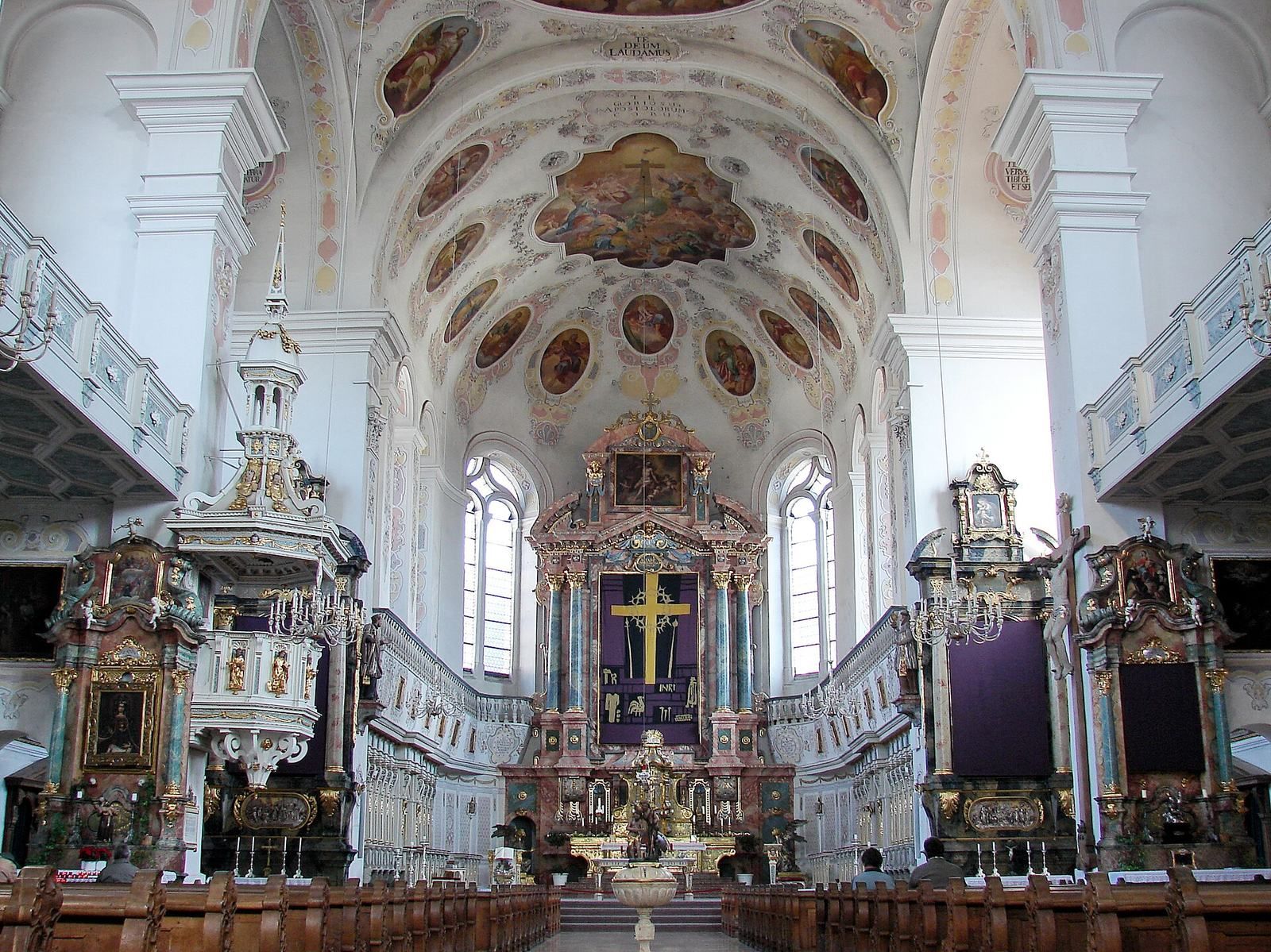
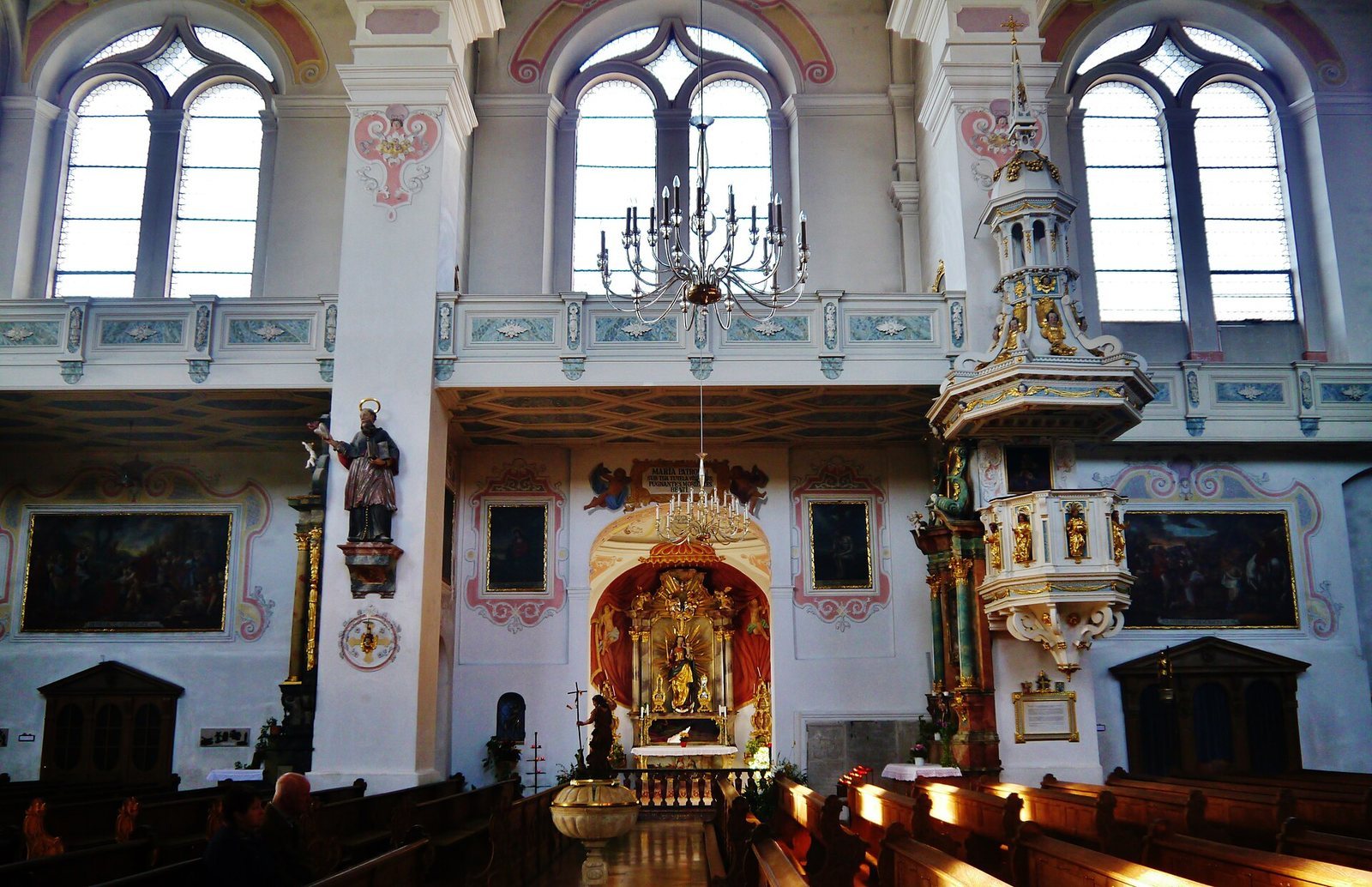
The present Baroque building is a three-aisled hall church, with a nave and side aisles of broadly similar height. It measures 54.8 metres long, 22 metres wide, and 22.3 metres high. Its Gothic tower, inherited from the predecessor church and raised in 1669, stands 49 metres high. At the church’s southeast corner is the adjoining convent church of the Dillingen Franciscan sisters; a replica of the Lourdes Grotto occupies its southwest corner.
Interior and furnishings
Erasmus Chapel
The Erasmus Chapel, dedicated to Saint Erasmus, an early Christian bishop and martyr, extends from the church’s north side. Its stucco and painted decoration dates to 1733 and 1734. The Rococo interior features lighter, more delicate ornament, including ceiling frescoes painted by Matthias Wolker in 1734.
Organ
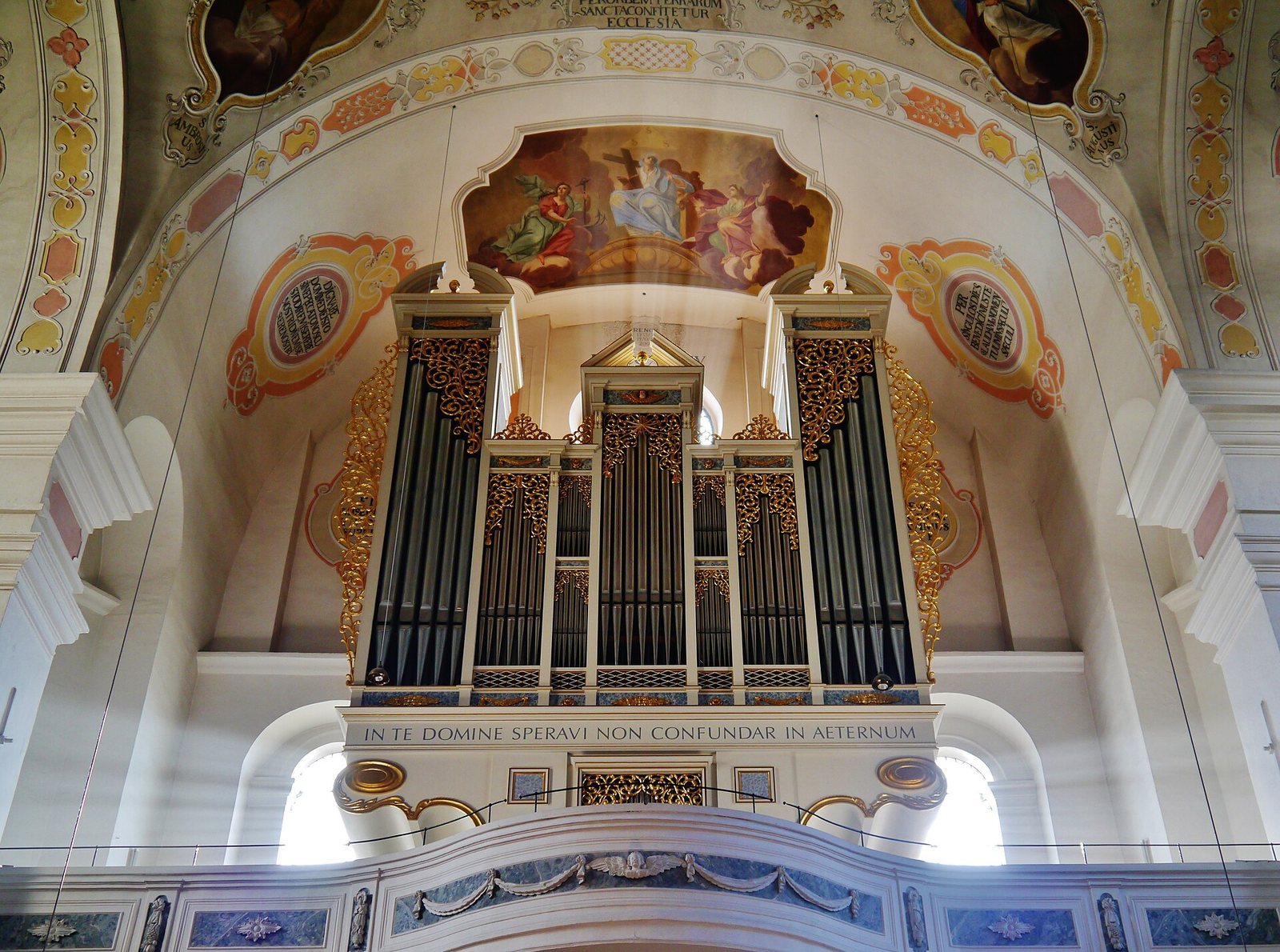
The organ stands on the gallery and was built in 1978 by Hubert Sandtner of Dillingen. It incorporates some pipe ranks from an 1889 organ made by G. F. Steinmeyer of Oettingen. Expanded in 2006 from 47 to 53 registers and enlarged again in 2021–22, it has three hand keyboards and a pedal keyboard played by the feet. Its electronic combination system stores 8,000 settings. The 2006 additions included a bell-like Cymbelstern and a Cucculus stop that imitates a cuckoo call. Couplers link the keyboards and pedal, including octave-shifting links and connections for horizontal, trumpet-like chamade pipes.
Bells
The bell frame holds six bells. Three were cast in 1724, when Alexander Sigismund, Prince-Bishop of Augsburg, commissioned a set. A prince-bishop held both an ecclesiastical office and, historically, temporal authority. Two further bells were added in 1981 by the Bachert foundry, while the death bell was cast in 1716. Bells one through four sound an extended minor-key motif. Their inscriptions invoke Christ as a model, affirm the unity of the Trinity, name the incarnate Word and the apostles Peter and Paul, and address Christ crucified alongside Mary, Joseph, and the Trinity. One also asks the holy patrons to pray for the faithful. Peter is identified as Dillingen’s patron and Paul as its co-patron.
The death bell’s inscription recalls Christ’s grief and prayer before his arrest and names Saints Wolfgang, Henry, and Anne: a tenth-century bishop of Regensburg, a Holy Roman emperor, and the traditional mother of Mary, respectively. Although the bell was cast in 1716, its inscription bears the date 1710.