Taiseishōgun-ji Temple: A Buddhist Temple in Yao, Osaka


Site at a Glance
- Rating
- 4.3
- Popularity
- Low
- Country
- Japan
- Primary era
- Classical
- External website
- Open
- Eras represented
- Classical
- Civilizations
- Yamato
- Site type
- Religious
- Remains
- Sanctuary
On this page8 sections
History
Taiseishōgun-ji Temple is a Buddhist temple in Yao, Osaka, Japan, traditionally associated with Prince Shōtoku and the conflict of 587 that helped establish Buddhism within the early Japanese court. Affiliated with Kōyasan Shingon-shū, a Japanese Buddhist school of the Shingon tradition centered on Mount Kōya, it is also called Taishidō or “Lower Taishi.” Together with Eifuku-ji, known as “Upper Taishi,” and Yachū-ji, known as “Middle Taishi,” it forms one of three temples associated with Prince Shōtoku.
Foundation traditions
The temple’s foundation story begins with the conflict between Soga no Umako, a powerful court leader who supported Buddhism, and Mononobe no Moriya, a leading opponent of that policy. In 587, Prince Shōtoku is said to have prayed for victory before joining the struggle against Moriya. After Moriya was defeated, Shōtoku reportedly established Taishidō to enshrine the Four Heavenly Kings, Buddhist guardian deities assigned to protect the four directions. He is also traditionally associated with the establishment of Shitennō-ji in Naniwa for the same purpose.
A related tradition tells that Moriya’s forces surrounded Shōtoku during the fighting. A large muku tree supposedly split open and concealed him within its hollow trunk. After surviving, Shōtoku carved an image of himself as a sixteen-year-old from the tree, cut off his own hair, and placed it inside the figure. He then carved images of the Four Heavenly Kings from nearby Chinese sumac trees. Soga no Umako, Hata no Kawakatsu, Ono no Imoko, and Tomi no Ichii each wore one of the images in his hair, representing Virūḍhaka, Vaiśravaṇa, Dhṛtarāṣṭra, and Virūpākṣa. Tomi no Ichii is said to have killed Moriya with an arrow, after which a hall was built for the images.
Imperial recognition and later traditions
In 594, Empress Suiko is said to have bestowed the mountain name Shinmyō Ryōju-san, commemorating the muku tree, and the temple name Taiseishōgun-ji, referring to Shōtoku’s victory. This year is treated as the formal foundation date, while 587 remains the date connected with the battle and the earlier foundation tradition.
In 756, the retired Emperor Shōmu granted the temple the title Taiseishōgun Chingo Kokka-ji and designated it an imperial-prayer temple. This was a temple established or patronized for prayers concerning the protection and welfare of the state. The temple formerly included monastic residences or compounds called Hōshaku-in, Ryūge-in, and Nichira-in.
Taiseishōgun-ji also developed an association with Bishamonten, the northern guardian among the Four Heavenly Kings and a deity independently venerated for protection and victory. Temple tradition holds that two images were made after Bishamonten appeared at Mount Shigi, a mountain in the Nara region associated with his worship. One image was dedicated at Chōgosonshi-ji on Mount Shigi, while the other was brought to Taiseishōgun-ji, where a Bishamonten Hall was established.
Pilgrimage and cultural heritage
The temple remains connected with several pilgrimage traditions. It is the first station of the Kawachi Saikoku pilgrimage, the second site associated with the sacred sites of Prince Shōtoku, and the third station of the Kawachi Asuka Ancient Temple pilgrimage. It is also the Bishamonten site within the Kawachi Asuka Seven Lucky Gods tradition.
Taiseishōgun-ji and its associated cultural properties have received tangible cultural-property designations from Osaka Prefecture and Yao City. The prefectural designations include the principal image and its internal image, four wooden figures of the Four Heavenly Kings, a wooden Bishamonten, and a suit of armor. Municipal designations include paintings of Prince Shōtoku and a wooden image of Prince Shōtoku with two attendant princes.
Remains
Precinct and principal image
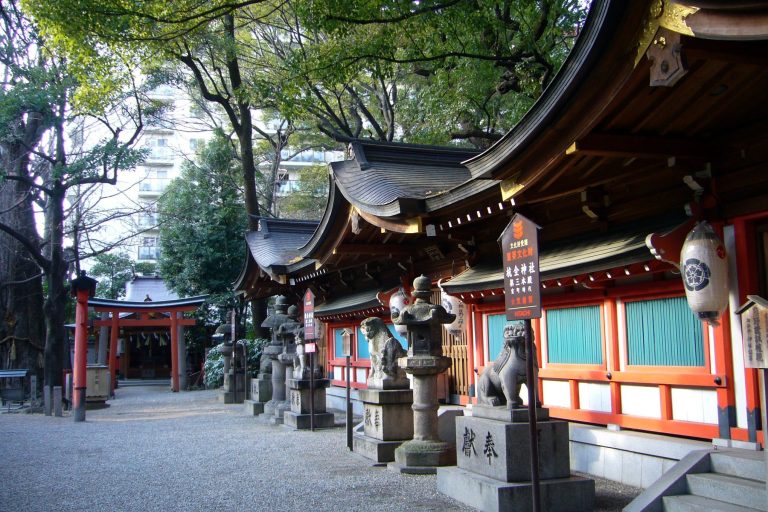
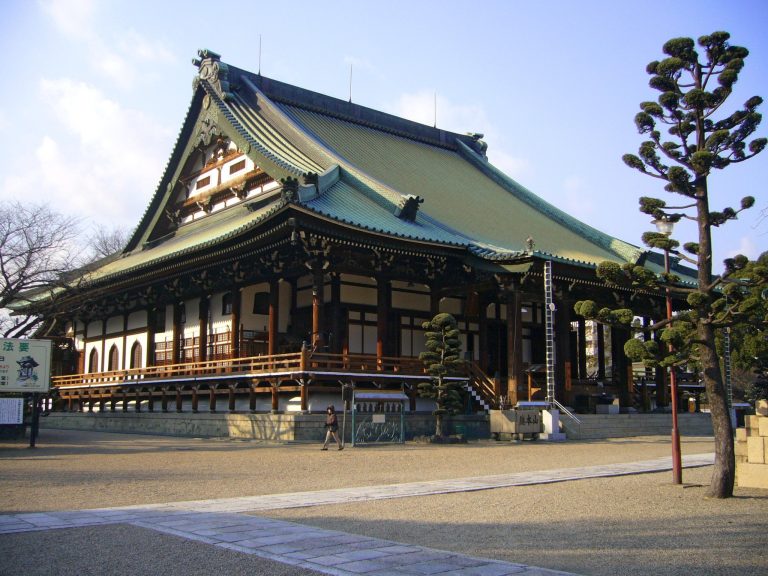
Taiseishōgun-ji stands along the former Nara Highway in Taishidō. Its mountain name is Shinmyō Ryōju-san, and the precinct includes the Sanmon, or main gate. The present Taishidō is the hall traditionally connected with the enshrinement of Prince Shōtoku’s image and the Four Heavenly Kings after the victory over Mononobe no Moriya. A Bishamonten Hall was established for the image dedicated to the temple, linking this building group with the temple’s protective and pilgrimage traditions.
The principal image is a two-armed wooden Nyoirin Kannon seated in a contemplative half-lotus pose. Nyoirin Kannon is a form of Kannon, the bodhisattva of compassion, associated with wish fulfillment and the wish-granting jewel. Inside the wooden figure is a small gilt-bronze image of a contemplative bodhisattva seated in the same half-lotus position. The principal image and its internal figure form part of the temple’s prefecturally designated cultural properties.
Guardian figures and painted works
Four wooden images of the Four Heavenly Kings are associated with the temple and are included among its prefecturally designated cultural properties. A wooden image of Bishamonten is also part of that collection. Together, these figures preserve the protective Buddhist imagery at the center of the temple’s foundation tradition.
The associated collection includes a four-panel silk painting depicting the life of Prince Shōtoku, made by Hasegawa Eishin, and a silk painting showing the prince on horseback. It also contains a wooden image of Prince Shōtoku caring for his parents with two attendant princes, a silk painting of Enmaten, the Buddhist deity of judgment and the afterlife, and a silk painting of Kojima Kōjin, a Buddhist protective deity.
Landscape traditions around the temple
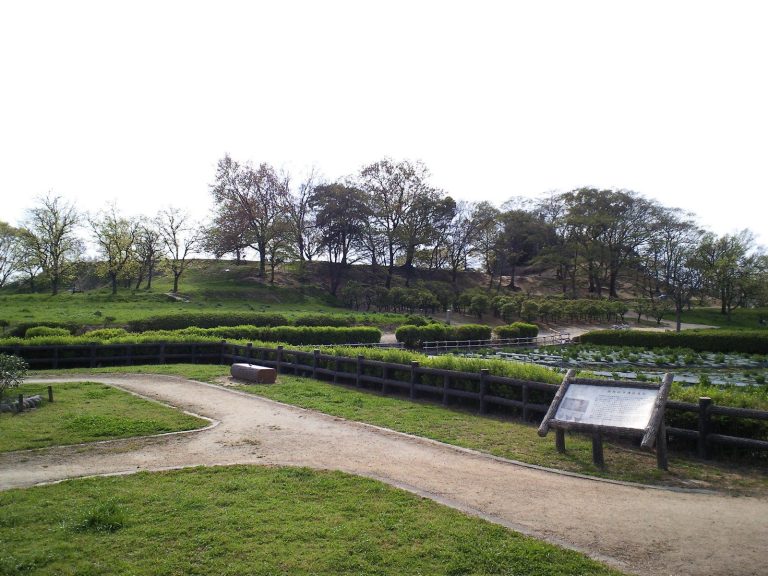
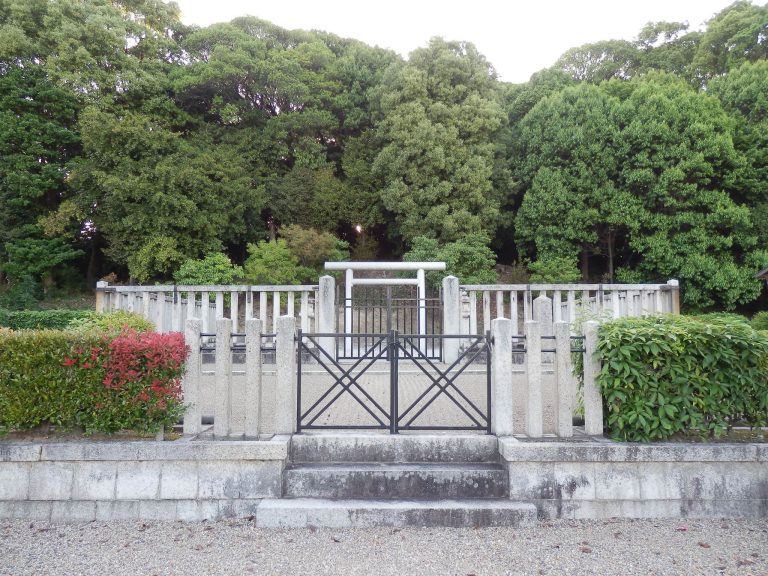
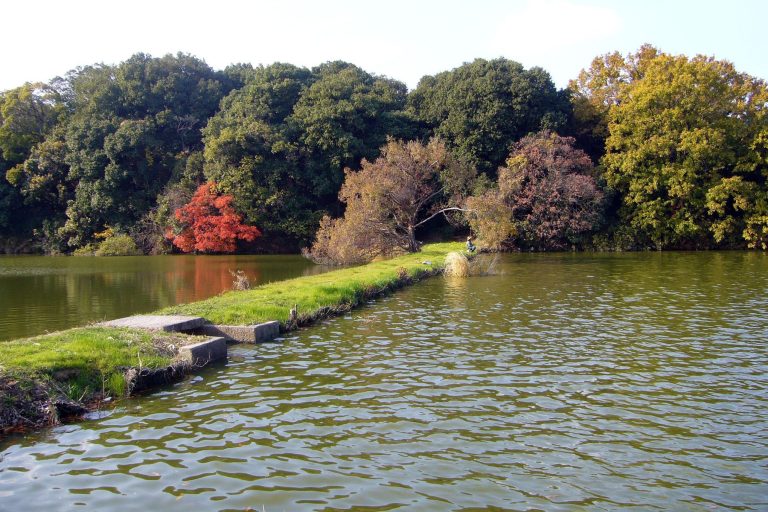
The precinct is associated with the muku tree in the temple’s foundation tradition and in the meaning attached to its mountain name. East of the temple lies a tomb traditionally identified with Mononobe no Moriya. The nearby Kaburaya Mound, to the southeast, is traditionally said to contain the arrow used to kill him, while a mound farther southwest is associated with the bow. These features connect the surrounding landscape with the temple’s account of the 587 conflict.