Starokostiantyniv Castle: A Historic Fortress in Ukraine
Visitor Information
Google Rating: 4.6
Popularity: Medium
Official Website: zamokst.com.ua
Country: Ukraine
Civilization: Early Modern, Medieval European
Site type: Military
Remains: Castle
History
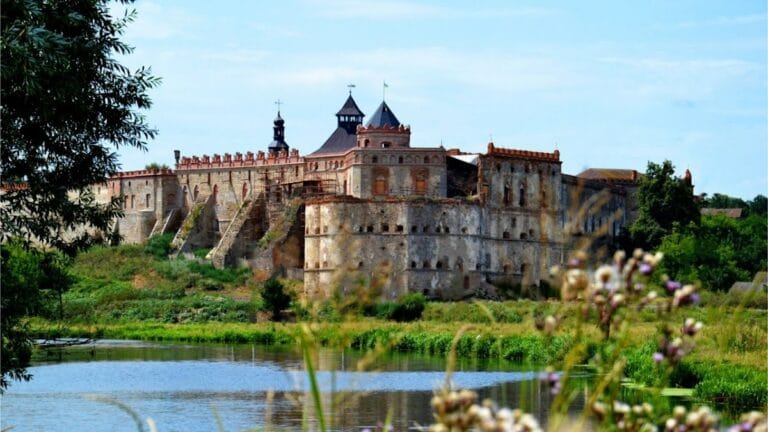
Starokostiantyniv Castle is located in the city of Starokostiantyniv in present-day Ukraine. It was built by the East Slavic princely family known as the Ostrozkys in the mid-16th century as part of efforts to defend southeastern Volhynia against frequent raids by the Tatars.
The castle and adjoining settlement were founded in 1561 by Prince Vasyl-Kostiantyn Ostrozkyi, who obtained royal permission to establish the city initially called Kostiantyniv. Construction rapidly progressed, and by 1571 much of the fortification and urban infrastructure was completed, with further building continuing into the early 1580s. The name of the city later evolved into Starokostiantyniv, meaning “Old Kostiantyniv.” The fortress served as the main residence of the Ostrozkyi family and became the center of local administration known as the Kostiantyniv volost. Its strong fortifications proved effective in repelling all Tatar assaults throughout this period.
In the late 16th century, Severyn Nalyvaiko, a noted Cossack leader, held command as the centurion of the castle’s court Cossack hundred around 1591. During the mid-17th century uprising led by Bohdan Khmelnytsky, Starokostiantyniv Castle was captured by Ukrainian Cossack forces in 1648. Khmelnytsky himself stayed within the castle walls in 1649. The fortress continued to play a strategic military role throughout the remainder of the 17th century. It housed various Cossack garrisons, including those aligned with Petro Doroshenko around 1673, and successfully resisted a Turkish siege in 1675.
Following the death of Anna Khodkevych, granddaughter of the castle’s founder, in 1654, the property passed to the Sangushko family. Unlike their predecessors, the Sangushkos did not make the castle their home and instead leased it out for economic activities. Later, during the 19th and early 20th centuries under Russian imperial governance, the castle accommodated local government officials and police services.
In the 20th century, the castle’s historical value was officially recognized when it was declared a State Historical and Cultural Reserve in 1929. Archaeological excavations carried out between 2001 and 2008 uncovered medieval layers beneath the castle grounds, revealing earlier fortifications dating back to the late 12th and early 13th centuries. These findings linked the site to the Bolokhiv land, a historic region destroyed by the Ruthenian prince Danylo Romanovych. Restoration efforts in the 1930s established a museum within the princely palace, although World War II inflicted damage on the complex. Subsequent restoration attempts in the late 20th century sometimes harmed the old structures. Since 2010, the castle has been part of a heritage rehabilitation pilot project under the Council of Europe.
Remains
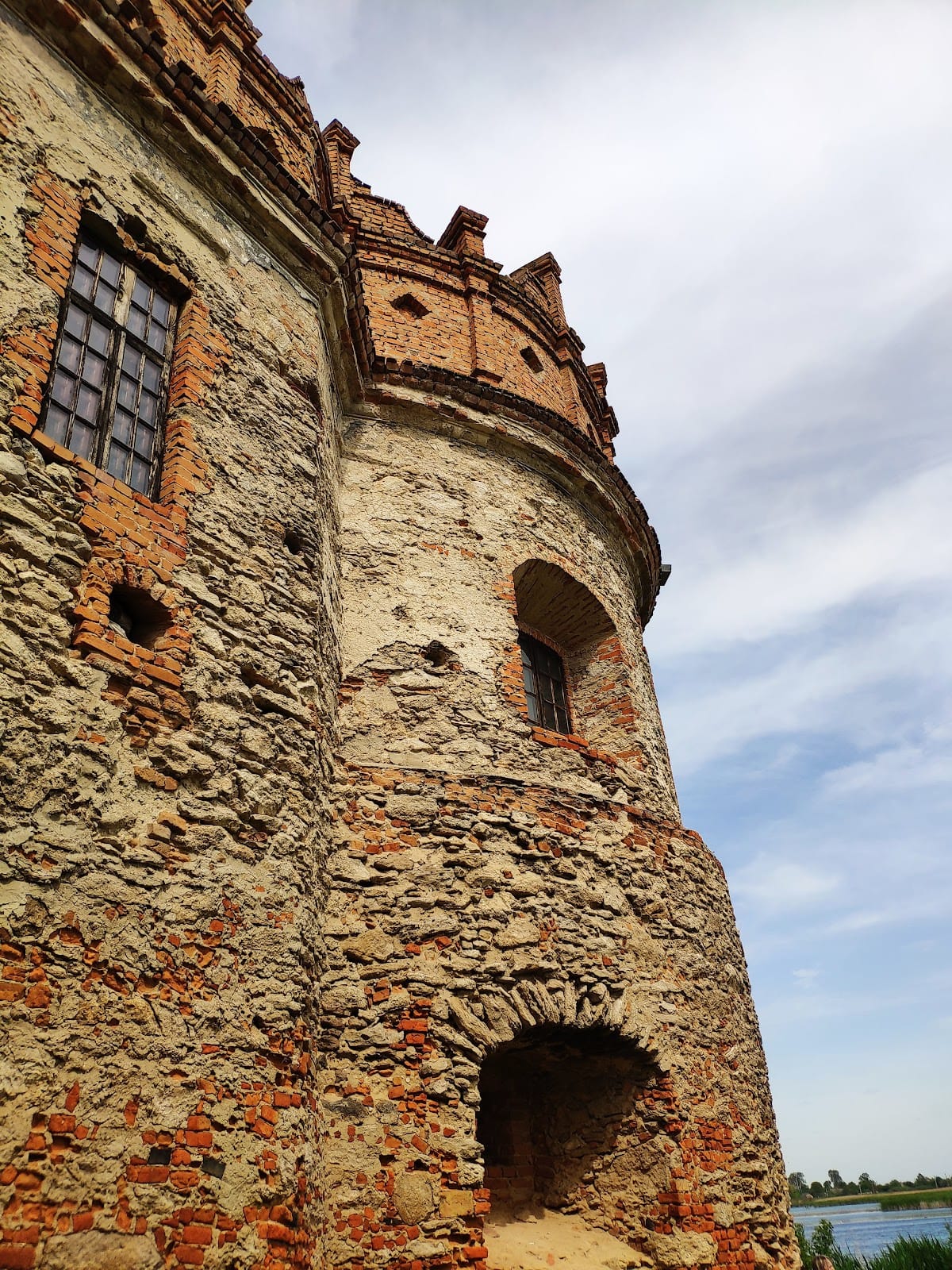
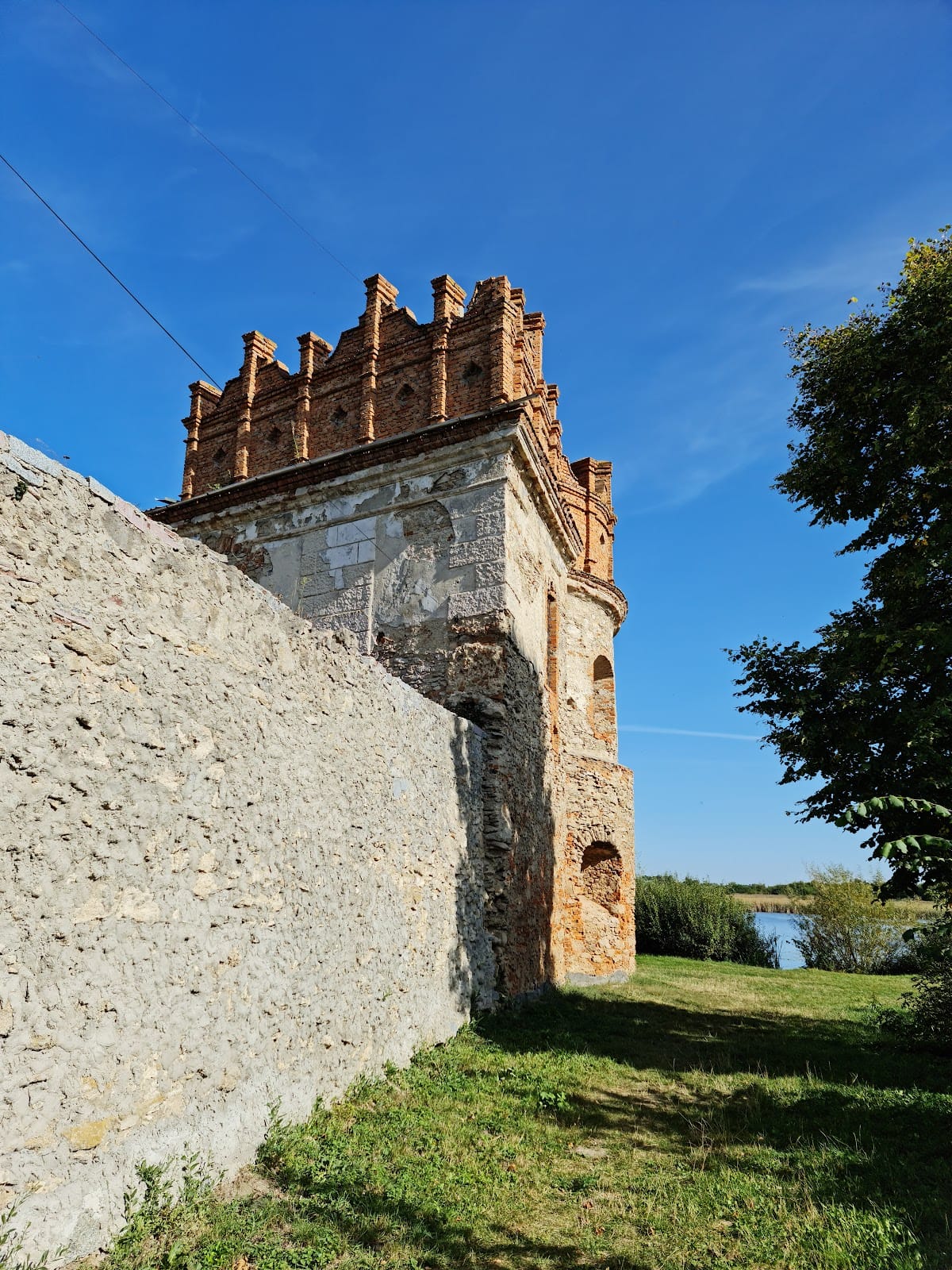
Starokostiantyniv Castle occupies a strategic triangular promontory formed where the Sluch and Ikopot rivers meet. Its layout integrates natural water defenses on two sides with man-made fortifications enclosing the third edge adjacent to the city. The castle was surrounded by a defensive water-filled ditch or moat, an earthen embankment, and a stone wall measuring approximately 1.5 meters thick and nearly 6 meters tall. Originally, the fortress featured five towers, though today only two remain partially intact.
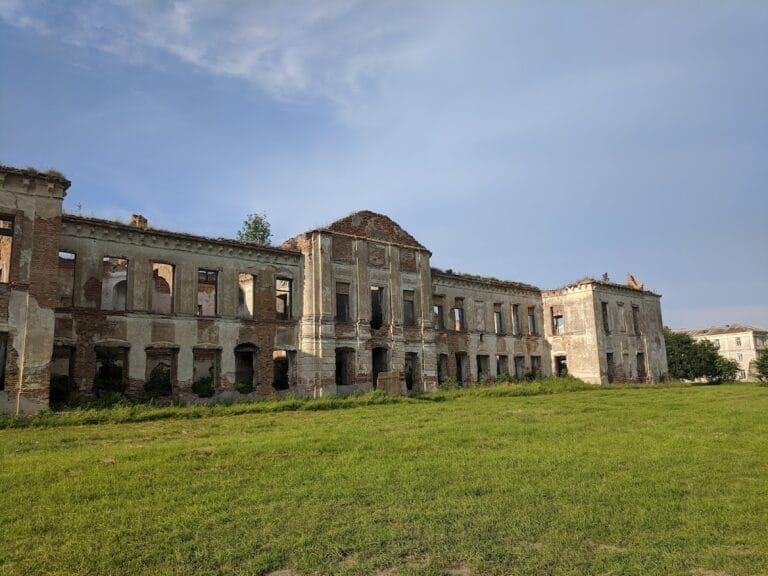
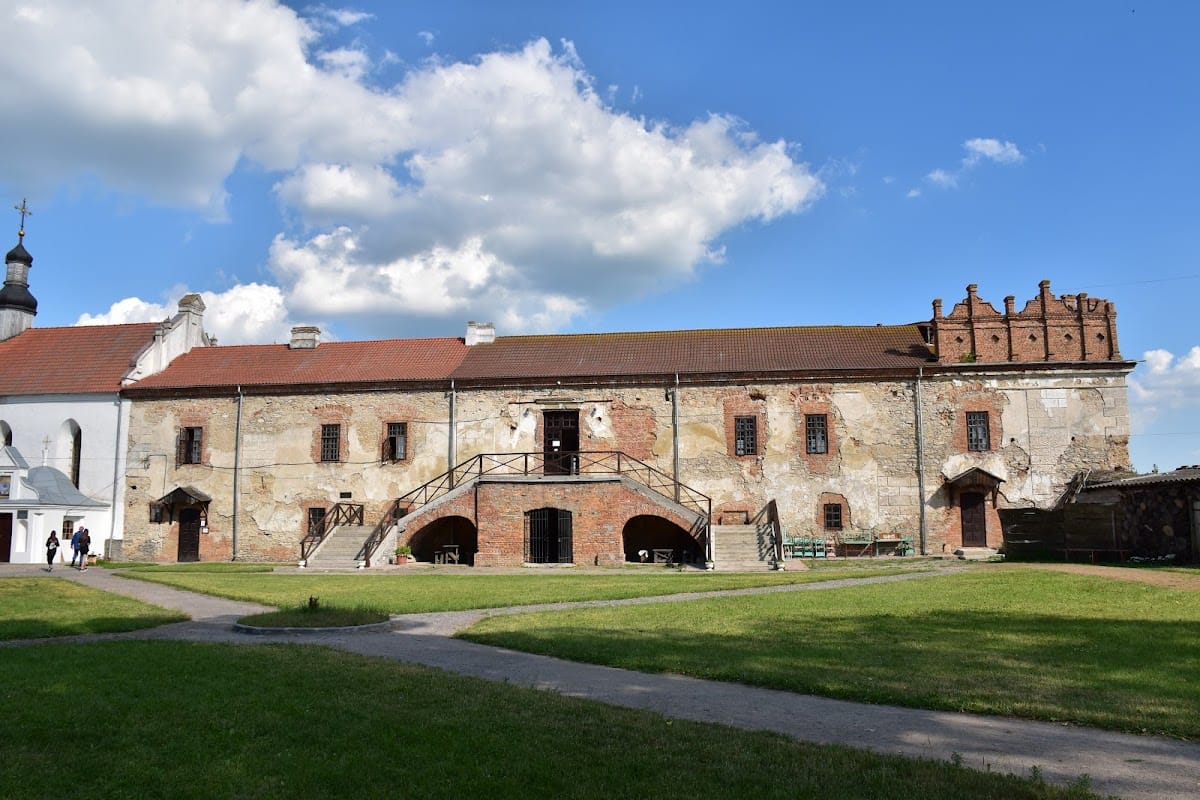
At the heart of the complex, the main buildings are arranged closely together, reflecting the design of Romanesque palaces that combined living quarters, official halls, and religious spaces. The princely residence is a two-story elongated structure built from late medieval brick. It is situated near the southern riverside within the castle. However, renovations carried out in the 1990s introduced heavy concrete roofing that placed undue strain on the historic brick walls, resulting in damage.
The castle church dedicated to the Holy Trinity is a modest stone and brick building with a single nave and an apse at one end. It is adorned with glazed tiles on its exterior and features a combination of cylindrical and groin vaulting inside—a groin vault being an architectural element where two barrel vaults intersect at right angles. The church’s nave is divided by piers resting on four columns, each topped with pointed arches. On the side facing the rivers, the church is joined by a sacristy (a room for storing sacred vessels) which includes defensive loopholes—narrow vertical openings used for archery or firearms. The church remains relatively well preserved and is currently used by the Ukrainian Orthodox Church of the Kyiv Patriarchate.
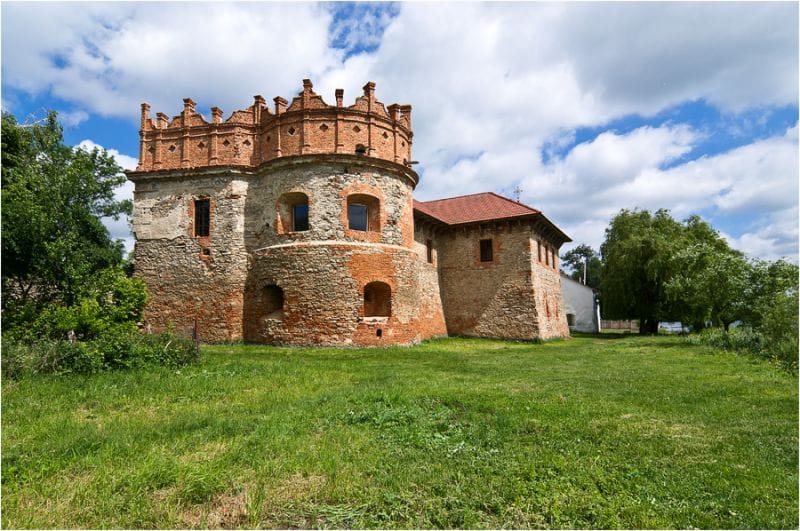
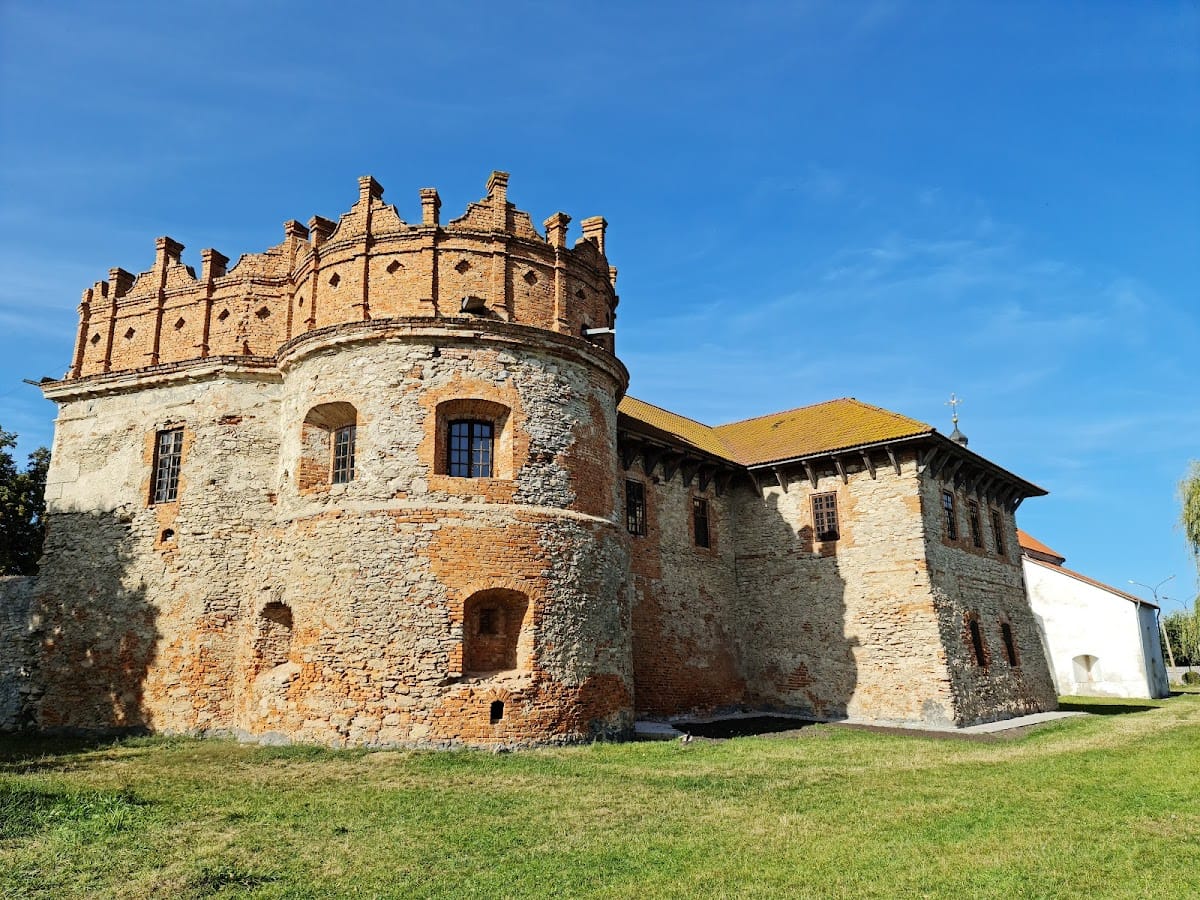
One of the surviving towers stands at the southwest corner of the castle. This tower rises two stories and incorporates firing slits designed to allow defenders to cover both frontal and side approaches. Its upper section is marked by a two-level attic. The tower’s ground floor features a hemispherical vaulted ceiling, while the upper floor’s ceiling is made of wooden beams, supported by structural elements.
Excavations beneath the castle uncovered an important medieval cultural layer containing ash deposits and fortification remnants dating back to the late 12th or early 13th century. These finds connect the site to the medieval Bolokhiv land region which was destroyed by Prince Danylo Romanovych. Historical documents from the 17th century also record the existence of auxiliary buildings within the castle complex such as stables, storerooms, and kitchens, although many of these earlier structures have not survived to the present day.