St. Wolfgang: An Evangelical Church in Glashütte
Site at a Glance
- Popularity
- Very Low
- Country
- Germany
- Primary era
- Early Modern
- Eras represented
- Early Modern, Modern
- Civilizations
- Electorate of Saxony, German, Holy Roman Empire, Kingdom of Saxony
- Site type
- Religious
- Remains
- Church
On this page19 sections
History
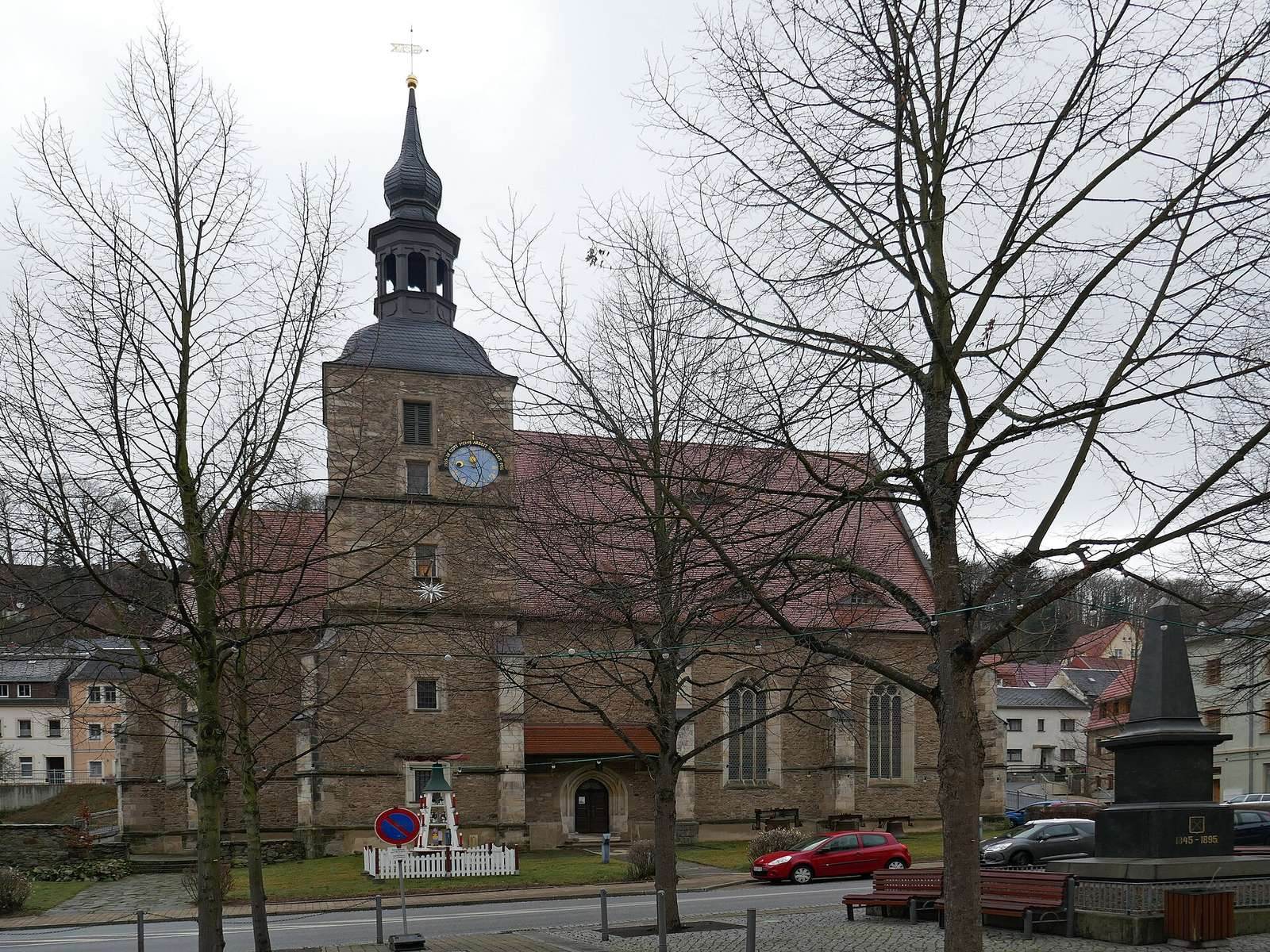
St. Wolfgang is an Evangelical church in Glashütte, Germany, built in late Gothic form between 1520 and 1535. A mining chapel stood on the site by 1495, and the church became a parish church in 1519. It belongs to the St. Wolfgang congregation in the Glashütte parish of the Evangelical-Lutheran Church of Saxony.
From mining chapel to parish church
The new church replaced the earlier chapel, and the upper storeys of its tower date to 1580. The building retains a late Gothic core, although its form and interior were altered through later renovations.
Renovations and interior changes
Renovations began in 1668 and were carried out in every subsequent century. Particularly extensive work took place in 1742–1747 and 1890–1891. In 1836, remains of a winged altarpiece were found in the church attic and later restored.
In 1890–1891, workers dismantled the second north gallery, built in 1724, and the old council gallery. A smaller gallery replaced the council gallery. The figures of Peter and Paul were given to the church in 1891.
The organ and its alterations
An unknown builder made a small organ for the church in 1597. Gottfried Fritzsche moved and enlarged it in 1608. In 1730, the congregation acquired a used organ from the village church at Reinhardtsgrimma, after that church obtained a new instrument by Gottfried Silbermann, a prominent German organ builder closely associated with Saxony.
Johann Christian Kayser built the present organ in 1797. Karl Traugott Stöckel repaired it in 1855, and Karl August Schröder inspected its bellows in 1857. A local carpenter made minor repairs in 1861. The Jehmlich brothers undertook a major repair the following year, probably adding the Aeoline 8-foot and Schwiegel 8-foot stops, controls that select sets of pipes. In 1872, Stöckel renewed parts of the action, the mechanism linking keys to pipes, and fitted box bellows.
The organ’s front pipes were removed in 1917 and later replaced with zinc pipes, and an electric blower was installed. In 1960, Jehmlich cleaned and treated the instrument, overhauled its pipes, and replaced wood damaged by wood-boring insects. The work also substituted a Sifflet 1-foot stop for the Aeoline 8-foot stop and removed the additional Schwiegel 8-foot stop from the upper division, a separate section of pipes and controls.
Remains
The church combines a single-nave plan with a narrower choir, the sanctuary area, and is built of rubble stone with sandstone details. Although it was planned as a vaulted hall with three aisles, the completed church has one main body beneath a high pitched roof. Its buttresses and wall piers preserve evidence of the broader plan first intended.
Plan and exterior
Church fabric and openings
The nearly square main body measures about 18 by 14.5 metres. Buttresses extend along both it and the choir, while wall piers on the east side and buttresses on the west wall reflect the original three-aisled plan. Pointed-arch entrances with interlacing stone patterns are set into the north and west sides. Broad windows divided into three sections have elaborate stonework and only slightly pointed arches.
Tower and sacristy
A four-storey tower rises at the northeast corner. Its upper portion has a curved, domed roof, and rectangular windows; the reveals of the windows in the lower two storeys contain interlacing stonework. The sacristy occupies the tower’s ground floor.
Main body and choir
Ceiling and galleries
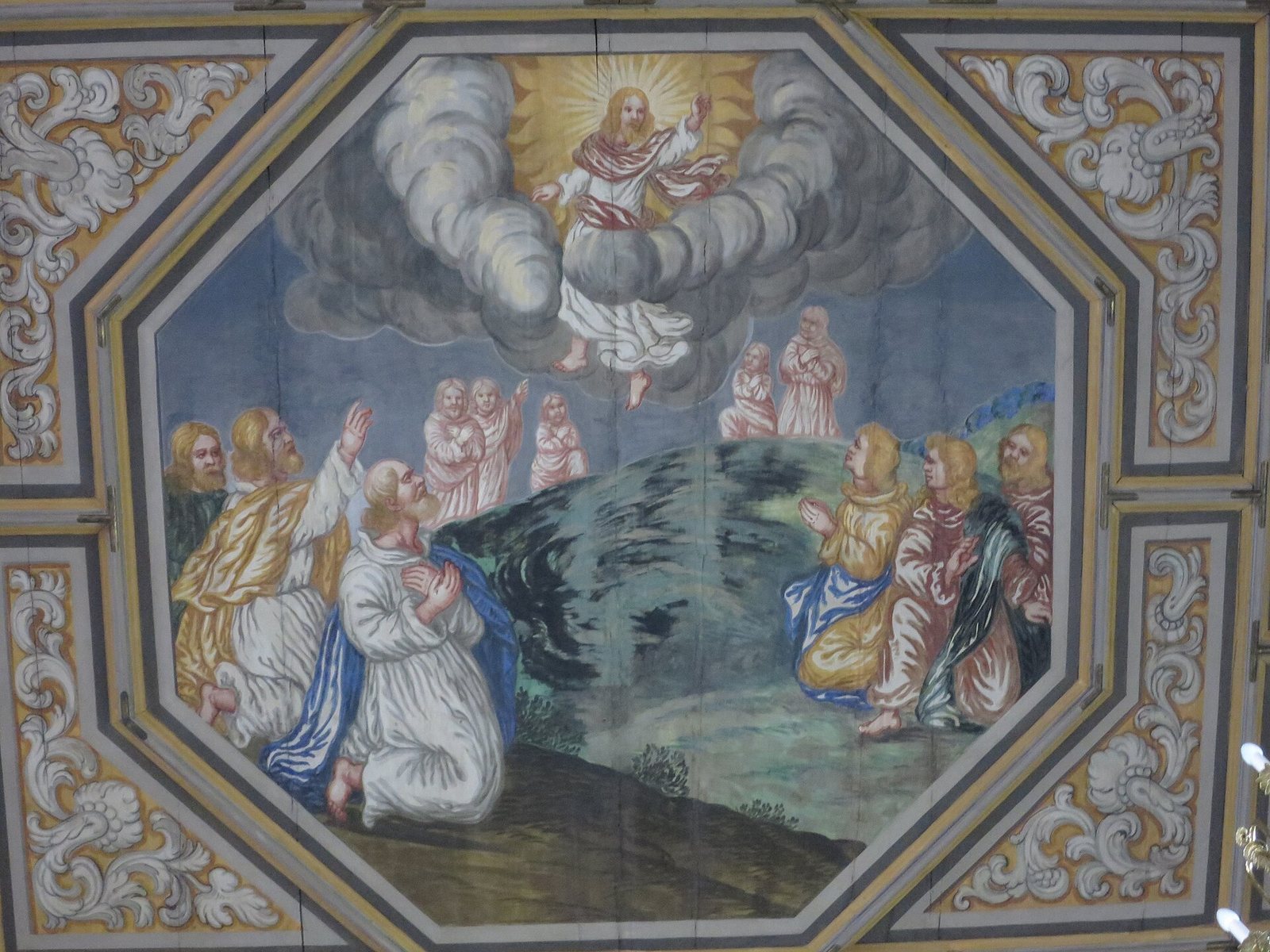
A wooden ceiling divided into panels dates to 1668. Johann Hauffen painted it with the Resurrection and Ascension in two octagonal medallions. Smaller panels form a checkerboard pattern around them, alternating ornament with a total of 74 musical angels. Galleries extend along three sides of the main body, and their painted decoration dates to around 1890.
Choir
A pointed arch separates the main body from the narrower choir, which ends in three sides of an octagon. Its simply painted wooden ceiling dates to 1616, and two late Gothic doorways with interlacing stone patterns survive in the north wall. Panels from the former council gallery are now mounted in wooden frames here. Painted by Hans Panitz and dated to 1626, they show 14 New Testament scenes. Painted sandstone tomb monuments to the pastors Kittel, who died in 1639, and Hartung, who died in 1679, stand against the choir’s north wall.
Furnishings and images
Altar
The principal furnishing is a two-storey painted wooden altar with carved raised scenes dated to 1613. Its central panel depicts the Last Supper, with Christ on the Mount of Olives below and the Crucifixion and a triumphant Christ above. Fully sculpted figures of the Evangelists stand beside the columns.
Mining pulpit
The carved wooden pulpit dates to 1650. A senior mine foreman in ceremonial dress supports it while standing on a natural rock ledge. An inscription credits the pulpit paintings to Balthasar and Hans Gottfried Böhme of Dresden. Its body shows Christ and four angels holding coats of arms, as well as John and Peter; figures of the Evangelists decorate the staircase.
Baptismal font
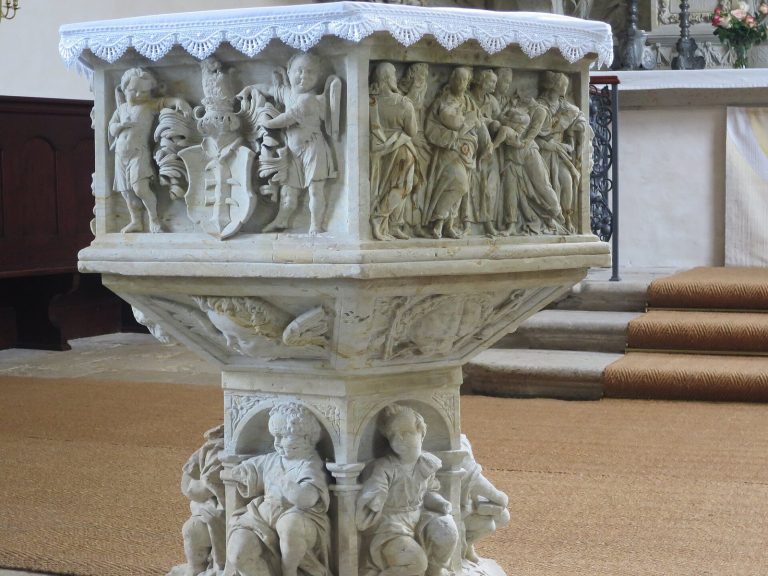
The sandstone baptismal font dates from the beginning of the 16th century. Comparable fonts by the same stonemason are found in the churches at Höckendorf and Seifersdorf.
Paintings and sculpture
Four tall rectangular panels, remnants of a winged altarpiece and dating to around 1520, depict the Annunciation and Saints Lawrence and Martin. They hang on the choir walls. A 17th-century portrait on the south wall of the main body shows Elector John George I, one of the princes entitled to take part in choosing the Holy Roman Emperor, with his wife Magdalena Sibylla, Electress of Saxony. Figures of the apostles Peter and Paul stand on the stumps of wall piers.
Organ and bells
Organ
The well-preserved organ reflects the Classicism period and follows the tradition associated with Gottfried Silbermann. It has 18 stops, two hand keyboards, and a pedal keyboard.
Bells
The peal consists of four bronze bells. Their oak frame and oak supports were renewed in 2009.