St. Walpurgis: A Late Gothic Lutheran Parish Church in Germany
Site at a Glance
- Rating
- 4.5
- Popularity
- Very Low
- Country
- Germany
- Primary era
- Medieval
- External website
- Open
- Eras represented
- Medieval, Early Modern, Modern
- Civilizations
- German, Holy Roman Empire
- Site type
- Religious
- Remains
- Church
On this page11 sections
History
St. Walpurgis is a Late Gothic Lutheran parish church in Großengottern, Germany, dedicated to Saint Walpurga, an eighth-century Christian missionary and abbess whose cult spread widely through medieval Europe. Its rectangular nave dates from 1478, and the west tower carries an inscription dated 1494. The church was built on the foundations and walls of an earlier building and was reconstructed and extended in 1494.
Medieval origins
The church is older than its earliest surviving written reference. A priest lived in Großengottern from 1280, while St. Walpurgis itself was first mentioned in 1494. Like St. Martin’s Church in the lower part of the village, first mentioned in 1318, it therefore predates the surviving documentary evidence. The two churches have experienced very little structural change since 1500, and their relationship is also reflected in the seals of the churches and the village.
Later changes and the organ
Alterations took place in the eighteenth century and again in 1851 and 1852. Restoration campaigns followed in 1952 and from 1993 to 1995. These interventions took place within a building whose principal form remained rooted in its Late Gothic phase.
Since 1717, the church has housed a valuable Baroque organ by Tobias Heinrich Gottfried Trost, a major German organ builder of the period. Ernst Siegfried Hesse reworked its actions and replaced the manual keyboards and some stops in 1848 and 1849. Lightning damaged the instrument in 1878, after which Friedrich Erdmann Petersilie restored it and replaced additional stops. A proposal for a fundamental alteration was not carried out. Rudolf Kühn restored the organ between 1940 and 1947 under the direction of Rudolf von Beckerath, and Eule Orgelbau Bautzen restored it in 1999 according to its original design and tuned it in a system associated with Andreas Werckmeister’s 1698 treatise.
Remains
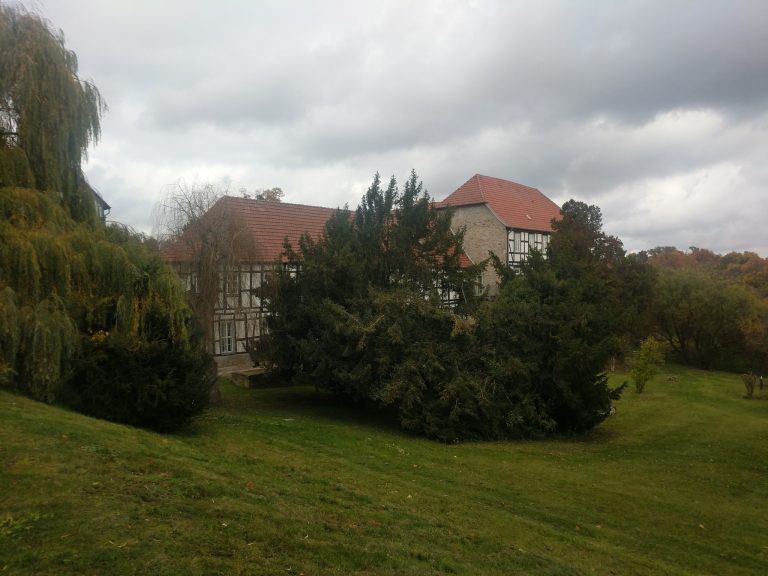
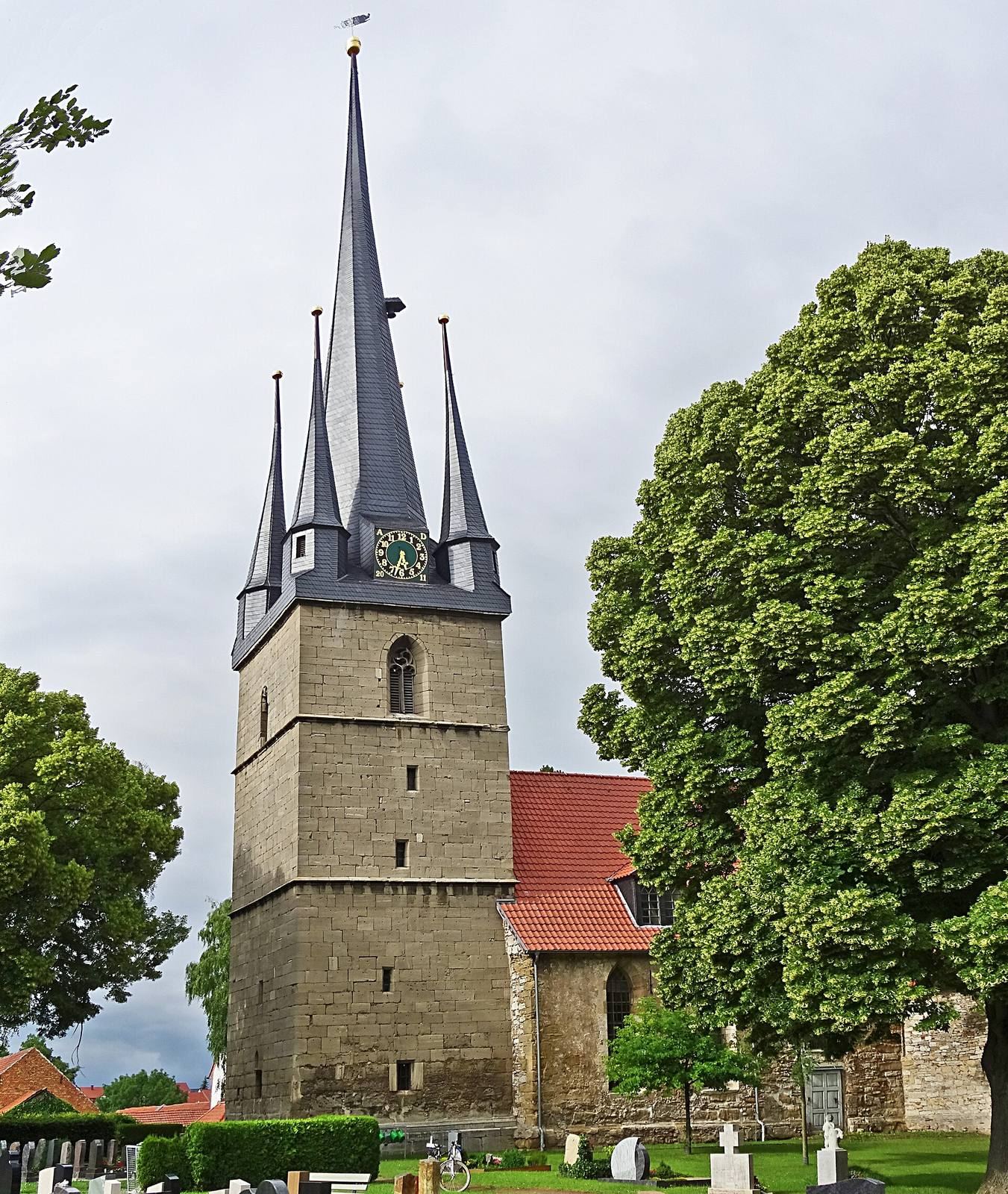
St. Walpurgis is an aisleless hall church built of rubble-stone masonry. Its rectangular nave ends in a three-sided choir, while the west tower forms a prominent part of the building. The vicarage and the gateway to the church stand beside it, preserving the immediate arrangement of the parish complex.
Exterior and tower
Late Gothic church
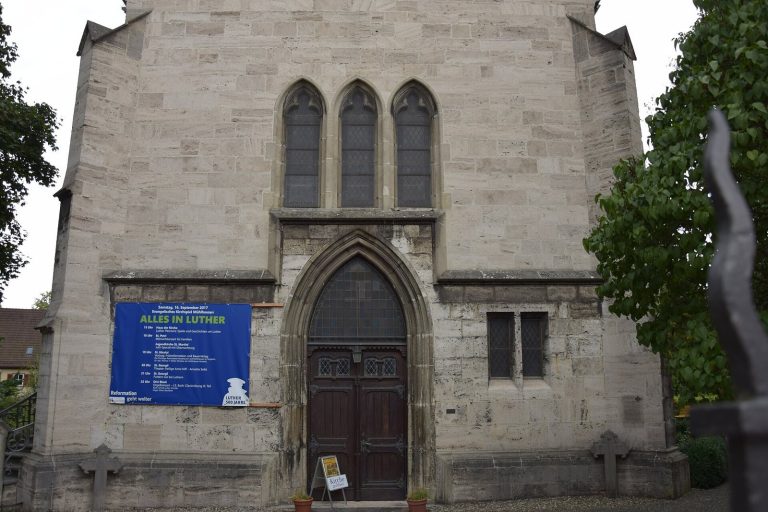
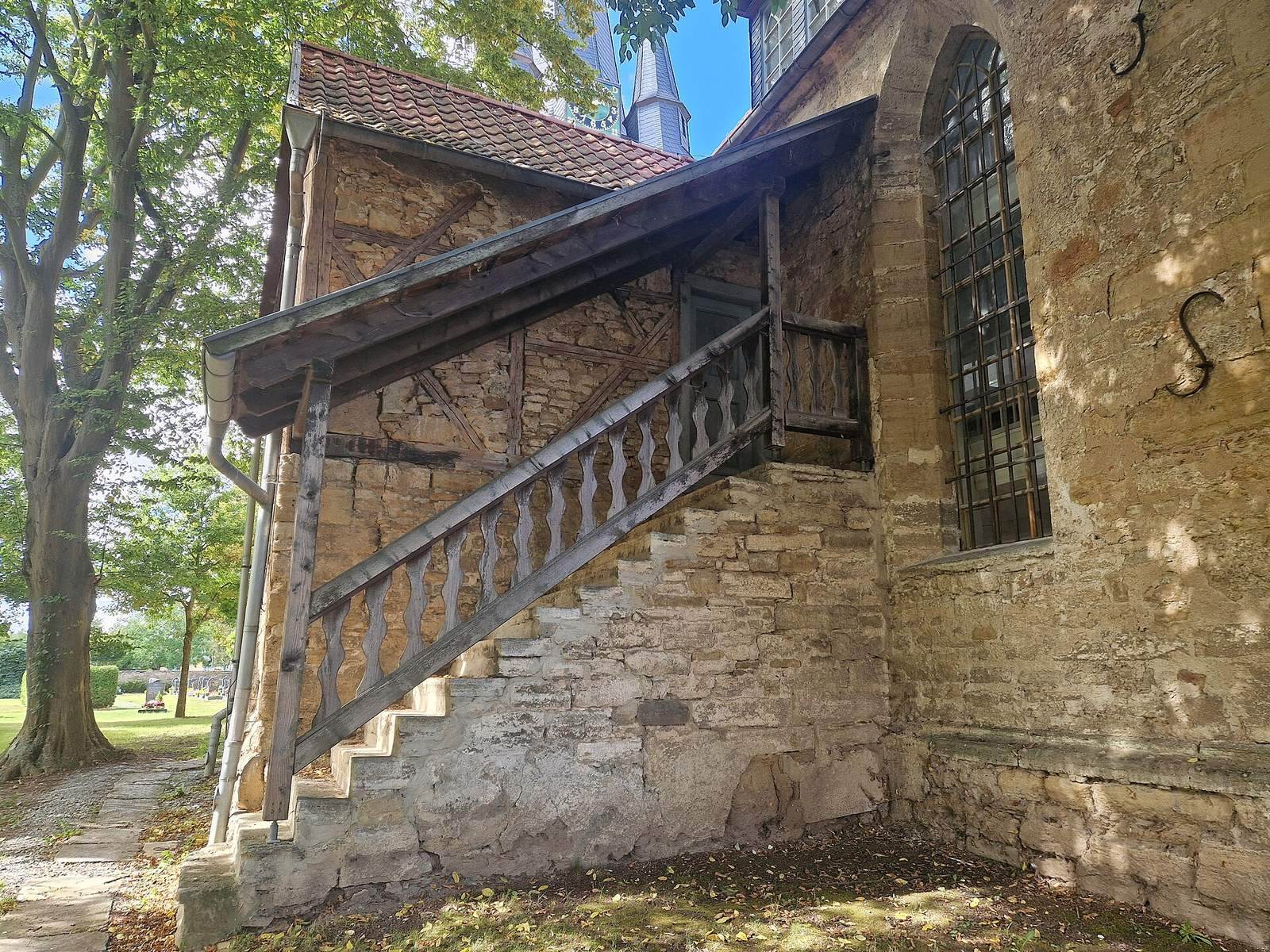
The tower has a pointed-arch portal and curtain-arch windows. Pointed-arch windows pierce the nave, and the choir has tracery windows. A gravestone commemorating a knight of Großengottern is preserved beside the exterior northern portal.
Romanesque baptismal font
The lower room of the tower contains a Romanesque baptismal font. Its basin is decorated with a frieze of round arches, providing an earlier element within the Late Gothic church.
Interior furnishings
Vault, galleries, and altar
The interior is covered by a wooden barrel vault and surrounded by a two-storey wooden gallery dating from 1739. At the east end stands a Neo-Gothic pulpit altar decorated with pinnacles and tracery. The choir also contains a second baptismal font, made in 1739, and coloured stained-glass windows with biblical motifs from 1908. An altar crucifix dates from the first half of the eighteenth century.
St James altar
The lower part of the tower contains the St James Chapel, where a Late Gothic St James altar from the beginning of the sixteenth century is installed. Its central shrine holds carved figures of Saints Nicholas, James, and Walpurga. When the wings are opened, they display scenes from the life of Saint James.
Trost organ
Trost’s organ has two manuals and a pedal. Its unusual arrangement places the stops above the manuals and includes two Cymbelstern effect stops, which produce bell-like or tinkling sounds. The instrument also has a manual coupler, two pedal couplers, a tremulant that periodically varies the wind supply, and a shutoff valve.