St Vedast Foster Lane: An Anglican Parish Church Rebuilt After the Great Fire
Site at a Glance
- Popularity
- Medium
- Country
- United Kingdom
- Primary era
- Early Modern
- Eras represented
- Medieval, Early Modern, Modern
- Civilizations
- British, English
- Site type
- Religious
- Remains
- Church
On this page10 sections
History
Medieval parish and early modern church
St Vedast Foster Lane is an Anglican Church of England parish church in the United Kingdom, dedicated to Saint Vedast, also known as Vaast. Vedast was a late-antique Christian bishop associated with Arras and Cambrai who died around 540. The church was established before 1308 and enlarged in the 13th century. Vedast’s cult reached England through contacts with Augustinian clergy, and “Foster” is an English form of the saint’s name. The church was Roman Catholic until 1538. The English poet Robert Herrick was baptised there in 1591. Parishioners organised extensive repairs in 1662.
Rebuilding after the Great Fire
The Great Fire of London in 1666 damaged the church so severely that it was included in the rebuilding programme led by the English architect Christopher Wren. The main body was reconstructed on the earlier walls from 1670 to 1673. Further repairs associated with Wren followed in 1695 and 1701.
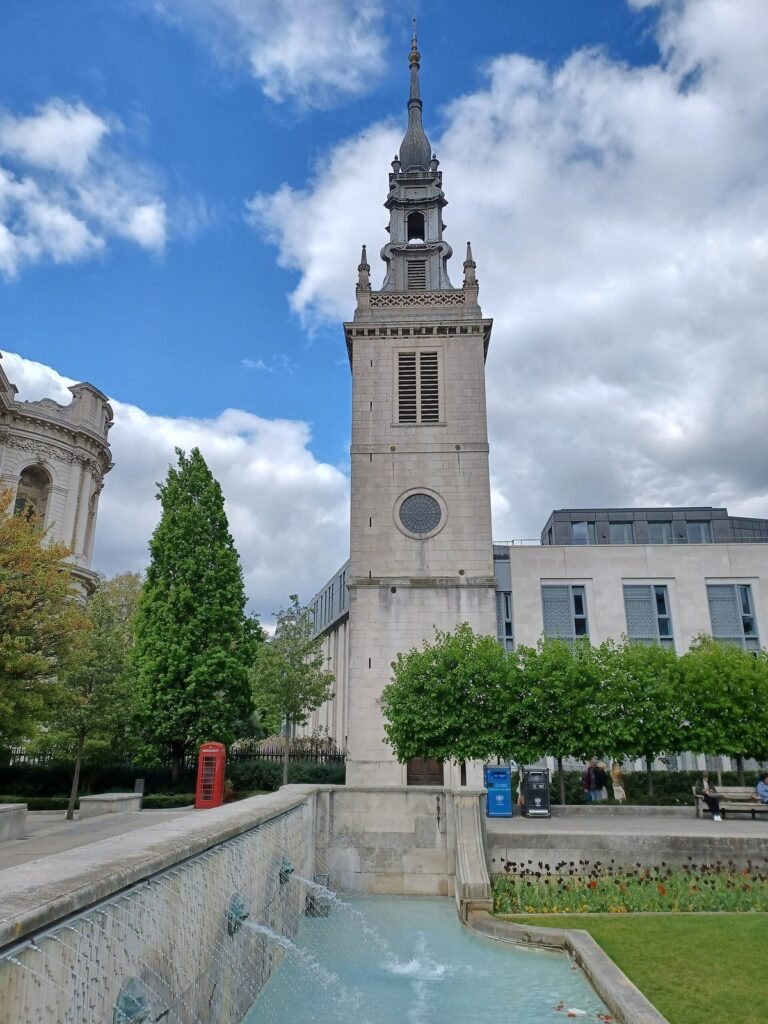
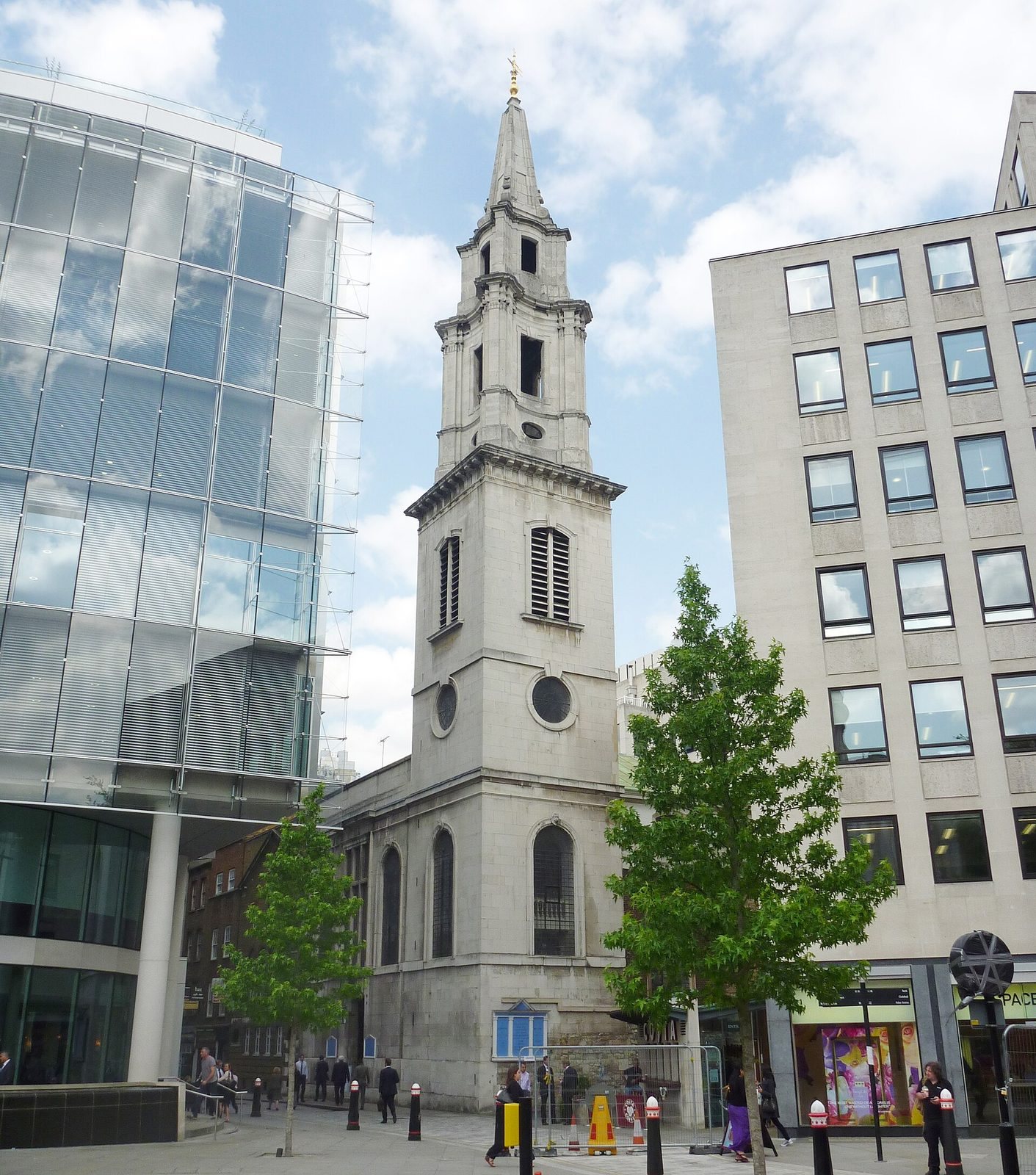
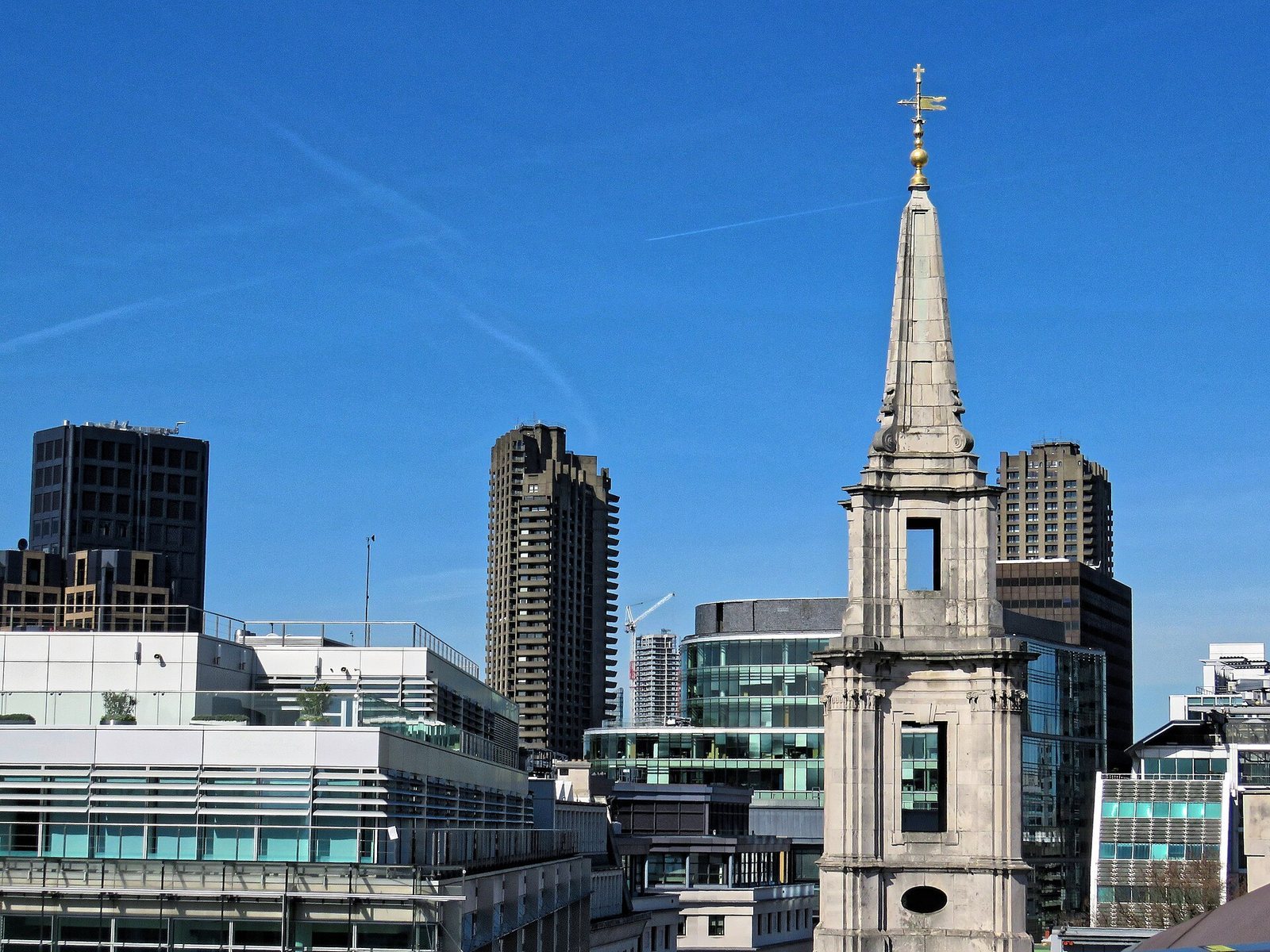
The medieval tower was taken down in 1694 and replaced between 1695 and 1698, possibly retaining its lower medieval stages. A three-tier spire was added from 1709 to 1712, perhaps to a design by the English architect Nicholas Hawksmoor. Its late completion may have made St Vedast the last of Wren’s City churches to be finished.
Wartime damage and restoration
German bombing raids on London during the Blitz of 1940–41 gutted the church, leaving it roofless. Architect Sir Hugh Casson proposed preserving it and several other churches as open-air war memorials, but the plan was not adopted. Restoration within the old walls and reroofing began in 1953 under rector Canon Charles B. Mortlock. Architect and church restorer Stephen Dykes Bower directed the work, which was completed in 1962. The church received Grade I listed status in 1950, England’s highest listed-building category, reserved for buildings of exceptional interest.
Remains
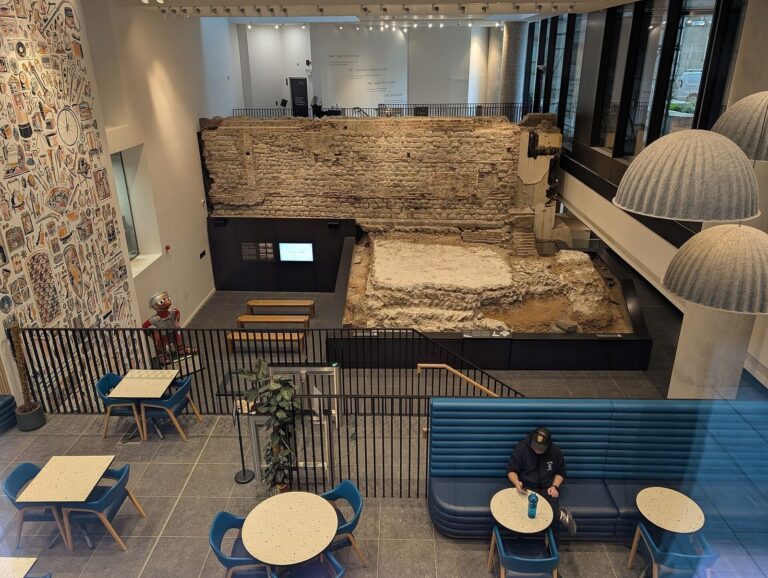
The church has a simple hall plan with a low side aisle. Parts of its medieval fabric survive within the rebuilt structure. The south wall is the clearest surviving medieval section, exposed during restoration work in 1992 and 1993.
Tower and spire
The tower is crowned by a three-tier Baroque spire. Baroque is a European architectural style known for elaborate forms and dramatic effects. The spire is small in scale, with curved sides in its upper structure and an obelisk at the top.
Interior arrangement
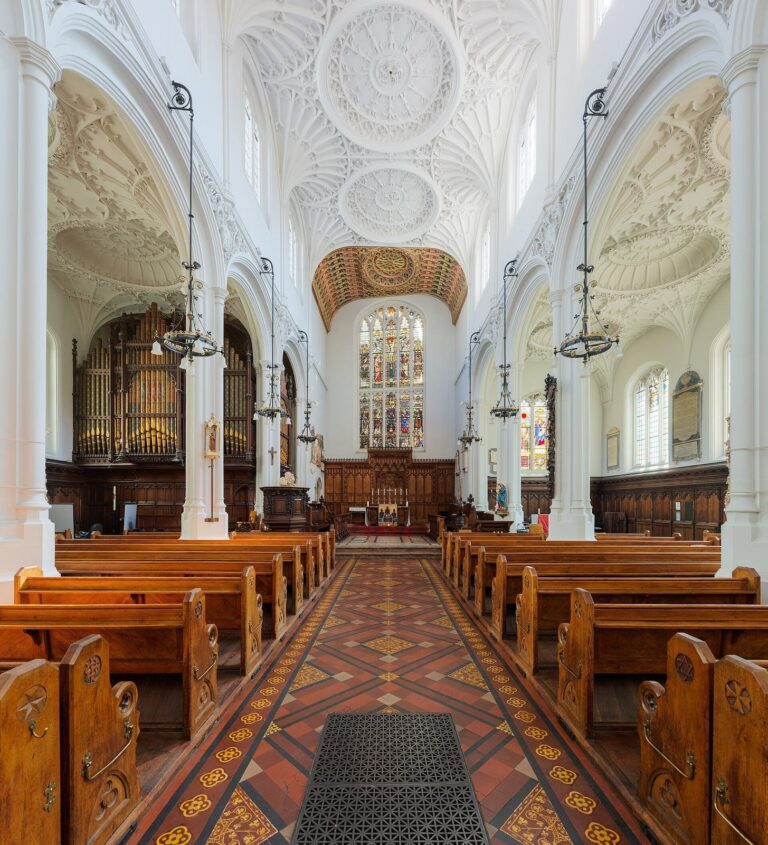
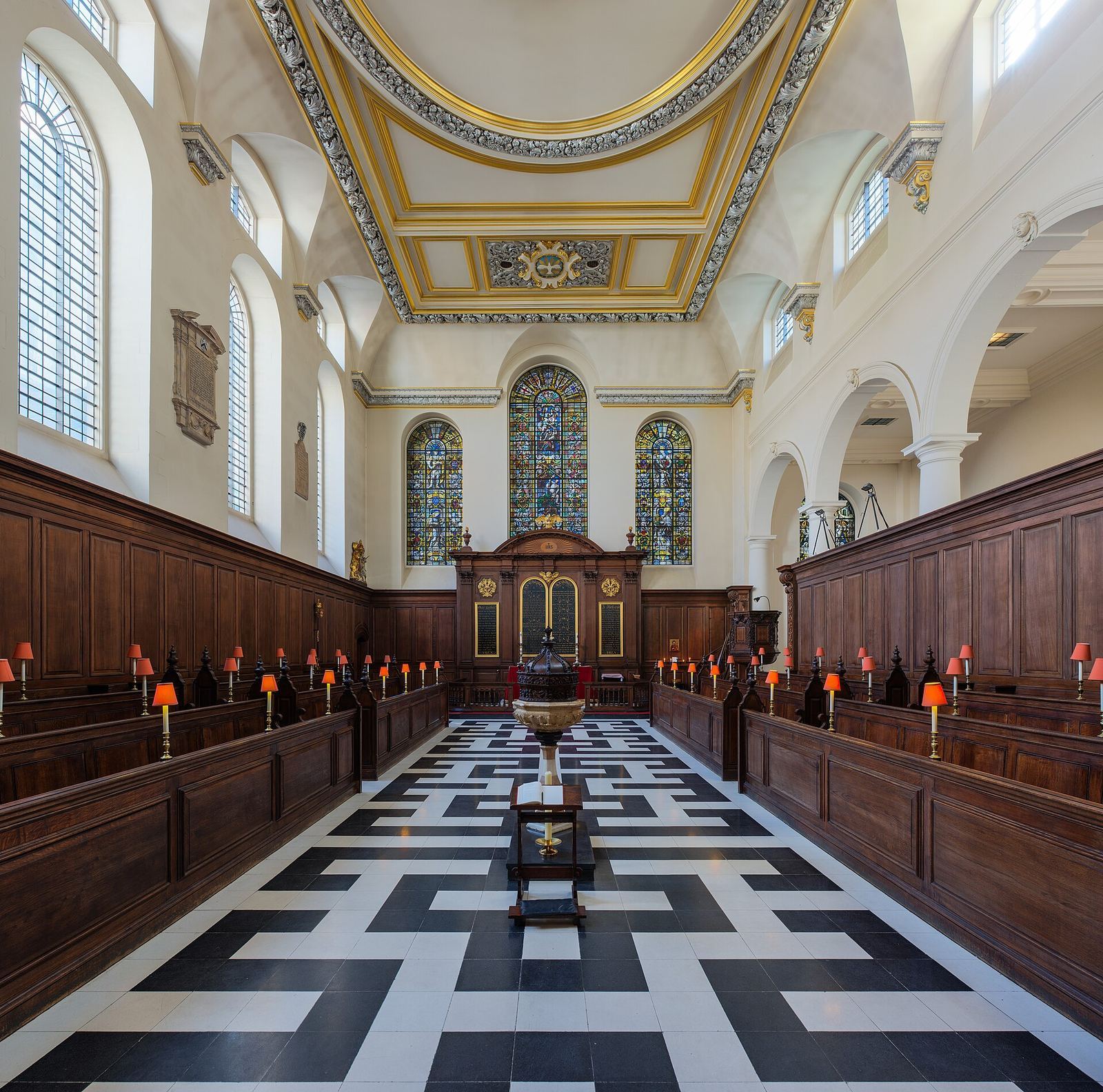
The interior is arranged in the manner of a collegiate chapel, with seating along both sides and a side chapel occupying the former south aisle. The irregular old walls were adjusted so the altar faces squarely into the nave. The pews and floor pattern narrow subtly towards the east, creating a false perspective that makes the church appear longer.
Windows and furnishings
Stained-glass windows by Whitefriars fill the east end with scenes from Saint Vedast’s life. Their opaque glass screens tall buildings behind the church and conceals the wedge-shaped east wall. The south chapel altar has an aumbry, a small cupboard or recess for sacred objects, made by Bernard Merry. The interior also includes a richly carved pulpit from All Hallows Bread Street and a font with its cover from St Anne and St Agnes. Both churches were destroyed City churches.
Organ and bells
The present organ was made by John Harris and John Byfield in 1731 for St Bartholomew-by-the-Exchange. After that church was demolished in 1840, the instrument was installed in its replacement, St Bartholomew, Moor Lane, in 1841. Following that church’s demolition in 1902, it moved to St Alban-the-Martyr, Fulham, in 1904, then to St Vedast in 1959. Noel Mander restored and enlarged it in 1962, reusing the Harris case. Its soundboard, which distributes air to the pipes, is among the oldest still in use in the country. An earlier organ made by Crang and Hancock in 1774 gave way to one by J. W. Walker, installed at the west end in 1853. J. W. Walker & Sons enlarged that instrument and moved it to the east end in 1885; it was destroyed in the 1941 bombing. The present six bells were cast by Mears and Stainbank in 1960 from the cracked earlier set, whose oldest dated bell was made in 1671.
Parish buildings
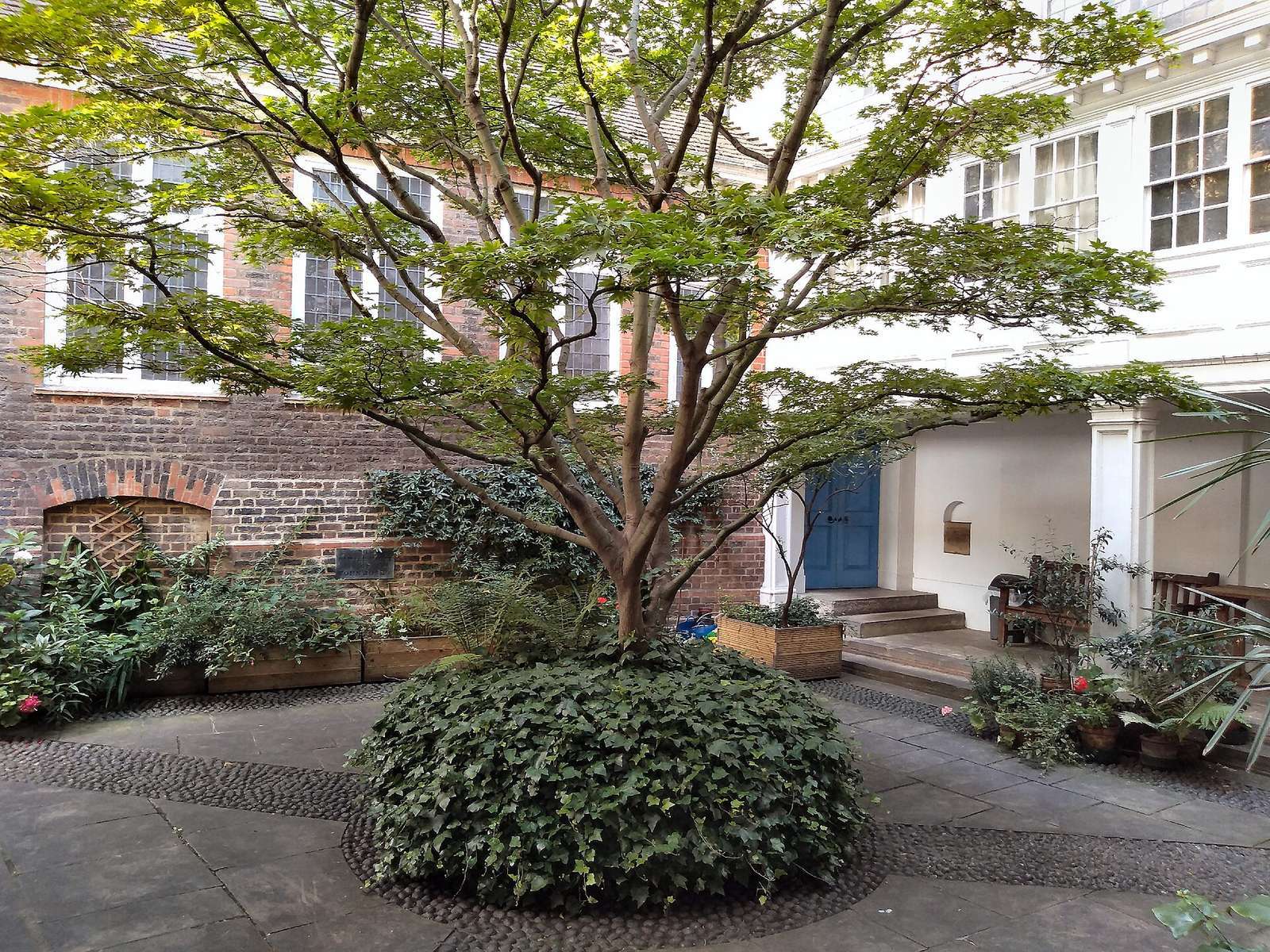
A small Parish Room northeast of the church was built in a 17th-century style, while the rectory beside the church on Foster Lane was designed in a Georgian style; both date to 1959. A first-floor room in the rectory contains a mural by painter Hans Feibusch depicting Jacob and the Angel. In the building’s internal courtyard, a niche holds a carved stone head of Canon Mortlock by sculptor Jacob Epstein.