Madan Kamdev: A Medieval Temple Complex in Assam
Site at a Glance
- Popularity
- High
- Country
- India
- Primary era
- Medieval
- Eras represented
- Medieval
- Civilizations
- Unclassified
- Site type
- Religious
- Remains
- Temple
On this page10 sections
History
Madan Kamdev is a ruined temple complex on Devanagiri Hill in Kamrup, Assam, India, attributed on stylistic grounds to the Pala dynasty, a medieval ruling house of Kamarupa, the historical kingdom in the Assam region. The site is broadly dated to the ninth and tenth centuries, while analysis of its temples and carved images has placed temple construction in the tenth to twelfth centuries. Its architecture is described as Pala and Assamese in style, and its religious association is with the worship of Shiva and Parvati together.
Pala-era setting
The Palas ruled Kamrup from about 990 until the mid-twelfth century. Their first capital was Pragjyotishpura, identified with present-day Guwahati. A copperplate, a record engraved on copper, issued by King Dharmapala late in his reign names Kamrup Nagar as his capital; he may have transferred it there from Pragjyotishpura. North Guwahati is identified with Kamrup Nagar because of its remains of forts, roads, buildings, temples, and inscriptions. Madan Kamdev, about 10 kilometres away, is considered to have belonged to that urban area.
Religious traditions and patronage
The worship of Shiva and Parvati as a pair joined Shaivism, centred on Shiva, with Shaktism, centred on the Goddess or divine feminine power. Their union was understood as a unified reality comparable to Purusha (consciousness or spirit) and Prakriti (nature). The Varman, Salastambha, and Pala dynasties ruled Kamarupa in succession and were associated with Shaiva worship. Copperplate inscriptions show Salastambha and Pala rulers honouring Shiva in paired form. Banamala Varman, who ruled from 835 to 860, and King Indrapala named Kameshvara-Mahagauri, a form of Shiva with Parvati, as their chosen deity.
The Kalika Purana, a Hindu religious text, places Shiva worship in Kamrup before the legendary king Naraka introduced goddess worship at Kamakhya. Later, royal support for Shaktism grew as paired Shaiva-Shakta worship declined. Koch and Ahom rulers patronized temples such as Kamakhya and Hayagriva, and Madan Kamdev may not have received similar later support. Forest eventually covered the area.
The name Madan Kamdev has been linked to a story in which Kamadeva, the Hindu god of love and desire, regained his form at the site after Shiva burned him with anger, then reunited with his wife Rati. This explanation is considered less convincing than the suggestion that the name arose from the temple’s erotic carvings, associated with Madan, another name for Kamadeva.
Rediscovery and excavation
After centuries beneath forest, the site was rediscovered in the twentieth century. A priest placed a canopy over the ruined main temple and resumed worship there. Edward Dalton’s 1855 description of the ruins of 15 temples near Silsako Bridge has been proposed as a possible reference to Madan Kamdev, though the identification is uncertain. The bridge was destroyed in the 1897 Assam earthquake. Tarnikant Sharma supported the identification in articles published in 1943 and 1949.
Excavation did not begin for more than a quarter-century after Sharma’s 1949 article. During that interval, villagers removed some statues, while hunters shifted others. Assam’s Archaeological Directorate took responsibility for the area in 1977, declared it protected, and began excavations under Pradeep Sharma. Further excavation followed in 1982.
Remains
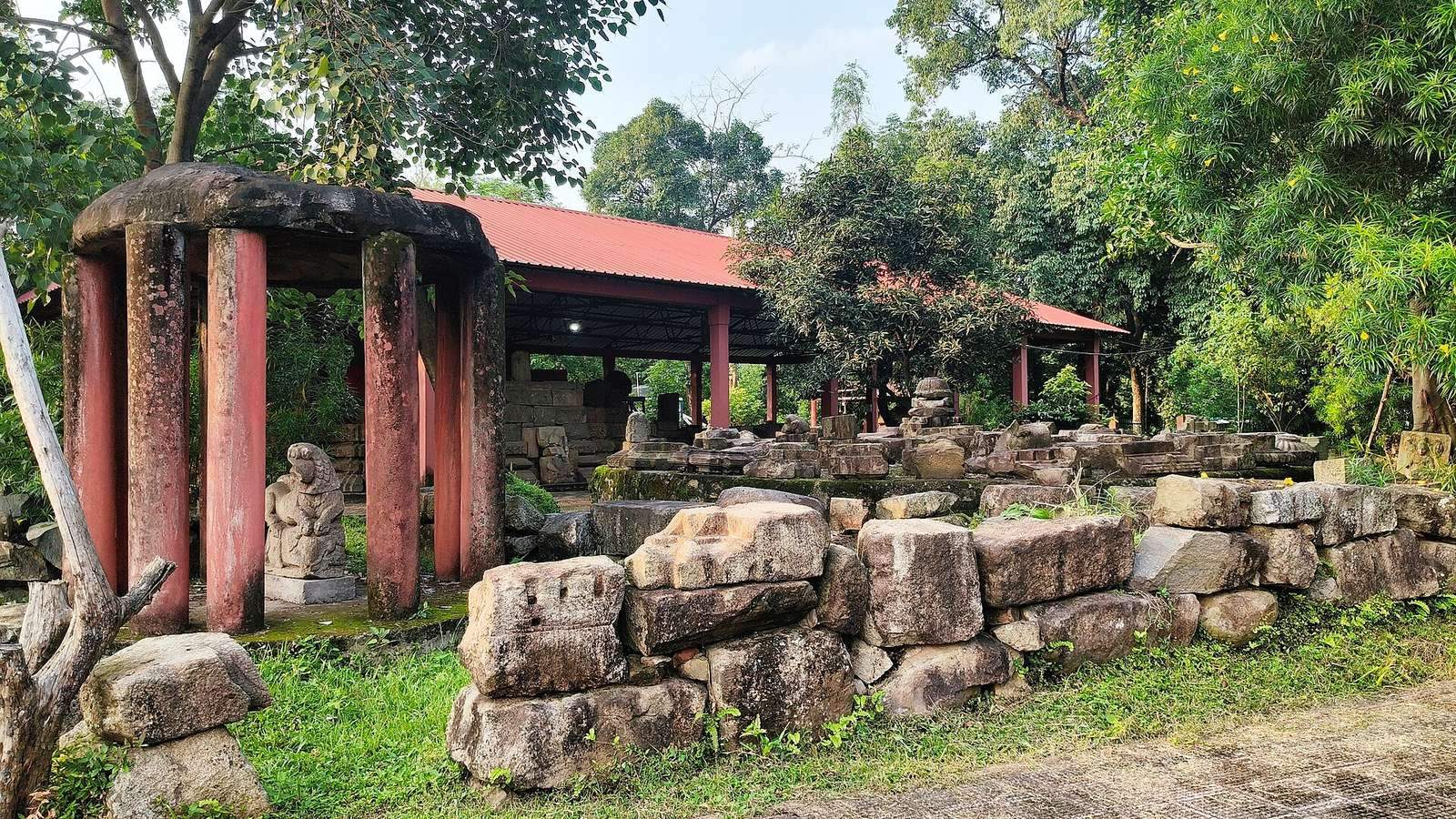
The complex combines Pala and Assamese architectural forms, with stone temples and sculptures spread across roughly 500 metres. Its remains occupy Madan Kamdev Hill and nearby Narasingha Hill, amid a landscape of forest, marshland, river, and surrounding hills.
Layout and landscape
The site lies about 3 kilometres from Baihata Chariali. Most structures stand on Madan Kamdev Hill, with additional remains on Narasingha Hill. The Madankuri River runs below the site to its east and north, while the Gopeshwar hill chain extends from the north toward the west. Natuar Nacha and Sangsari lie to the east, and marshy ground lies below the hill. A 1977 description noted extensive forest around the hill and wildlife including snakes, scorpions, deer, tigers, and birds.
Temple structures
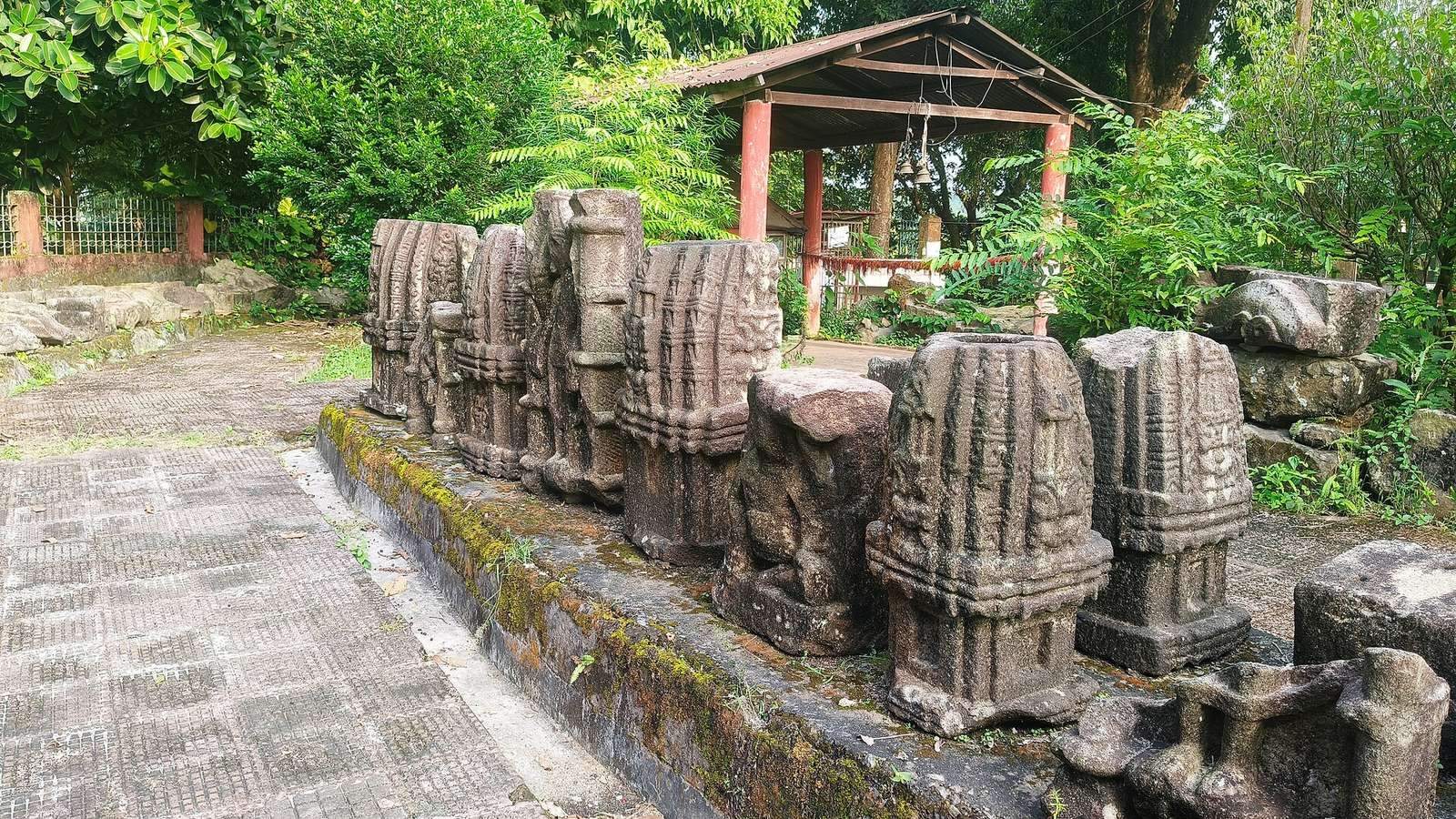
The main temple is a ruined stone building surrounded by remains of larger and smaller temples. Excavations uncovered more than 20 masonry structures, including the remains of 12 temples in addition to the main temple. The complex also contains numerous stone sculptures, many fragmentary, and terracotta figures made from fired clay.
Sculptural remains
Temple carvings
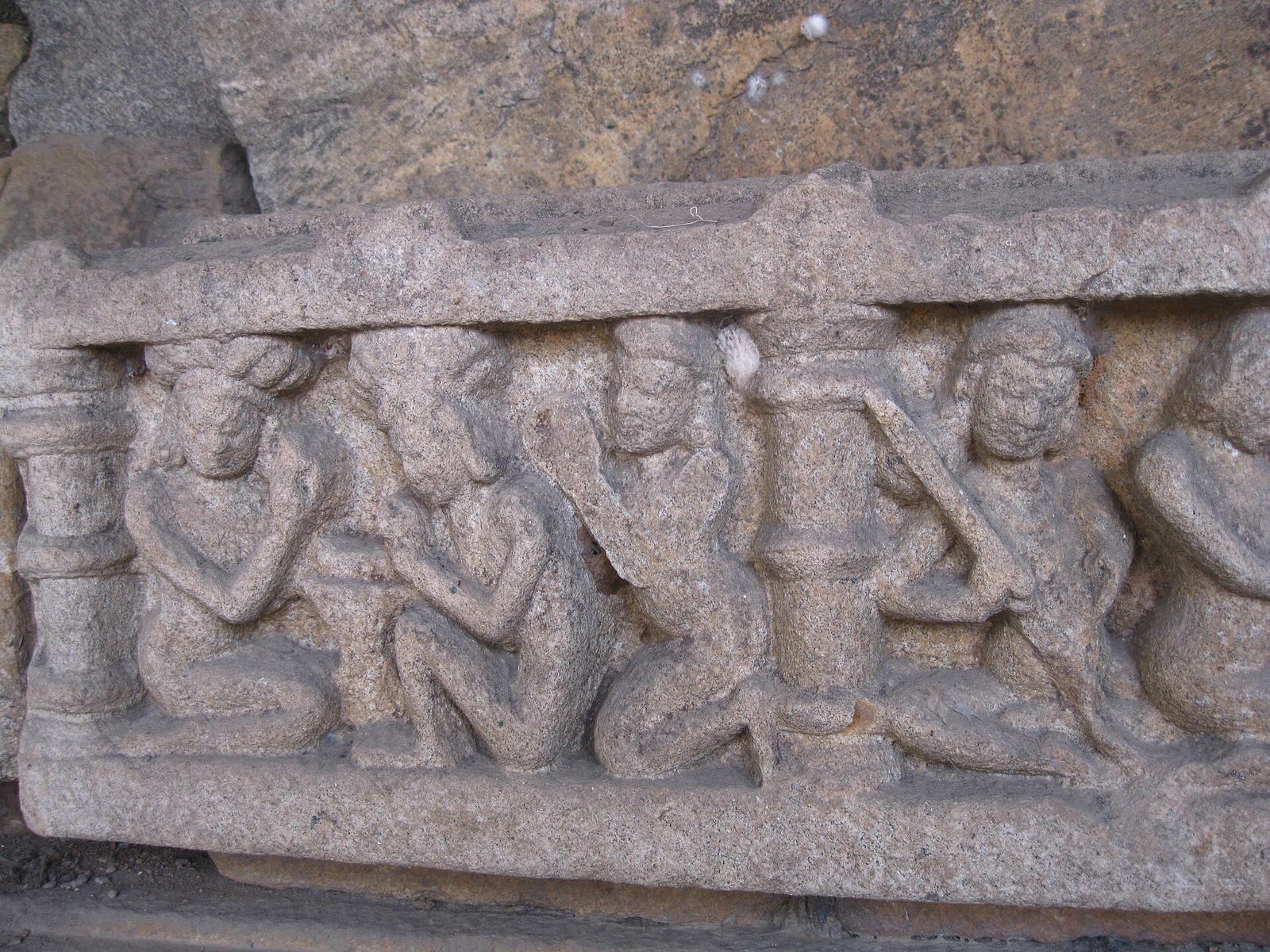
Temple walls carry carvings of couples in erotic poses, a feature that gave Madan Kamdev the nickname the Khajuraho of Assam, recalling the medieval temple complex in central India known for sculptural decoration. Other carved subjects include fighting lions, animals in sexual union, and women in scant clothing. Embracing images of Shiva and Parvati appear on stone from medieval temples.
Stone figures and religious images
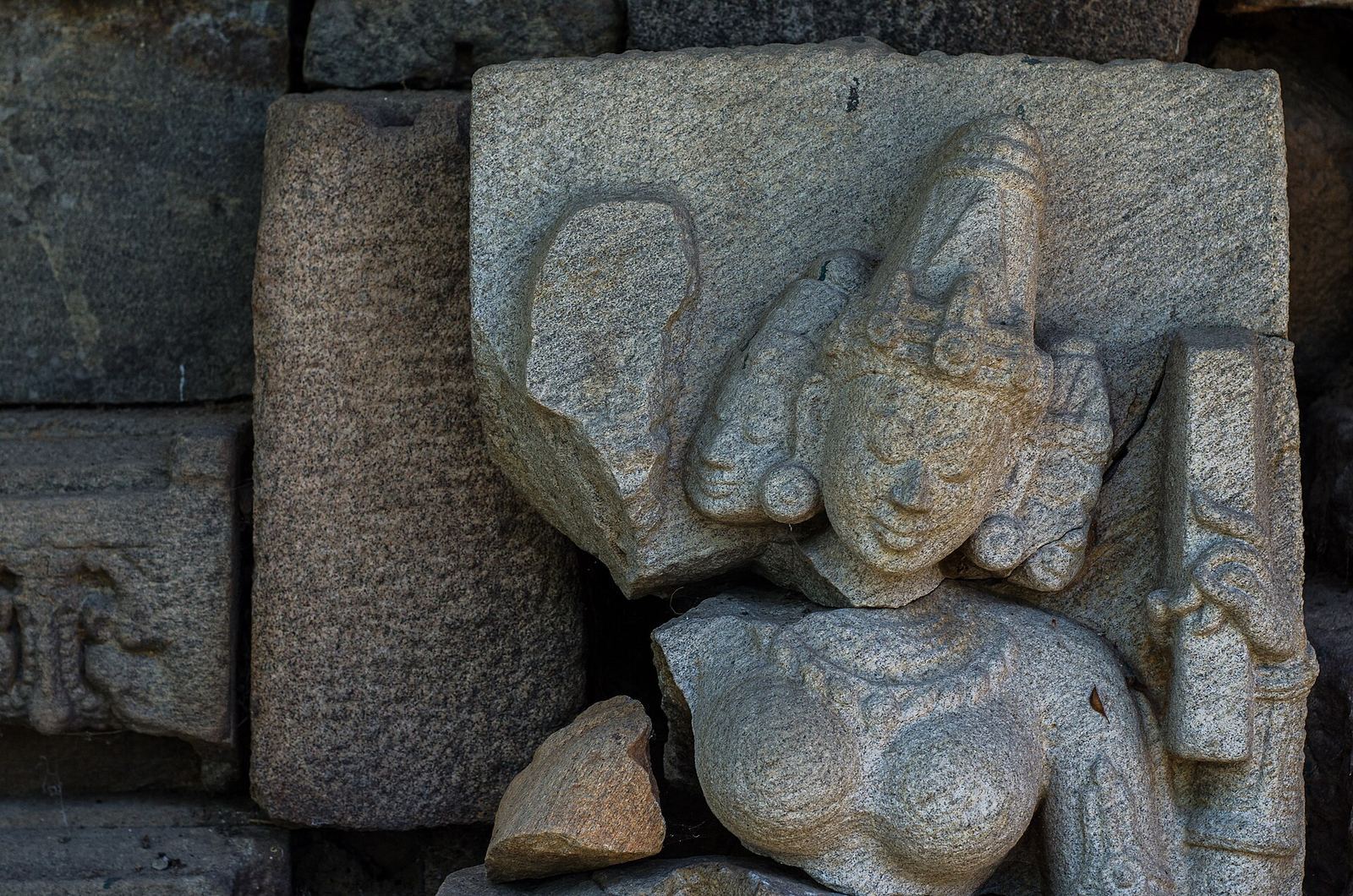
The sculptures include bulls, yoni emblems associated with the feminine principle, and Shiva lingams, ritual emblems of Shiva. Other figures represent six-headed Bhairava, a fierce form of Shiva, four-headed Shiva, six-headed Vishnu, the Sun, Ganesha, and Saraswati. Images also include Vidyadharas (supernatural beings), apsaras (celestial female beings), and Kalpavriksha (a mythical wish-granting tree). A lion sculpture is dated to the ninth or tenth century.