St. Peter and St. Paul’s Church, Mansfield: A Parish Church with Norman Origins
Site at a Glance
- Rating
- 4.3
- Popularity
- Medium
- Country
- United Kingdom
- Primary era
- Medieval
- Eras represented
- Medieval, Early Modern
- Civilizations
- English
- Site type
- Religious
- Remains
- Church
On this page14 sections
History
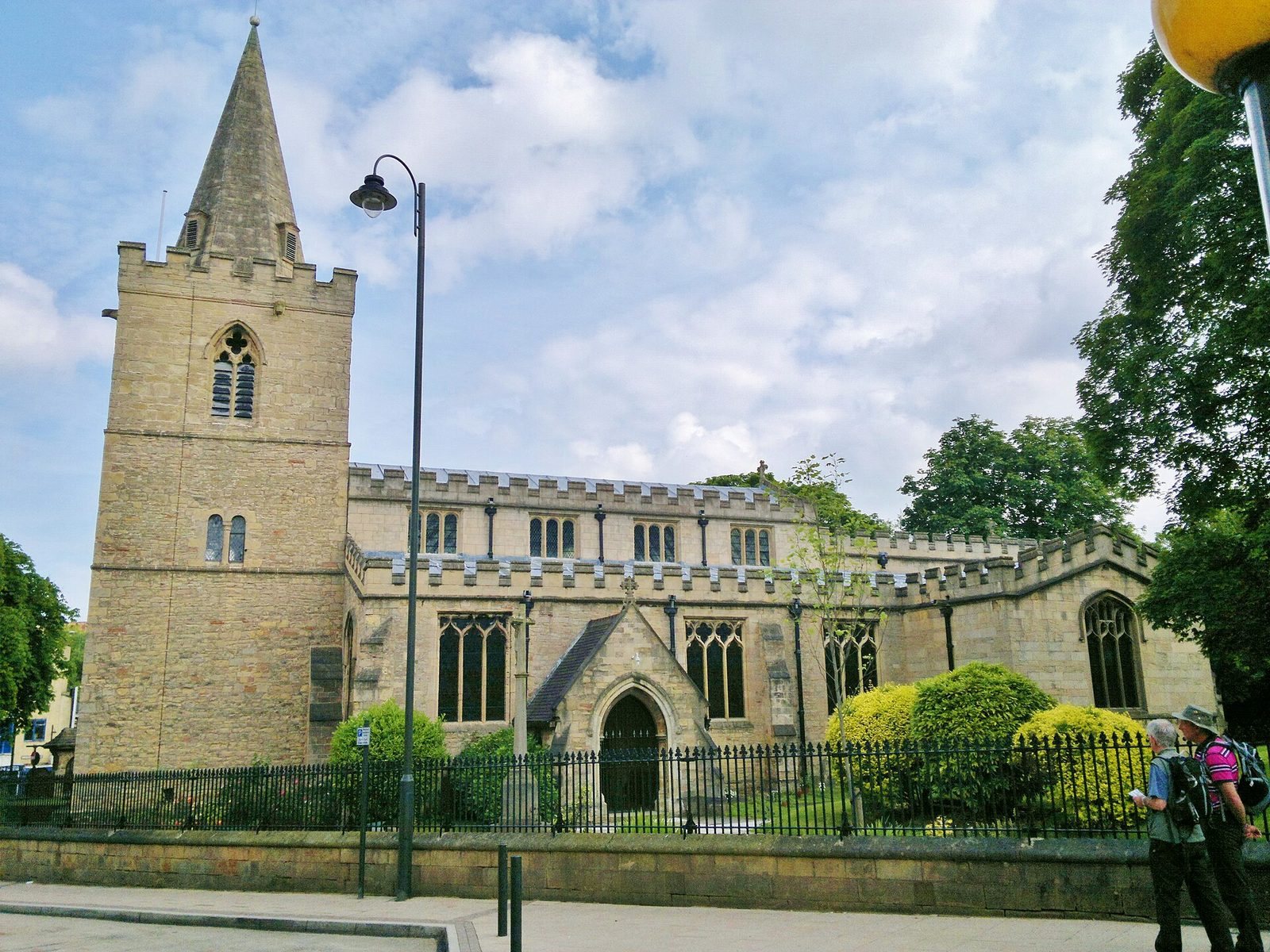
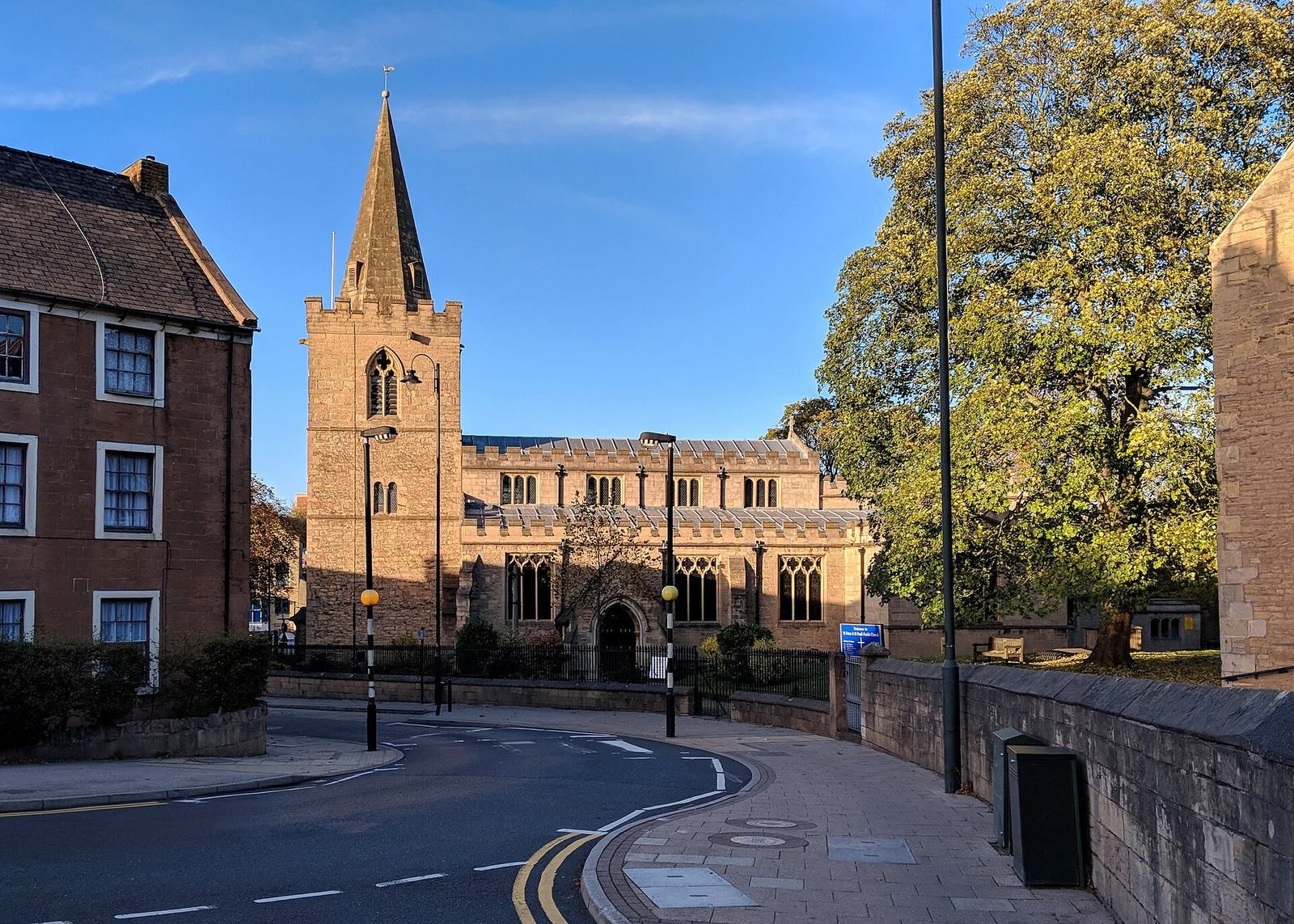
St. Peter and St. Paul’s Church stands in central Mansfield, Nottinghamshire, United Kingdom, and serves as a Church of England parish church. The Domesday Book, an 11th-century survey of English landholding and resources, names the church in 1086, and part of the building preserves Norman work from the period of Norman rule after 1066. The church belongs to the Diocese of Southwell and Nottingham, within the Province of York, and follows the Broad Church tradition, which accommodates a wide range of Anglican theological views.
Early church and medieval rebuilding
In 1096, William II, king of England, transferred the church to Robert Bloet, Bishop of Lincoln. A separate foundation date of 1101 has been claimed, but the Domesday entry establishes that a church was already present by 1086. A royal subsidy, a tax granted to the Crown, recorded in 1428 that the church remained attached to the Bishop of Lincoln.
During the 12th century, a new stone nave, the main body of a church, and chancel, the area around the altar, were built. The building was enlarged later in the century as Mansfield’s population grew. A 13th-century phase added an aisle, a side division alongside the nave, and two altars, tables used in Christian worship. The tower was raised during the 14th century. A fire in 1304 almost entirely destroyed the church, and restoration had brought it back by 1420.
Land grants and religious memory
In 1521, landowner Dame Cecilly Flogan granted land to the church for 99 years. A charter issued in 1557 by Mary I and Philip II of Spain authorized the church to hold land.
In 1647, George Fox, an English religious leader who later helped found the Quaker movement, wrote of receiving a revelation while walking beside the church. He described it as concerning people trampling on the life of Christ.
Anniversary and heritage status
The church celebrated its 900th anniversary in 2013, in connection with a claim that its original tower had been completed by December 1113. The church received Grade I listing in 1955, a status for buildings of exceptional interest. Its churchyard wall and gates, and the war memorial and railings south of the church, are Grade II listed, a category for buildings of special interest.
Remains
The surviving building combines Norman fabric with a stone nave and chancel, an aisle alongside the nave, and a tower. Its interior and grounds also contain a memorial plaque, bells, an organ, and features associated with the churchyard.
Church structure
Nave, chancel, and aisle
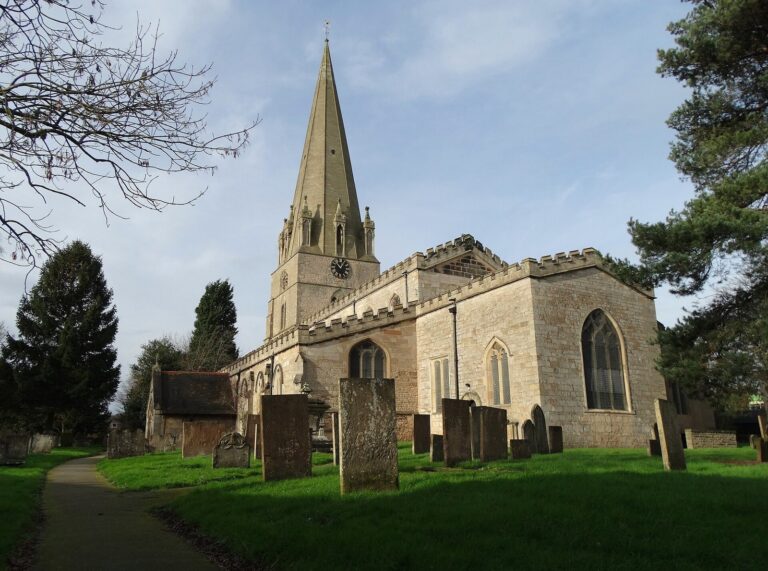
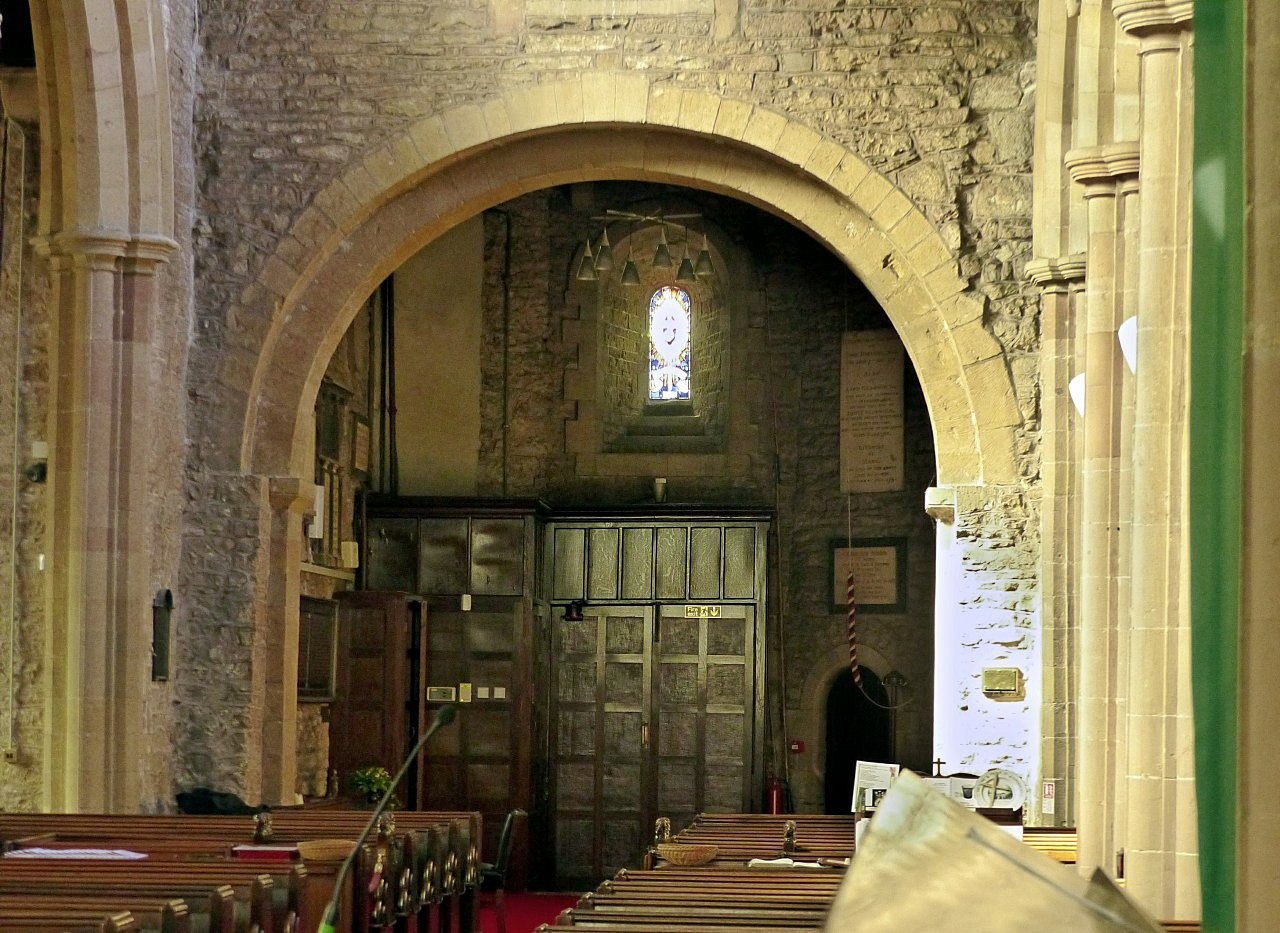
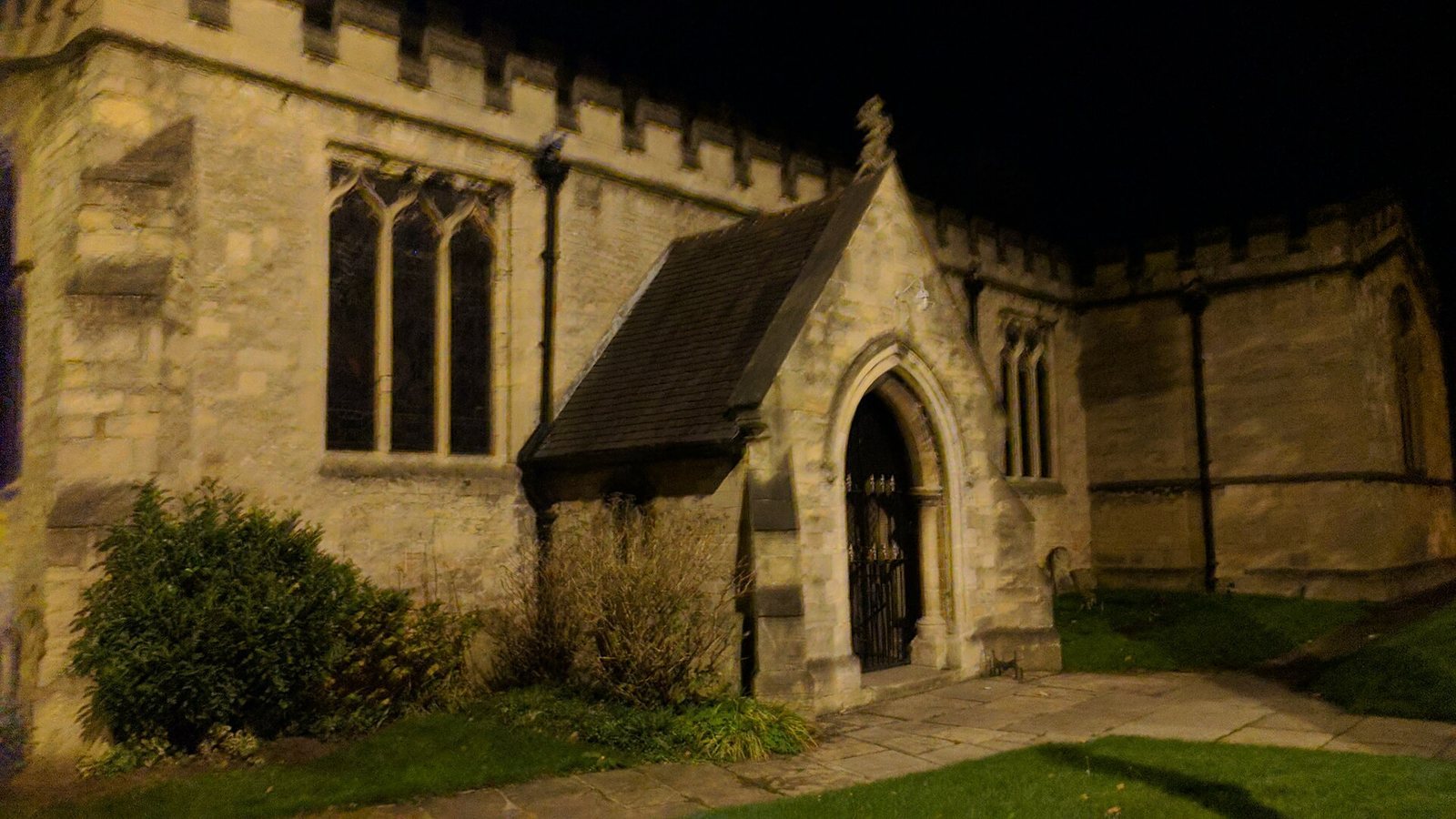
Part of the church is Norman. The stone nave and chancel form its principal spaces, with the aisle running alongside the nave. These elements preserve the building’s medieval architectural development.
Tower and steeple
The date of the steeple is disputed: it has been attributed to 1583, while 1666 has also been proposed. The tower contains eight bells. Their dating is unclear, with 1603 given as a date even though they were cast in 1948.
Interior memorials and music
Maymott Brass
The north aisle contains the Maymott Brass, a metal memorial plaque dated 1714 that commemorates Queen Anne.
Organ
The church organ has three manuals, or hand-played keyboards. It was acquired from Clare College, Cambridge, in 1970, then substantially altered and enlarged by London organ builder Noel Mander before installation in the south chapel in 1971. Further work and restoration followed, and the instrument was reconsecrated at the end of 2000.
Churchyard features
Boundary wall and gates
A boundary wall and gates enclose the churchyard.
War memorial and railings
A war memorial and its railings stand south of the church.