St Mary’s Church, Edwinstowe: A Medieval Parish Church in England


Site at a Glance
- Rating
- 4.8
- Popularity
- Low
- Country
- United Kingdom
- Primary era
- Medieval
- External website
- Open
- Eras represented
- Medieval
- Civilizations
- English
- Site type
- Religious
- Remains
- Church
On this page4 sections
History
Early foundations and medieval development
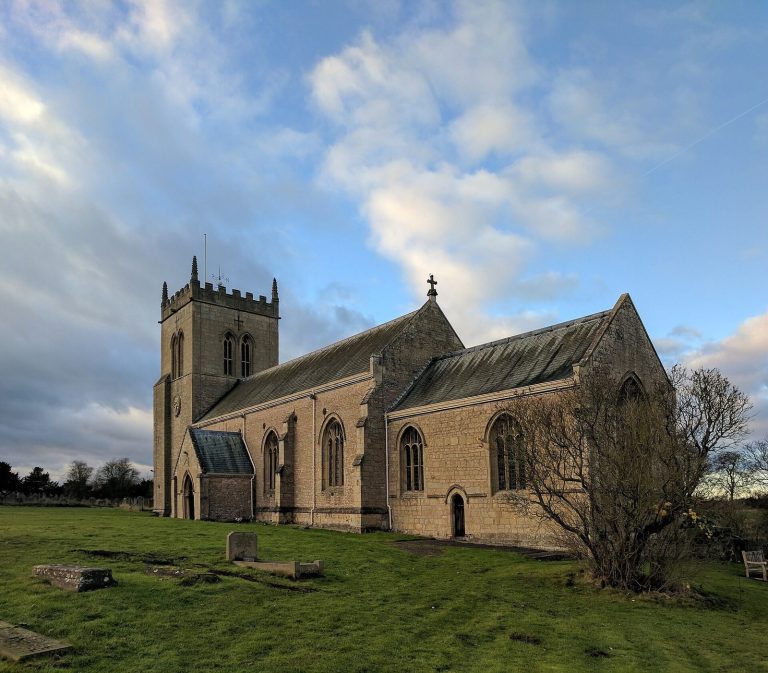
St Mary’s Church is a Church of England parish church in Edwinstowe, United Kingdom, dating from around 1175. A small wooden chapel was reportedly established by 633 after Edwin of Northumbria, a seventh-century king later venerated as a saint, was killed at the Battle of Hatfield Chase and buried in the forest before his companions could carry his body to York. This chapel is regarded as the predecessor of the present church, and the village’s name is associated with King Edwin.
The earlier wooden church was rebuilt during the reign of Henry II, the English king who ruled from 1154 to 1189. The church was recorded in the Domesday Book of 1086, the extensive survey of landholding and resources commissioned by William the Conqueror. William II, who ruled England from 1087 to 1100, later gave it to Lincoln Cathedral.
Later history and tradition
St Mary’s Church was restored in 1869 and again in 1890. It remains within the Church of England’s Diocese of Southwell and Nottingham, in the Archdeaconry of Newark and the Deanery of Mansfield, and serves the parish of Edwinstowe.
The church is associated with a local tradition that Robin Hood and Maid Marian were married there. Robin Hood and Maid Marian are legendary medieval English figures traditionally connected with Sherwood Forest, so the reported marriage belongs to local tradition rather than established history. St Mary’s Church was designated a Grade I listed building on 11 August 1961. Its boundary wall, gate, steps, and overthrow were separately listed at Grade II on 20 January 1986.
Remains
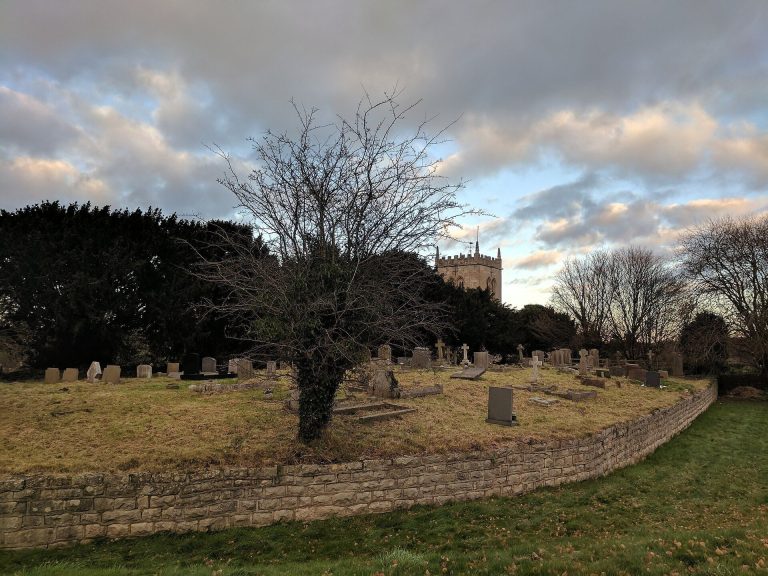
The church complex includes the parish church together with a boundary wall, gate, steps, and an overthrow, the structure spanning the gateway. These external features have their own Grade II listing, while the church itself has Grade I status.
The church contains an organ made by Forster and Andrews in 1862, providing a surviving material link with the building’s nineteenth-century history and its later restoration phases.