St. Mary’s Church in Kilkenny: Medieval Parish Church and Museum
Site at a Glance
- Rating
- 5
- Popularity
- Very Low
- Country
- Ireland
- Primary era
- Medieval
- External website
- Open
- Eras represented
- Medieval, Early Modern
- Civilizations
- English, Norman
- Site type
- Religious
- Remains
- Church
On this page11 sections
History
Foundation and medieval civic life
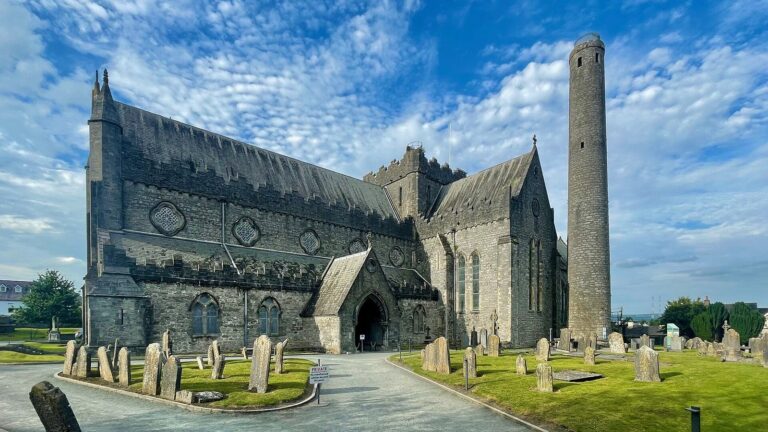
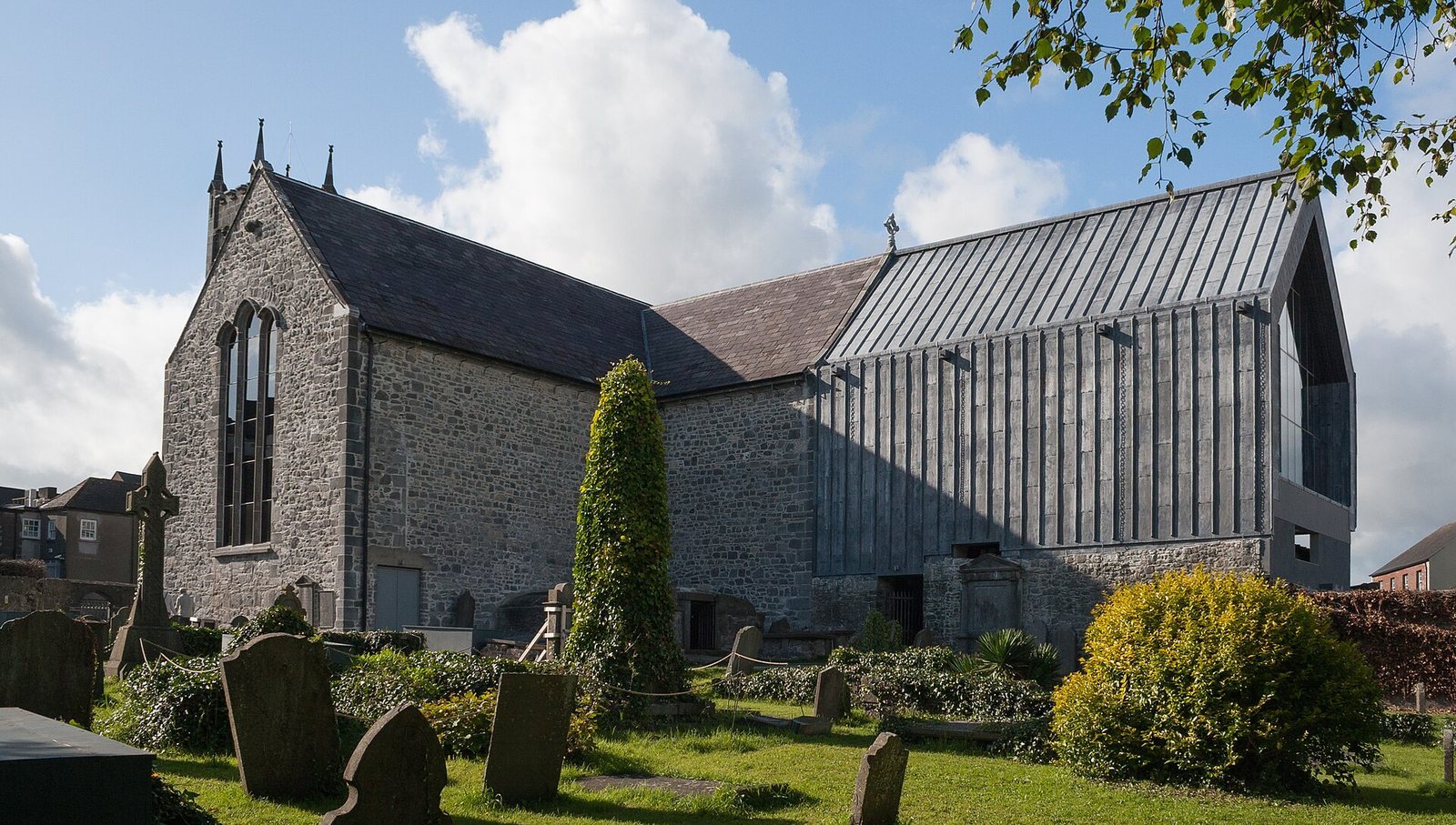
St. Mary’s Church is a medieval parish church in Kilkenny, Ireland, built in 1202 under Norman rule and associated with Gothic and Gothic Revival architecture. The Normans had established rule and settlements in parts of Ireland from the late twelfth century. St. Mary’s served Kilkenny’s Norman High Town.
The parish was formed from parts of those of St. Patrick’s and St. Canice’s. It first extended as far as St. James’s Street, then reached the Breagagh River between 1207 and 1232. The Bishop of Ossory provided land for the enlargement in exchange for land at Aghaboe, in County Laois.
By 1205, the church was hosting ecclesiastical court proceedings, tribunals concerned with church law. Kilkenny’s town council also met there and held court sessions. In the sixteenth century, the building hosted town plays. Merchants supported its upkeep through annual payments of four pence from each hall and a halfpenny from each town stall or shop. Burial inside the church was reserved for the wealthiest burgesses, members of the town’s privileged civic class.
Religious change and contested worship
After the Reformation, a period of religious change that spread Protestant churches across western Europe, St. Mary’s fell into disrepair and became a Protestant place of worship. In 1603 it returned to Catholic use, but later again served the Church of Ireland, an Anglican Protestant church. During the Confederation of Kilkenny, an Irish Catholic political and military organization active from 1642 to 1649, the church was once more in Catholic hands. Giovanni Battista Rinuccini, the papal representative in Ireland, celebrated High Mass there, a solemn form of Catholic worship.
Kilkenny’s Protestant population fell from less than 20 percent in 1731 to 5 percent by 1800. The decline led to the later construction of Catholic churches using established parish names, including St. Canice’s Church, St. John’s Church, and St. Mary’s Cathedral.
Alteration and new uses
Between 1819 and 1826, Kilkenny-born architect William Robertson carried out work on the tower and other parts of the church. The building’s tall spire also served as a principal reference point when the Ordnance Survey, Ireland’s national mapping organization, mapped the city and county.
St. Mary’s was deconsecrated in 1957 and adapted for use as a parish hall, a badminton hall, and a Freemasons’ lodge. Kilkenny County Council bought the property in 2009, and the building has housed the Medieval Mile Museum since 2017.
Remains
The limestone church follows a plan with a nave, the main space for the congregation, side aisles, transepts forming the cross-arms, and a chancel around the altar. Its architecture is described as Gothic and Gothic Revival.
Architectural features
Rothe chantry chapel
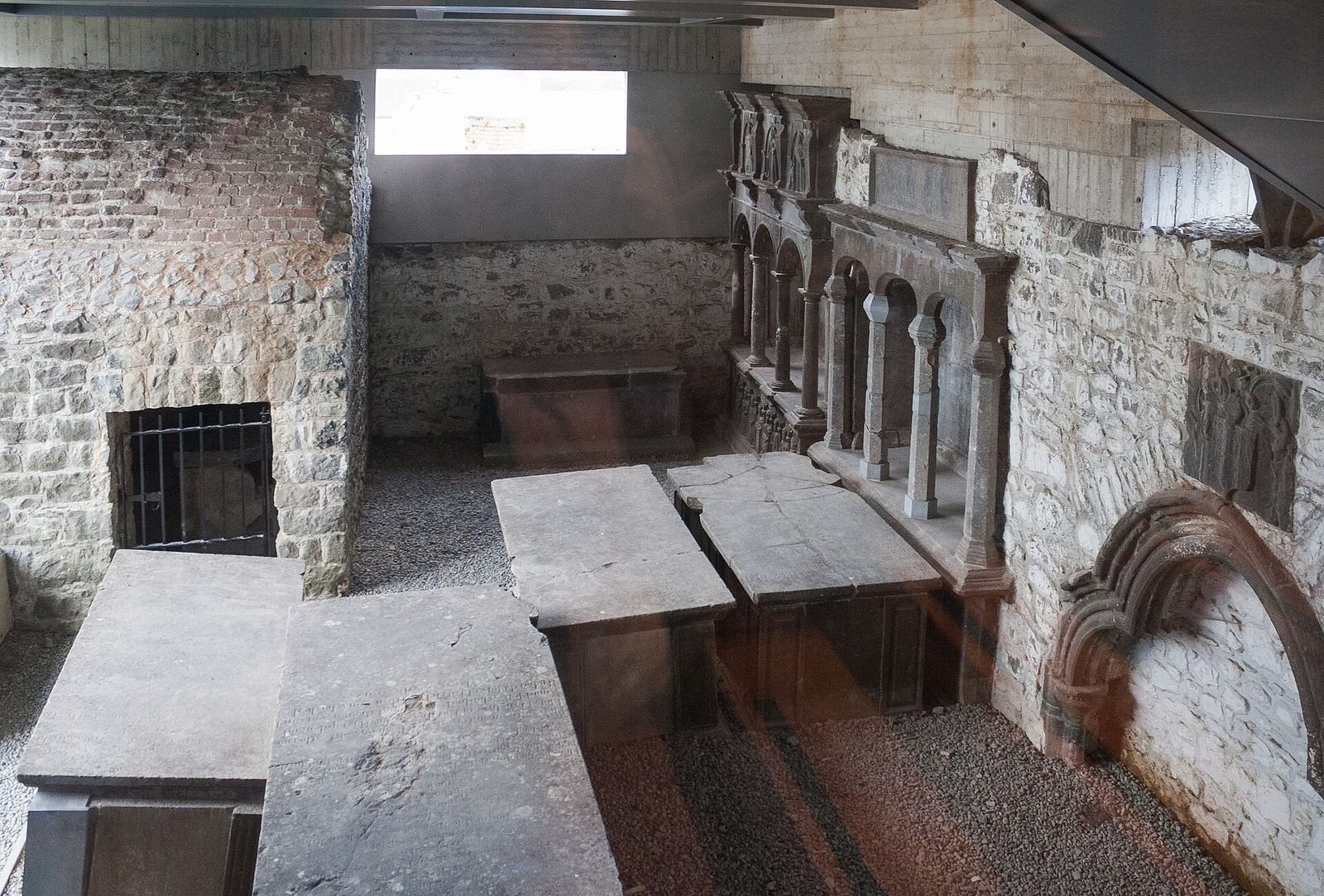
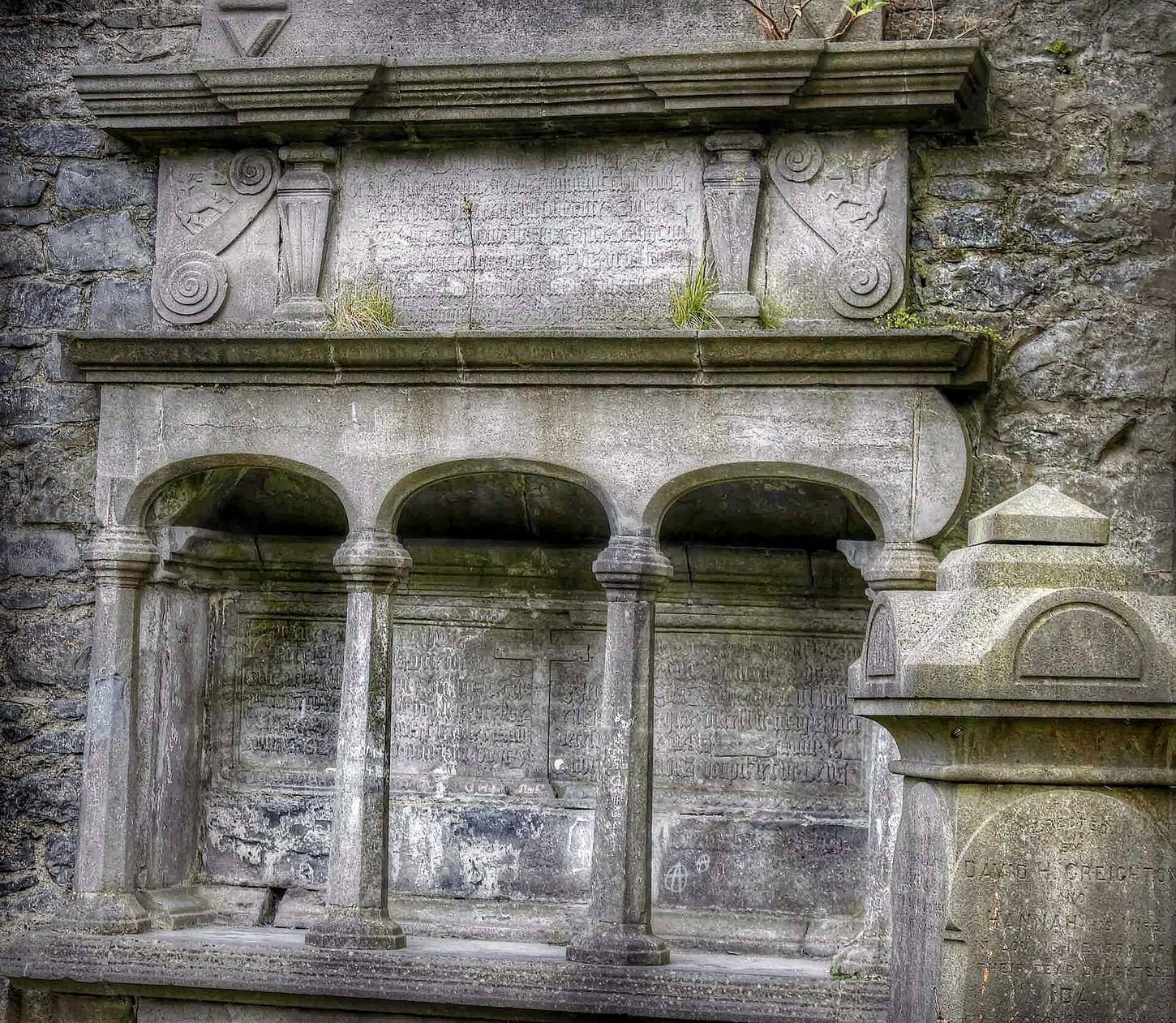
Around 1560, the wealthy Rothe family built a chapel in the north transept, dedicated to the Archangel Michael. Known as a chantry chapel, it was associated with prayers and services for the dead. Catholic worshippers continued to use it after the main church became Protestant. The chapel contains burials of members of the families of John Rothe and Rose Archer, as well as other Catholic merchants.
Tower and survey evidence
The church tower was added in 1343, and Robertson later worked on it. The bell tower is thought to have been a separate building; a concrete platform in the churchyard indicates its position. At the entrance, a surviving benchmark, a fixed point used for survey measurements, provides physical evidence of the church’s use as a surveying reference.
Burials and memorials
Gateway burials
An archaeological investigation in 2016 uncovered four female skeletons in the gateway area. Three have been displayed in the museum since 2019.
Robertson family grave and memorial
Robertson is buried in the graveyard with members of his family. A plaque inside the church commemorates his nephew, who was a founding member of the Kilkenny Archaeological Society.