Maudlin Castle: A Hospital-Associated Tower House in Kilkenny


Site at a Glance
- Rating
- 4
- Popularity
- Very Low
- Country
- Ireland
- Primary era
- Early Modern
- External website
- Open
- Eras represented
- Early Modern
- Civilizations
- Norman
- Site type
- Military
- Remains
- Castle
On this page6 sections
History
Maudlin Castle is a medieval hospital-associated tower house in Kilkenny, Ireland, built in the Norman style during the early sixteenth century. It formed part of the Hospital of St. Mary Magdalene, an institution recognized as one of the principal leprosy hospitals in medieval Ireland, and is now recognized as a National Monument of Ireland.
The Hospital of St. Mary Magdalene
The Hospital of St. Mary Magdalene had been established by 1327, although its exact foundation date is unknown. Its origins have been attributed, possibly, to William Marshal, 1st Earl of Pembroke, an influential Anglo-Norman nobleman of the late twelfth and early thirteenth centuries. Dedicated to Mary Magdalene, a central Christian figure traditionally associated with repentance, the hospital stood outside medieval Kilkenny and maintained a long association with St. John’s Priory, a religious house in the city. Medieval institutions for people affected by leprosy were often placed under her dedication.
The hospital closed during the Dissolution of the Monasteries, the sixteenth-century suppression and confiscation of religious houses under the English Crown. Maudlin Castle was later described as a small, tile-roofed castle intended to defend leprosy patients and suburban inhabitants. By that time, however, it stood empty and was considered to have no value. A reference from 1628 to a “town ditch” near St. Mary’s Church suggests that a moat may have extended beyond the hospital gate, although this remains uncertain. Charles I, king of England, Scotland, and Ireland from 1625 to 1649, later granted the hospital to the Kilkenny Corporation, the city’s municipal governing body.
Later Institutional Use
In a later phase, the hospital served as an institution for sick and infirm people. Its residents included wealthy members of the Rothes, Langton, and Shee families. Excavations along the adjoining street also provide evidence of the hospital community’s diet, including beef, mutton, bacon or ham, and wildfowl.
Remains
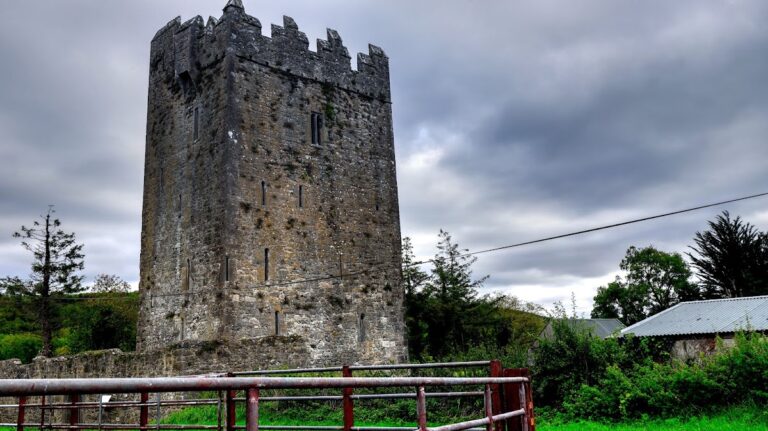
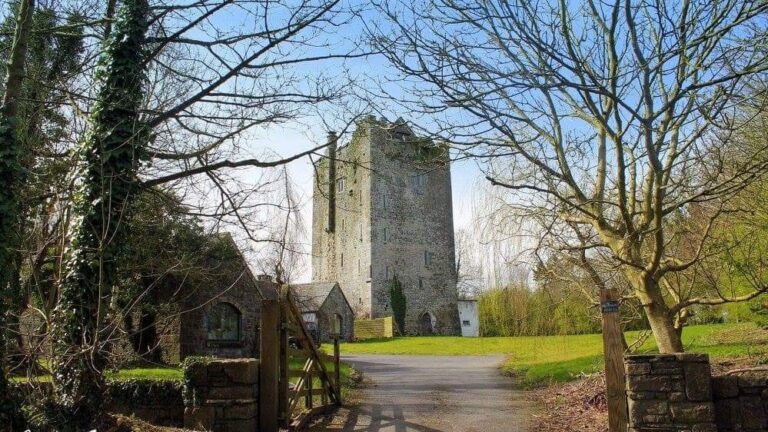
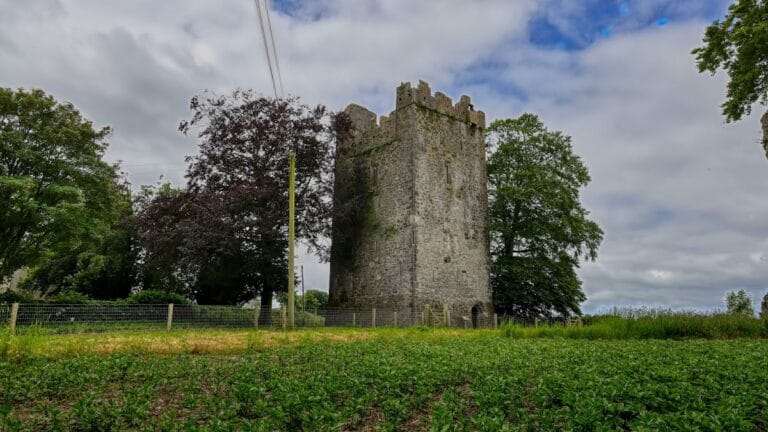
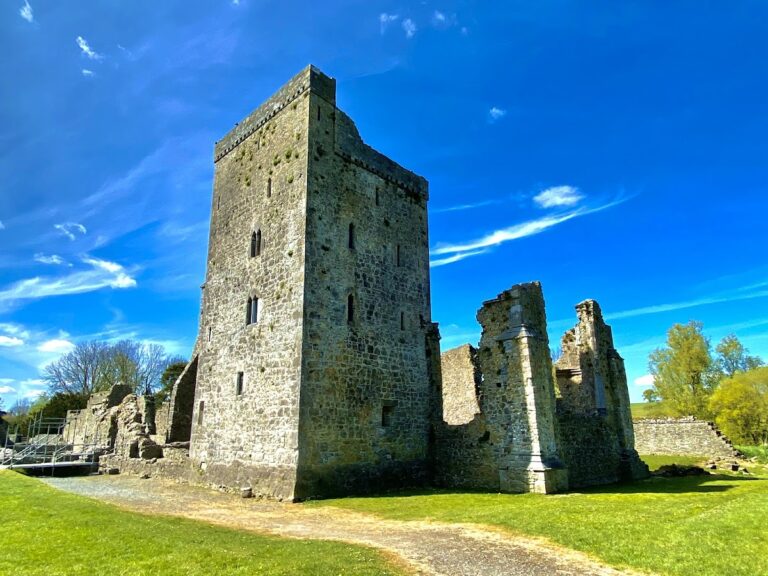
Maudlin Castle survives as a tall, vertically organized stone tower on Maudlin Street, just north of the River Nore and east of Kilkenny College. The tower was built from rubble stone and rises approximately 25 metres, or 82 feet, across four storeys. Its form reflects the defensive character of a Tower House, a fortified stone building arranged vertically and usually provided with a stair turret and battlements.
The Tower House
The base of the tower has strongly battered walls, meaning that they slope inward as they rise. A stair turret projects above the main tower and reaches the battlements. Together, these features give the surviving structure its distinctive fortified profile and provided vertical circulation within the building. The tower belongs to the early sixteenth-century phase of the hospital complex.
The Hospital Enclosure
The tower stood within a larger hospital complex enclosed by high walls. This enclosure included a defended gatehouse, a chapel, a graveyard, and approximately 50 acres of farmland. A possible moat or ditch lay beyond the gatehouse, although its existence is not certain. Archaeological excavations beside the street have also recovered evidence of food consumed by the hospital community, linking the surviving tower with the wider institutional settlement that once surrounded it.