Alt Reddevitz Megalithic Tomb: A Neolithic Burial Site on Rügen
Site at a Glance
- Popularity
- Low
- Country
- Germany
- Primary era
- Stone Age
- Eras represented
- Stone Age
- Civilizations
- Unclassified
- Site type
- Burial
- Remains
- Tomb
On this page7 sections
History
Construction and burial use
The Alt Reddevitz Megalithic Tomb is a Neolithic burial site near Göhren on the island of Rügen, Germany. It was built between 3500 and 2800 BC and is associated with the Funnelbeaker culture, a later Stone Age culture named for its characteristic funnel-shaped pottery. The tomb is also evidence that the Baaber Heide spit had formed in this area more than 4,000 years ago.
Burials included both cremations, represented by urns, and inhumations. Later burials were added, and an estimated 30 to 40 people were laid to rest here over an extended period around 4,000 years ago.
Rediscovery and investigation
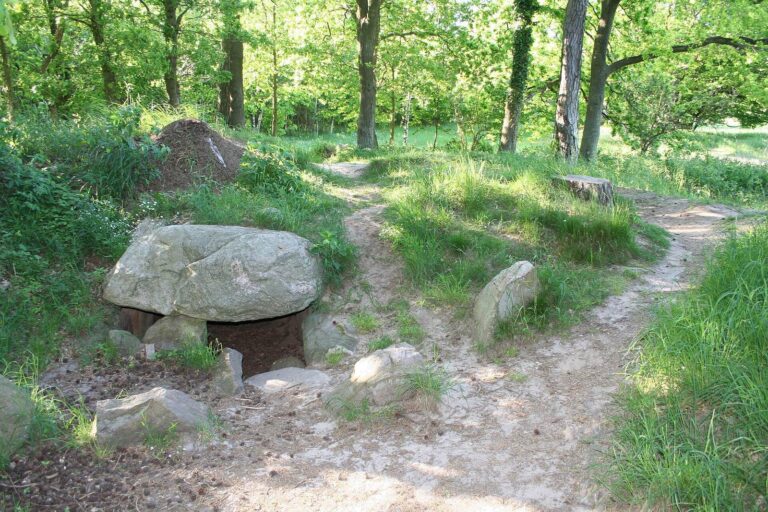
After hearing a local legend, Fritz Worm, a teacher and poet from Alt Reddevitz, began looking for the tomb in 1920. He located it in 1922, covered by shrubs and moss beside the forest path between Alt Reddevitz and Göhren. Prehistorian Franz Klinghardt investigated the site from 1922 to 1924, with archaeologist Armin von Gerkan of the University of Greifswald taking part. Anthropologist Theodor Mollison examined the human remains. In 1960, the university investigated the tomb again and opened its burial chamber.
Remains
Enclosure and burial chamber
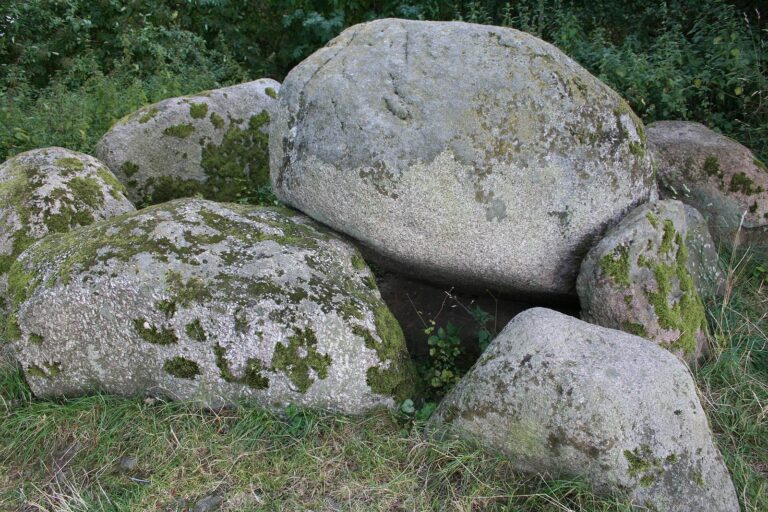
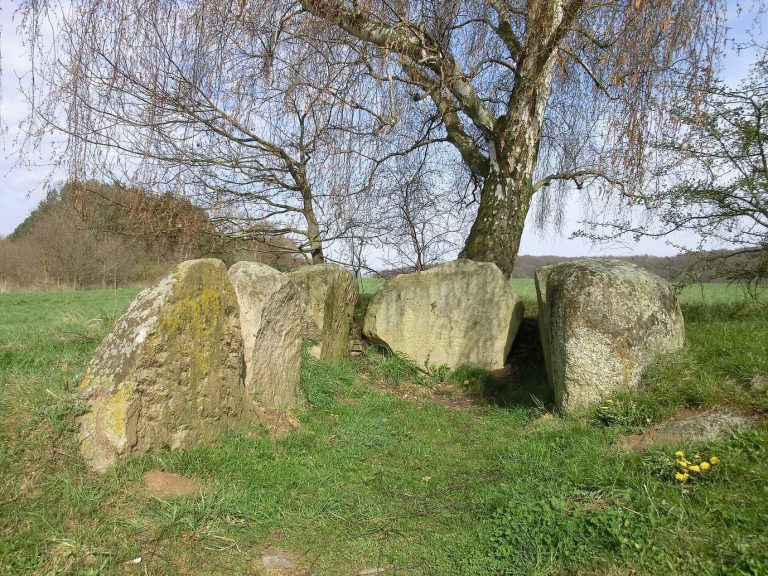
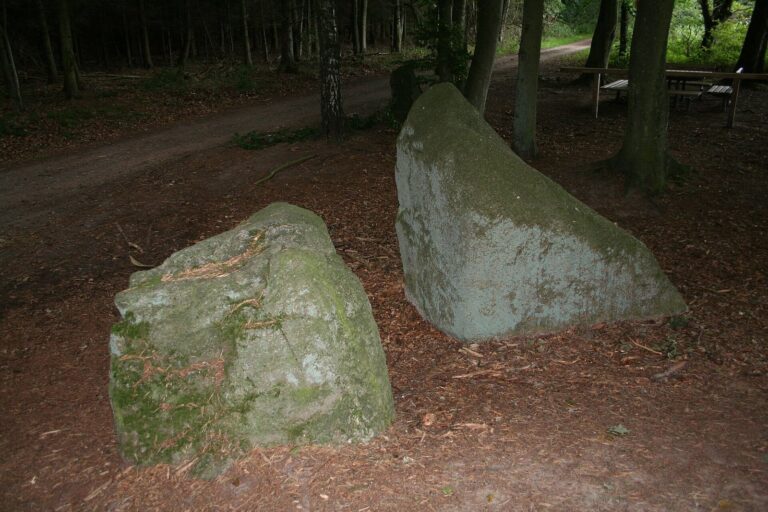
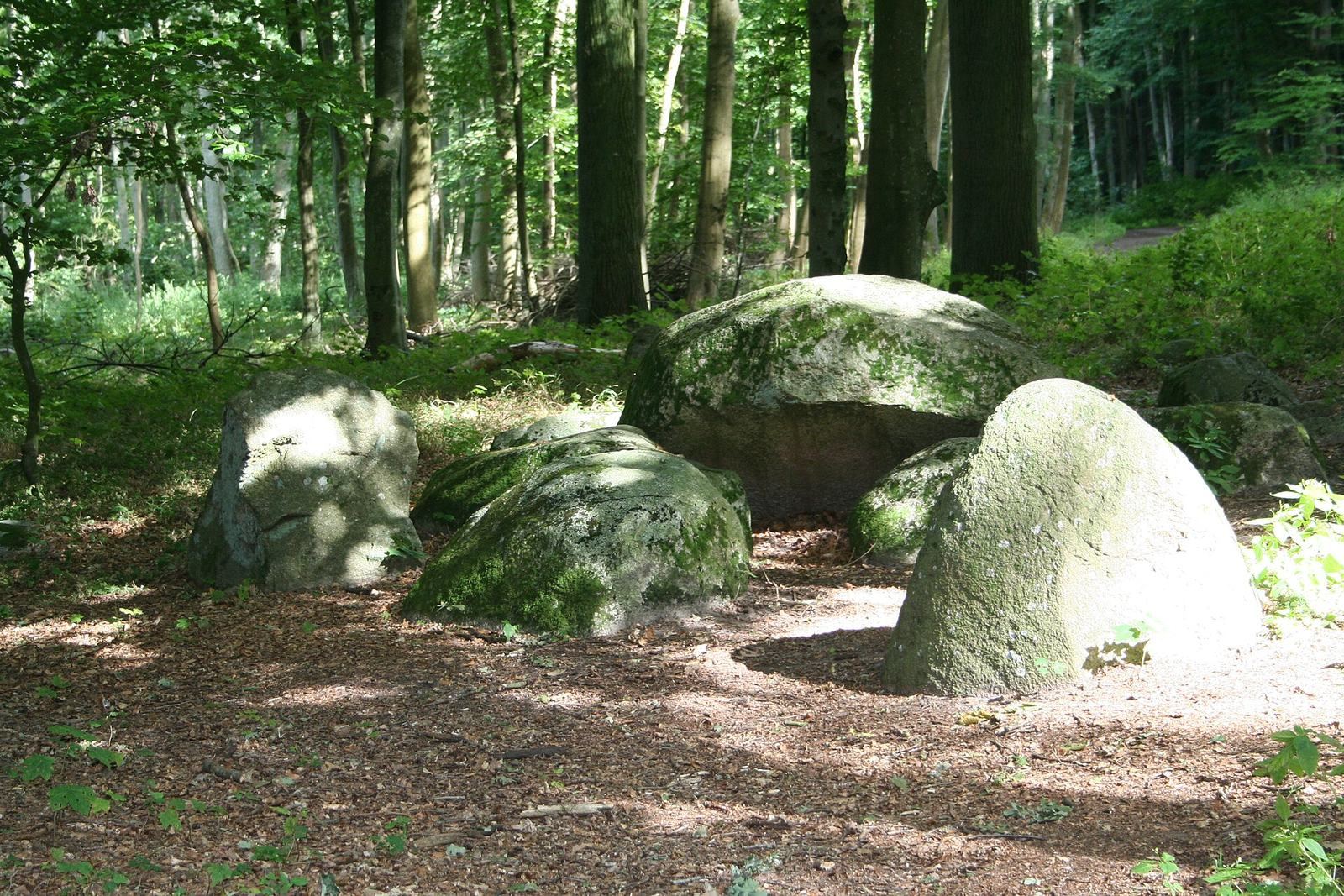
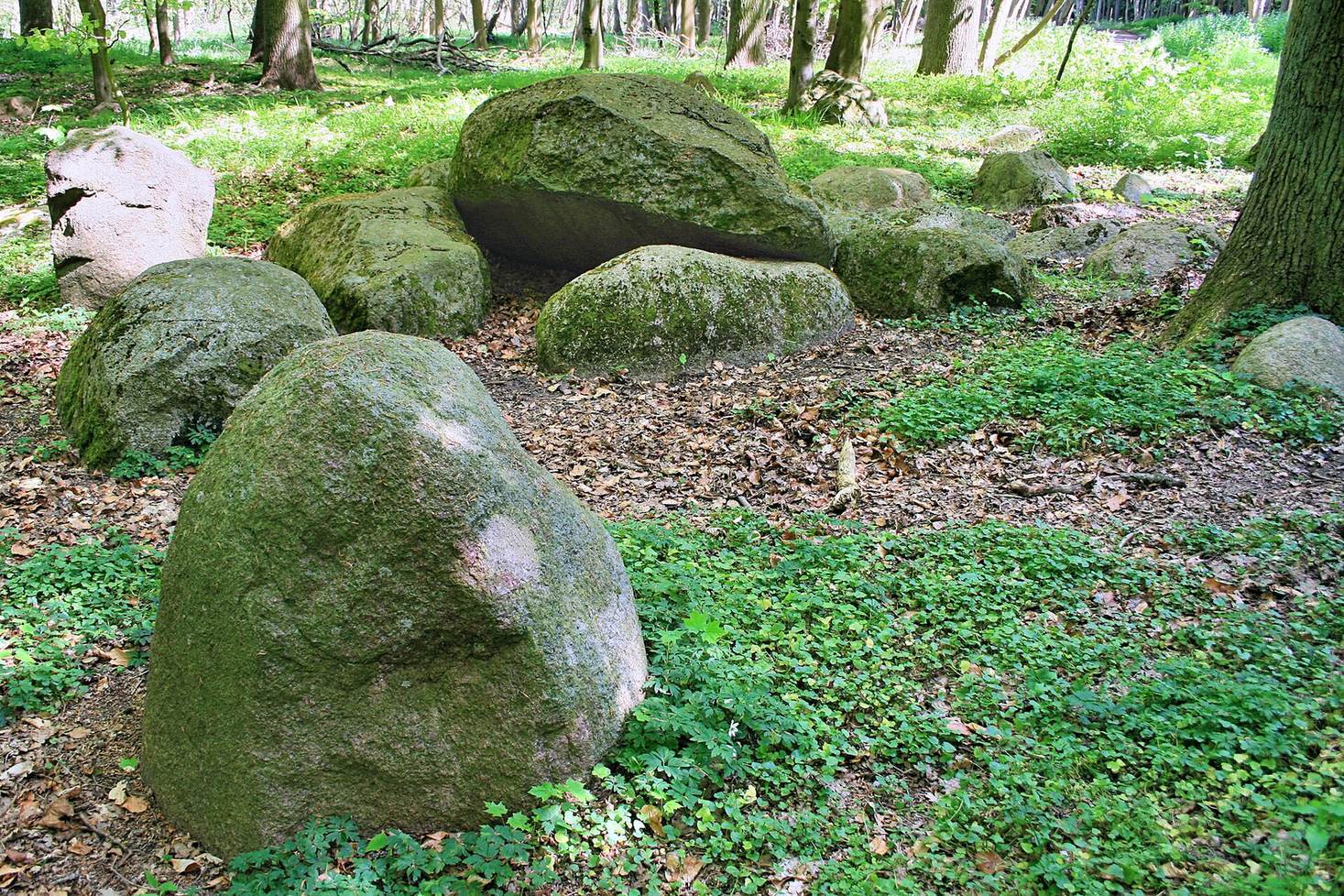
A roughly 15-metre-long stone enclosure, trapezoidal in plan, surrounds the burial chamber. The chamber measures about 5.40 metres in length. Four stones form each of its long sides, while a larger boulder closes the northern end. At the south, two upright slabs create a windbreak, a feature found in large megalithic tombs on Rügen. One capstone remains at its full original size and weighs about six tonnes; two others have broken into several pieces. The tomb is listed as entry 509 in Ernst Sprockhoff’s catalogue of German megalithic tombs.
Landscape and building stone
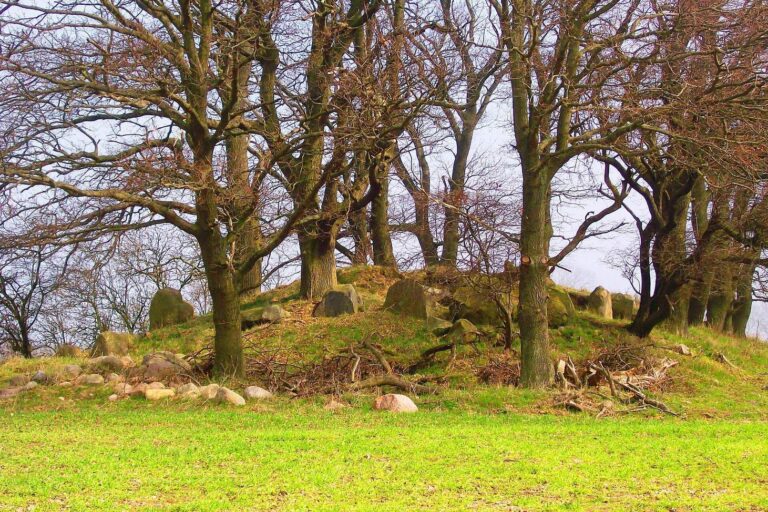
The tomb stands on the Mönchgut peninsula, near the southern edge of the Baaber Heide spit, a narrow ridge of deposited sediment attached to the coast at one end. It lies less than 100 metres from the cliff along the Göhren-Reddevitz ridge. Marine erosion formed this cliff about 6,000 to 7,000 years ago, during a postglacial phase when the brackish Littorina Sea occupied the Baltic basin. The enclosure and chamber were built from large boulders transported by glaciers, probably gathered from the nearby former sea cliff. Trees were planted across the Baaber Heide in the mid-19th century, and the area is now largely covered by Mönchguter Forest.
Burial finds
Excavations recovered relatively complete urns, decorated pottery fragments, stone axes, a slab used for grinding flint, other flint tools, and amber beads. The later investigation yielded pottery fragments from at least 26 vessels, 22 flint axes, two axes made from other types of rock, three flint chisels, 56 transverse arrowheads, and numerous amber beads. The finds and excavation records are now held in the archaeological collection of the University of Greifswald.