Schloss Engers: A Late-Baroque Hunting and Summer Palace in Germany
Site at a Glance
- Rating
- 4.4
- Popularity
- Low
- Country
- Germany
- Primary era
- Early Modern
- External website
- Open
- Eras represented
- Medieval, Early Modern, Modern
- Civilizations
- Holy Roman Empire
- Site type
- Domestic
- Remains
- Palace
On this page15 sections
History
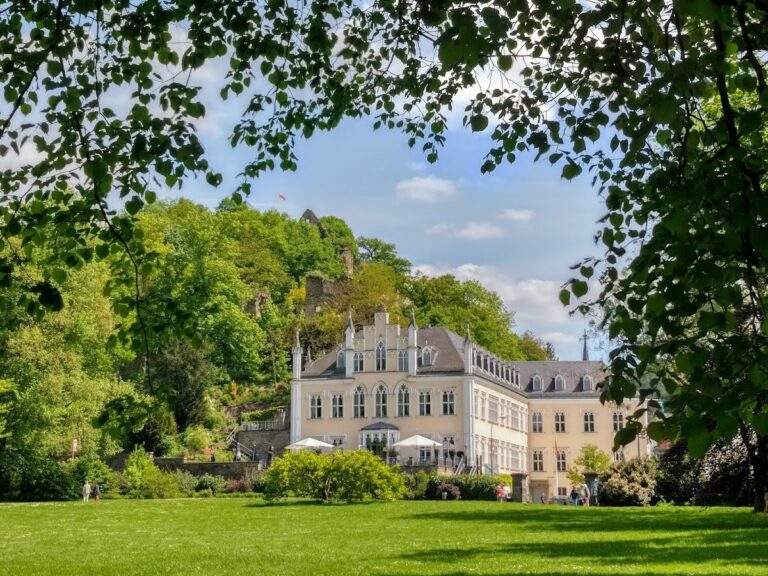
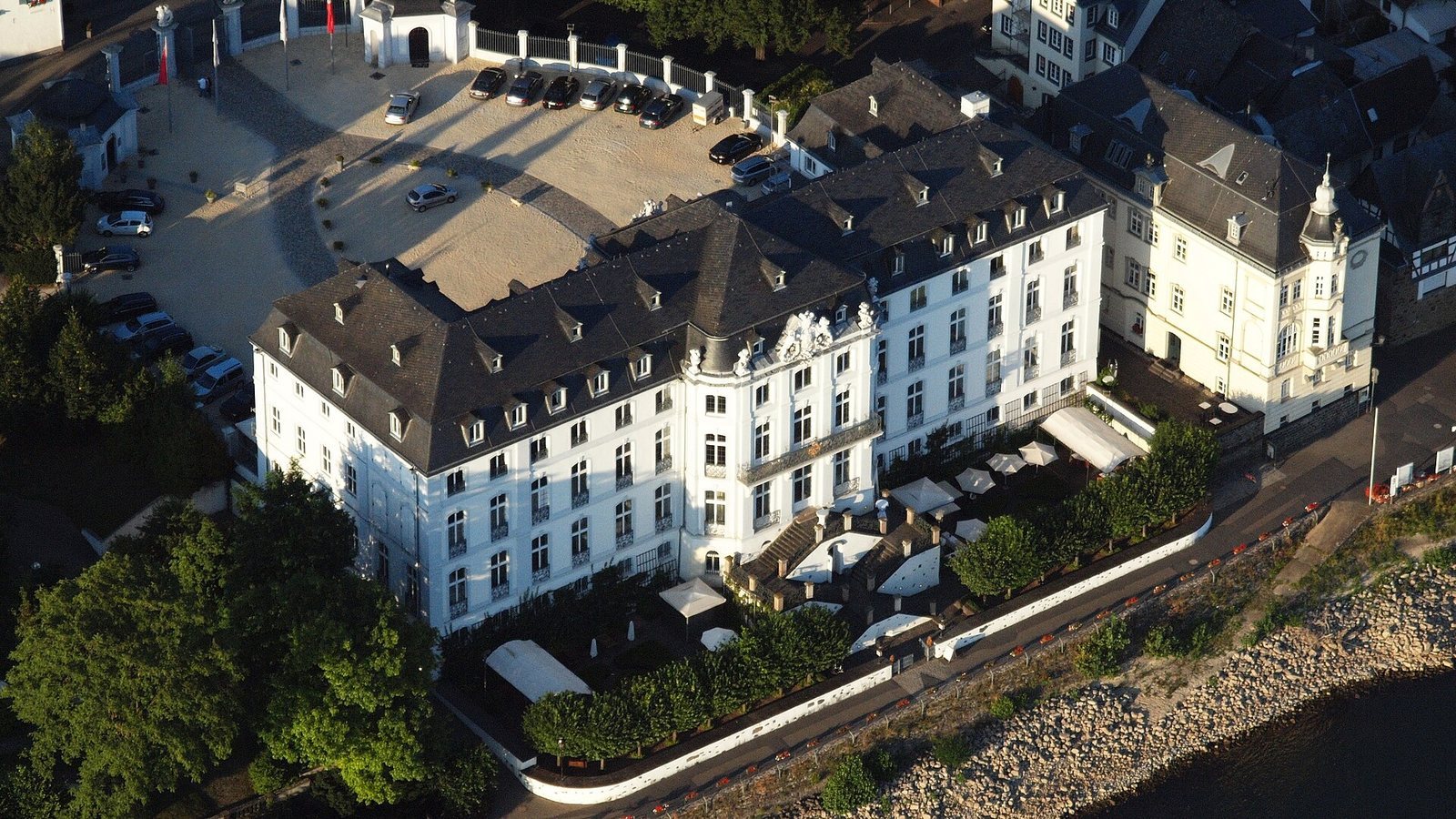
Schloss Engers is a late-Baroque hunting, leisure, and summer palace in Neuwied, Germany, built under the Electorate of Trier on the site of a medieval castle. Construction began in 1759 and was completed in the early 1760s. The palace served Johann Philipp von Walderdorff, Archbishop and Prince-Elector of Trier, an office combining senior Catholic ecclesiastical authority with a role in choosing the Holy Roman Emperor.
From Kunostein Castle to a toll station
In 1371, Kuno II of Falkenstein, Archbishop and Prince-Elector of Trier, acquired Engers and built Kunostein Castle beside the Rhine. His brother and successor, Werner von Falkenstein, moved the toll station from Stolzenfels Castle near Koblenz to Engers. Kunostein consequently became a toll castle, a fortified site used to control and charge traffic along an important route. The castle passed through the medieval period without major destruction.
The eighteenth-century palace
In 1757, Johann Philipp von Walderdorff decided to modernize Kunostein Castle, a decision interpreted as a response to the foundation of Neuwied. He abandoned that plan and ordered the medieval castle demolished in 1758. He then commissioned Johannes Seiz, an architect who had studied under Balthasar Neumann, to design a new palace on the same site.
The new building became the Elector’s summer residence and hunting lodge. Court stuccoist Michael Eytel, painter Januarius Zick of Koblenz, and sculptor Ferdinand Dietz participated in its interior decoration. Walderdorff usually stayed at Engers during the hunting season in September. At other times, the palace was unoccupied and opened to visiting travellers. He often reached it by barge from Philippsburg Palace in Koblenz, travelling across the Rhine.
Changes after the Electorate of Trier
Johann Philipp von Walderdorff died in 1768. After the Electorate of Trier ended, the palace was assigned in 1803 to the Prince of Nassau-Weilburg as a summer residence. Following the Congress of Vienna, the 1814 to 1815 settlement that reorganized Europe after the Napoleonic Wars, Engers became part of Prussia.
Between 1862 and 1914, Schloss Engers housed a military school. During the war of 1870 to 1871 and again from 1914 to 1917, it served as a reserve hospital. In 1928, the site was sold to the Josefs-Gesellschaft, which established a residential, medical, and educational institution for people with disabilities. Its hospital school later developed into the Christiane Herzog School, part of Heinrich-Haus, a social-care and educational organization serving people with disabilities, with a focus on motor development.
State and musical use
The state of Rhineland-Palatinate took over the building in 1990. Since 1995, it has housed Villa Musica, a state-supported foundation devoted to advanced classical-music training and concert performance, especially chamber music. Schloss Engers also contains facilities of the State Music Academy of Rhineland-Palatinate, which uses the building for rehearsal and administrative purposes. Since early 2023, the academy has held concerts and events in the Garden Hall. The palace is regarded as an outstanding historic site among the architectural monuments between the Rhine and Moselle.
Remains
Schloss Engers is a well-preserved late-Baroque palace standing directly on the Rhine. Its construction occupies the former site of Kunostein Castle, while the surviving Gray Tower preserves a fragment of the earlier toll station. The eighteenth-century palace has remained largely unchanged since its construction, retaining its principal decorated rooms and historical interior arrangement.
Palace interiors
Mirror Hall
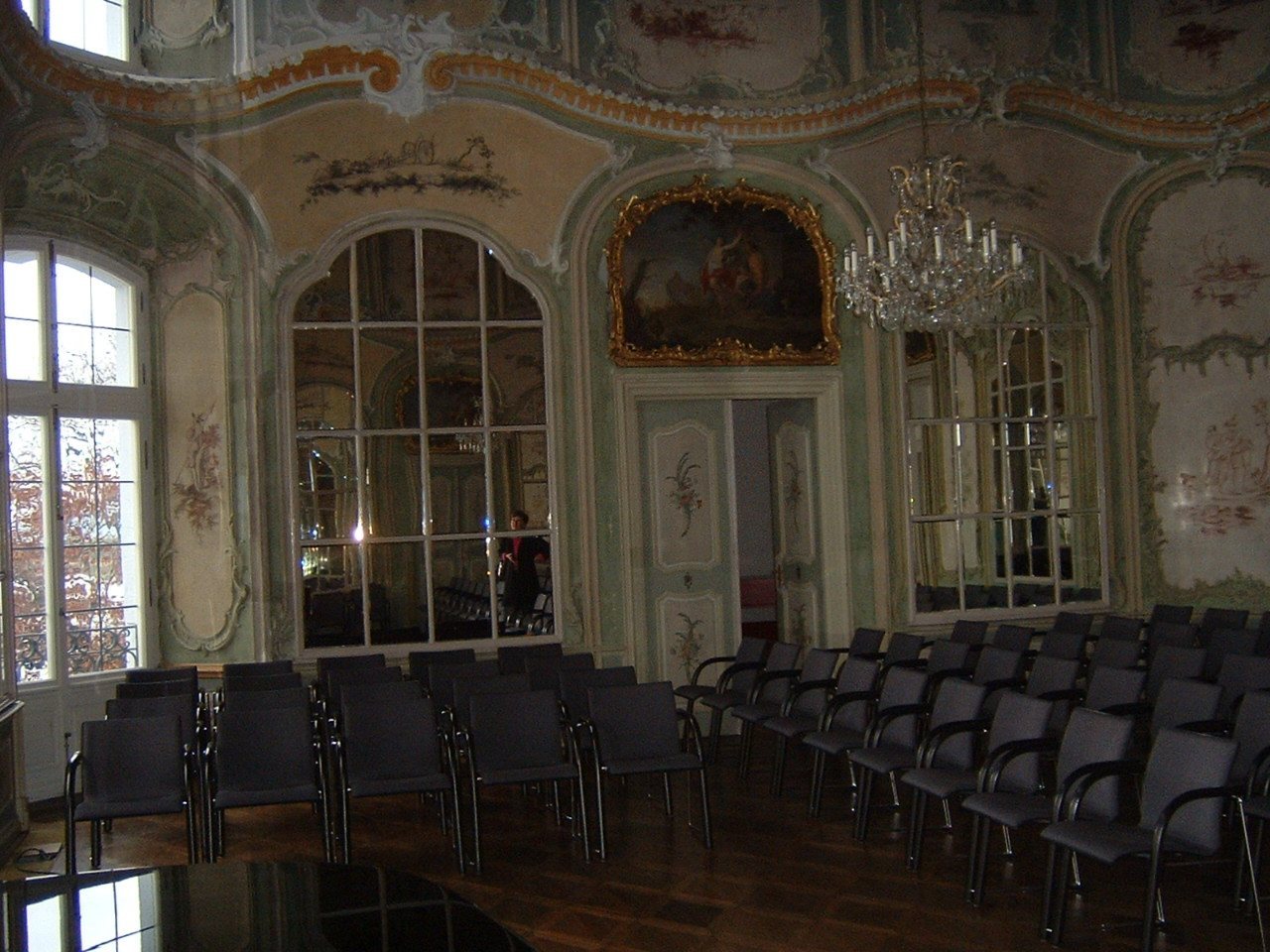
The first-floor Mirror Hall, also called the Hall of Diana, contains wall paintings and ceiling frescoes by Januarius Zick. The decorated room is used for chamber-music performances, linking its eighteenth-century artistic setting with the palace’s present musical role.
Rose Cabinet
Adjoining the Mirror Hall, the Rose Cabinet contains unusual stucco work by Michael Eytel. Its decorative treatment forms part of the interior created for the summer palace in the early 1760s.
Garden Hall
The ground-floor Garden Hall is used for concerts and events organized by the State Music Academy of Rhineland-Palatinate. It is one of the palace rooms that continues to support organized musical activity within the historic building.
Museum collections
A museum in the palace presents paintings of the Prince-Electors of Trier, Baroque furniture, and old musical instruments. These collections contribute to the interpretation of the building’s former courtly and cultural functions.
Earlier and associated buildings
Gray Tower
The Gray Tower is the surviving remnant of the former toll station associated with Kunostein Castle. It represents the site’s medieval phase, when the Rhine crossing and route were linked to the collection of tolls.
Meisterhaus
Immediately upstream from the palace stands the neo-Baroque Meisterhaus, a masters’ residence built around 1900 for masters trained at Heinrich-Haus. Renovated in 2003, it now houses the State Music Academy of Rhineland-Palatinate.
Present physical uses
The palace contains the offices of Villa Musica together with rehearsal and administrative rooms for the State Music Academy of Rhineland-Palatinate. These uses occupy the historic building while the preserved interiors, museum collections, and surviving Gray Tower continue to express its medieval, eighteenth-century, and later institutional history.