St. James, Levoča: A Gothic Parish Church in Slovakia


Site at a Glance
- Rating
- 4.8
- Popularity
- Medium
- Country
- Slovakia
- Primary era
- Medieval
- External website
- Open
- Eras represented
- Medieval, Early Modern, Modern
- Civilizations
- Habsburg, Hungarian
- Site type
- Religious
- Remains
- Church
On this page22 sections
History
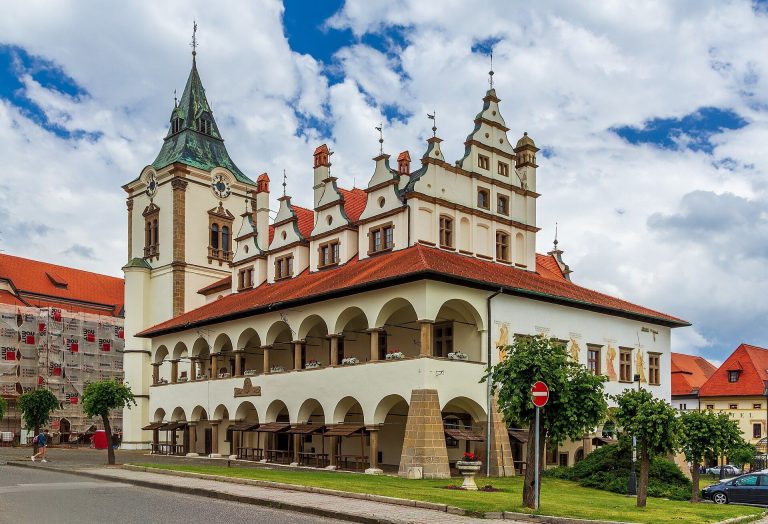
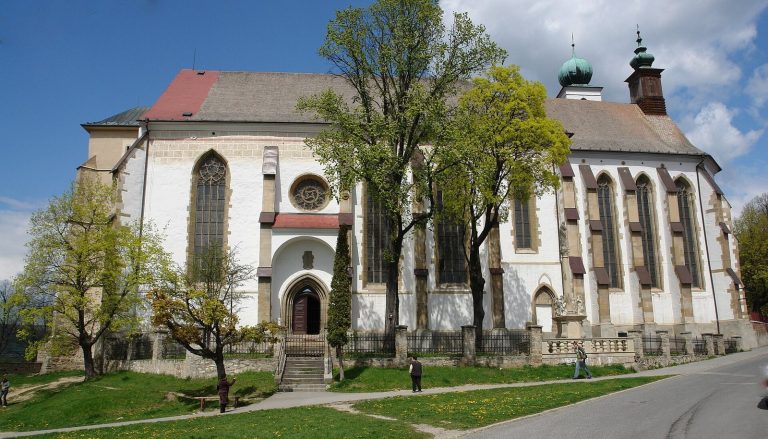
St. James, Levoča is a Roman Catholic parish church in Levoča, Slovakia, built by the town’s medieval German-speaking community in the Gothic period and dedicated to James the Greater. Standing across the main axis of the principal square, it forms a landmark with the Renaissance town hall and reflects Levoča’s development as a free royal town. The church belongs to the Diocese of Spišské Podhradie and became a minor basilica in 2015.
Levoča and the earlier church
Levoča was recorded as a settlement in a charter of King Béla IV in 1249. By the last third of the thirteenth century it had municipal self-government, a reeve, and a staple right, which required certain goods to be offered for sale locally. In 1271, King Stephen V made Levoča the principal town and judicial seat of the Spiš Saxons, a community of German settlers in the Spiš region. The town’s growing administrative and economic position created the circumstances for a larger parish church.
Three other churches already stood in Levoča during the thirteenth century. They were dedicated to John, Nicholas, and Elizabeth, but none survives as a separate building. The Church of St. Elizabeth stood south of the town walls beside a leper hospital and was demolished in 1532. Liturgical vessels and parts of the altars from St. Elizabeth and St. Nicholas were later installed in St. James, allowing elements of the earlier religious landscape to remain within the newer church.
An earlier sacred building occupied the site before the present church. Fragments dated to 1280 survive in the sacristy, including part of a former choir termination and consoles shaped like chalices. The building was probably too small for Levoča’s expanding population and no longer satisfied contemporary aesthetic expectations, so a new church was begun in the first quarter of the fourteenth century. Its construction expressed the town’s increasing prosperity, higher living standards, broader cultural outlook, and artistic ambitions.
Fourteenth-century construction
Work continued throughout the fourteenth century. The sanctuary was built first, followed by the nave, which was probably vaulted around the middle of the century. The principal building phase ended with the addition of the Chapel of St. George beside the north wall, probably in 1390–1392. Juraj Ulenbach, a burgher from Košice, commissioned the chapel as a burial place and dedicated it to his personal patron saint. The church itself was completed during the fourteenth century, although its precise completion date is uncertain.
The building workshop was influenced in part by Bohemian court architecture of the Luxembourg period. Some window tracery has flowing, flame-like forms associated with the Parler tradition, an architectural and artistic movement connected with the Parler family of Central European builders and sculptors. Swabian Parler-style architecture also influenced the church, especially the design of the south portal. These connections place St. James within the artistic networks that linked northeastern Slovakia with wider Central European court and urban culture.
The church and the adjacent Minorite church became important religious, social, and cultural centers for Levoča. James the Greater, regarded as a protector of pilgrims and workers, was also the town’s longstanding patron. His figure appeared on Levoča’s large municipal seal of 1409. A shell, one of his attributes, appeared in the town’s sixteenth-century coat of arms and on the façades of several patrician houses.
Late medieval expansion and Renaissance culture
The main building phase was followed by additions and extensive interior endowment. From the 1460s onward, individuals, guilds, confraternities, associations, and the town funded numerous altars. This activity intensified during Levoča’s prosperity at the end of the fifteenth and beginning of the sixteenth centuries. Between 1480 and 1490, the south entrance received a vestibule with a star vault, while the Oratory of King Matthias was built above it. A second vestibule with a net vault was added at the north portal at the end of the fifteenth century and bears a stated date of 1332–1342.
Ján Henckel, a humanist priest who became parish priest of Levoča in 1514, played an important part in the church’s development. He left the town in 1522 to become a court preacher in Buda. During his tenure, the present main altar and two further altars were commissioned. Between 1515 and 1519, he also had a church library built above the north vestibule and the Chapel of St. George. Known as the Bibliotheca Leutschoviensis, it was among Levoča’s earliest Renaissance buildings. Henckel’s private collection formed its core, and later donations included the library of the Brotherhood of the Twenty-Four Spiš Parish Priests.
After 1500, the sculptor and woodcarver known as Master Paul of Levoča settled permanently in the town. His workshop produced many of its most important works for St. James, including the main altar between 1508 and 1517 and several other sculptures and altarpieces. The church’s artistic character developed through the combination of Gothic architecture, late Gothic winged altars, Renaissance and Baroque furnishings, wall paintings influenced by Bohemian court art, and works connected with German artistic traditions. Its architecture also influenced later sacred buildings in Spiš.
Reformation and confessional change
The Reformation spread through Spiš from the 1520s. In 1544, a Protestant-oriented town government and parish leadership took power in Levoča, and St. James remained in Lutheran hands for approximately 130 years. The change of confession did not substantially damage the interior. New projects continued, including a gallery for an organ in the north aisle, built in 1622, followed soon afterward by the installation of a richly decorated organ.
A major fire in 1550 damaged the church while destroying much of Levoča and its archive. Some earlier furnishings were lost, and repairs brought new Renaissance elements into the interior, including benches, choir stalls, tomb slabs, and epitaphs. The church returned to Catholic control in 1674. Catholics and Protestants shared it between 1706 and 1710, after which it came into the exclusive possession of the Catholics.
Fires, restoration, and present status
In the eighteenth century, another major fire in Levoča entered through the church’s three southern entrances. The damage was limited, but the entrances were later blocked, leaving only one in use. The floor was subsequently laid with sandstone, and Turzo family tombs were removed from the area in front of the main altar.
The upper part of the medieval tower was dismantled at the end of the eighteenth century because its condition threatened its stability. A Neo-Gothic octagonal upper section was then built in 1852–1858 to designs by the Levoča architect Fridrich Mück, under the direction of master builder Ľudovít Schmidt. A major nineteenth-century restoration also replaced deteriorated original windows with stained glass and uncovered wall paintings that had been hidden beneath limewash and later plaster. The Moralities cycle was revealed during the general reconstruction of 1870, and the paintings were progressively restored.
The roof burned in a further fire in 1923. Repairs continued into the 1930s, and work resumed after the Second World War in 1948, including replacement of the roof covering. State anti-church policy restricted restoration for a period, although the main altar was conserved. Intensive conservation resumed after 1989, while restoration of the exterior walls remained beyond the parish’s financial capacity.
St. James entered the Slovak national cultural heritage list in 1970. It forms part of the UNESCO World Heritage property Levoča, Spiš Castle and the Associated Cultural Monuments, inscribed in 2009. Pope Francis elevated the church to a minor basilica on 30 November 2015.
Remains
St. James is a three-aisled Gothic pseudobasilica, a church whose central nave rises above the side aisles without the fully independent upper walls and windows of a true basilica. It has a raised central nave, a polygonally closed presbytery, side chapels, projecting vestibules, and a western tower. The building is 46.8 metres long and 26.94 metres wide. Its central nave is 40.50 metres long, 9.75 metres wide, and 19.23 metres high, while the side aisles are approximately 15 metres high.
Layout, portals, and chapels
Twelve pillars, six on each side, divide the central nave from the aisles. The pillars are approximately 9.50 metres high and 1.80 metres thick. The church preserves the customary east-west orientation of medieval churches and stands transversely across the main axis of Levoča’s principal square. At the west end are a pair of side chapels and a prismatic tower, whose Neo-Gothic octagonal upper section of 1852–1858 is capped by a pyramidal roof.
The church originally had five portals. Three elaborate entrances were placed on the north and south sides, while two simpler portals opened through the tower passage and the eastern perimeter wall. The latter two have disappeared or been blocked, and the present building is entered through three doorways. The richly articulated south portal has large foliate ornament, profiled architectural elements, and tracery. Its design reflects the spread of Swabian Parler-style architecture into northeastern Slovakia, and a Gothic rose window is associated with the entrance.
Chapel of St. George
The Chapel of St. George is a Gothic-Renaissance side chapel beside the north wall. Built as Juraj Ulenbach’s burial chapel, it contains a sculpture group of St. George fighting the dragon, probably made in Master Paul’s workshop around 1505–1507. The group stands on a raised console against an illusionistic painted landscape with a princess and castle architecture. A Baroque Altarpiece of St. John Nepomuk, dating from the mid-eighteenth century, was moved into the chapel from the north wall beside the sacristy after wall paintings were discovered behind it. Its central relief of John Nepomuk is flanked by Saints Barbara and Catherine of Alexandria. An Altarpiece of St. Catherine from 1510–1520 was also installed in the chapel after the closure of the diocesan museum in Spišská Kapitula.
Sacristy and Corvinian Oratory
The separate vaulted sacristy incorporates fragments of the earlier building dated to 1280, including part of a former choir termination and chalice-shaped consoles. A Gothic stone pastophorium, a medieval wall tabernacle for sacred objects, stands within the church, and the sacristy also has a Gothic stone pastophorium associated with the presbytery furnishings. Wall paintings survive in the presbytery and around the sacristy entrance. The Corvinian Oratory contains a life-size fifteenth-century Crucifixion group and a Baroque Altarpiece of Our Lady of Loreto from the early eighteenth century.
Vestibules and wall paintings
Southern vestibule
The southern vestibule has a star vault and contains a monumental Last Judgment painted around 1520. Christ the Judge appears within a mandorla, an almond-shaped aureole, above angels carrying the instruments of the Passion. The Virgin Mary and John the Evangelist kneel below, while apostles and scenes of medieval urban life occupy the lower registers.
Northern vestibule
The northern vestibule has a net-ribbed vault. Its wall paintings include the Virgin Mary with John the Evangelist, Saints Erasmus and Dorothy, and a Nursing Madonna between an unidentified saint and St. Anthony. The church library built above this area between 1515 and 1519 incorporated the early Renaissance architectural setting associated with Ján Henckel’s collection.
Medieval painting cycles
The church preserves wall paintings from the fourteenth to the sixteenth centuries. Fragments on the northeast wall of the presbytery show two men engaged in field work and probably belonged to a cycle of monthly labours. A Crucifixion with the Virgin Mary and John the Evangelist, painted around 1370–1380, survives on the east wall of the south aisle near the sanctuary. It represents the late Soft Style derived from Bohemian court painting of the second half of the fourteenth century. A painting of the Cross with the instruments of Christ’s Passion, created around 1400, is on the third pillar of the north aisle.
The Moralities cycle, dating from 1380 to the beginning of the fifteenth century, occupies the north wall of the left aisle above the entrance to the sacristy. Its upper register presents the seven works of mercy, with a repeated group of a man, a woman, and a pilgrim representing Christ. The lower register depicts the seven deadly sins, each linked to an animal. The scenes are read from right to left and accompanied by German verse inscriptions in Gothic minuscule. Painted in the secco technique, which applies colour to dry plaster, the cycle was covered with limewash in the seventeenth century and uncovered during the reconstruction of 1870. Its probable commissioner was the Brotherhood of the Body of Christ, founded in 1402 by the parish priest Herman.
A cycle of twenty scenes from the Legend of St. Dorothy was probably created during the first decade of the fifteenth century. Measuring approximately 286 by 925 centimetres, it is arranged in two horizontal registers read in opposite directions. The paintings narrate Dorothy’s family background, baptism, resistance to conversion, tortures, martyrdom, and burial, following the Golden Legend. Near the entrance to the Chapel of St. George, a painting from around 1520 shows the Virgin and Child, St. Anthony the Hermit, and an unidentified saint. The chapel doorway’s tympanum contains a dated 1515 image of Christ in the tomb displaying his wounds.
Altars and sculptural furnishings
The church contains a large collection of Gothic, Renaissance, and Baroque altars. Many were funded by individuals, guilds, confraternities, and associations between the fifteenth and sixteenth centuries. Several are reconstructed, relocated, or assembled from older works, so their present arrangement brings together elements from different periods.
Main altar
The main altar fills the end of the presbytery. It is 18.62 metres high and 6.21 metres wide and is regarded as the world’s tallest late Gothic winged altar. A winged altar has hinged carved or painted panels that can open and close according to the liturgical calendar. Master Paul of Levoča and his workshop carved the structure between 1508 and 1510, while gilding and polychromy were completed within the broader production period of 1508–1517. The wing paintings are attributed to Hans Moler of Levoča.
The central shrine contains a 2.43-metre-high Madonna holding the Christ Child and a sceptre, with angels placing a crown on her head. St. James stands beside her on one side and John the Evangelist, holding a chalice, on the other. The figures were carved from individual pieces of limewood. Reliefs on the wings show scenes from the life of John on Patmos and the beheading of James in Jerusalem. When closed, the wings show eight scenes from the final events of Christ’s life, from the Mount of Olives to the Resurrection.
The predella, the lower section of a winged altar, contains the Last Supper. Its upper part incorporates older apostolic figures probably taken from an earlier main altar dating from around 1370. The altar has been restored four times, including conservation in the 1950s when woodworm seriously threatened the carved structure.
Altars in the south aisle
The south aisle contains the Altarpiece of St. Elizabeth in the Baptismal Chapel, the Christmas Predella Altarpiece, the Altarpiece of the Two Marys, the Vir Dolorum Altarpiece, the Altarpiece of the Four Saints John, the Altarpiece of St. Anne, the Altarpiece of St. Catherine of Alexandria, and the Altarpiece of St. Michael the Archangel.
The St. Elizabeth altarpiece incorporates panel paintings from 1492–1493 that came from the demolished church outside the town walls. They were installed in the present Neo-Gothic altar during the 1870s, and the altar was consecrated in 1875. The paintings show Saints Elizabeth, Stephen, and Florian, scenes from the lives of Elizabeth and Stephen, and Saints Bernard, Hedwig, Alexius, and Helena. Václav Merklas attributed them in 1860 to Master Nicholas of Levoča.
The Christmas Predella Altarpiece brings together elements from several earlier altars. Its predella contains the Adoration of the Magi. The associated altar in the north aisle is a Baroque structure from 1752 incorporating a late Gothic Nativity group made by Master Paul around 1500. The sculptures of the Virgin Mary, Joseph, and probably the shepherds were found in a blocked niche in Levoča town hall in 1698. Archbishop Mikuláš Csáky commissioned the altar, which is also called the Csáky Altarpiece, and a figure of the Christ Child was added at that time.
The Altarpiece of the Two Marys has an early sixteenth-century shrine showing two Marys carrying fragrant oils to Christ’s tomb. It is probably the work of one of Master Paul’s pupils. The Gothic Vir Dolorum Altarpiece, also called the Altar of Matthias Corvinus, dates from 1476–1490 and is nearly thirteen metres high. The carved predella ornament bears the coats of arms of King Matthias Corvinus and his wife Beatrice of Aragon, explaining its traditional association with the royal couple.
The central shrine of the Vir Dolorum altar presents the Sorrowful Christ displaying his wounds, flanked by the Virgin Mary and John the Evangelist. The wings show saints and Marian scenes, while the predella includes the prophet Isaiah and a second prophet whose figure is missing. A monstrance, a vessel for displaying the consecrated Eucharist, attended by two angels occupies the upper section, which is crowned by St. Andrew. The wing paintings are attributed to Master Nicholas of Levoča. The altar was altered and reassembled several times, changed location repeatedly, and has stood in its present position since the mid-twentieth century, after thorough restoration.
Four Saints John and related altars
The Altarpiece of the Four Saints John was made in 1520 and completed no later than about 1525. Its inscription dedicates it to John the Baptist, John the Evangelist, John the Almsgiver, John Chrysostom, and the theologian Jean Gerson. The sculptures are attributed to Master Paul, and the altar is considered one of his workshop’s final Renaissance works. Its shrine contains John the Baptist and John the Evangelist, while reliefs on the wings show John the Almsgiver and John Chrysostom. Painted scenes present episodes from the lives of the Baptist and the Evangelist, and the rear of one wing shows Jean Gerson kneeling beneath the Cross.
The predella contains a sculptural Lamentation over Christ, flanked by the coats of arms of Hungary and Levoča. The upper section includes the Baptism of Christ, St. George, St. Ladislaus, and Renaissance putti, childlike decorative figures derived from classical and Renaissance ornament. The Altarpiece of St. Anne, made in Master Paul’s workshop before 1516, has a simpler composition. Its shrine shows St. Anne with Mary and the Christ Child, with an angel behind them, while the wings show Saints Anthony the Hermit and Paul. One wing panel is missing, and the remaining panels depict Christ’s maternal ancestry.
The Altarpiece of St. Catherine of Alexandria is among the oldest in the church. Its maker was the Levoča master John, whose signature and the date 1469 were discovered on the altar. The central figure of St. Catherine is flanked by panel paintings of Saints Barbara and Margaret, while the upper section contains the prophets Samuel and Isaiah. The wings show scenes from Catherine’s life. Its predella contains an approximately 1400 triptych of the enthroned Christ among angels, St. Sophia with her daughters, and Jacob’s Dream. The present Altarpiece of St. Michael the Archangel dates from 1719–1731 and consists of a statue of the archangel set against an altarpiece painting.
Altars in the north aisle
The north aisle contains the Altarpiece of the Nativity, the Altarpiece of Our Lady of the Snows, the Altarpiece of Saints Peter and Paul, the Altarpiece of St. Nicholas, the Altarpiece of the Fourteen Holy Helpers, and the Altarpiece of the Good Shepherd. The Gothic Altarpiece of Our Lady of the Snows dates from around 1494 and is among the church’s largest and most architecturally elaborate altars. It commemorates the meeting in Levoča of the Jagiellonian brothers John Albert, Vladislaus, Sigismund, and Frederick.
The central shrine of Our Lady of the Snows contains the Virgin and Child attended by two angels and four virgin martyrs, Catherine, Dorothy, Barbara, and Margaret. The wings depict Christological and Marian scenes. Later Baroque sculptures of James, Ecce Homo, Joseph, and John Nepomuk occupy the upper section, while the predella bears Levoča’s coats of arms.
The late Gothic Altarpiece of Saints Peter and Paul dates from around 1495. Sculptures of Peter and Paul stand beneath canopies in the shrine, and the predella shows Christ rising from the tomb between the Virgin Mary and John the Evangelist. Tempera paintings attributed to Master Nicholas or his workshop depict scenes from the lives of Peter and Paul and episodes from the Golden Legend. The altar was first recorded in 1542, and an earlier altar with the same dedication may have occupied the site.
The late Gothic Altarpiece of St. Nicholas, also called the Altarpiece of St. John the Almsgiver, dates from 1507 and is Master Paul’s earliest securely dated altar. Paul carved the figures of John the Almsgiver and Leonard, while the central statue of St. Nicholas is considerably older, probably from the second quarter of the fourteenth century. It is attributed to the Master of the Madonna of Ruskinovce and may have come from the former main altar of the medieval Church of St. Nicholas.
The St. Nicholas altar is 3.20 metres high and has two double-sided painted wings. Their scenes include the charitable acts of John the Almsgiver, the miracles of Leonard, the legend of Leopold finding Agnes’s veil, and four episodes from Christ’s Passion. The paintings, dated 1507, are attributed to an unidentified, probably Spiš painter who drew on late fifteenth-century Dürer woodcuts. The predella shows Christ among the Fourteen Holy Helpers, a group of saints traditionally invoked together for protection against particular illnesses and dangers.
The Fourteen Holy Helpers altar stands beside the second pillar of the north aisle, opposite the St. Catherine altar, and consists of a large painting in a carved frame. Beside the third pillar is the Baroque Good Shepherd altar, dating from 1696 and consecrated in 1715. Its painting shows Christ as the Good Shepherd, while its frame includes an angel and a scene of a thief climbing through a shepherd’s window.
Funerary monuments and movable furnishings
More than forty epitaphs and funerary monuments from the fourteenth to the eighteenth centuries remain in the church. Their Latin and German inscriptions give names, dates of death, ages, titles, origins, occupations, biblical quotations, family relationships, and heraldic information. The oldest tombstone, from the end of the fourteenth century, belongs to Juraj Ulenbach, founder of the Chapel of St. George.
The Turzo family is especially strongly represented. Its monuments include the epitaph of Jan I Turzo, who died in 1508, the white-marble Renaissance epitaph of Alexius I Turzo, and the 1626 epitaph of Stanislav Turzo, Spiš župan and Hungarian palatine. Late-sixteenth-century Renaissance epitaphs imported from Poland commemorate Alexius II Turzo, president of the Spiš Chamber and hereditary župan, and the town senator Georg Engelhardt. Other major monuments include Georg Buchwald’s painted epitaph of 1602, Sophie Greff’s ten-panel wooden epitaph of 1609, and Hans Wolf’s epitaph from around 1640, whose six-tiered structure is nearly six metres high.
Martin Urbanovitz’s red-marble and sandstone epitaph of 1621 measures 360 by 320 centimetres. It commemorates his wife Margita and family members who died during the plague of 1600. The inscription identifies Margita as the granddaughter of the sculptor Paul who made the main altar. Originally placed on the exterior of the south vestibule, the monument was badly weathered. It was restored in 1989–1990, after which the marble section concerning Master Paul’s authorship was installed inside the church.
The church preserves benches and choir stalls from the fifteenth to seventeenth centuries. The late-fifteenth-century Senatorial Bench served members of the Levoča town council. The three-seat Tischler Bench, dated 1516, has illusionistic inlay showing idealized Gothic cities, towers, and churches. It is signed by Juraj Tischler, a sculptor and woodcarver from Kežmarok, who also made the geometrically inlaid doors to the sacristy and library in the 1520s. The three-seat Owl Bench, from around 1490, is among the church’s earliest patronal benches.
Pulpit and organ
The Renaissance pulpit of 1625–1626 was commissioned by the Levoča patrician Anton Kramer and made by Christoph Kollmitz, an Olomouc-born master carpenter. Moses holding the tablets of the Decalogue supports the structure. The parapet contains the four major Old Testament prophets, Isaiah, Jeremiah, Ezekiel, and Daniel. The canopy bears the four Evangelists, St. Paul, Christ as Salvator Mundi, meaning Saviour of the World, and the triumphant Risen Christ. Reliefs on the staircase show Abraham’s sacrifice, Samson among the Philistines, and Jacob wrestling with the angel. Kollmitz made the architectural structure, while the sculptures are attributed to Paul Unterbaum and Hans Schmidt.
Hans Hummel of Kraków built the organ between 1624 and 1630 at the expense of the town and the burgher Friedrich Pobst. It was installed on the north-aisle organ gallery built in 1622. The organ case was made by the Kraków joiner Andrej Hertel and the sculptor Hans Schmidt. A second gallery, known as the Shoemakers’ Gallery, was added beside it in 1668.
Windows, font, and independent sculpture
Stained-glass windows in the south aisle and sanctuary replaced deteriorated earlier windows from the 1870s onward. Six figurative windows in the south aisle depict St. George fighting the dragon, St. Martin with a beggar, the Assumption of the Virgin, St. James, St. Joseph with the Child, and John the Evangelist. Bishop Juraj Čáska donated the first three, while parish priest Celestýn Kompanyik donated the latter three. The south-aisle windows were made by an Innsbruck firm in 1876 and by Eduard Kratzmann’s Budapest firm in 1893. Additional sanctuary windows depict St. Stephen and St. Ladislaus, medieval kings of Hungary later venerated as saints.
A Gothic stone pastophorium from the first half of the fifteenth century stands on the left wall of the presbytery beneath the triumphal arch. The church also has a Gothic baptismal font from the end of the fourteenth century with relief ornament, made in a metalworking foundry at Spišská Nová Ves. Independent sculptures include a mid-fourteenth-century Crucified figure before the main altar, three Crucifixion groups from the fifteenth to Baroque periods, and a life-size fifteenth-century Crucifixion group in the Corvinian Oratory.
The horseman St. George in the Chapel of St. George dates from around 1515 and is attributed to Master Paul. It was designed to be viewed from all sides. Together with the carved altars, mural paintings, stained glass, epitaphs, liturgical furnishings, rib vaults, geometric and figurative tracery, and restored architectural fragments, these works give the church a material fabric assembled across six centuries of religious and civic history.