Levoča Historic Town Hall: A Renaissance Municipal Building in Slovakia
Site at a Glance
- Rating
- 4.7
- Popularity
- Low
- Country
- Slovakia
- Primary era
- Early Modern
- External website
- Open
- Eras represented
- Medieval, Early Modern, Modern
- Civilizations
- Habsburg, Hungarian
- Site type
- Civic
- Remains
- Town Hall
On this page7 sections
History
Levoča’s Historic Town Hall is a municipal building in Slovakia, built by the town’s medieval civic community in the Gothic period and traditionally dated to around 1470. Dendrochronology, the scientific dating of timber through its annual growth rings, showed in 2022 and 2023 that wooden boards concealed in the walls came from trees harvested around 1415. This finding indicates that construction may have begun earlier than the traditional date.
Fire and Renaissance rebuilding
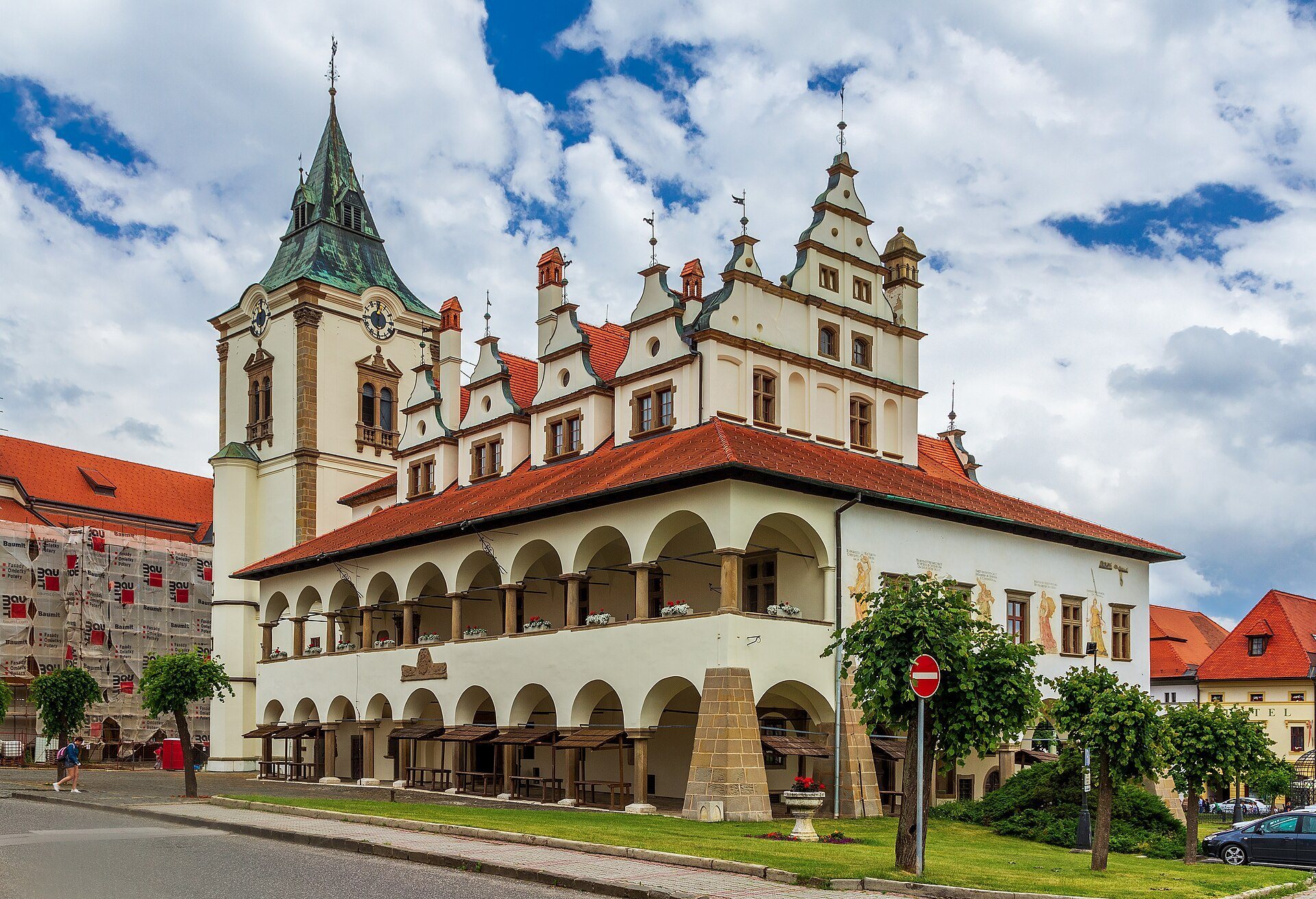
On 7 June 1550, a major fire destroyed the town hall and the municipal archive kept inside it. Reconstruction began soon afterward in the Renaissance style and continued from 1551 to 1559. Another fire in 1599 led to further additions, which continued until 1615. During these works, the building was enlarged and received partly two-storey arcades along its western and southern sides.
In 1615, allegorical frescoes were added to the southern side. Their personified civic virtues were Justice, Fortitude, Patience, Prudence, and Temperance. The paintings expressed ideals associated with municipal government and became part of the building’s Renaissance decoration.
The clock tower and later alterations
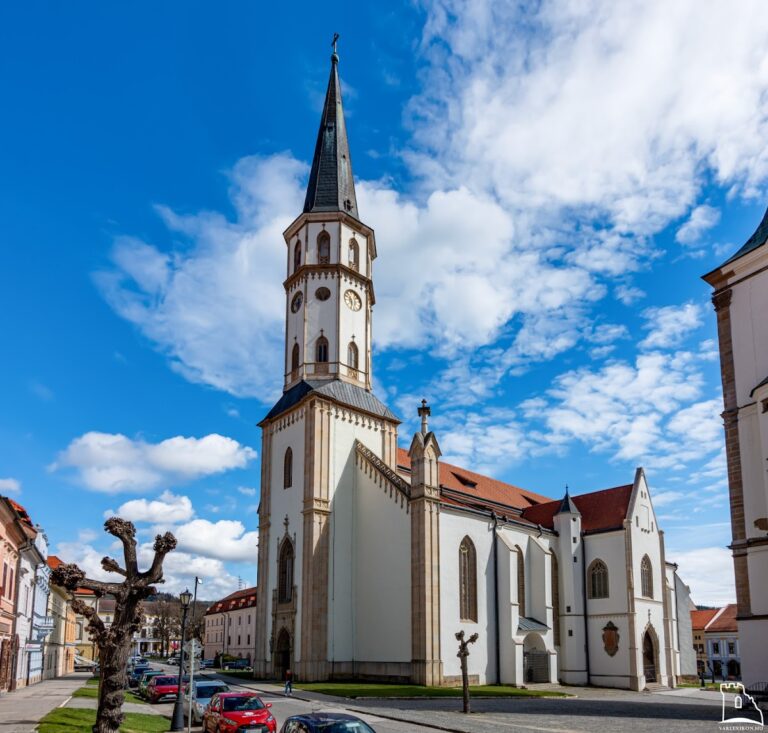
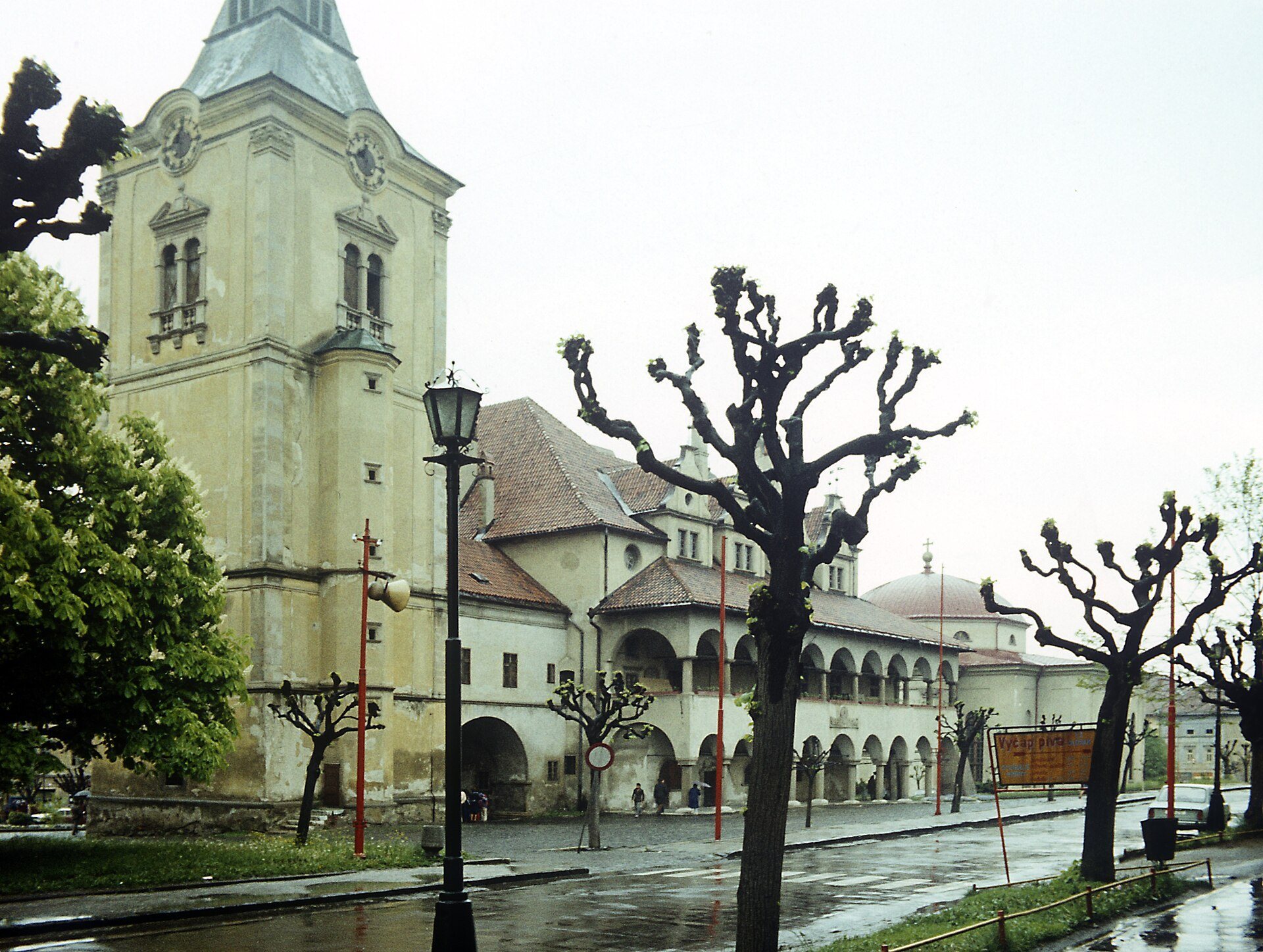
A Renaissance clock tower was built between the town hall and the Church of St James from 1656 to 1661. It served as the town bell tower and also contained clocks. In 1768, a passage connected it to the town hall. Both the town hall and the associated tower received Baroque alterations during the eighteenth century.
Historicist remodelling and modern use
From 1893 to 1895, the town hall underwent a major historicist remodelling in a neo-Renaissance manner. Frigyes Schulek, a Hungarian architect and university professor, designed the work. The corner columns were reinforced with piers, while the upper storey and roof gable were formed during this campaign, substantially changing the building’s earlier appearance.
The town hall remained the seat of Levoča’s municipal council until 1955. It now houses a branch of the Spiš Museum, a regional institution within the Slovak National Museum network. Its permanent exhibitions address the history of Levoča and the art history, crafts, art, and natural history of the Spiš region. The council chamber continues to serve representational purposes. Since 2009, the town hall has formed part of the UNESCO World Heritage property called “Levoča, Spiš Castle and the Associated Cultural Monuments.”
Remains
The town hall stands in the central part of Levoča’s elongated market square, now known as Námestie Majstra Pavla. Its long axis follows the length of the square, and the building lies between the Roman Catholic Church of St James to the northeast and the Evangelical church to the southwest. The present complex combines the masonry of the original two-storey Gothic structure with Renaissance arcades, later historicist forms, and the attached clock tower.
Town hall building
Renaissance arcades extend along the western and southern sides, with some arranged on two levels. Remnants of the earliest polychrome decoration survive at the right-hand corner of the southern facade. Later paintings between the windows represent restraint, prudence, courage, patience, and justice through allegorical figures.
The eastern entrance is reached by a staircase built in 1894. The remodelling created the present mansard roof and the building’s historicist Renaissance appearance. Inside are a vaulted entrance hall, a municipal council chamber with a beam ceiling, and a large hall vaulted on three columns. The council chamber is among the rooms accessible within the building.
Above the Renaissance doorway leading to the council chamber, a maxim dated 1549 advises: “When administering justice, set an example. Let the judge himself do what he demands of others.” A portrait of Julianna Korponay-Géczy, known in historical and literary tradition as the White Lady of Levoča, is also displayed. The painting originally stood in a niche in the town’s defensive walls.
Clock tower and forecourt feature
The Renaissance clock tower occupies the northeastern side of the town hall, between the main building and the Church of St James. Its connecting passage dates from 1768, while the tower itself was not included in the late nineteenth-century remodelling. In front of the town hall’s southeastern corner stands a historical pillory, or shame cage, dating from around 1600.