Casa del Mar: A Coastal Trading Fortress in Morocco

Site at a Glance
- Rating
- 4.6
- Popularity
- Very Low
- Country
- Morocco
- Primary era
- Modern
- Eras represented
- Modern
- Civilizations
- British
- Site type
- Military
- Remains
- Fort
On this page10 sections
History
Casa del Mar is a historical coastal fortress in Morocco, built by the British North West Africa Company at Cape Juby near Tarfaya and completed in 1882. It combined a trading post with a defended coastal base, linking commerce from the surrounding Saharan regions to the company’s commercial network.
Establishment and trade
Donald Mackenzie, a British trader, traveler, and engineer, founded the British North West Africa Company and established the enterprise at Tarfaya on 12 December 1879. The center was intended to exchange goods with caravans traveling from Timbuktu toward Wadi Noun and to develop trade with the surrounding Sahara.
Mackenzie reached a commercial agreement with Sheikh Mohamed Bairouk, with support from the British vice-consul on Lanzarote in the Canary Islands. The fortress was completed in 1882 under the name Port Victoria, honoring Queen Victoria, the British monarch of the period. The company operated the trading center until 1895.
Attack and British withdrawal
On 26 March 1888, local Saharan tribes attacked the fortress. The assault killed its head and wounded two workers, but commercial activity continued afterward. Following the attack and the Treaty of Cape Juby, the company abandoned the site and ceded it to Sultan Moulay Abd al-Aziz, who ruled Morocco from 1894 to 1908. The British government then recognized Moroccan sovereignty over the territory between the Draa River and Cape Bojador.
Later name and conservation
During the Spanish occupation of the area from 1916, the fortress became known as Casamar, the Spanish name meaning “House of the Sea.” Casa del Mar remains the locally used name. The building endured Atlantic Ocean waves for 128 years and is now a ruin. In 2014, Morocco’s Ministry of Culture began a five-year project to repair and rehabilitate the monument.
Remains
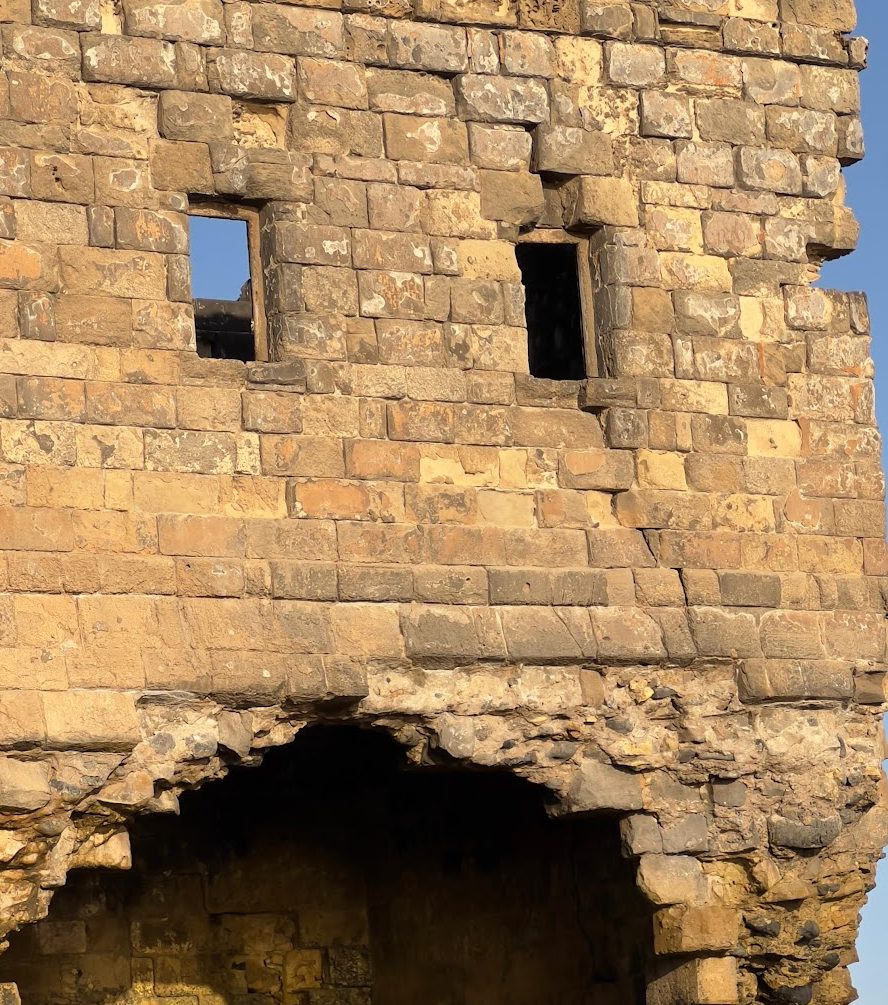
Casa del Mar was built on a sandy island at Cape Juby. The fortress formed a compact two-storey complex, with rooms for commercial storage, tanks for drinking water, and a shipping port. Cannons added a military function to the trading establishment, which now survives in ruined condition.
Fortress layout
The ground floor contained eight rooms, while a further eight rooms occupied the upper floor. These spaces stored consumer goods imported from the surrounding region and goods exported through the area toward Manchester, England. The arrangement reflects the fortress’s role as both a warehouse and a coastal exchange center.
Water, shipping, and defense
Water tanks
Six tanks at ground level supplied potable water. Their inclusion formed part of the fortress’s practical infrastructure on the sandy island.
Shipping port
A port beside the fortress provided berthing for ships and commercial boats, allowing goods to move through the trading center and connect the coastal site with its wider commercial routes.
Cannons
Military cannons protected the complex against possible attacks by local Saharan tribes. They gave the commercial establishment a defensive capacity alongside its storage and shipping facilities.