St. Hovhannes Chapel, Hartagyugh: An Armenian Pilgrimage Site
Site at a Glance
- Popularity
- Very High
- Country
- Armenia
- Primary era
- Modern
- Eras represented
- Modern
- Civilizations
- Armenian
- Site type
- Religious
- Remains
- Chapel
On this page7 sections
History
St. Hovhannes Chapel is an Armenian Apostolic place of worship on the summit of Saint’s Mountain in Armenia’s Pambak range, near Tsaghkaber. It belongs to the Armenian Apostolic Church, Armenia’s historic Christian church, and the Diocese of Gugark, a church administrative district. The chapel has served as a pilgrimage destination and is linked to traditions about John the Baptist.
Pilgrimage tradition
Tradition holds that relics of John the Baptist, a preacher prominent in Christian belief, were brought to the site and buried there in the thirteenth century. In past centuries, the chapel was among the Alexandropol district’s prominent destinations for Vardavar, an Armenian Christian feast celebrating the Transfiguration of Christ.
Destruction and rebuilding
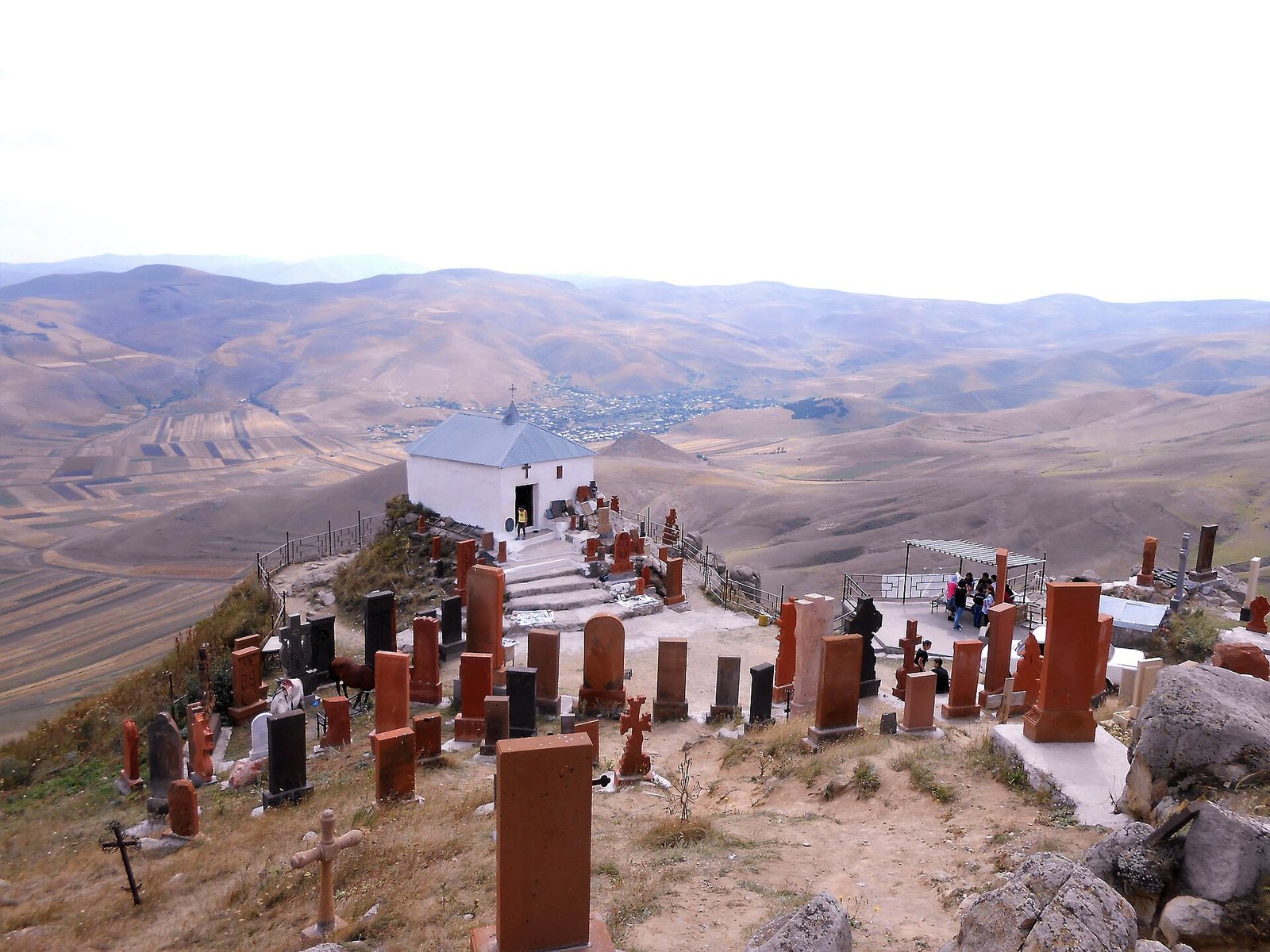
Under the communist regime, the chapel was blown up and burned three times. Residents of Hartagyugh rebuilt it after each destruction, with the most recent rebuilding completed in 1958. Cross-stones known as khachkars had been at the site before its first destruction in the 1930s, and their installation began again in 2005.
Literary references
The Armenian poet Hovhannes Shiraz referred to the chapel in his letters and poems. George Gurdjieff, a twentieth-century mystic philosopher and writer, also wrote about it in Meetings with Remarkable Men.
Remains
The chapel on Saint’s Mountain
The chapel stands at an elevation of 2,157 metres on the summit of Saint’s Mountain, in the Pambak range near Tsaghkaber. Its mountain setting is difficult to reach and lies in a strong seismic zone, where earthquakes and severe winds occur. The building remains standing, but its earlier form has not survived. Its altered appearance is described as needing restoration and correction.
Cross-stones and interior
Hundreds of carved Armenian cross-stones, or khachkars, are now installed at the site. Crosses and religious icons are found inside the chapel, while numerous fragments have been seen below it.