Church of the Holy Saviour: An Armenian Apostolic Church in Gyumri
Site at a Glance
- Popularity
- High
- Country
- Armenia
- Primary era
- Modern
- Eras represented
- Modern
- Civilizations
- Armenian, Russian
- Site type
- Religious
- Remains
- Church
On this page9 sections
History
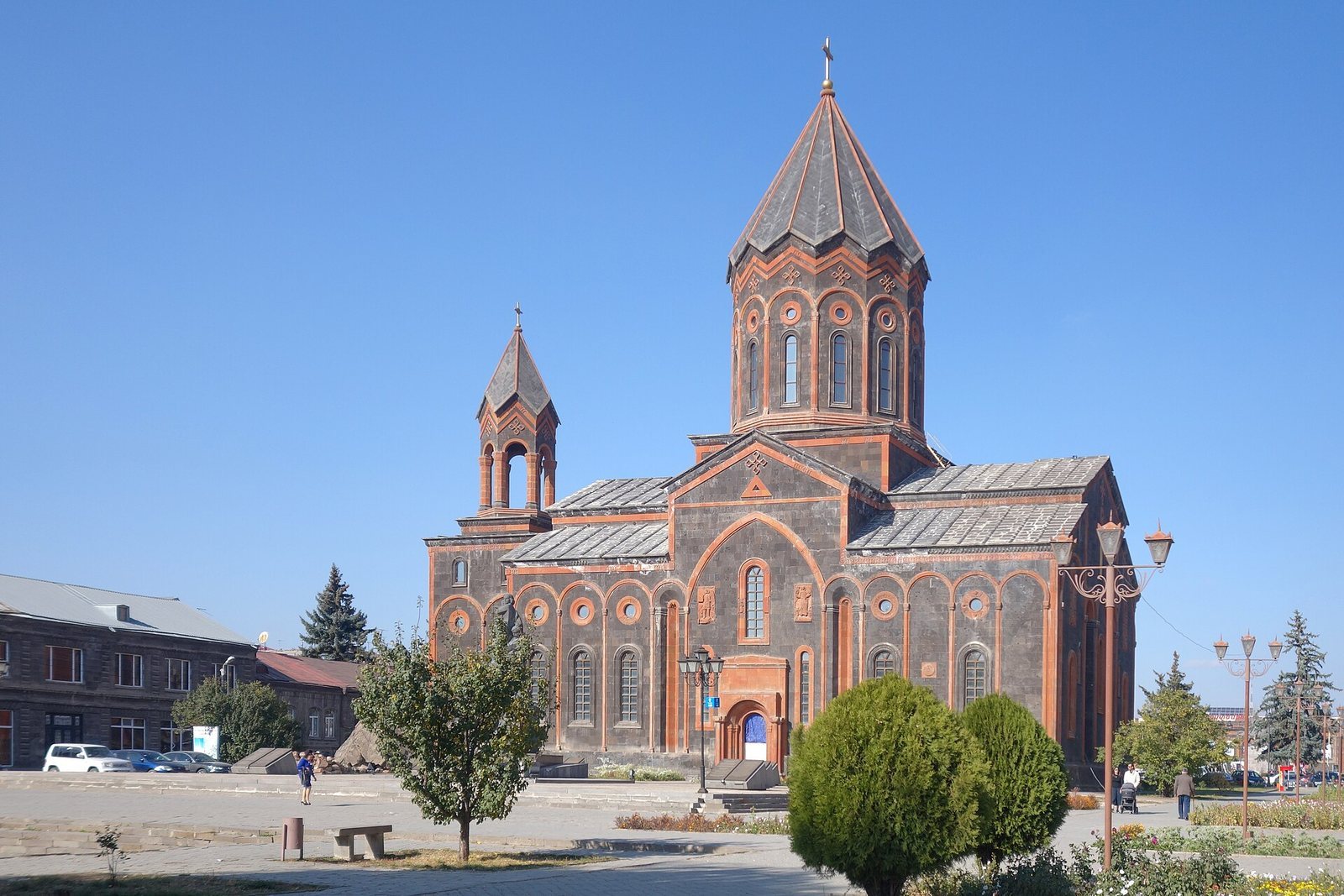
The Church of the Holy Saviour is an Armenian Apostolic church on the southern side of Vartanants Square in central Gyumri, Armenia. Construction began in 1858 and was completed in 1872 in Armenian style. It belongs to the Armenian Apostolic Church, one of the Oriental Orthodox churches, and the Diocese of Shirak, a regional church jurisdiction.
A larger church for Alexandropol
In the 1850s, two churches stood in central Alexandropol, the former name of Gyumri: one Armenian Apostolic and the other Greek Orthodox. The local Armenian Apostolic community wanted a larger church on their site. Residents financed the new building, including members of the Drampyan family, and it was formally dedicated in 1873.
Earthquake and Soviet-era changes
The church survived the 1926 earthquake. Its position on a marshy riverbank had partly been chosen because the ground was expected to soften earthquake tremors. In the early 1930s, Soviet authorities took control of the building and church services stopped. The parish school that had operated beside it was demolished during the Soviet period.
In 1932, the bell tower was demolished after tanks and explosives had been used in attempts to bring it down; it was rebuilt in 1964. The church building was used first as a museum, then for a philharmonic and as a classical-music concert hall.
Earthquake damage and restoration
The 1988 earthquake severely damaged the church. Some opposed restoring it, proposing that the ruins be preserved as an earthquake memorial. Restoration was authorized in 1995 following efforts involving local architects, conductor Loris Tjeknavorian and Shirak governor Ararat Gomtsyan. Work began in 2002, with former Gyumri mayor Vardan Ghukasyan taking responsibility for its costs; funding shortages repeatedly interrupted the project.
The exterior was restored in 2014. On June 21 that year, Garegin II, Catholicos of All Armenians and senior head of the Armenian Apostolic Church, blessed crosses that were placed on the dome and bell tower. The church reopened in 2023 and was reconsecrated by Garegin II on December 7, 2024. It is active today.
Remains
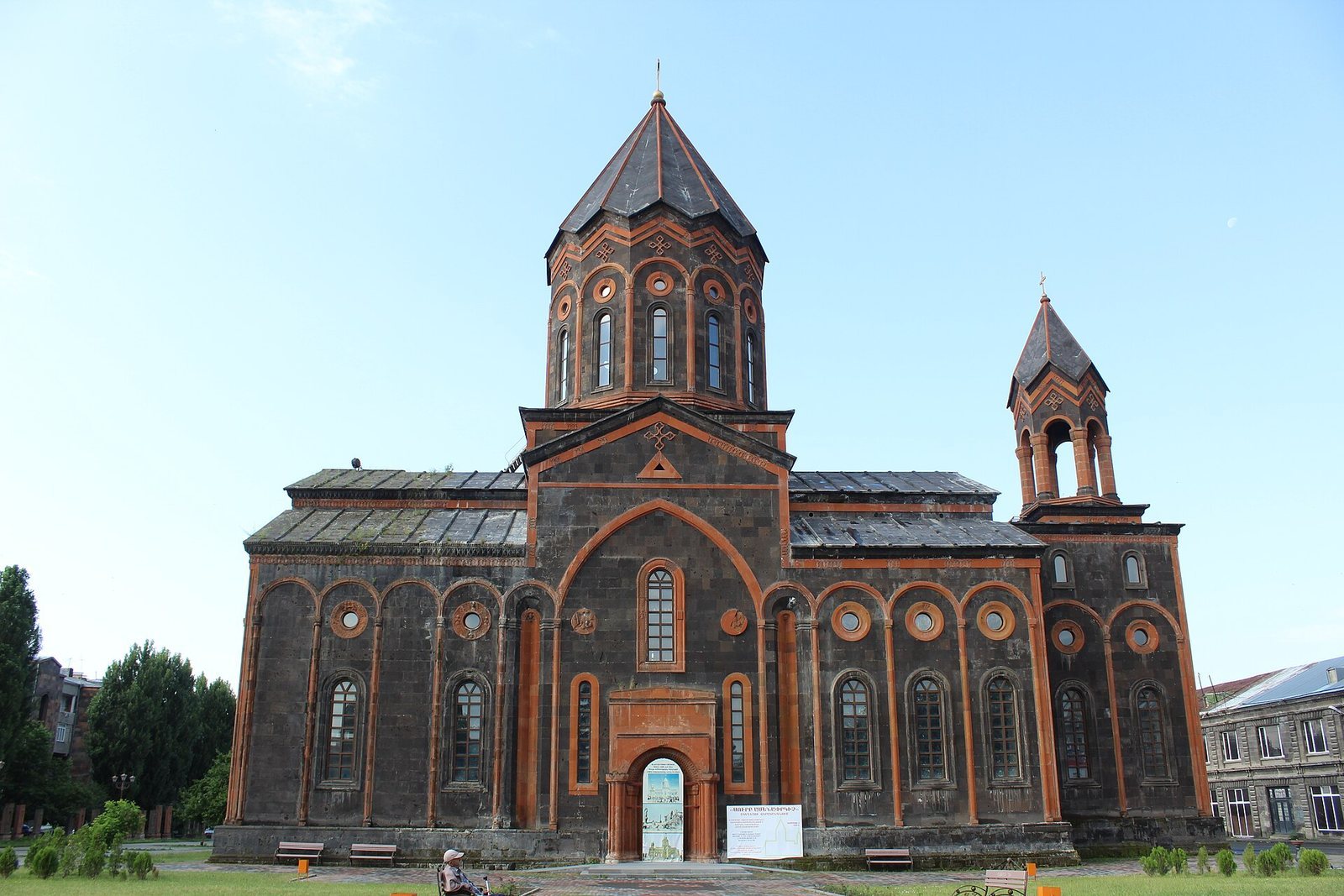
The complex centers on a domed basilica, a church in basilica form with a dome, accompanied by a bell tower and a small annex against the north side. The church reaches a maximum height of 36 metres.
Architectural features
Main church
The church’s design was modeled on the Cathedral of Ani, a medieval Armenian cathedral in a historic city now in eastern Turkey, and the two buildings resemble one another. During restoration, craftsmen reused as many of the church’s original stones as possible. A wall painting and decorative patterns adorn the dome. Manuk Petrosyan directed the woodwork and became known as “Righteous Manuk” after personally lifting and fixing a large cross to the main dome. The cross weighed six poods, a traditional unit of about 16.4 kilograms.
Bell tower and north annex
The bell tower forms part of the church complex. A small annex was added against the north façade in 1882 with funding from the Dzitoghtsyan family.
Carved stone crosses
More than 20 khachkars, Armenian carved stones bearing crosses, were installed in 2010 in the grounds behind the church and in the courtyard of Shaumyan Church. Made by Gyumri craftsmen, they copy khachkars from Julfa, a historic Armenian settlement known for these carved stones.