St Edmund, King and Martyr: An Anglican Church in London
Site at a Glance
- Rating
- 4.8
- Popularity
- Medium
- Country
- United Kingdom
- Primary era
- Early Modern
- Eras represented
- Early Modern
- Civilizations
- English
- Site type
- Religious
- Remains
- Church
On this page7 sections
History
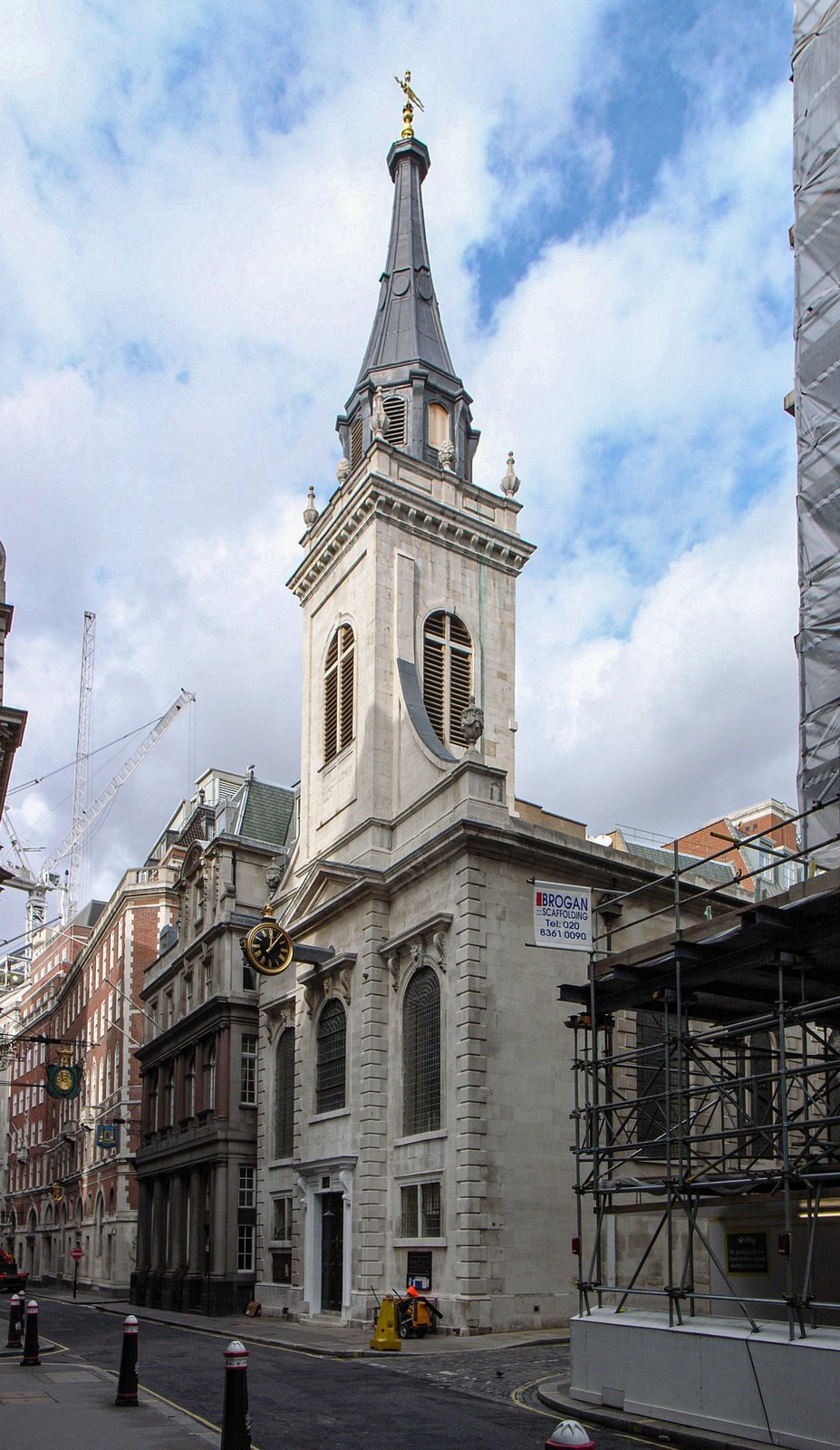
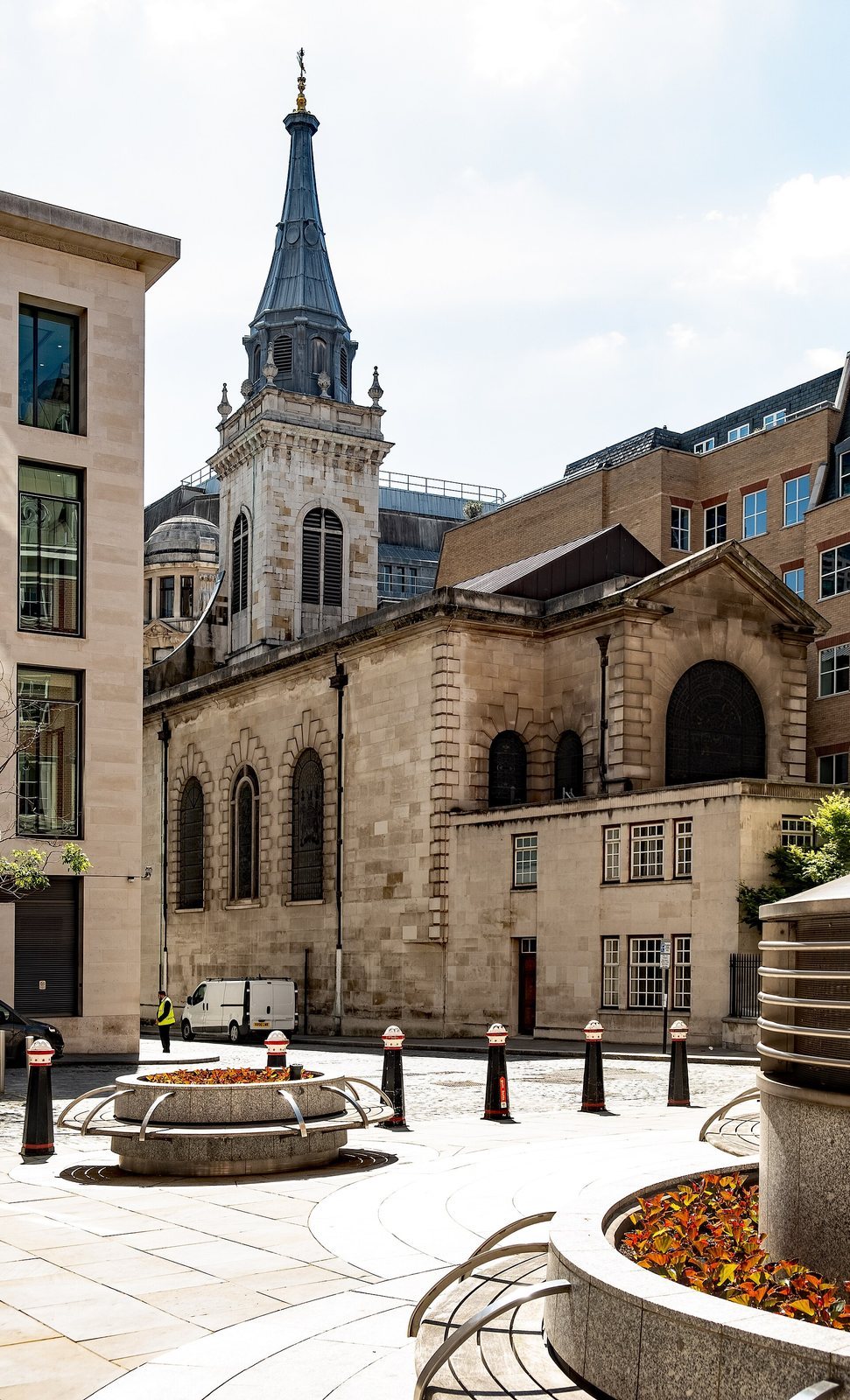
St Edmund, King and Martyr is an Anglican church on Lombard Street in the City of London, United Kingdom. The present English Baroque church was built between 1670 and 1679, replacing a medieval church dedicated to Edmund, an early medieval king of East Anglia who died in 869 and was later canonized as a Christian saint.
Medieval church and dedication
A church dedicated to Edmund existed by the thirteenth century. It appears in a 1292 record as “Saint Edmund towards Garcherche” and in 1348 as “Saint Edmund in Lombard Street.” John Stow’s Survey of London, first published in 1598 and revised in 1603, also called it St Edmund Grass Church. The name referred to a market selling hay, grass, and seeds that extended to the church. The church was Roman Catholic until 1534 and is now Anglican, within the Church of England.
Rebuilding after the Great Fire
The Great Fire of London destroyed the medieval church in 1666. Its parish was joined with that of St Nicholas Acons, whose church was also destroyed and never rebuilt. The present building was designed by the English scientist and architect Robert Hooke, with Christopher Wren’s approval, and constructed from 1670 to 1679. The essayist Joseph Addison married there in 1716.
Restoration, damage, and continuing use
William Butterfield directed restoration work in 1864, followed by further restoration in 1880. In September 1868, a riot broke out outside the church after the Anglican clergyman J. L. Lyne, known as “Father Ignatius,” criticized Lombard Street traders in a Friday-morning sermon. A German daylight air raid struck the church with a high-explosive bomb on 7 July 1917, prompting extensive repairs. Incendiary bombs damaged it again during the 1941 London Blitz. The church became a Grade I listed building on 4 January 1950, the highest category of listed-building protection in England.
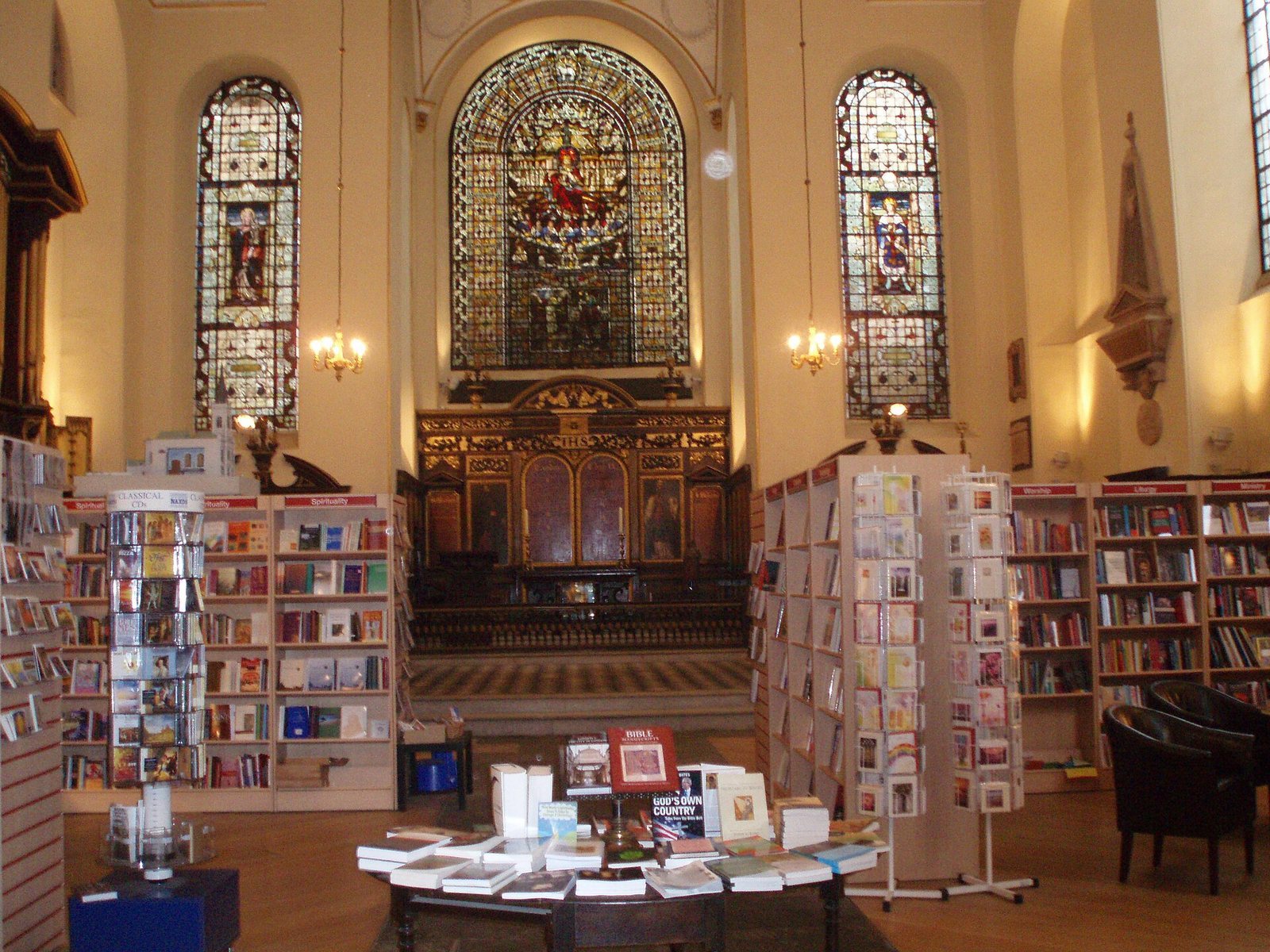
From 2001, the building housed the London Centre for Spirituality, later renamed the London Centre for Spiritual Direction. It remains consecrated, meaning formally dedicated for worship, and Imprint Church has held regular worship there since 2019. The building also houses the office of the Bishop of Islington. The church is part of the Diocese of London and a combined parish commonly shortened to St Edmund & St Mary Woolnoth. The grouping also includes St Nicholas Acons, All Hallows Lombard Street, St Benet Gracechurch, St Leonard Eastcheap, St Dionis Backchurch, and St Mary Woolchurch Haw. St Edmund and St Mary Woolnoth are the only surviving churches in the group.
Remains
Plan and interior
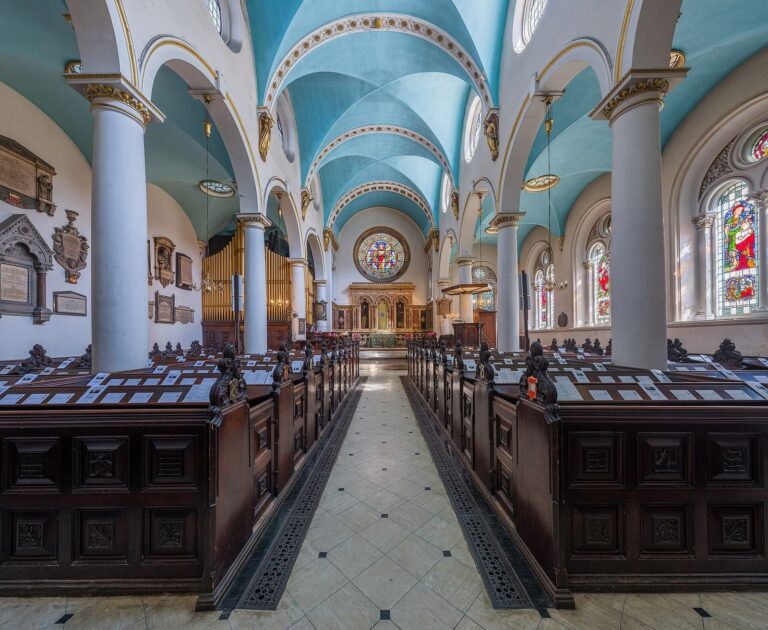
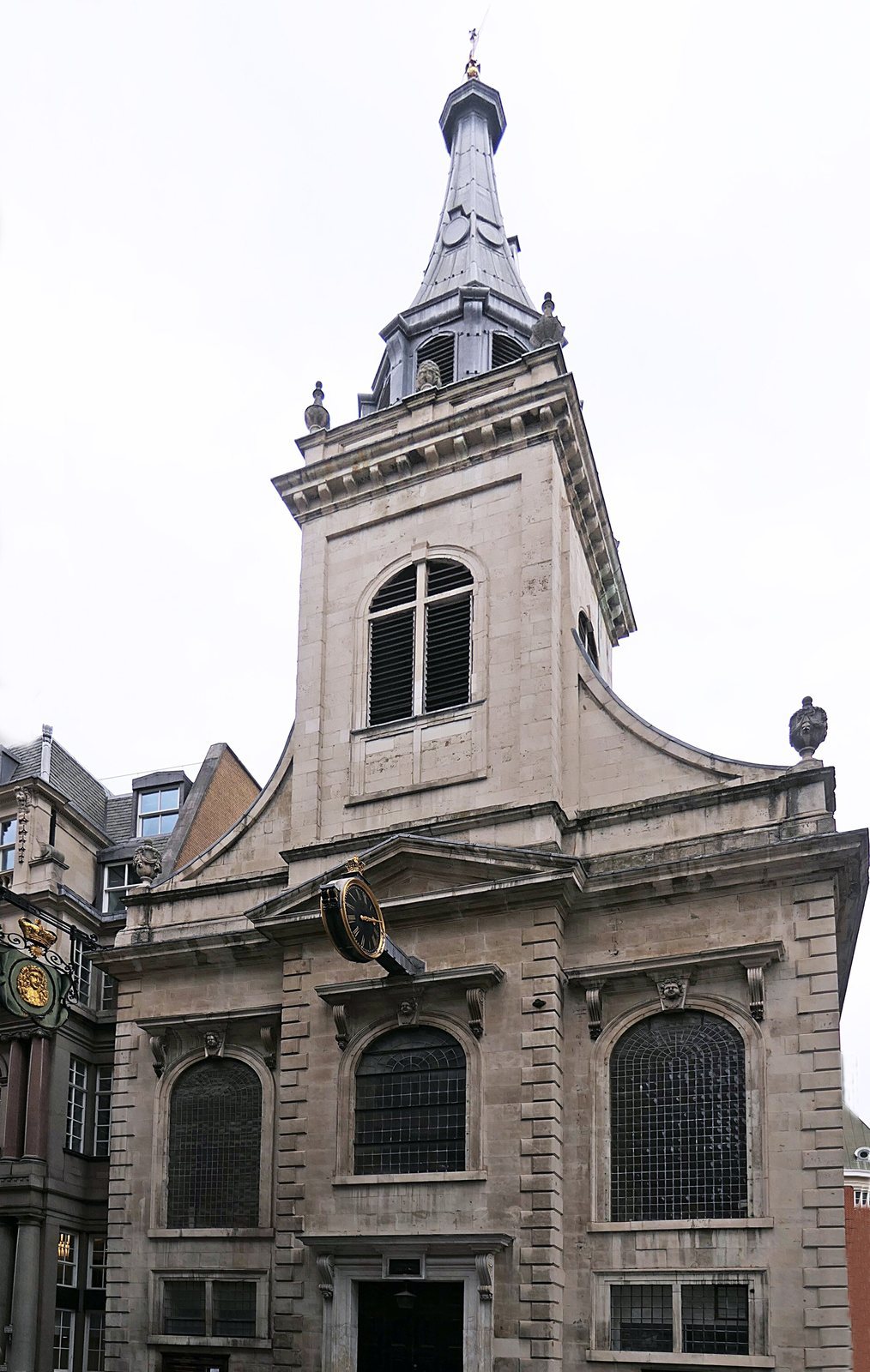
The church has a simple, undivided hall interior, with its altar facing north rather than the more usual east. Its design is English Baroque. A drawing of the original façade is held at All Souls College, Oxford.
Tower and wartime damage
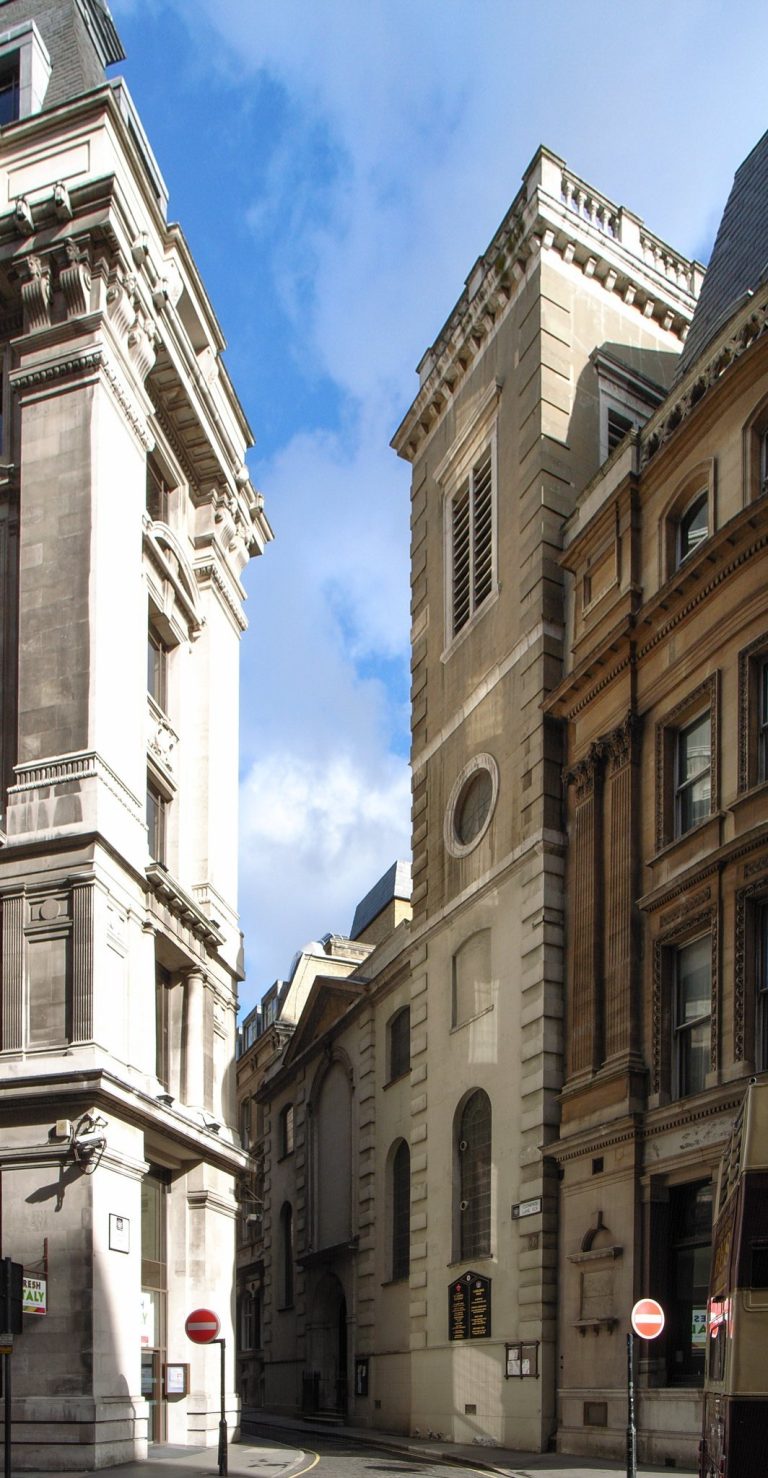
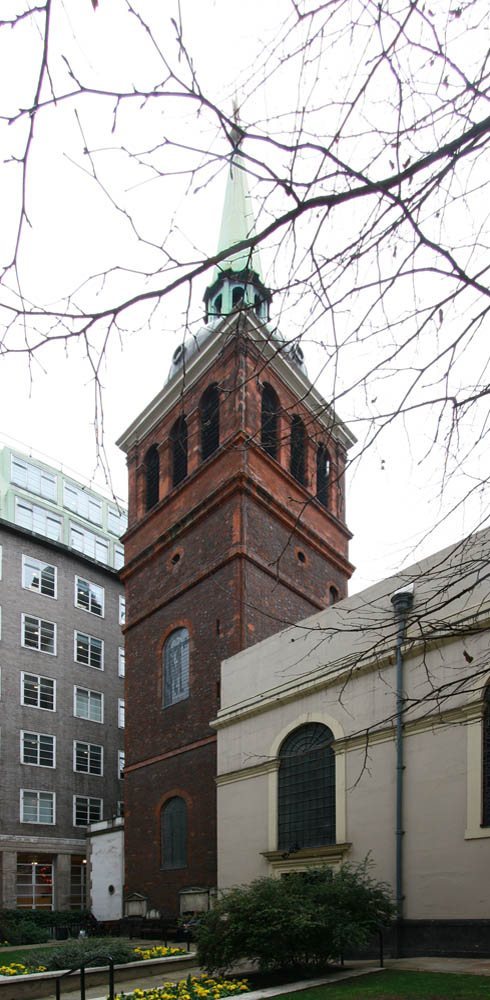
The tower has flaming urns at its corners, an allusion to the Great Fire. By 1706 it had acquired its upper section, including a slightly curved, helmet-shaped pyramidal roof. The bomb that struck the church in 1917 destroyed its main roof beam; fragments of the German bomb are preserved inside the church.