St Mary Abchurch: A Wren Church Rebuilt after the Great Fire
Site at a Glance
- Rating
- 4.6
- Popularity
- Low
- Country
- United Kingdom
- Primary era
- Early Modern
- Eras represented
- Early Modern, Modern
- Civilizations
- British, English
- Site type
- Religious
- Remains
- Church
On this page11 sections
History
Medieval church and changing patronage
St Mary Abchurch is a Church of England church in the City of London, United Kingdom, dedicated to the Virgin Mary and first mentioned in 1198–1199. The medieval church was Roman Catholic before the English Reformation, the sixteenth-century break between the Church of England and papal authority. The name Abchurch probably derives from an early incumbent. A proposed connection to Upchurch, referring to a supposed position on high ground, does not fit the church’s earlier name forms.
The religious house of St Mary Overy in Southwark held the church’s patronage, the right to nominate its incumbent, until about 1455. It then passed to the master and chaplains of the Corpus Christi college at St Laurence Pountney. After the Reformation, Archbishop Matthew Parker persuaded Elizabeth I to transfer the right to Corpus Christi College, Cambridge, which has appointed the church’s incumbent ever since. Parishioners paid for extensive restoration and beautification in 1611.
Rebuilding and later changes
The Great Fire of London destroyed the medieval church in 1666. The replacement was built between 1681 and 1686 by Sir Christopher Wren, or under his direction, with Robert Hooke supervising the work. Wren was an English architect who designed St Paul’s Cathedral and many churches rebuilt after the fire. St Mary Abchurch’s parish was joined with that of nearby St Laurence Pountney, also destroyed in the fire and not rebuilt.
Repairs and beautification followed in 1708. The church received its first organ in 1822, paid for by public subscriptions and made by J. C. Bishop. Peter Perchard, a merchant and former Lord Mayor of London, and members of his family are buried in the church. St Mary Abchurch became a Grade I listed building, England’s highest listed-building grade, on 4 January 1950.
Wartime damage and repair
A bomb struck the church during the London Blitz in September 1940, part of Germany’s aerial bombing campaign against Britain in the Second World War. The dome suffered especially severe damage. W. Godfrey Allen directed repairs from 1948 to 1953. E. W. Tristan worked on restoring the dome until his death in 1952, after which Walter Hoyle completed the work. The organ, badly damaged in the bombing, was replaced in the 1950s by an instrument made by N. P. Mander.
The church is now in the Diocese of London and follows the Church of England’s Traditional Catholic tradition, which emphasizes Catholic liturgy and practice.
Remains
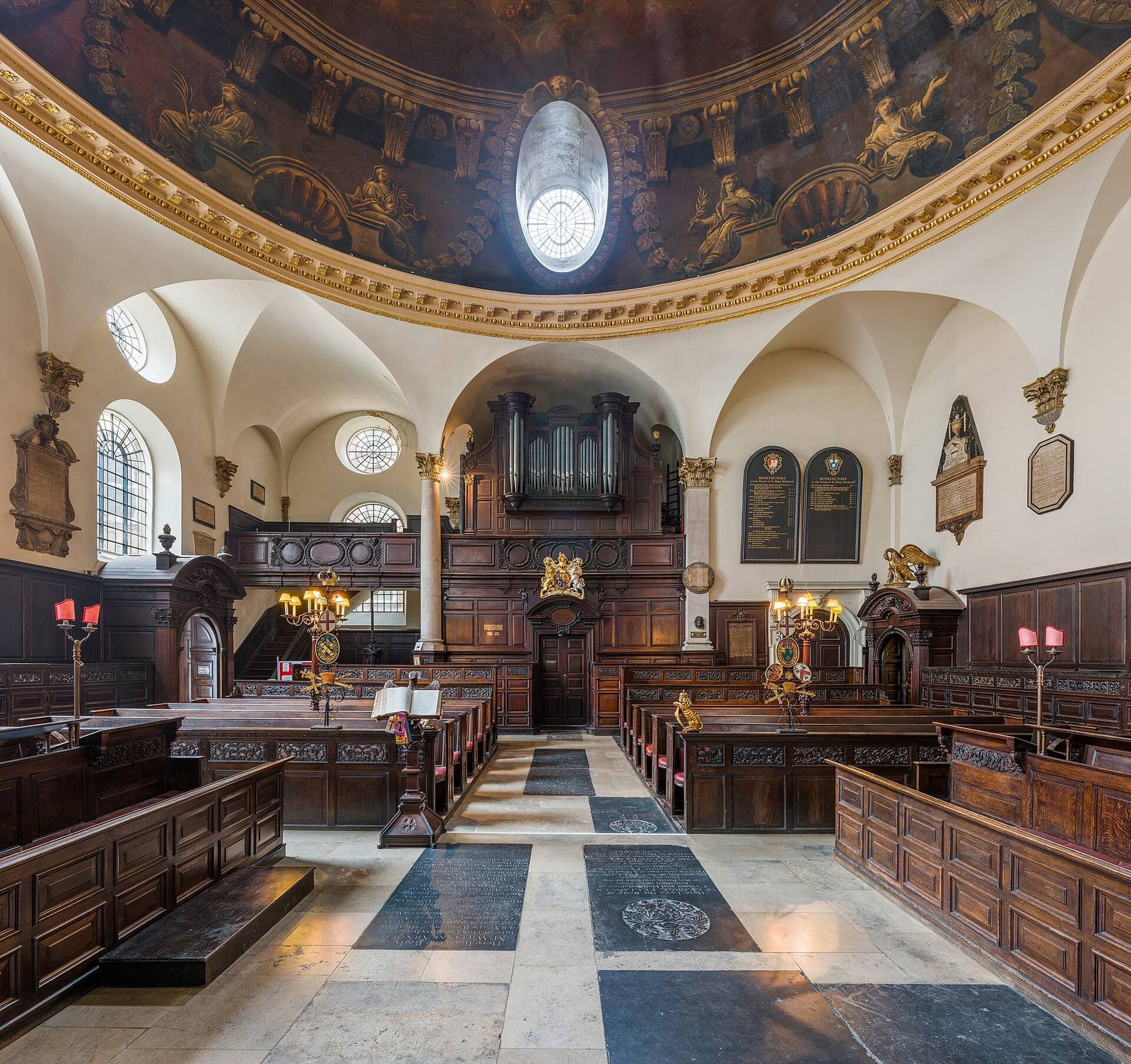
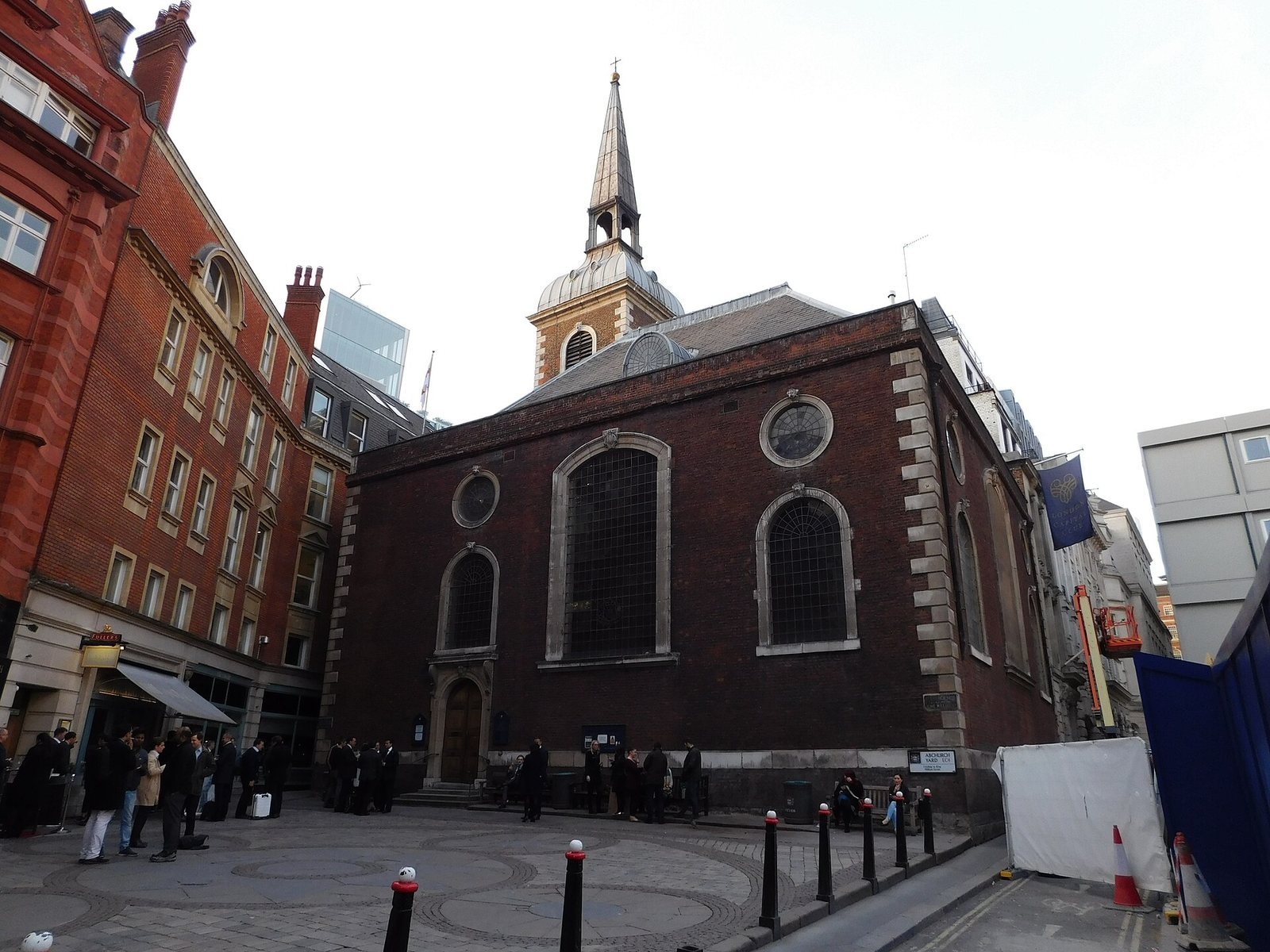
St Mary Abchurch combines a red-brick exterior with stone dressings and a compact interior beneath a broad domed ceiling. It was intended to be substantially larger, on a plan compared with St Stephen Walbrook, but was built on a smaller scale for reasons that remain unknown.
Exterior and structure
Tower and exterior
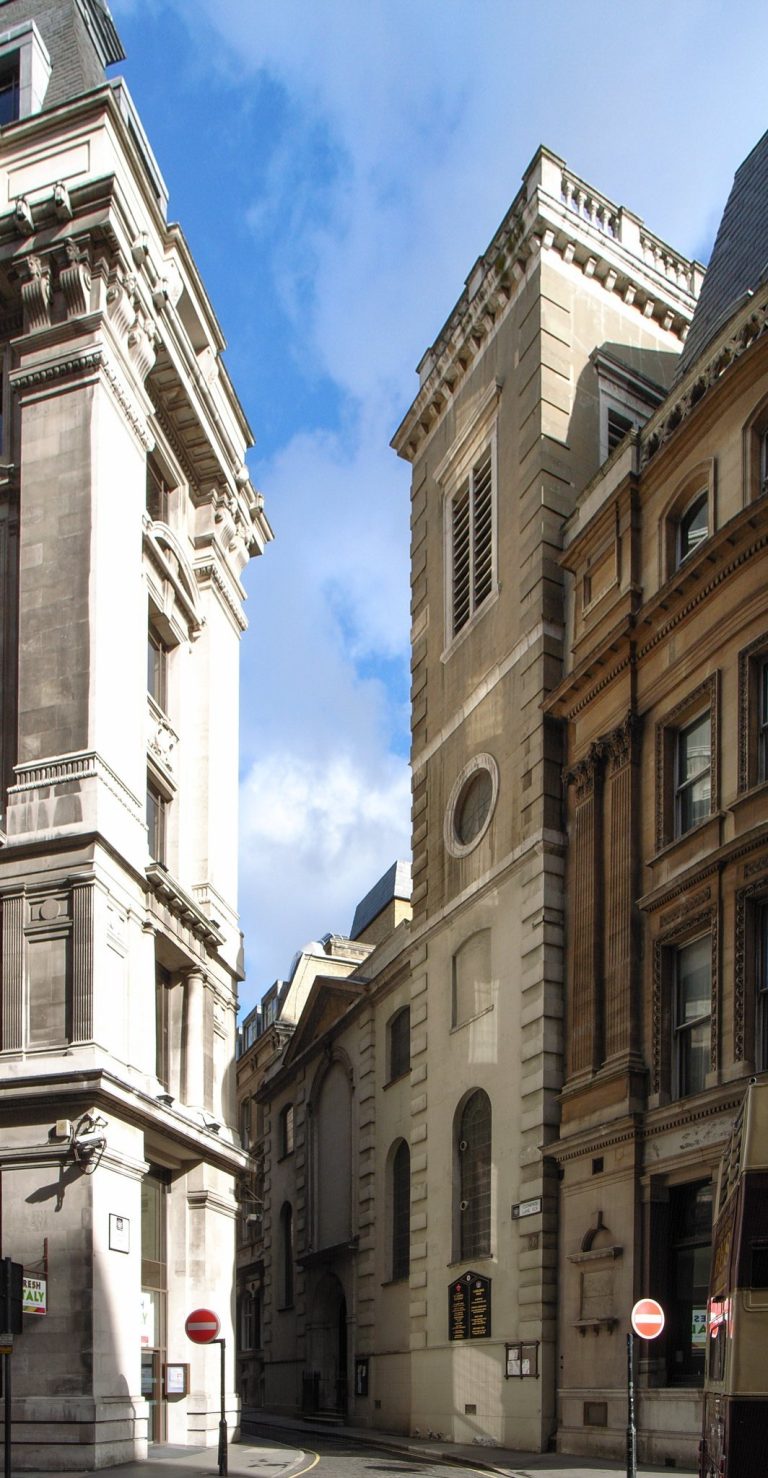
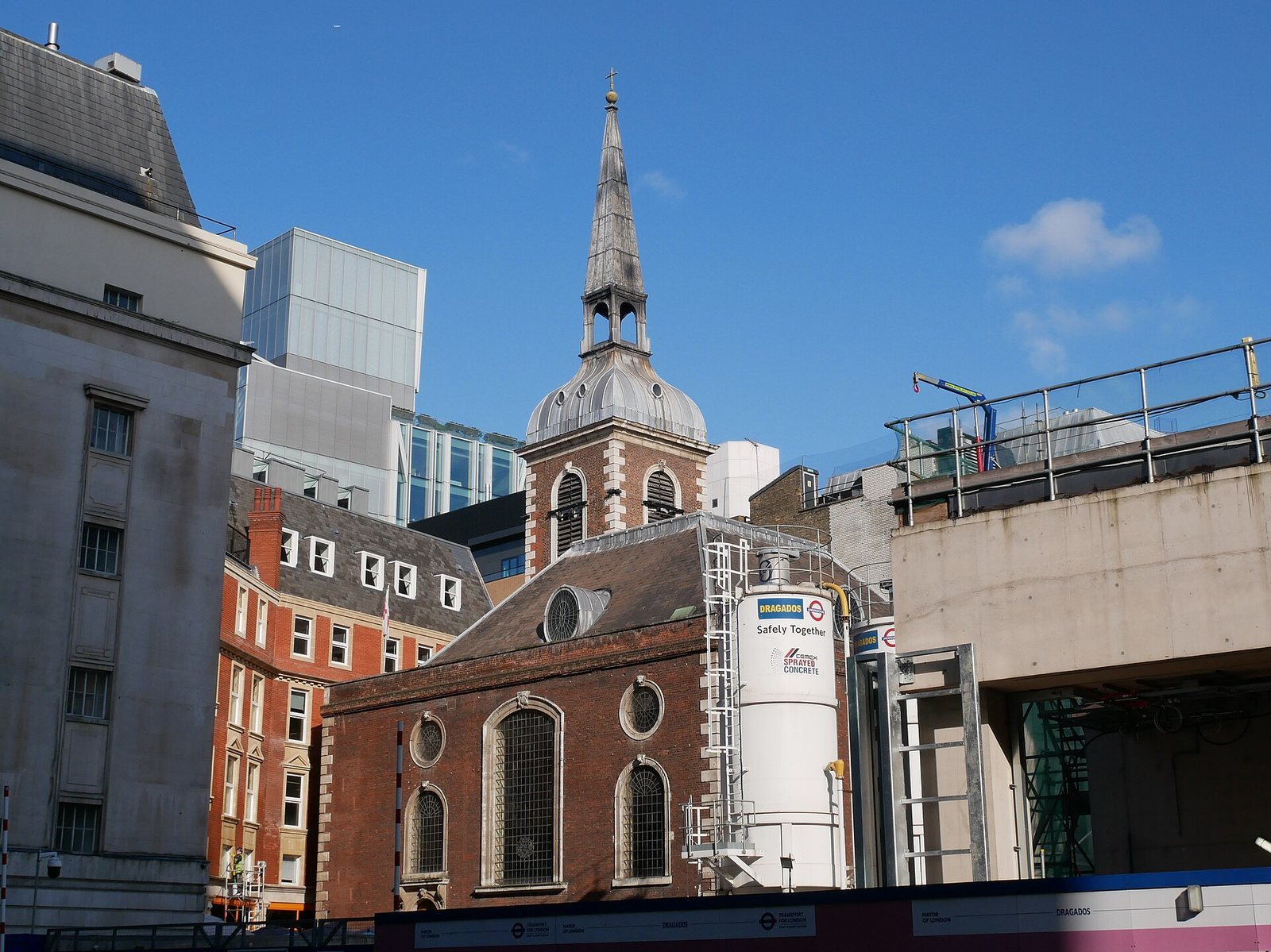
The church’s four-storey tower stands about 16 metres (51 feet) high and carries a lead-covered spire. Its exterior brickwork is finished with stone details. A copper weather vane made by Robert Bird originally stood on the spire. It bears a gilded pelican feeding its young, a Christian emblem of self-sacrifice that is also used by Corpus Christi College. The vane was later moved for safety and now sits above the north door.
Domed ceiling
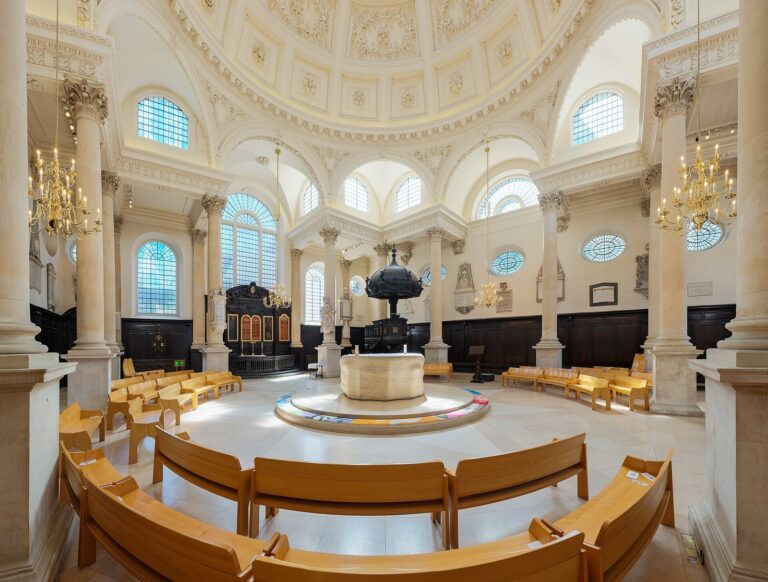
The cupola, a domed ceiling, rises from four plain brick walls and has no external supports to counter its outward thrust. It spans about 13 metres, or more than 40 feet. Four elliptical openings in the dome appear almost circular from outside and lead into dormer windows set into the roof.
Oil-painted decoration is applied directly to the cupola’s plaster. A painted cornice creates the illusion of a three-dimensional moulding and divides the dome into two zones. Above it, angels and cherubs turn towards a radiant centre bearing the name of God in Hebrew characters. Below, eight seated female figures are painted in monochrome to resemble sculpture. Their meaning is uncertain and has been interpreted in different ways. The decoration was restored once in the eighteenth century and twice in the nineteenth, then fully restored and repainted after the Second World War. William Snow is a probable painter, though payments to him do not specify what work he carried out.
Interior furnishings
Altar and church fittings
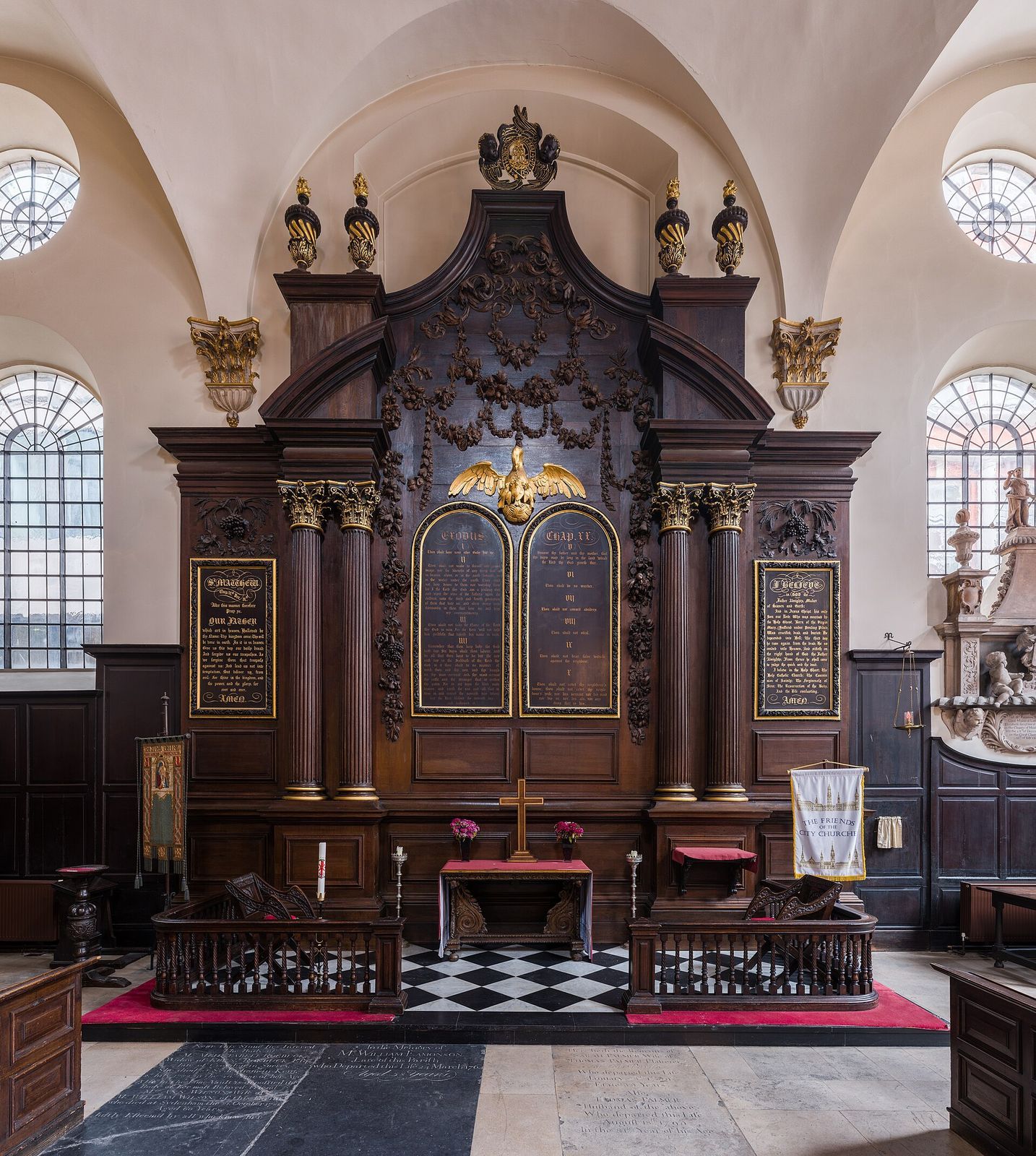
Grinling Gibbons made the main altar piece, or reredos, an ornamental structure behind the altar. Its gilded pelican motif matches the emblem on the weather vane. Church wardens removed the reredos and kept it safe during the Second World War, so it survived the bombing intact. William Grey made the pulpit, while William Emmett produced the door cases, font cover, rails, and Royal Arms.
Pews and organ
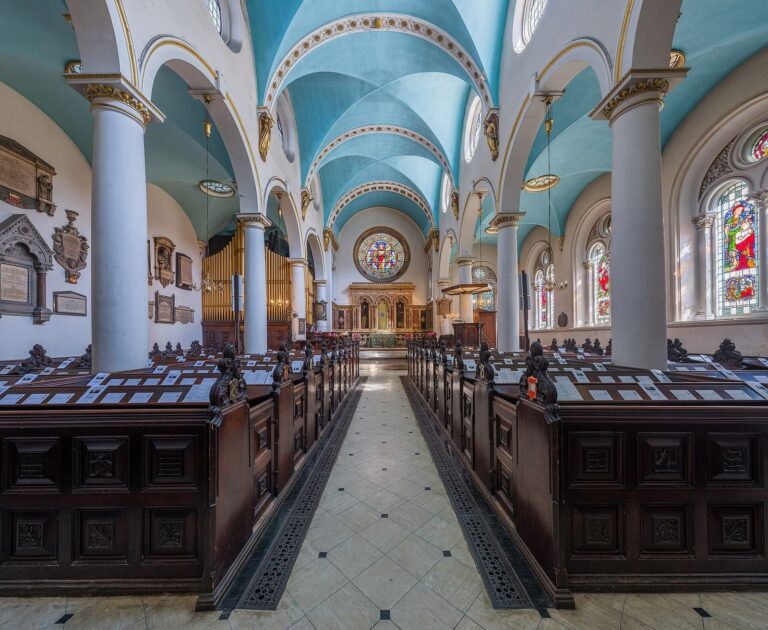
Original high box pews, enclosed seating with tall sides, survive along three sides of the church. The organ made by N. P. Mander in the 1950s incorporates the case of an instrument built in 1717 for All Hallows, Bread Street, a church demolished in 1876.