St Augustine’s Church, Penarth: A Victorian Parish Church
Site at a Glance
- Rating
- 4.6
- Popularity
- Low
- Country
- United Kingdom
- Primary era
- Modern
- Eras represented
- Medieval, Modern
- Civilizations
- British
- Site type
- Religious
- Remains
- Church
On this page12 sections
History
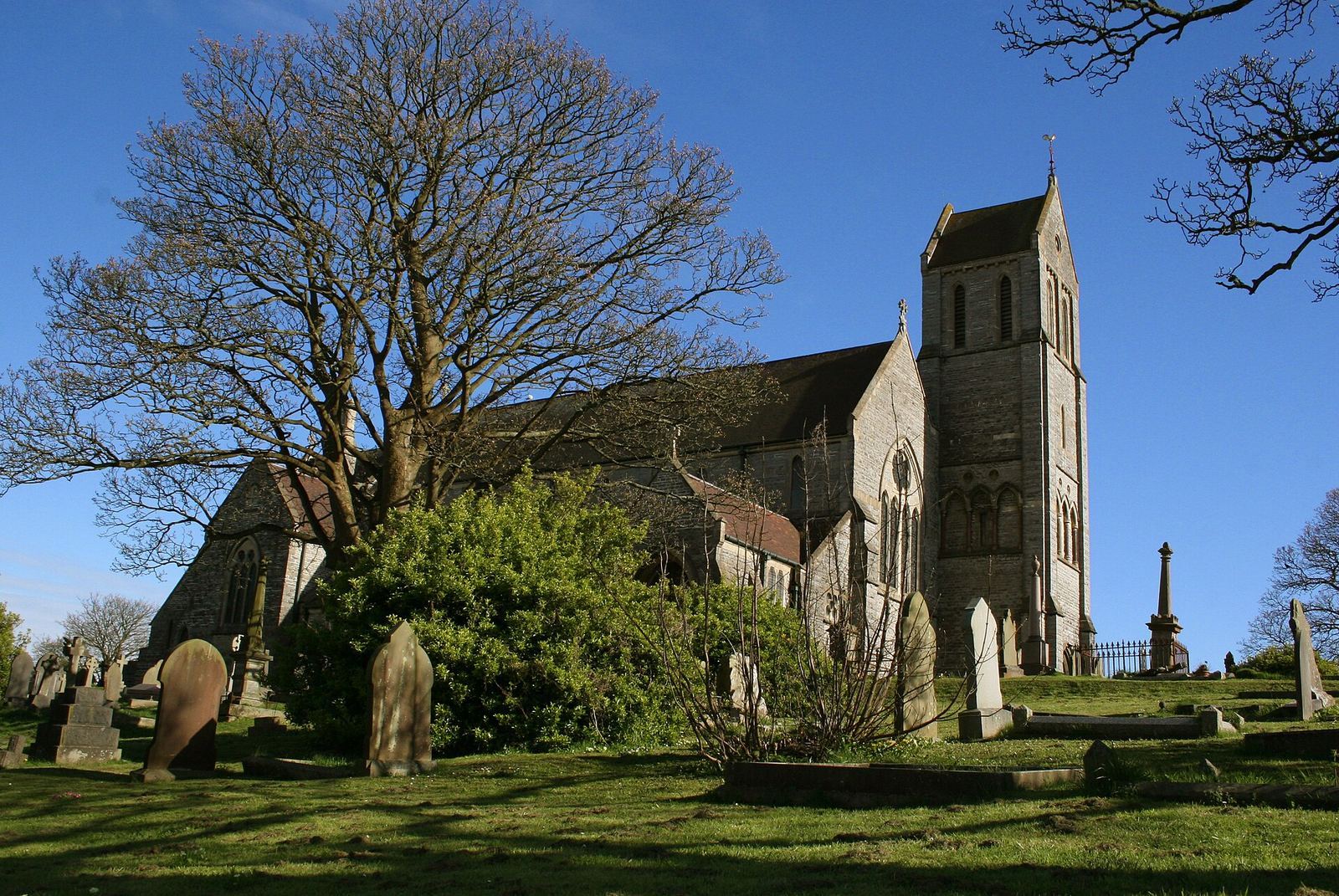
St Augustine’s Church, Penarth, is a parish church of the Anglican Church in Wales in the United Kingdom. Rebuilt in 1865–66, it interprets the Gothic Revival through Early English forms, an earlier phase of English Gothic architecture. Dedicated to St Augustine of Hippo, an influential Christian bishop and theologian, it is recognized as William Butterfield’s most ambitious building in Wales and an exceptionally intact example of High Victorian church architecture.
Medieval foundation
In 1183, Osbert de Pennard gave the site to the Black Canons of St Augustine, Augustinian clergy who lived in community according to the Rule of St Augustine. William de Saltmarsh, who later became Bishop of Llandaff, a senior cleric with oversight of a diocese, directed the construction of the first church in 1242.
Victorian rebuilding
By the 19th century, the medieval church could no longer serve Penarth’s growing parish. It was demolished in 1865, and Harriet Windsor-Clive, the 13th holder of the title Baroness Windsor, commissioned a replacement on the same site. Designed by the English architect William Butterfield, the new church was built between 1865 and 1866.
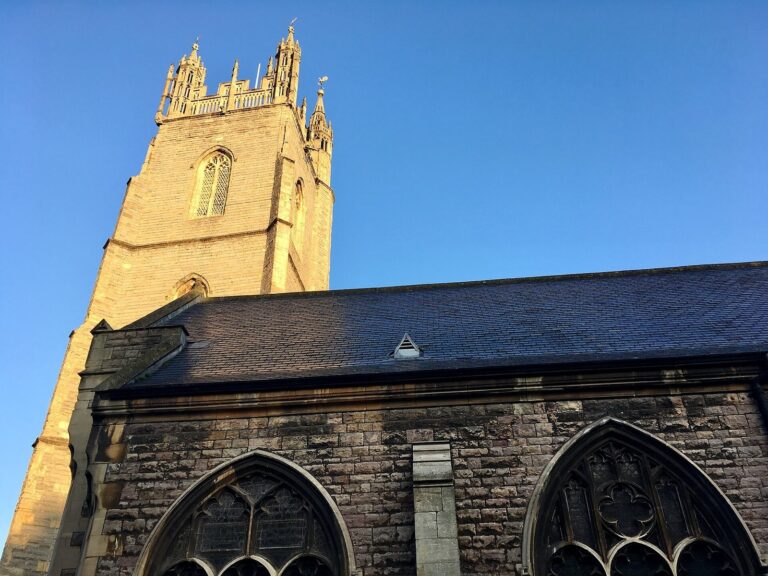
The medieval church’s Norman-style tower had served as a navigational landmark for pilots on the Bristol Channel. Pilots objected to an initial proposal for a short, square tower on the replacement, and the design was changed to include a tower 90 feet high. During the Second World War, its height raised concern that German forces might use it as a visual guide when bombing Cardiff’s docks.
Later history and recognition
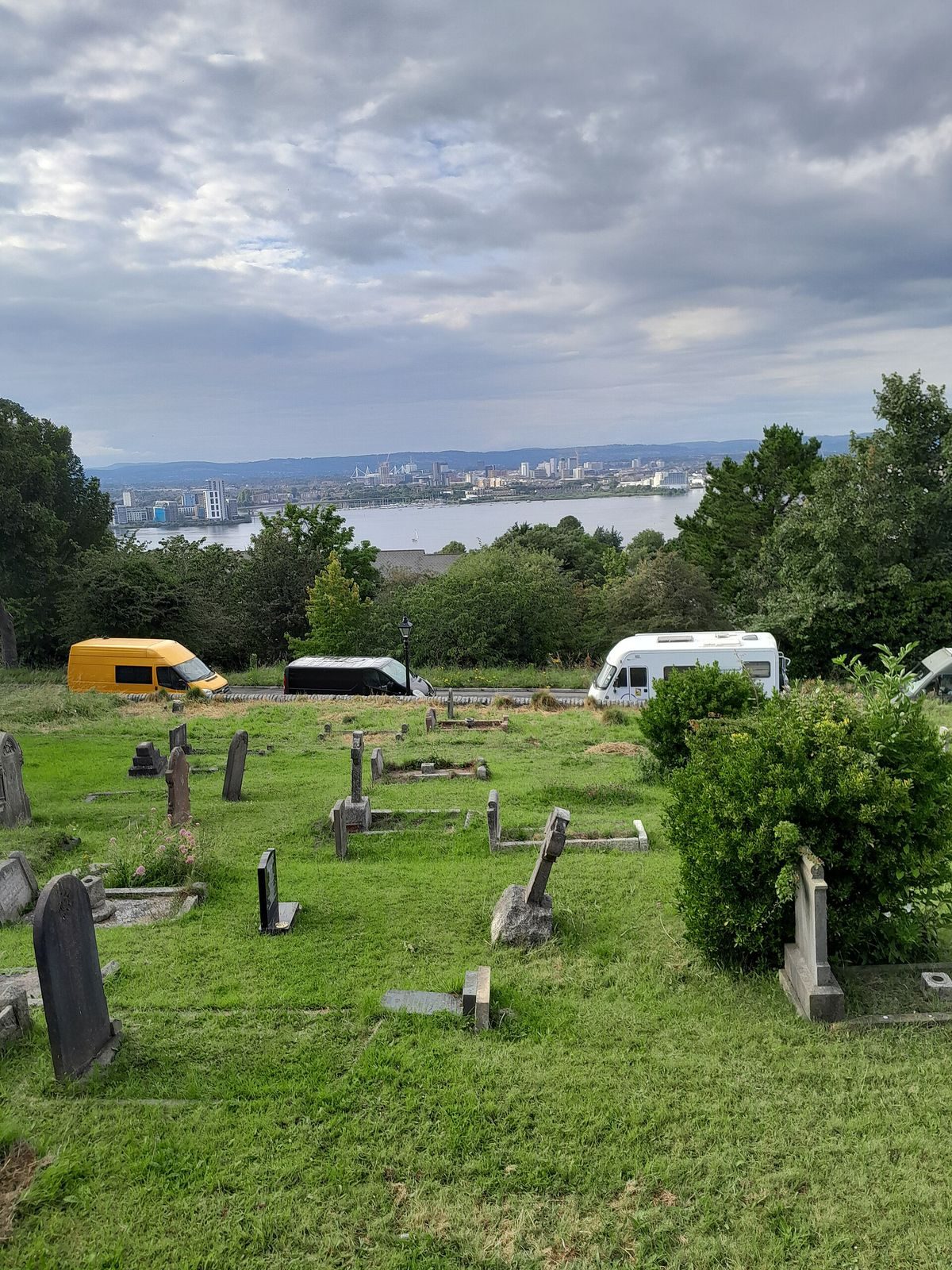
Until Penarth Cemetery opened in 1903, the churchyard was the town’s only burial place. Welsh composer Joseph Parry is buried there. A medieval cross that once stood in the churchyard was moved inside the church and is protected as a Scheduled Monument, a designation for a nationally important archaeological site or monument.
On 4 April 1989, the church received Grade I listed status, the highest listed-building category in Wales. The designation recognized its architectural and historic interest, including its importance as Butterfield’s most ambitious building in Wales and its exceptionally intact High Victorian design.
Remains
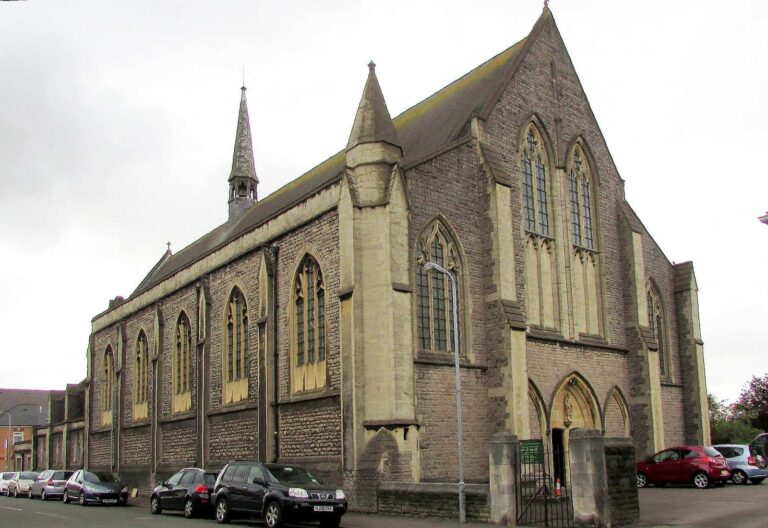
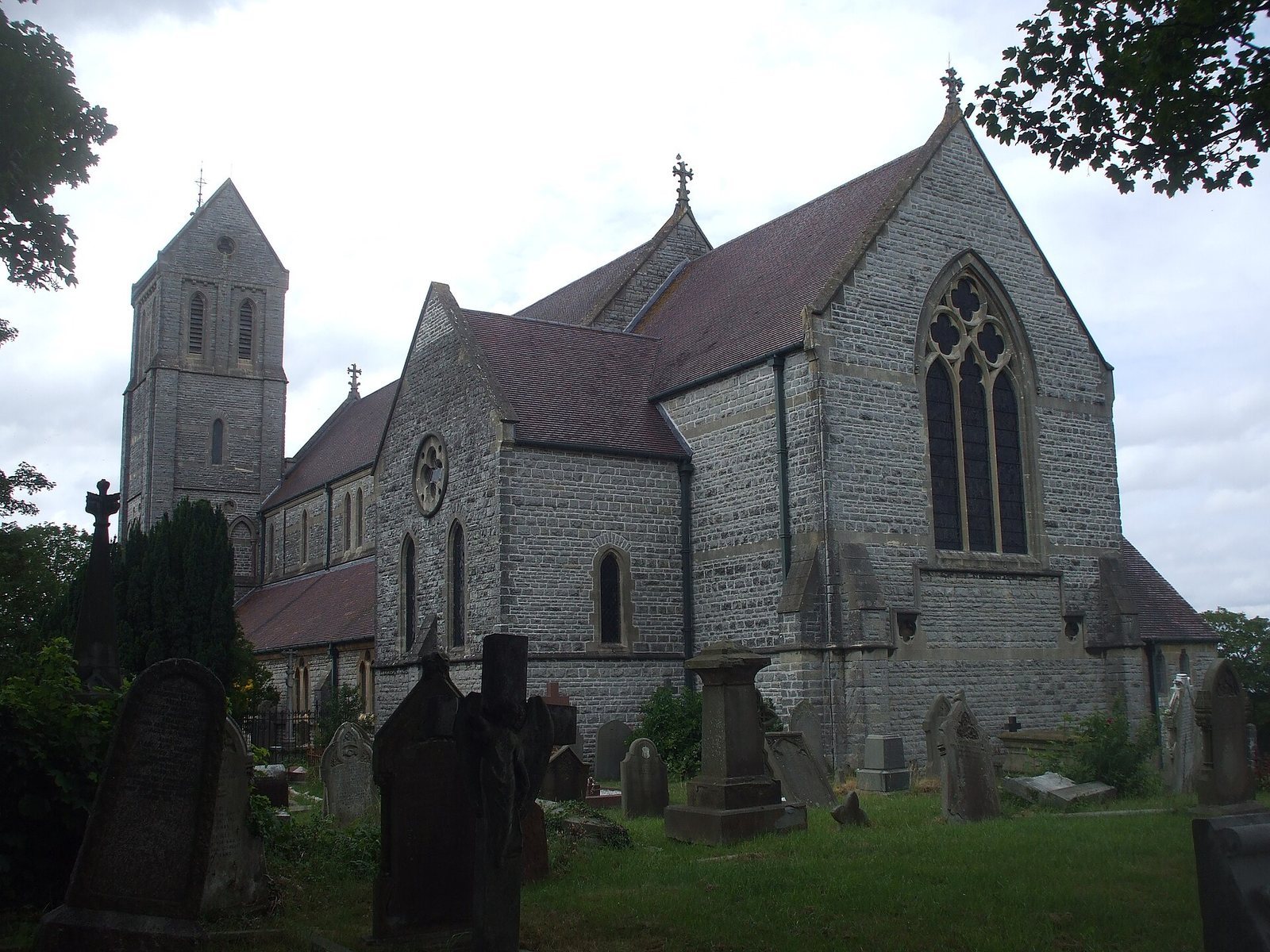
The present church occupies the site of its predecessor at Pen Arth, meaning ‘the Bear’s Head’, on Cardiff Bay, and accommodates 1,000 people. Its exterior combines Leckwith limestone facing, Bath stone dressings and bands, and red Staffordshire tiles.
Exterior and tower
Church exterior
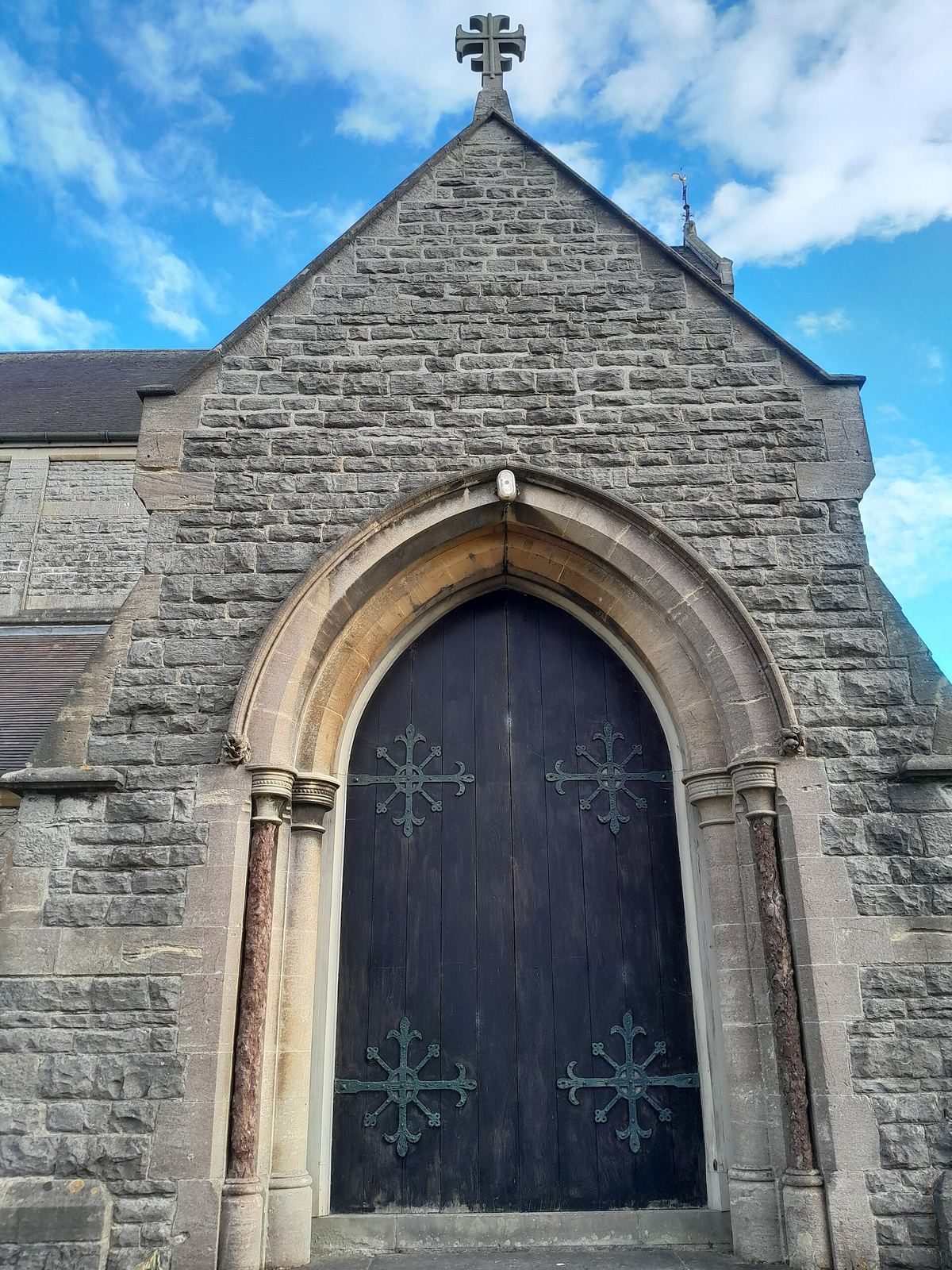
The gables have parapets, carved crucifix-shaped ornaments, and moulded supports at the lower ends of the roof slopes. Low, set-back buttresses with steep stepped faces reinforce the walls.
Tower and bells
The prominent tower rises four storeys and has a saddle-shaped roof, with its slopes meeting along a ridge. Projecting masonry supports the roof; buttresses mark the corners, and three arched openings form the lower-storey arcade. Six bells installed soon after the church was completed were recast in 1935 to make a set of eight.
Interior
The interior has changed little since construction. Patterns of coloured brickwork and Bath stone details stand out against red brick. The low-pitched roof over the chancel, the church’s sanctuary end, has raised ribs in star patterns and wall plates with battlement-like edges. The steeper nave roof has wall posts supporting its main trusses. William Hill & Sons built the organ in 1895.
Cross and churchyard memorials
Medieval cross
The medieval cross stands inside the church near the Lady Chapel altar.
War graves
Fourteen Commonwealth War Graves Commission memorials mark the graves of British and Commonwealth soldiers. Ten commemorate First World War burials and four mark Second World War graves; one honors a member of the Australian Infantry.