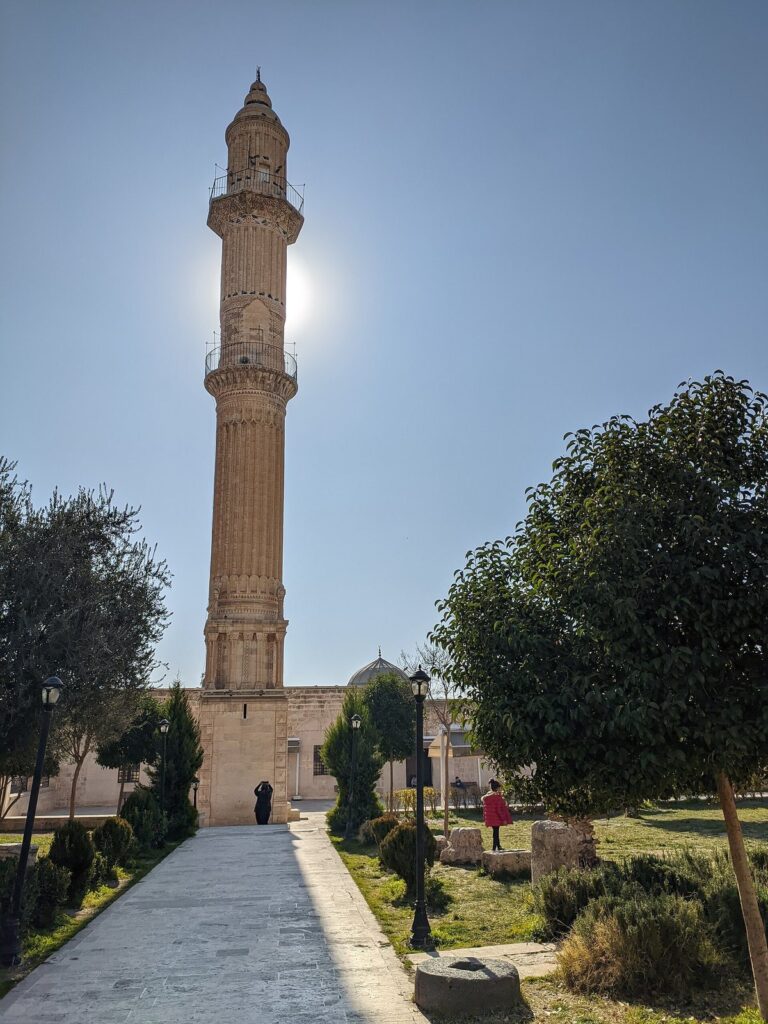
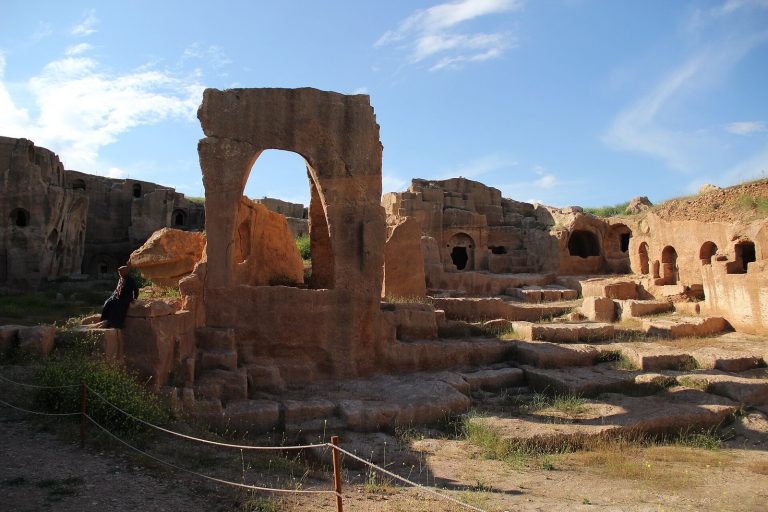
Matiate: An Underground Settlement Beneath Midyat, Turkey
Site at a Glance
- Popularity
- Medium
- Country
- Turkey
- Primary era
- Classical
- Eras represented
- Classical
- Civilizations
- Roman
- Site type
- Settlement
- Remains
- City
On this page8 sections
History
Origins and use
Matiate is an underground settlement beneath Midyat in Mardin Province, Turkey. It is thought to date to the 2nd or 3rd century CE, although estimates place its use between the 1st century BCE and the 6th century CE. The name derives from an ancient Assyrian name for Midyat, meaning “city of caves.” Assyrian was the language of ancient Assyria.
At its estimated height, Matiate may have housed between 60,000 and 70,000 people. It is considered among the largest known underground-city systems. Excavation director Gani Tarkan interprets its early purpose as refuge for communities escaping persecution. Christians faced persecution under Roman rule in the region, and Christian communities in Anatolia sought shelter in underground settlements.
After people returned to live above ground, the underground complex is thought to have continued in use for wine storage and as a catacomb, an underground burial space or network of passages.
Discovery and excavation
Workers uncovered a limestone cave by chance in 2020, during restoration in Midyat’s historic district. Excavations began afterward, with cooperation from the Ministry of Culture and Tourism, Midyat Municipality, and the Mardin Museum.
Remains
Layout and extent
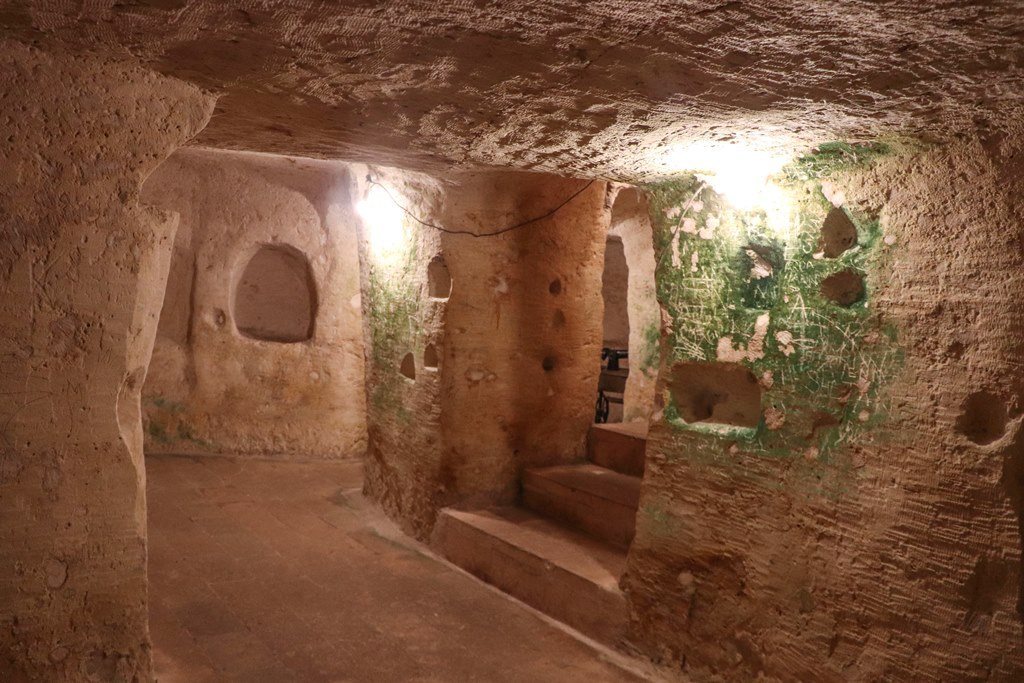
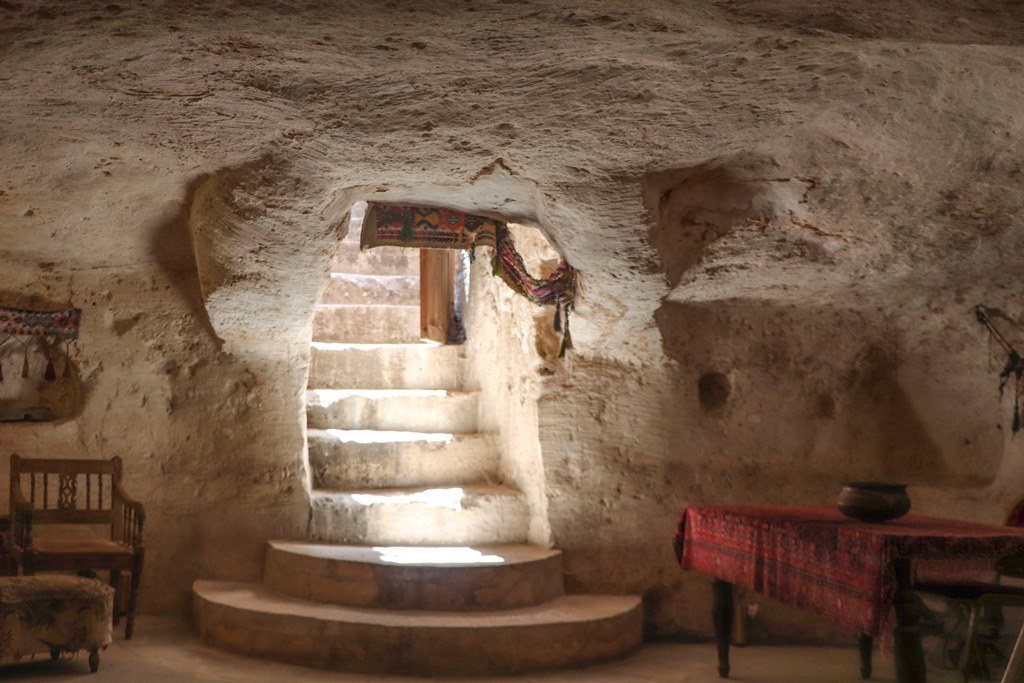
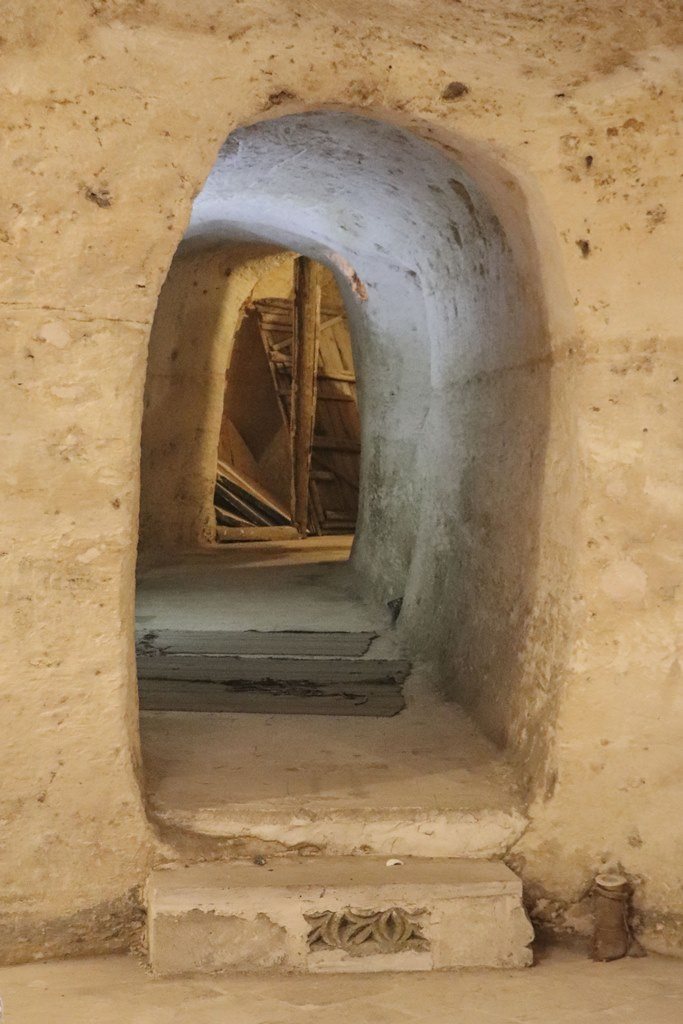
Matiate consists of tunnels and rooms extending in different directions beneath the town. The excavated spaces include areas for worship and living, wine cellars, water wells, and grain silos.
By 2022, excavation had exposed 49 rooms and about 100 metres of tunnels, an estimated 3 percent of the settlement. The site is about 1 kilometre long and 2 metres high, while estimates suggest the full underground network may extend for several kilometres.
Excavated structures and finds
Church and possible synagogue
The exposed remains include a Christian church and a room marked with a Star of David, interpreted as a possible synagogue.
Wells, silos, and other finds
Excavated features include water wells and grain silos. Finds from the underground complex also include coins, lamps, and human and animal bones.