National Museum Cardiff: Wales’s National Museum of Art and Natural History
Site at a Glance
- Popularity
- High
- Country
- United Kingdom
- Primary era
- Modern
- Eras represented
- Bronze Age, Early Modern, Modern
- Civilizations
- Welsh
- Site type
- Museum
On this page18 sections
History
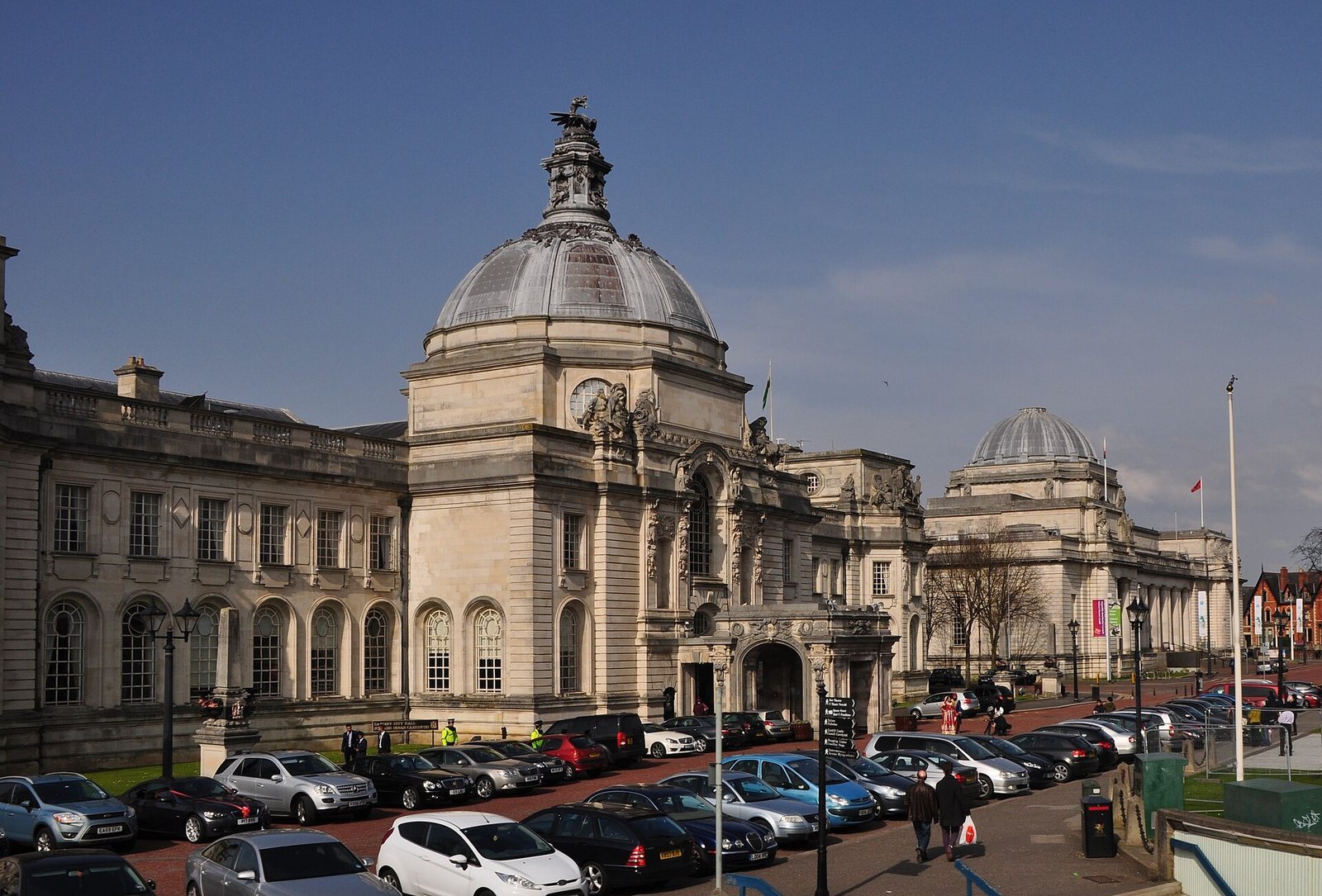
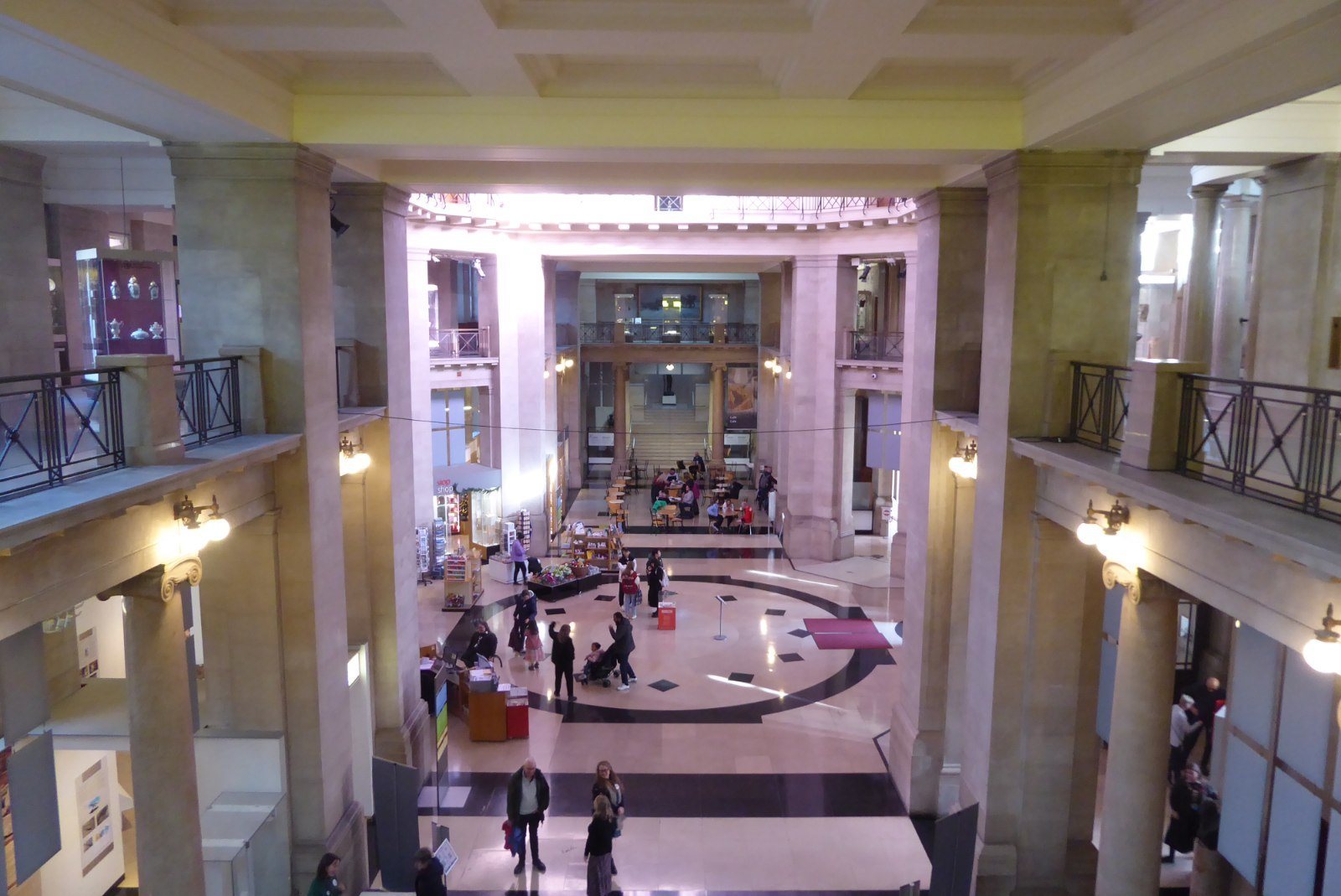
National Museum Cardiff is a museum of art and natural history in Cathays Park, Cardiff, United Kingdom. The National Museum of Wales was founded in 1905 and received its royal charter in 1907. Its creation brought together collections that had developed in Cardiff before the new institution opened.
Foundation and construction
Before the national museum was established, Cardiff Museum shared the Cardiff Library building and formed part of the library’s departments until 1893. Its collection, then called the Welsh Museum of Natural History, Archaeology and Art, was transferred to the National Museum of Wales in 1912 as Cardiff sought to host the institution.
Construction of a purpose-built museum in Cathays Park also began in 1912. The First World War delayed its opening to the public until 1922, and its official opening took place in 1927. The institution, formerly known as the National Museum of Wales, is now part of Amgueddfa Cymru (Museum Wales). Its archaeological collection was later transferred to St Fagans National Museum of History, another museum within the organization.
Collections and changing interpretation
Art collecting became a central part of the museum’s development. Gwendoline and Margaret Davies began assembling works in 1908 and gave the museum a total of 260 works in gifts made in 1951 and 1963. The Williams-Wynn collection had an earlier history: the Welsh politician and art patron Sir Watkin Williams-Wynn, 4th Baronet, established it in the eighteenth century.
In 1979, the museum acquired four full-size preparatory designs for tapestries depicting episodes from Virgil’s Aeneid as works by Peter Paul Rubens. Their attribution is now disputed. The museum acquired Pablo Picasso’s Nature morte au poron in 2009. In 2016, Rembrandt’s 1657 Portrait of Catharina Hooghsaet entered permanent display. Conservation and research in 2019 established that a painting of the Madonna and Child with a pomegranate came from Sandro Botticelli’s studio, with parts painted by Botticelli himself. It had previously been treated as a later copy of a lost work.
In 2011, the former Glanely Gallery became the Clore Discovery Centre, a space intended to let people handle and explore objects normally kept in storage. In November 2021, the museum removed a nineteenth-century portrait of Lieutenant-General Sir Thomas Picton by Sir Martin Archer Shee and replaced it with Albert Houthuesen’s painting of a Welsh gardener. Picton, a Welsh-born army officer and former governor of Trinidad, had been convicted of abuses that included torture. The museum also commissioned artists to reconsider his legacy.
Remains
Building and exterior sculpture
The museum building
The museum stands within the civic complex of Cathays Park. Architects Arnold Dunbar Smith and Cecil Brewer designed it, but the building as completed was substantially shorter than their original plan.
Sculptural scheme
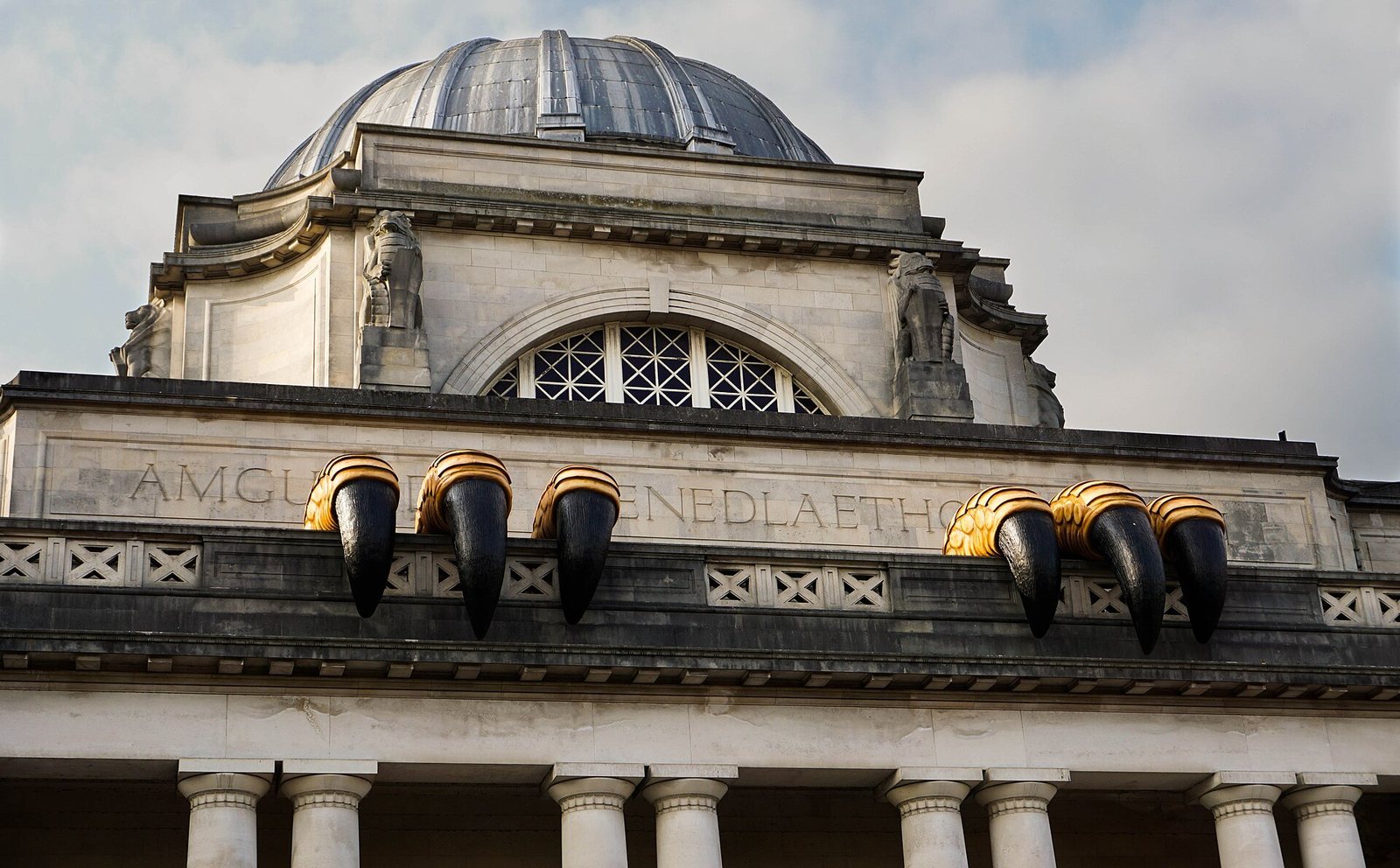
Sir W. Goscombe John devised the building’s sculptural scheme. Its figures include Gilbert Bayes’s Prehistoric Period and Classic Period; Thomas J. Clapperton’s Learning, Mining and Shipping; Bertram Pegram’s Art; Richard Garbe’s Medieval Period; and David Evans’s Music. D. Arthur Thomas was commissioned to model the dragons, while A. Bertram Pegram modelled the lions placed around the base of the dome.
Art and decorative collections
Early and seventeenth-century paintings
The art holdings span roughly five centuries and include Welsh and international painting, drawing, sculpture and applied arts. Among the earlier paintings are Cima da Conegliano’s Madonna and Child, from about 1500, and Amico Aspertini’s Madonna and Child between Saint Helena and Saint Francis, dated 1520. Adriaen van Cronenburgh’s 1568 portrait of Catherine of Berain is known as the “Mother of Wales,” while The Family of Henry VIII: Allegory of the Tudor Succession, from about 1572, is attributed to Lucas de Heere.
Later examples include Andrea Sacchi’s Hagar and Ishmael in the Desert, from about 1630; Mathieu Le Nain’s The Quarrel (1640); and two paintings by Nicolas Poussin, The Funeral of Phocion (1648) and The Finding of Moses (1651). The latter is jointly owned by the museum and the National Gallery in London. Jan van de Cappelle’s Sea Calm, dated 1654, is another work in the collection.
The Davies collection and French art
The collection assembled by the Davies sisters includes French art by William Turner, Jean-Baptiste-Camille Corot, Eugène Carrière, Édouard Manet, Claude Monet, Camille Pissarro, Pierre Puvis de Chavannes, Paul Signac, Paul Cézanne and Vincent van Gogh, as well as sculptures by Auguste Rodin. It contains the world’s largest group of paintings by Honoré Daumier and what is described as Britain’s most important collection of paintings by Jean-François Millet. Welsh artists Moses Griffith and Richard Wilson are also represented. Other works associated with the collection include pieces by Augustus John, Josef Herman, Oskar Kokoschka, Stanley Spencer, Wyndham Lewis and Frank Brangwyn, along with El Greco’s The Disrobing of Christ and two works from Botticelli’s studio.
Landscape, Impressionism and modern art
The classical landscape collection includes paintings by Claude, Gaspard Dughet and Salvator Rosa. Among its Impressionist works are Monet’s Palazzo Dario, Venice and San Giorgio Maggiore at Dusk, both from 1908, as well as examples from his Rouen Cathedral and Water Lilies series. Other works include Manet’s Effect of Snow at Petit-Montrouge (1870) and Renoir’s La Parisienne (1874), shown at the First Impressionist Exhibition. Cézanne’s The François Zola Dam, from about 1877–1878, was the first painting by him displayed in a British public collection. His Mountains in Provence dates to 1878–1880; Van Gogh’s Landscape at Auvers in the Rain dates to 1890. The museum’s Impressionist holdings are among Europe’s notable collections.
Welsh artists represented include Thomas Jones, Augustus and Gwen John, Ceri Richards, David Jones and Kyffin Williams. Augustus John’s works include a well-known image of Dylan Thomas. The twentieth-century collection also contains sculpture by Jacob Epstein, Herbert Ward and Eric Gill, and paintings by Stanley Spencer, Wynford Dewhurst, L. S. Lowry and Oskar Kokoschka. Works by Francis Bacon, Frank Auerbach and Rachel Whiteread are shown in rotation. David Jones’s fragile works on paper are seldom displayed.
British patronage and ceramics
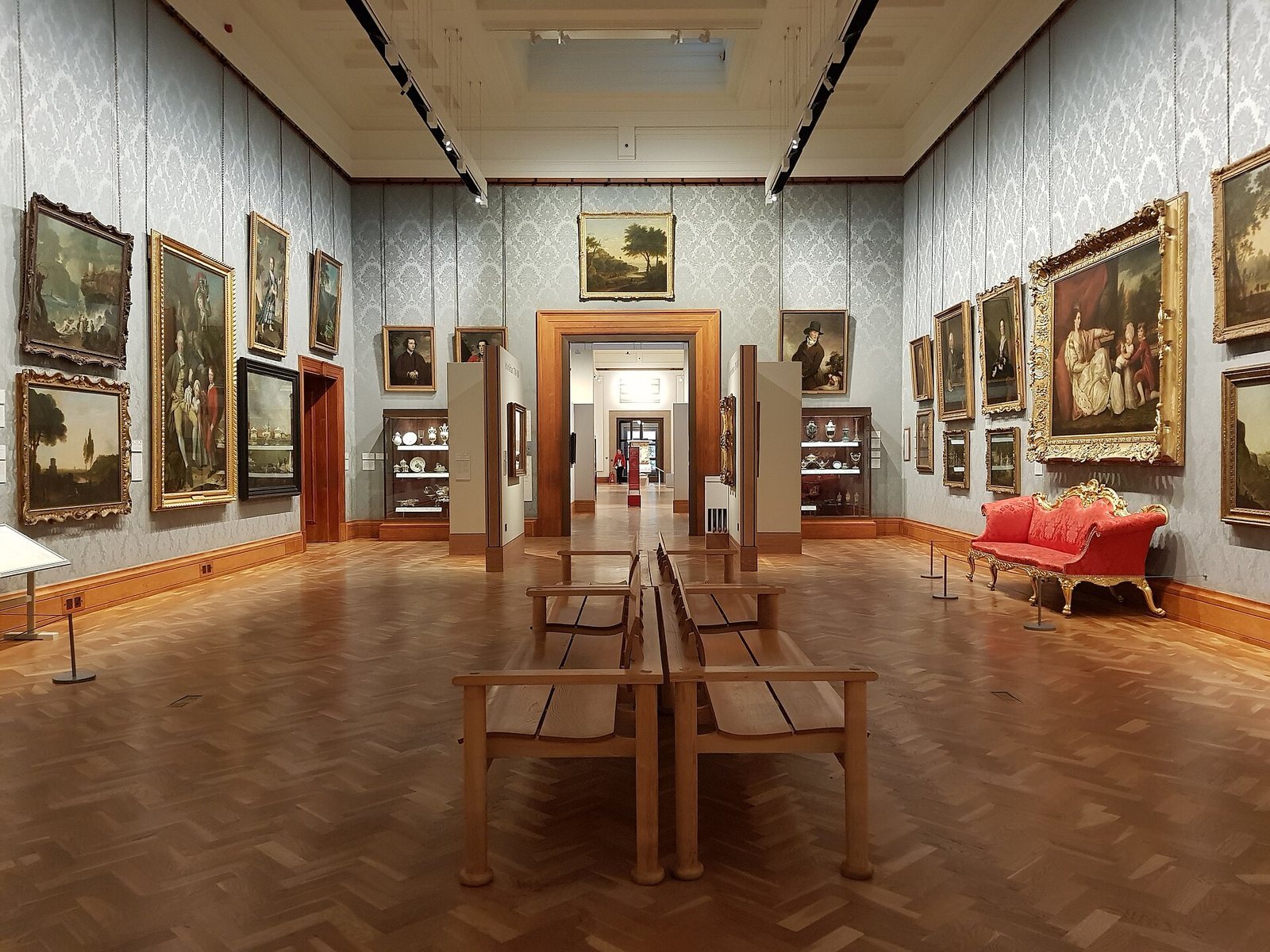
A gallery devoted to eighteenth-century British patronage includes Pompeo Batoni’s portrait of Sir Watkin Williams-Wynn in Rome with fellow tourists, and Joshua Reynolds’s portrait of Williams-Wynn’s second wife. A chamber organ designed by Robert Adam is also displayed. Other works from the period include George Romney’s portrait of Viscountess Elizabeth Bulkeley of Beaumaris as Hebe and Johann Zoffany’s group portrait of Glamorgan landowner Henry Knight with his children. The Williams-Wynn collection also includes works by Paul Sandby, Reynolds and Richard Wilson.
The European porcelain collection includes more than 2,000 eighteenth- and nineteenth-century pieces donated by Wilfred De Winton in 1917 and 1929. The Morton Nance collection, given in 1952 after its owner’s death, contains about 1,500 pieces of Welsh pottery and porcelain, including work from Swansea, Nantgarw and Llanelli.
Natural history and geology
Earth and the evolution of life
The Evolution of Wales display spans about 4.6 billion years, from the Big Bang and the formation of Earth through environmental and climatic change and the development of life. Its exhibits include meteorites, dinosaur remains and a woolly mammoth. One object is a lunar rock brought to Earth by the Apollo 11 crew, the 1969 mission that first landed people on the Moon. Other specimens include the Gibeon meteorite, found in Namibia in 1836, fossil ammonites and Thecodontosaurus, an early dinosaur genus. A meteorite is said to have fallen in north Wales in 1949.
Welsh environments and animal specimens
Natural-history displays cover Welsh environments from the coast to inland forests. They include material on seabird colonies along cliffs and on Skomer Island, off southwest Wales, which has one of northwestern Europe’s largest seabird colonies. Forest displays describe trees around 200 years old and the wildlife and birds that inhabit Welsh woods.
A 7.5-metre basking shark weighing four tonnes hangs from the ceiling; it is identified as the largest fish found off the Welsh coast. The displays also include the nine-metre skeleton of a juvenile humpback whale caught off Barry in October 1982. A leatherback turtle found on a beach near Harlech Castle in September 1988 is presented in a dedicated gallery. It weighed 916 kilograms, measured about three metres in length and had a flipper span of 2.5 metres. The Guinness Book of Records listed it as the largest recorded specimen of its species.
Former archaeological gallery
Prehistoric objects
The former gallery presented material from the Paleolithic, or Old Stone Age, through the medieval period. Its displays included Neanderthal remains about 230,000 years old. Neanderthals were an extinct human group closely related to modern humans. Other exhibits included a model of the Bryn Celli Ddu tomb on Anglesey, dated to 3000 BC, a gold crescent-shaped necklace called the Llanllyfni lunula, from about 2000 BC, and an Iron Age cast showing a mythical beast.
Roman and medieval material
Roman-period objects included the Abergavenny Leopard Cup, described as probably the finest Roman vessel found in Wales, and a first-century AD vessel handle shaped as a leopard, found at Abergavenny. The gallery also presented early medieval stone inscriptions and sculptures, later medieval written records and religious objects, and a bilingual inscription in Latin and Welsh from Aberconwy dated 1198–1230.