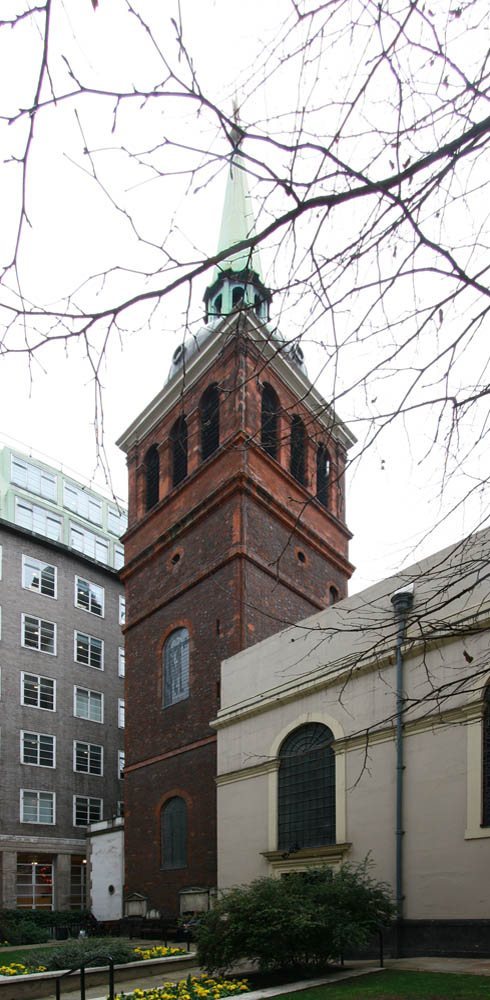
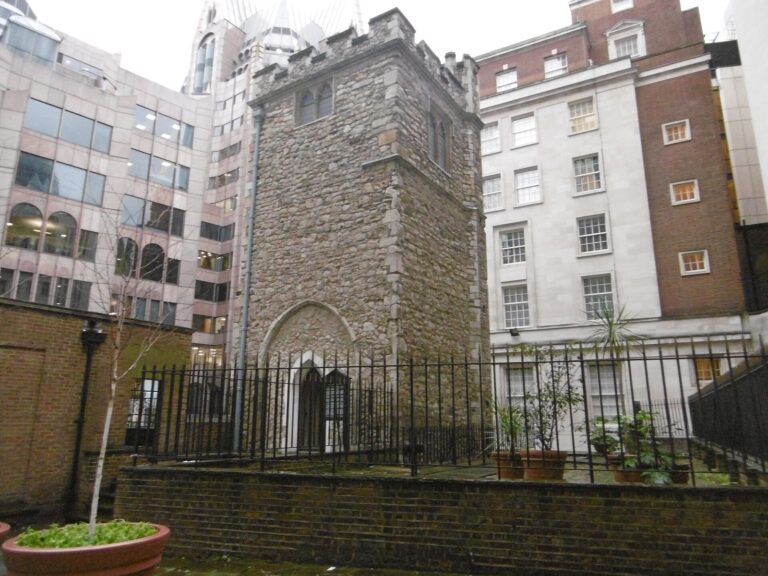
St Andrew Undershaft: A Church of England Church in the City of London
Site at a Glance
- Rating
- 4.9
- Popularity
- Medium
- Country
- United Kingdom
- Primary era
- Early Modern
- Eras represented
- Early Modern
- Civilizations
- English
- Site type
- Religious
- Remains
- Church
On this page12 sections
History
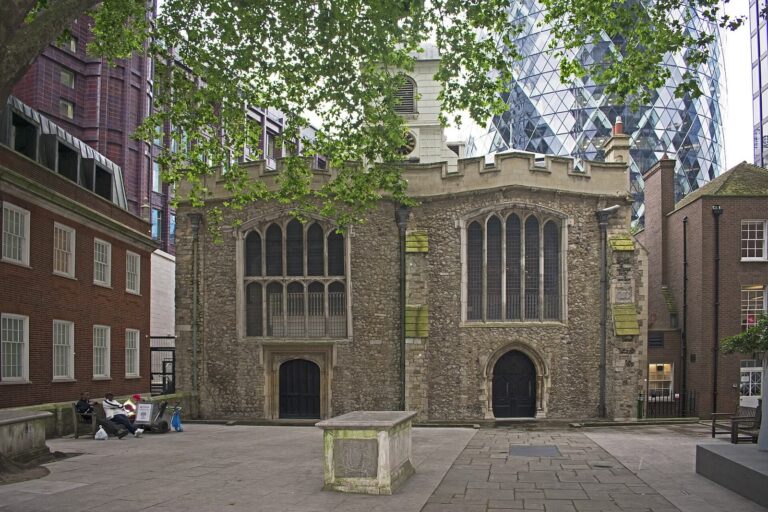
St Andrew Undershaft is a Church of England church in the City of London, United Kingdom. Dedicated to Saint Andrew, its present building was rebuilt in 1532 in the Perpendicular Gothic style, a late English Gothic style characterized by vertical emphasis. The church follows a conservative evangelical Anglican tradition that stresses evangelical Protestant belief and the authority of the Bible.
Medieval origins and the maypole
A church stood on the site by 1147. It was rebuilt in the 14th century and again in 1532, making the present church the third building there.
The name St Andrew Undershaft recalls a maypole, a tall pole used for seasonal celebrations, traditionally raised each spring opposite the church. Student riots ended the custom in 1517, but the pole remained until 1547, when a crowd seized and burned it as a pagan idol. John Stow later recorded that it had rested on hooks for 32 years before its removal.
Rebuilding and early modern London
Sir Stephen Jennings, who served as Lord Mayor, the civic head of the City of London, financed a rebuilding of the church. His granddaughter Joan died in 1578. Her husband, Sir Thomas Offley, served as Lord Mayor in 1563–64 and was buried at the church in 1582. John Stow, the chronicler and author of Survey of London, was buried there in 1605. Hugh Hamersley, Lord Mayor in 1627, is also commemorated at the church. The German-born Renaissance painter Hans Holbein the Younger was a former parishioner and may have been buried there.
Survival and present status
The church survived the Great Fire of London in 1666 and the Blitz, Germany’s sustained bombing campaign against Britain during the Second World War. It became a Grade I listed building on 4 January 1950, the highest listed-building category in England. St Andrew Undershaft now forms part of the parish of St Helen’s Bishopsgate and is administered from that nearby church. It belongs to the Diocese of London, an ecclesiastical district overseen by a bishop.
Remains
Building and interior
Layout and fabric
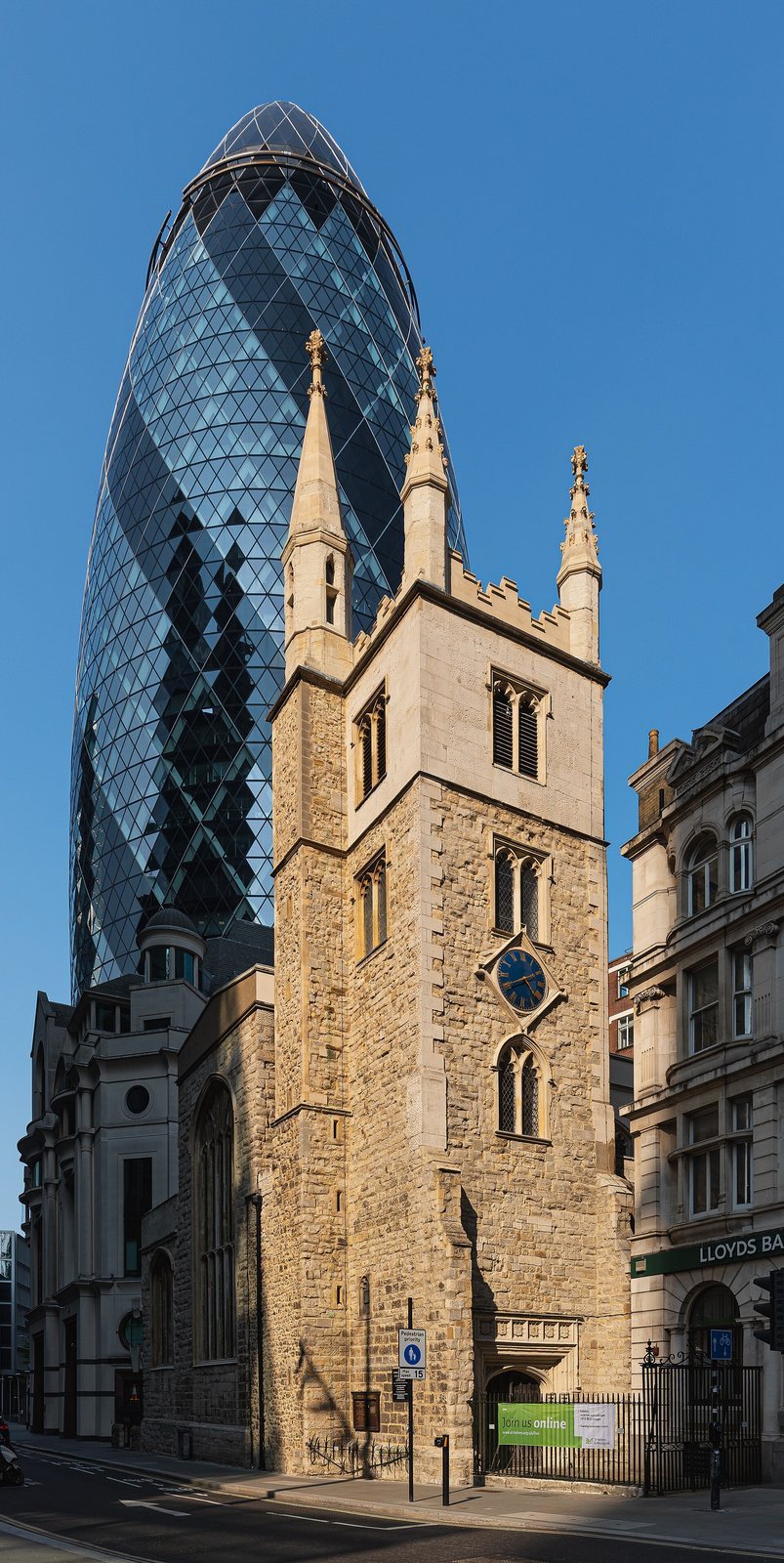
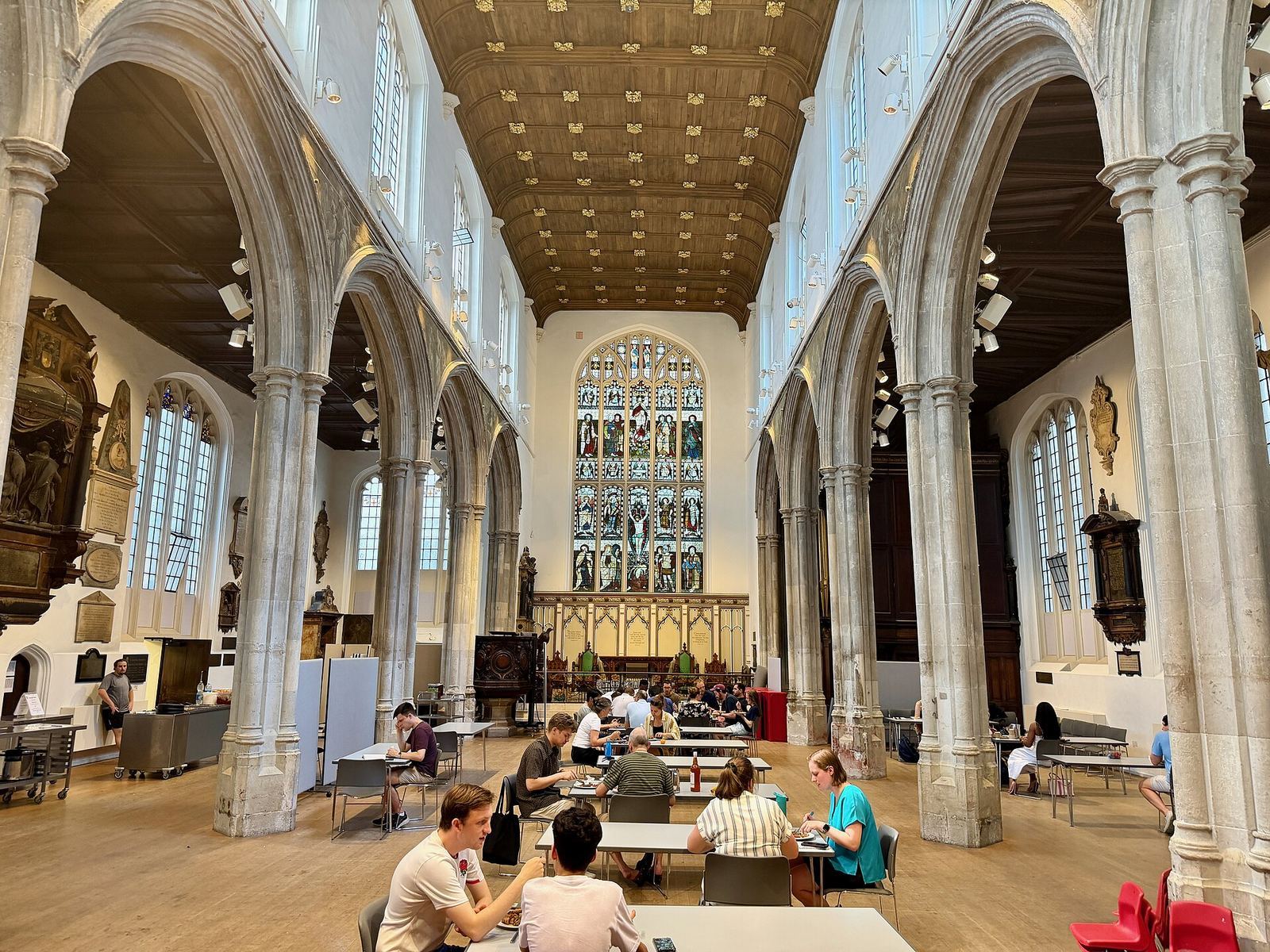
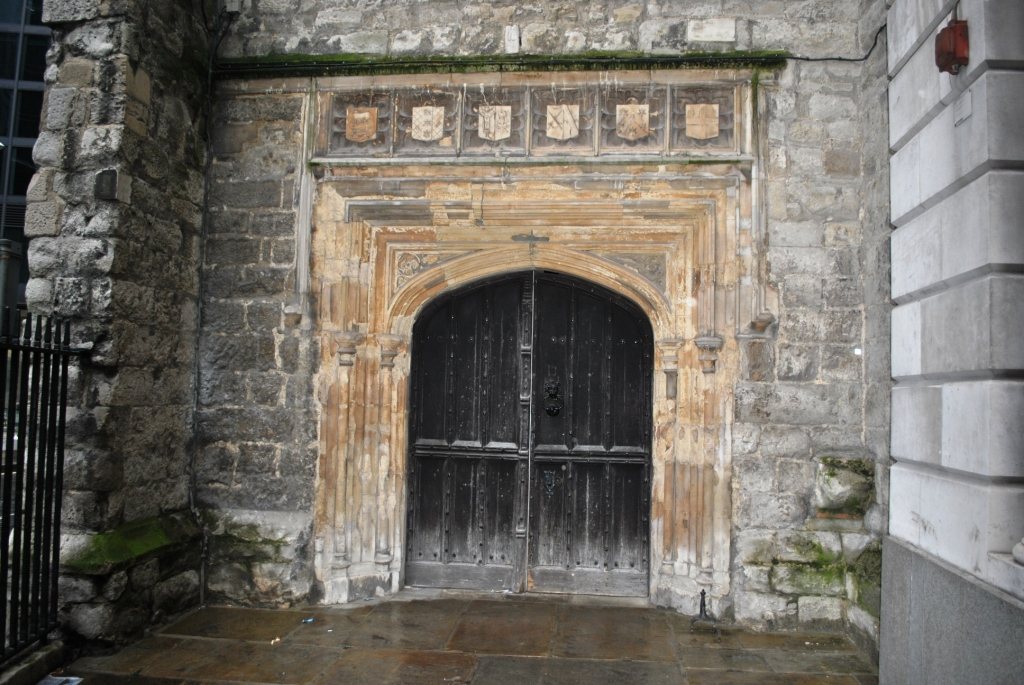
The church stands between St Mary Axe and Leadenhall Street. Its entrance is at the base of a tower set off-centre, and the interior is divided into six bays, or distinct sections. Many of the original interior fittings survived the Victorian renovation.
Stained glass
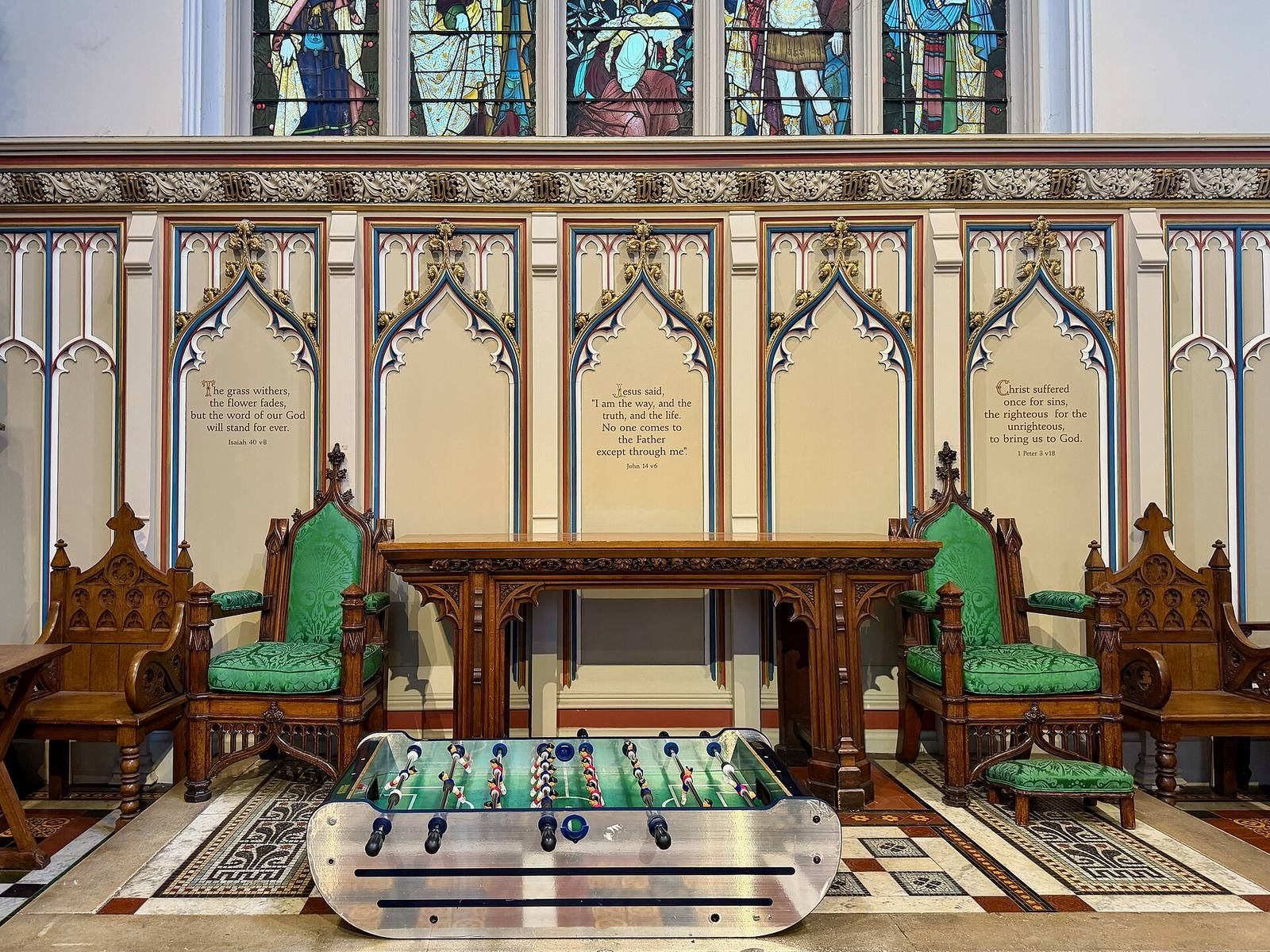
A large stained-glass window installed in the 17th century was among London’s few windows of comparable size to survive from its period. It was destroyed in the 1992 bombing of the Baltic Exchange.
Fittings and memorials
Organ
Renatus Harris installed the organ in 1696. In 1750, John Byfield added a swell, an organ division with shutters that allow the player to vary its volume. George Pike England restored and enhanced the instrument in 1810–11 and again in 1826. Later work was carried out by William Hill, Speechly, J. W. Walker & Sons, and Rushworth and Dreaper. The British Institute of Organ Studies, an organization concerned with historic organs, awarded it a Grade I historic-organ certificate.
Bells
The tower holds six bells tuned to the key of G. Robert Mot cast the tenor bell in 1597. The bells are fixed in place rather than swinging when rung.
Memorials
A monument in the church commemorates Sir Thomas Offley and his wife Joan. John Stow’s alabaster monument depicts him holding a quill pen, which is renewed periodically. A separate memorial commemorates Hugh Hamersley.