Spirito Santo: A Baroque Church on Ortigia, Syracuse
Site at a Glance
- Country
- Italy
- Primary era
- Early Modern
- Eras represented
- Medieval, Early Modern
- Civilizations
- Crown of Aragon, Kingdom of Sicily, Spanish
- Site type
- Religious
- Remains
- Church
On this page8 sections
History
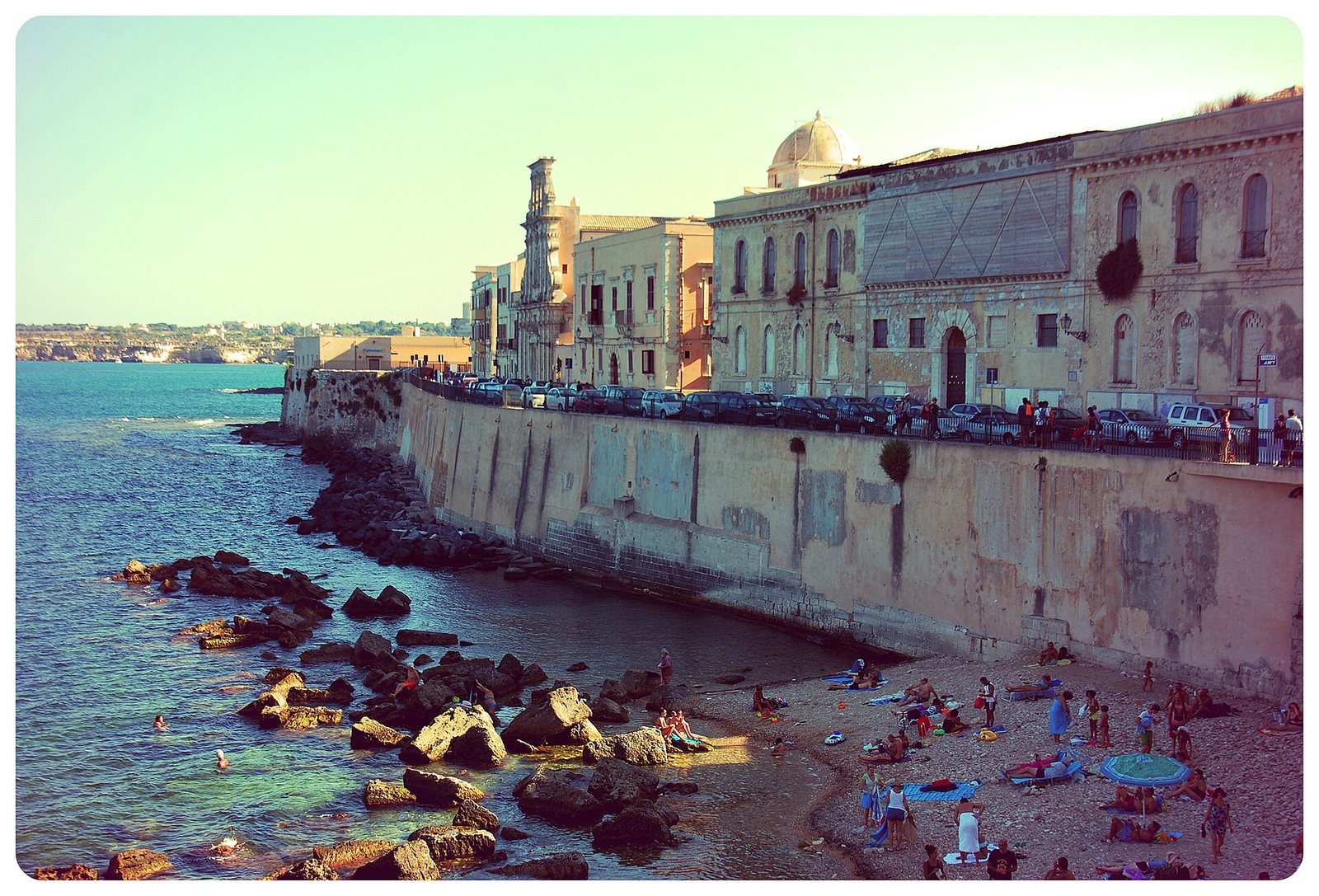
Spirito Santo is a Baroque church on Ortigia, the historic island at the heart of Syracuse, Italy, facing the Ionian Sea. The church is associated with the Confraternity of the Holy Spirit, a lay religious association devoted to the Holy Spirit, which has sponsored it since 1652.
Early church and earthquake damage
A tradition says that Bishop Germano commissioned Spirito Santo as one of four basilicas in the fourth century. Giuseppe Capodieci, the church’s prior after the 1693 earthquake, reported this claim, and Syracuse historian Serafino Privitera probably repeated it. The fourth-century attribution is considered technically implausible because the theological significance of the Holy Spirit had not yet been established. The first church building is more securely dated to the fourteenth century.
An earthquake damaged the church in 1542, and it underwent major renovation during the seventeenth century. Another earthquake brought it down in 1693.
The confraternity, rebuilding, and later history
The confraternity’s hooded members had the privilege of leading Holy Week processions, part of the Christian observance leading up to Easter. These included displays depicting episodes from Jesus’ suffering and death.
Under Spanish rule in Sicily, architect Pompeo Picherali rebuilt the church. Work began in 1727 and was completed in 1797. The church belongs to the Roman Catholic Church and the Archdiocese of Syracuse, and lies within Syracuse’s UNESCO heritage area. In 1974, burglars stole an eighteenth-century silver chalice and an altarpiece associated with the artistic tradition of fifteenth-century Sicilian painter Antonello da Messina, though it was not necessarily painted by him.
Remains
The surviving church combines a sculpted limestone exterior, a three-tiered façade, a dome, and a bell tower. Inside, frescoes and a pipe organ form part of its decoration.
Exterior
Façade
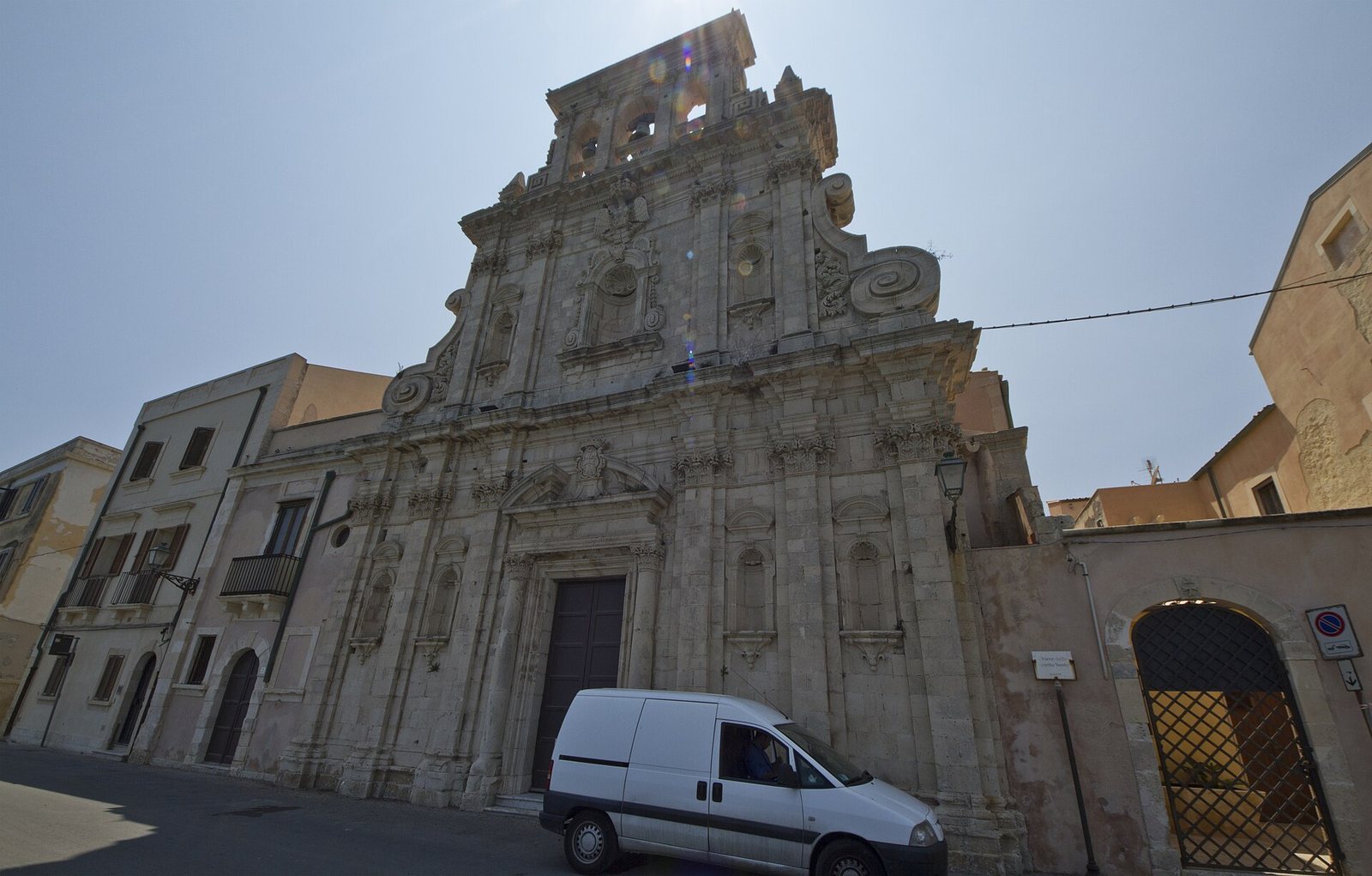
The bright white façade is built of Syracuse limestone and divided into three tiers by shallow pilasters, wall features resembling columns. Scroll-shaped forms link the tiers, while a massive cornice, a projecting horizontal architectural band with a broken outline, separates them. A three-part window crowns the front. The pilasters have Corinthian capitals, column tops decorated with stylized foliage, amid sculpted ornament and varied wall planes.
Above the entrance, a shield bears the confraternity’s double-cross emblem. A second shield above it displays a crowned, single-headed eagle, probably representing the Spanish Bourbons, the branch of the Bourbon dynasty that ruled Spain.
Dome and bell tower
The church has the only exterior dome in Syracuse, designed in the same Baroque style as the building. Bells remain in the bell tower. An exterior staircase provides access to roof level, from which the nearby sea and roofs of adjacent churches can be seen.
Interior
The interior contains a valuable pipe organ. Frescoes by Ermenegildo Martorana depict the Virtues, and other frescoes are by Antonio Madiona. The interior has deteriorated with age and needs repair.