Speos Artemidos: Rock-Cut Temples of Pakhet in Egypt
Site at a Glance
- Rating
- 3.9
- Popularity
- Very Low
- Country
- Egypt
- Primary era
- Bronze Age
- Eras represented
- Bronze Age, Classical
- Civilizations
- Egyptian, Kingdom of Macedon
- Site type
- Religious
- Remains
- Temple
On this page11 sections
History
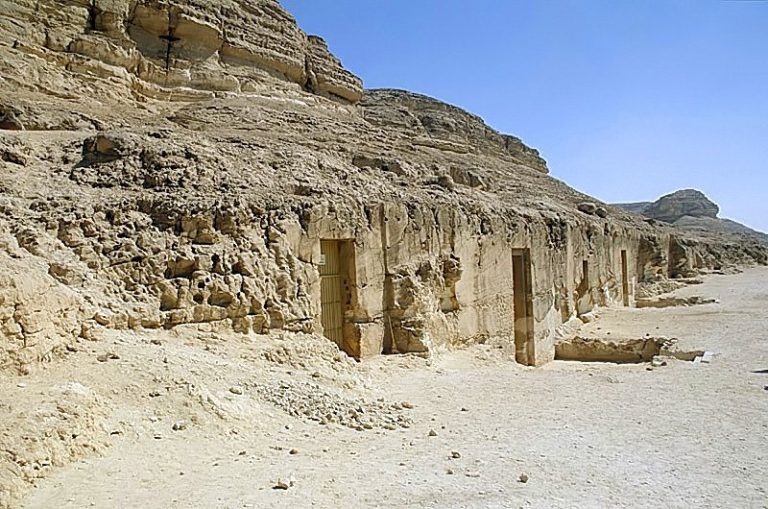
Speos Artemidos is an archaeological site near the village of Istabl Antar in Egypt, about 2 kilometres south of the Middle Kingdom tombs at Beni Hasan and approximately 28 kilometres south of Al Minya. Cut into the eastern cliffs of the Nile, its two temples were dedicated to Pakhet, an Egyptian goddess associated with hunting and represented in leonine form. The principal temple was built during the reign of Hatshepsut, an Eighteenth-Dynasty pharaoh who ruled as king and commissioned major religious monuments.
The name and earlier history
The ancient Greek name Speos Artemidos means “Grotto of Artemis.” During the Hellenistic period, Greek visitors identified Pakhet with Artemis and applied this name to the place. Jean-François Champollion, the French Egyptologist known for deciphering Egyptian hieroglyphic writing, later identified the site with the Speos of Artemis mentioned by ancient Greek writers.
An earlier temple may have stood at the site, but no remains earlier than Hatshepsut’s reign have been found. A dedicatory text in the principal temple presents Hatshepsut as a restorer of monuments damaged under the Hyksos, foreign rulers who controlled parts of Egypt during the Second Intermediate Period. The inscription also helped establish the legitimacy of her rule.
Alterations under later rulers
Seti I, a pharaoh of Egypt’s Nineteenth Dynasty, altered parts of the temple’s decoration. He replaced Hatshepsut’s name with his own in some places, changed representations of the queen into images of himself, and added further dedications. The extent of earlier damage under Thutmose III, Hatshepsut’s Eighteenth-Dynasty successor, remains uncertain. Fairman and Grdseloff found no clear evidence that Thutmose III defaced the chapel, while Brand proposed that an image of Hatshepsut may have been vandalized during his reign and later recarved as an image of Seti I.
Brand also interpreted some alterations as Seti I’s repairs to damage linked with Akhenaten, an Eighteenth-Dynasty ruler associated with the promotion of the god Aten and the suppression of the traditional cult of Amun. Seti replaced at least one priestly image with an image of Thoth, a god associated with writing, knowledge, and ritual authority. He also added three scenes to the representations of Hatshepsut’s coronation, which Brand regarded as new additions rather than usurpations.
Later religious use
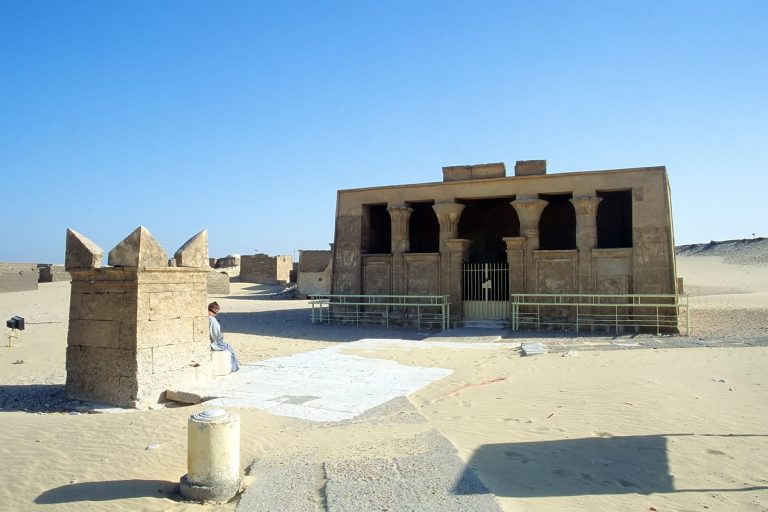
A nearby small shrine bears the name of Alexander IV of Macedon, a successor in the dynasty founded by Alexander the Great. Another rock-cut chapel, known as Speos Batn al-Bakarah, was dedicated to Pakhet by Hatshepsut, Thutmose III, and Neferure, Hatshepsut’s daughter. The chapel was left unfinished and was later decorated during the reign of Alexander II.
The temples were associated with a cat cemetery because cats were dedicated to Pakhet. Caves in the surrounding area were later occupied by early Christians during the third and fourth centuries. Graffiti at the principal temple belongs to Pharaonic, Greek, and Coptic periods, reflecting the site’s continued use and visitation across successive eras.
Remains
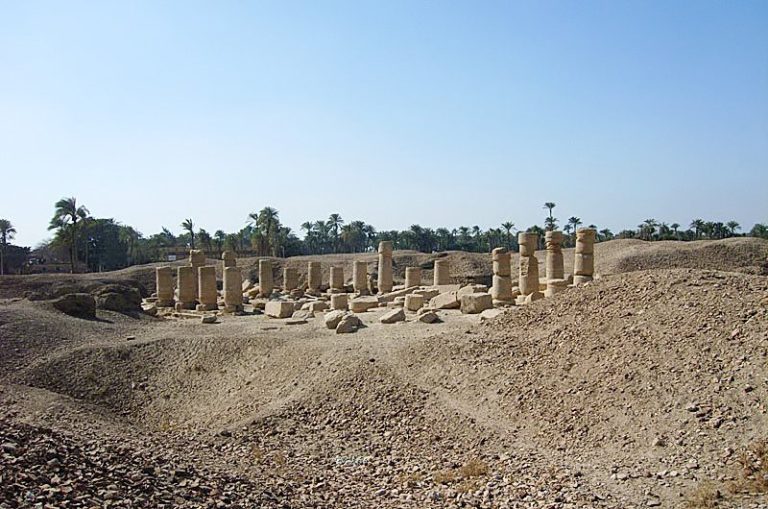
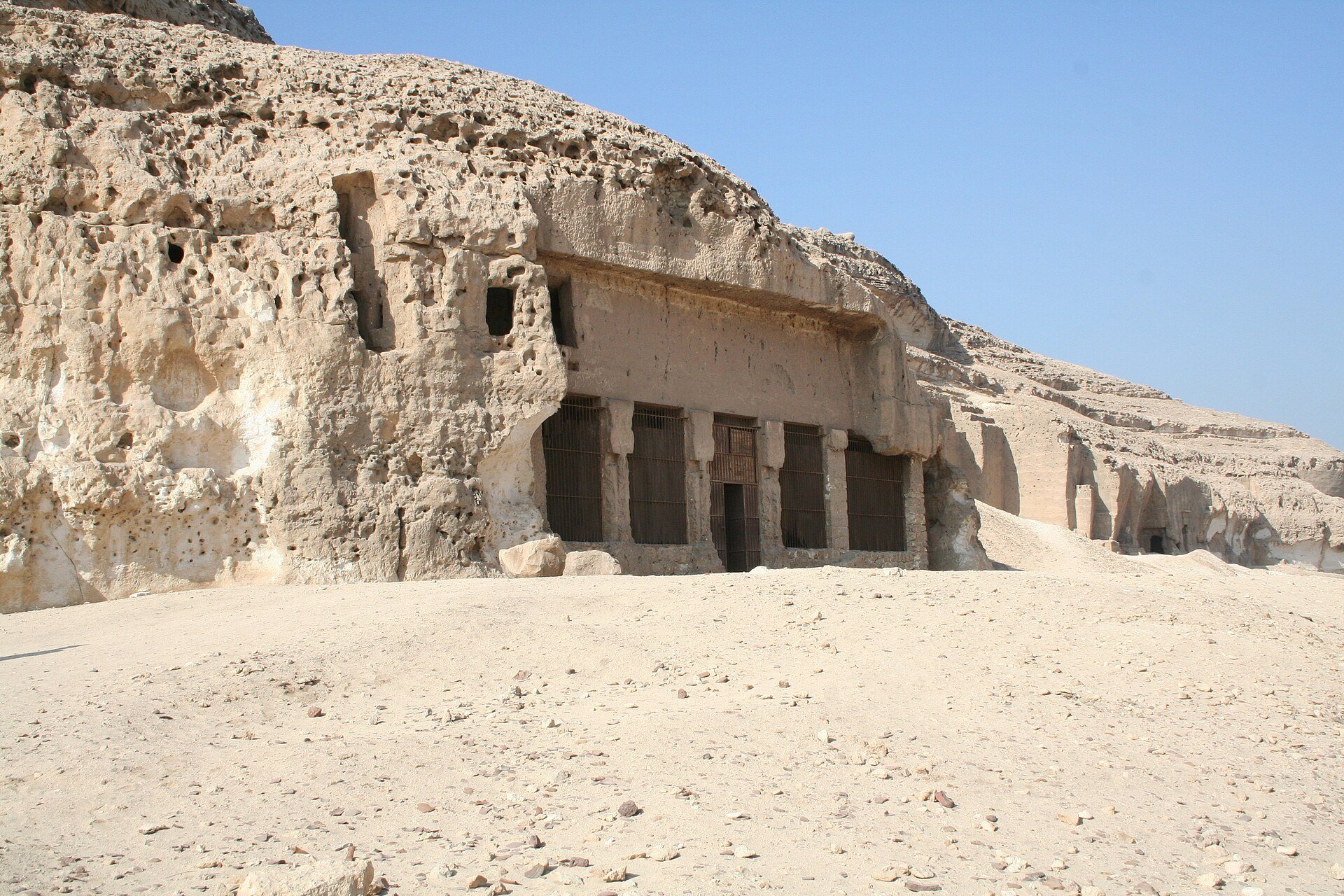
The site consists of two temples cut directly into the rock of the eastern Nile cliffs, together with nearby chapels, a cat cemetery, and surrounding caves. The principal temple is carved from the living rock and has two chambers joined by a short passage. Its outer portico originally contained eight stone columns arranged in two rows of four. Three facade columns remain relatively intact, while the internal pillars have disappeared.
Principal temple
Portico and facade
The facade is approximately 15 metres long. Its inscription is arranged in 42 columns and addresses gods and humans while describing Hatshepsut’s works at the site and in the surrounding region. It also presents her rebuilding of monuments associated with damage caused by the Hyksos. The rock face above the outer columns was dressed and inscribed with Hatshepsut’s name.
The portico’s pillars carried royal cartouches, oval enclosures surrounding names in Egyptian hieroglyphic inscriptions, belonging to Thutmose III and Seti I, and probably also to Pinedjem I. Their intended decoration was not completed. Hathor, a goddess associated with motherhood, femininity, music, and kingship, appeared on the outward-facing sides, while Osiris, god of the dead and the afterlife, appeared on the inward-facing sides.
Interior chambers
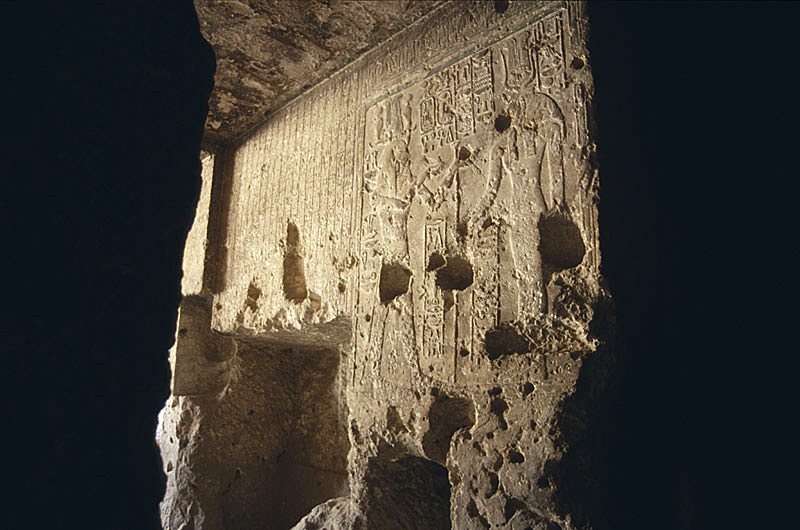
Within the portico, the southern wall is the only wall described as bearing inscriptions. These texts were originally associated with Hatshepsut but were later altered by Seti I, who added further writing. The eastern walls preserve scenes originating in Hatshepsut’s reign that were modified under Seti I. The western side contains scenes of Seti I, including his coronation and offerings to Pakhet.
The smaller inner sanctuary is square and has a statue niche at the rear. Hatshepsut left no inscriptions in this chamber. One niche bearing Seti I’s name was probably intended for a statue and is empty, while another niche held a statue of Pakhet. The passage leading toward the sanctuary remained unfinished. Brand proposed that Seti I may have first excavated the passage and sanctuary, although that interpretation is not certain.
Nearby chapels and surrounding features
Speos Batn al-Bakarah
Speos Batn al-Bakarah is a small, unfinished chapel cut into the rock near the principal temple. Hatshepsut, Thutmose III, and Neferure dedicated it to Pakhet, and its decoration was later continued during the reign of Alexander II.
Cat cemetery and caves
Remains of a cat cemetery surround the two temples, reflecting the dedication of cats to Pakhet. The surrounding area also contains caves that were later used as habitation by early Christians during the third and fourth centuries. A nearby small shrine or chapel bears the name of Alexander IV of Macedon.