Pyramid of Zawyet el-Maiyitin: An Early Egyptian Provincial Pyramid
Site at a Glance
- Rating
- 4.5
- Popularity
- Very Low
- Country
- Egypt
- Primary era
- Bronze Age
- Eras represented
- Bronze Age
- Civilizations
- Egyptian
- Site type
- Civic
- Remains
- Monument
On this page5 sections
History
The Pyramid of Zawyet el-Maiyitin is a small provincial pyramid on the eastern bank of the Nile south of Minya in Egypt. Built by the ancient Egyptians, it belongs to a group of seven similar monuments established away from the country’s principal royal centers. Its date and purpose remain uncertain, although its materials have been compared with those used at Meidum, suggesting a possible construction early in the reign of Sneferu, the founder of the Fourth Dynasty.
Builder and purpose
The monument has been attributed at different times to Djoser, Huni, and Sneferu. Djoser was a ruler of the Third Dynasty, Huni is traditionally regarded as its last king, and Sneferu founded the Fourth Dynasty. The attribution to Huni remains disputed, and some interpretations propose that the pyramid was not a royal monument.
The purpose of provincial pyramids is also debated. They may have represented the king in a distant part of the country, symbolized the primordial mound known as the Benben, expressed Egypt’s political and religious unity, or served as cenotaphs, monuments commemorating the dead without necessarily containing a body. The Pyramid of Zawyet el-Maiyitin is generally not regarded as a tomb.
Investigation
The pyramid was first examined in 1911 by the French Egyptologist Raymond Weill. Further investigation took place in 1962 under the French archaeologist Jean-Philippe Lauer. These studies contributed to continuing discussion of the monument’s date, builder, and role within the group of provincial pyramids.
Remains
Step pyramid
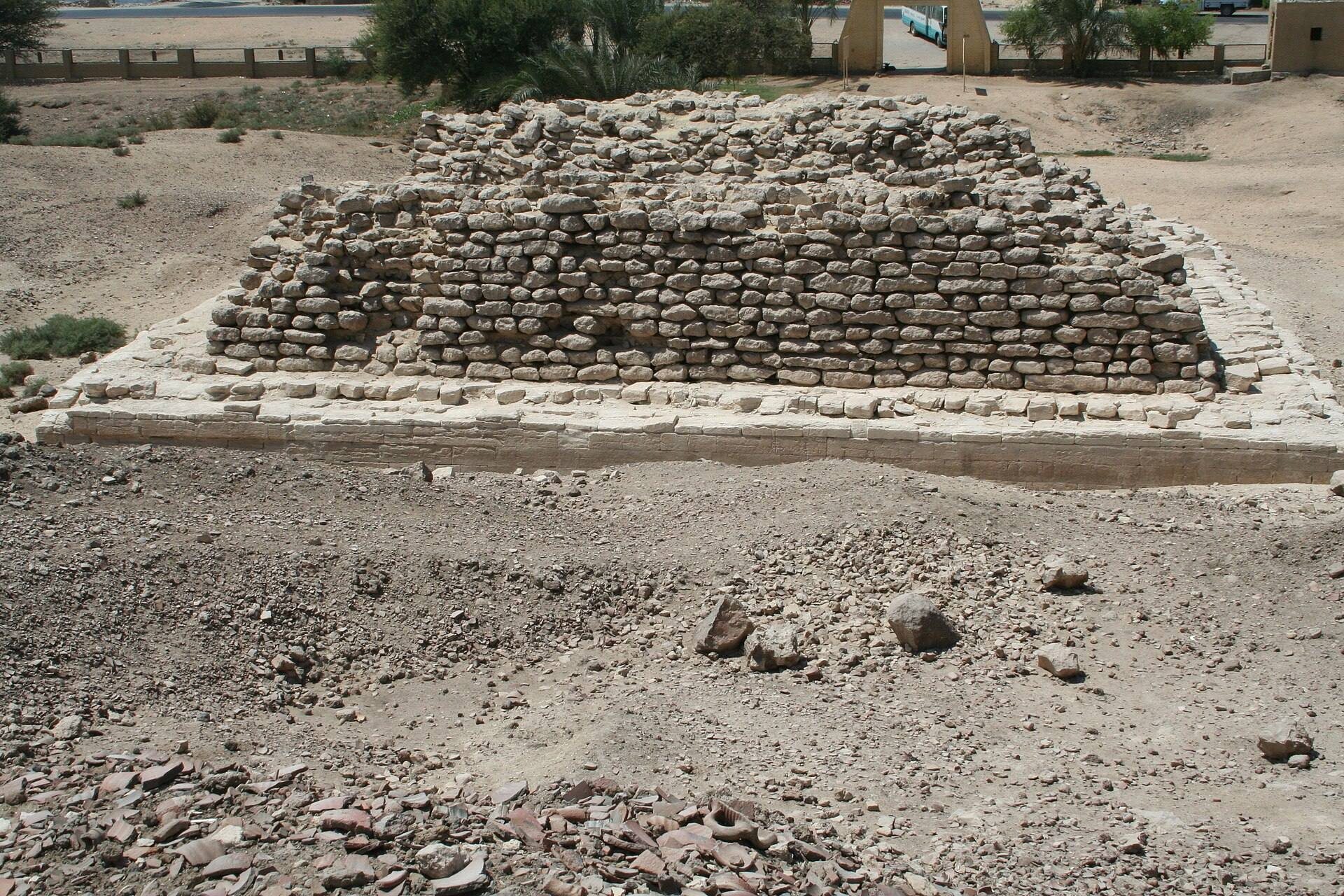
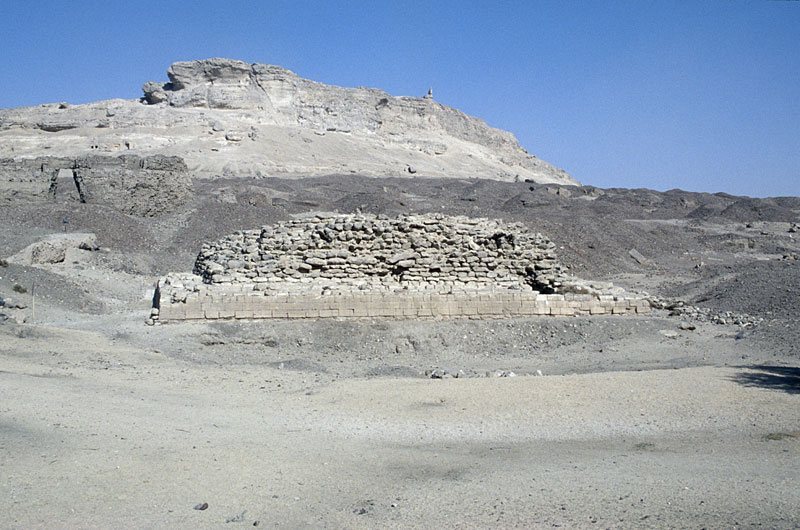
The monument is a step pyramid formed from successive receding levels rather than smooth outer faces. It has a square base measuring approximately 22.5 metres on each side. The surviving steps rise at an inclination of about 80 degrees. The pyramid originally had three, or possibly four, steps and probably reached about 17 metres in height. Its maximum surviving height is approximately 4.75 metres.
Local limestone forms the structure, and the blocks were joined with mortar made from mud, sand, and lime. The stone has a composition similar to material used during the earliest stages of the Pyramid of Meidum. The pyramid is aligned parallel to the ancient course of the Nile, although its western side deviates by approximately 20 degrees toward the northwest.
Zawyet el-Maiyitin occupies an unusual position within Egyptian pyramid architecture. It is the only known Egyptian pyramid on the eastern bank of the Nile, while the other provincial pyramids belong to a group located away from the principal royal centers.