Huchuy Qosqo: An Inca Royal Estate in Peru
Site at a Glance
- Rating
- 4.8
- Popularity
- Low
- Country
- Peru
- Primary era
- Medieval
- Eras represented
- Medieval, Early Modern
- Civilizations
- Inca, Spanish
- Site type
- Domestic
- Remains
- Palace
On this page8 sections
History
Huchuy Qosqo is an Inca archaeological settlement above and west of Lamay in Peru, overlooking the Sacred Valley at about 3,600 to 3,650 meters above sea level. Settlement at the site dates from approximately AD 1000 to 1400, while construction of the royal complex took place between about AD 1420 and 1530 during the expansion of the Inca state, the Andean polity centered on Cusco.
From Kakya Qawani to Huchuy Qosqo
The name Huchuy Qosqo means “Little Cusco” in Southern Quechua and came into use during the twentieth century. Earlier names included Kakya Qawani and Caquia Xaquixaguana in Spanish chronicles. Kakya Qawani referred to a place associated with watching lightning. The site was probably established as a royal estate for Viracocha around AD 1420. A royal estate was a state-controlled property used for residence, political authority, production, and sometimes defense.
Viracocha and the Inca royal estate
Pedro de Cieza de León attributed the construction of the palaces to Viracocha, traditionally regarded as the eighth Inca ruler. Other chroniclers stated that Viracocha spent the remainder of his life at the estate after his son Pachacuti took power. During the revolt of the Chanca people late in Viracocha’s reign, Viracocha took refuge at Huchuy Qosqo while Pachacuti defended Cusco. Pachacuti defeated the revolt, deposed his father, and became Inca ruler in AD 1438. The estate was expanded after Viracocha’s deposition.
Huchuy Qosqo functioned as a rural palace and possibly as a government center modeled on the Inca capital. Its operation required extensive labor for construction, maintenance, agriculture, and production. Workers may have been supplied through the mit’a, a system of obligatory labor service to the state, while mitma relocated families or ethnic groups to new areas. Permanent servants known as yanakuna and secluded women called aqllakuna, who produced textiles and fermented drink, also formed part of the estate’s labor system. The property could control farmland, grazing areas, mines, textile production, and other resources.
Spanish takeover and changing use
In about AD 1534, the Spanish conquistador Gonzalo Pizarro looted Huchuy Qosqo and burned Viracocha’s mummy. The Spanish took control of the site during the sixteenth century, after the Manco Inca revolt of approximately 1540, and converted it into a farm. Some Inca buildings were demolished during this period to create a larger reservoir. The lower storehouses have since been restored.
Remains
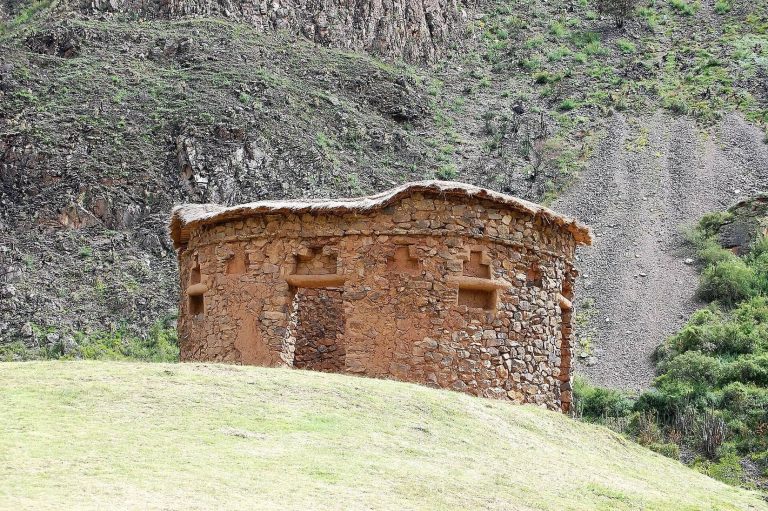
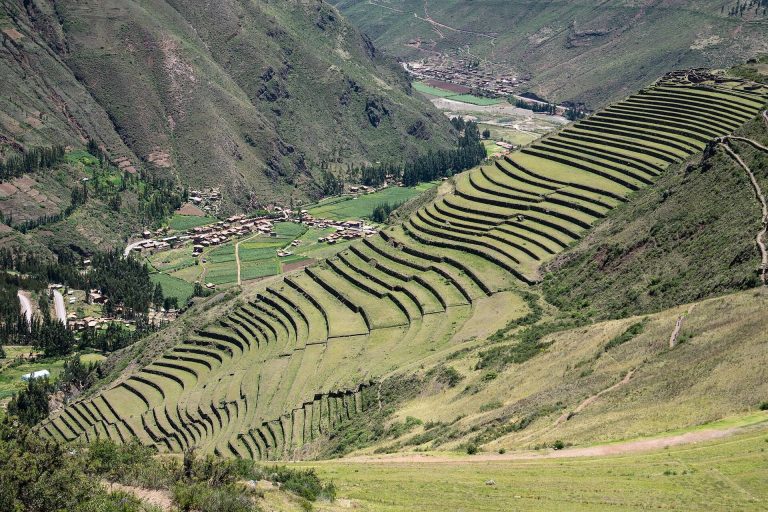
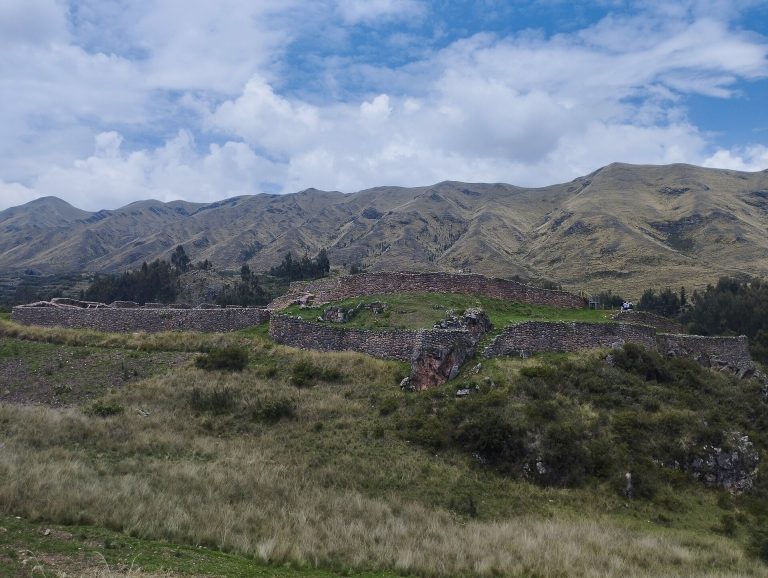
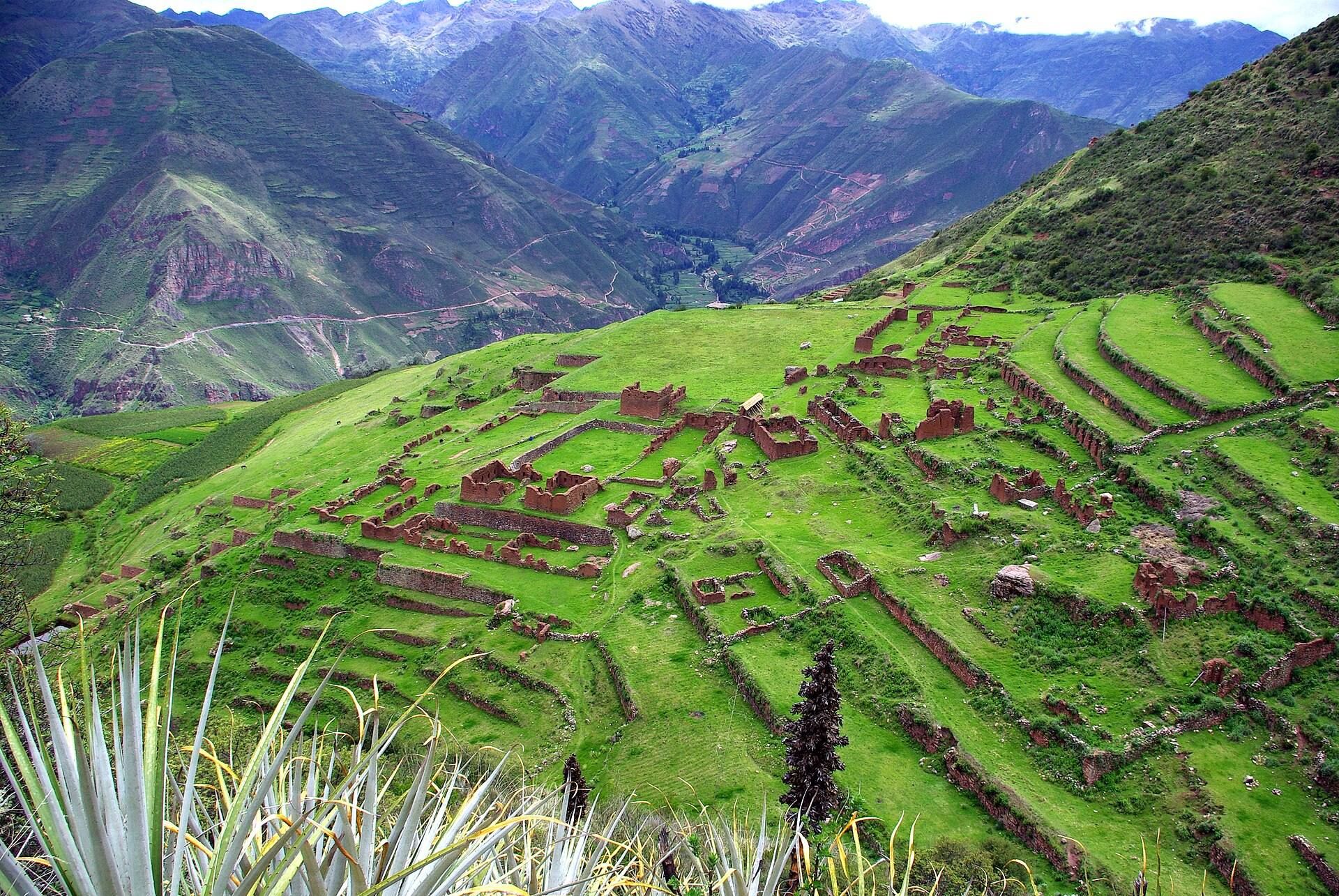
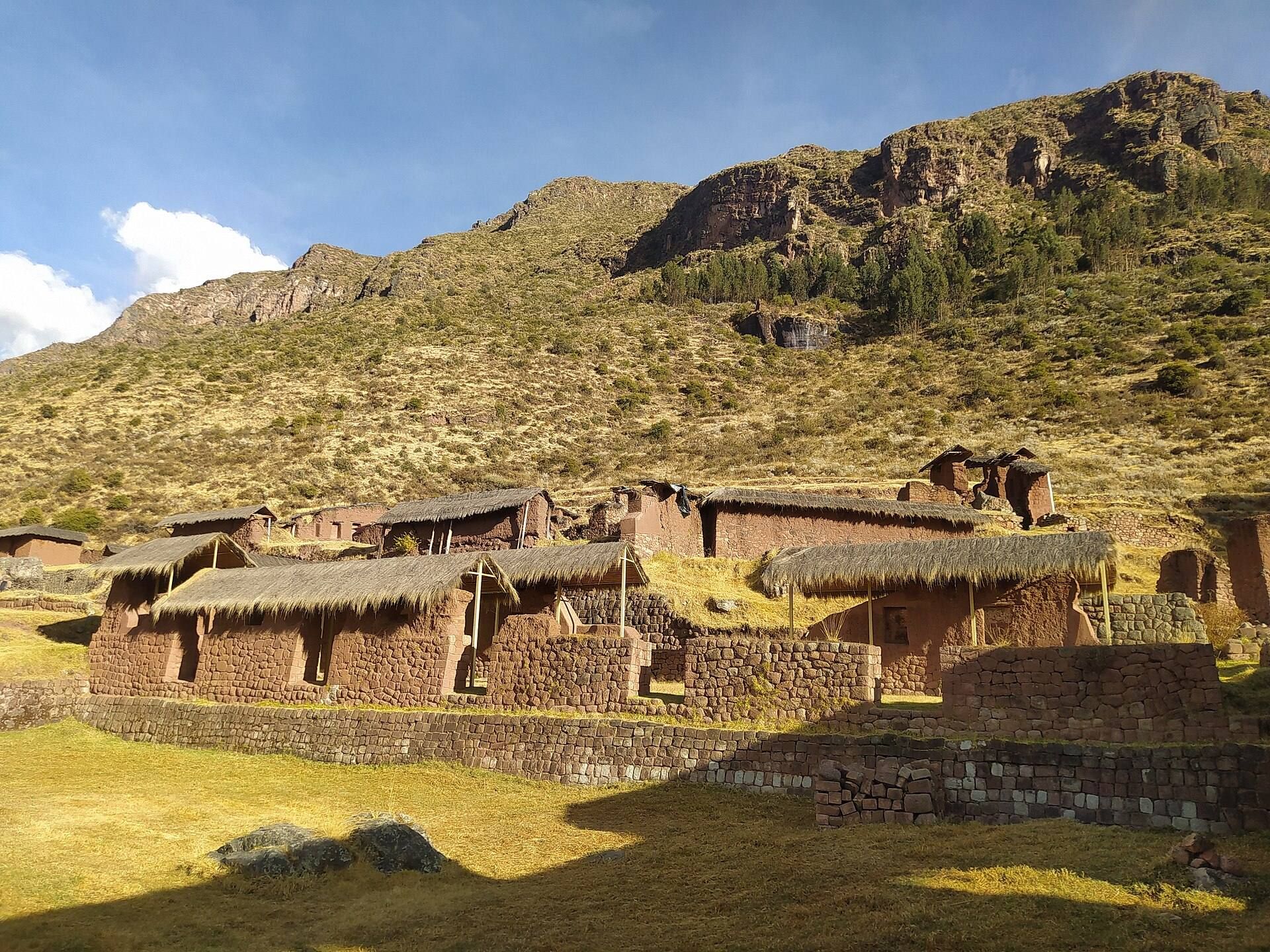
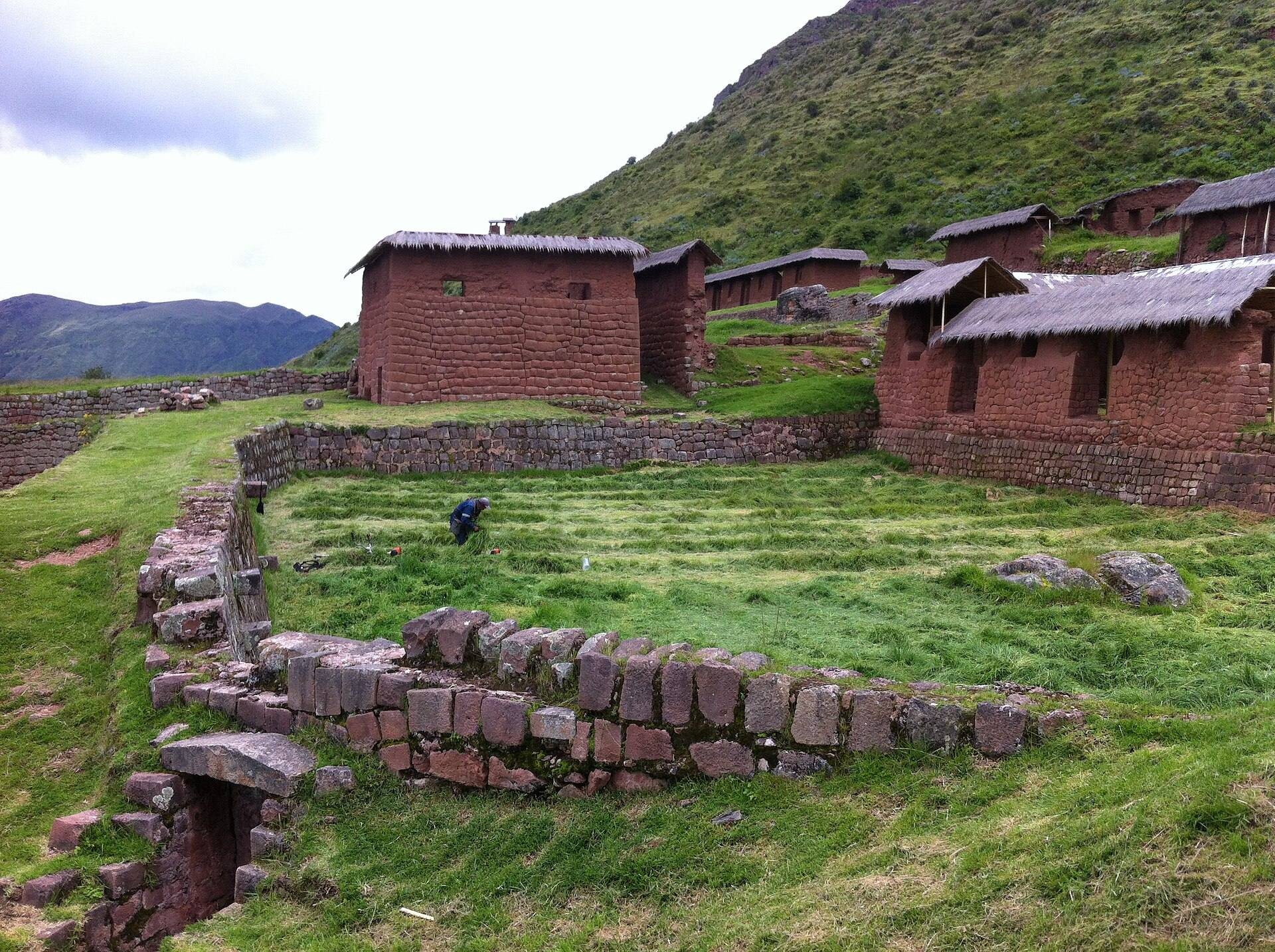
The surviving complex extends across a highland setting above the Sacred Valley and contains buildings made from both stone and adobe. Its remains include a large hall, water infrastructure, walls, stepped agricultural terraces, reservoirs, and storehouses arranged below the main settlement.
Halls and water systems
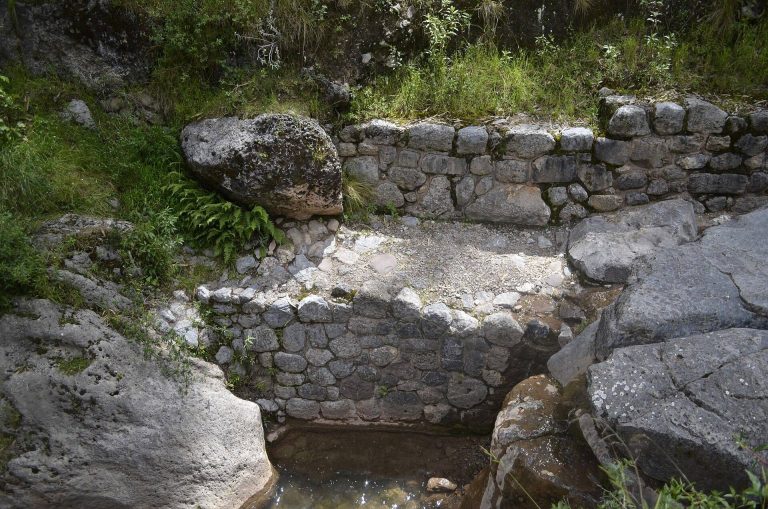
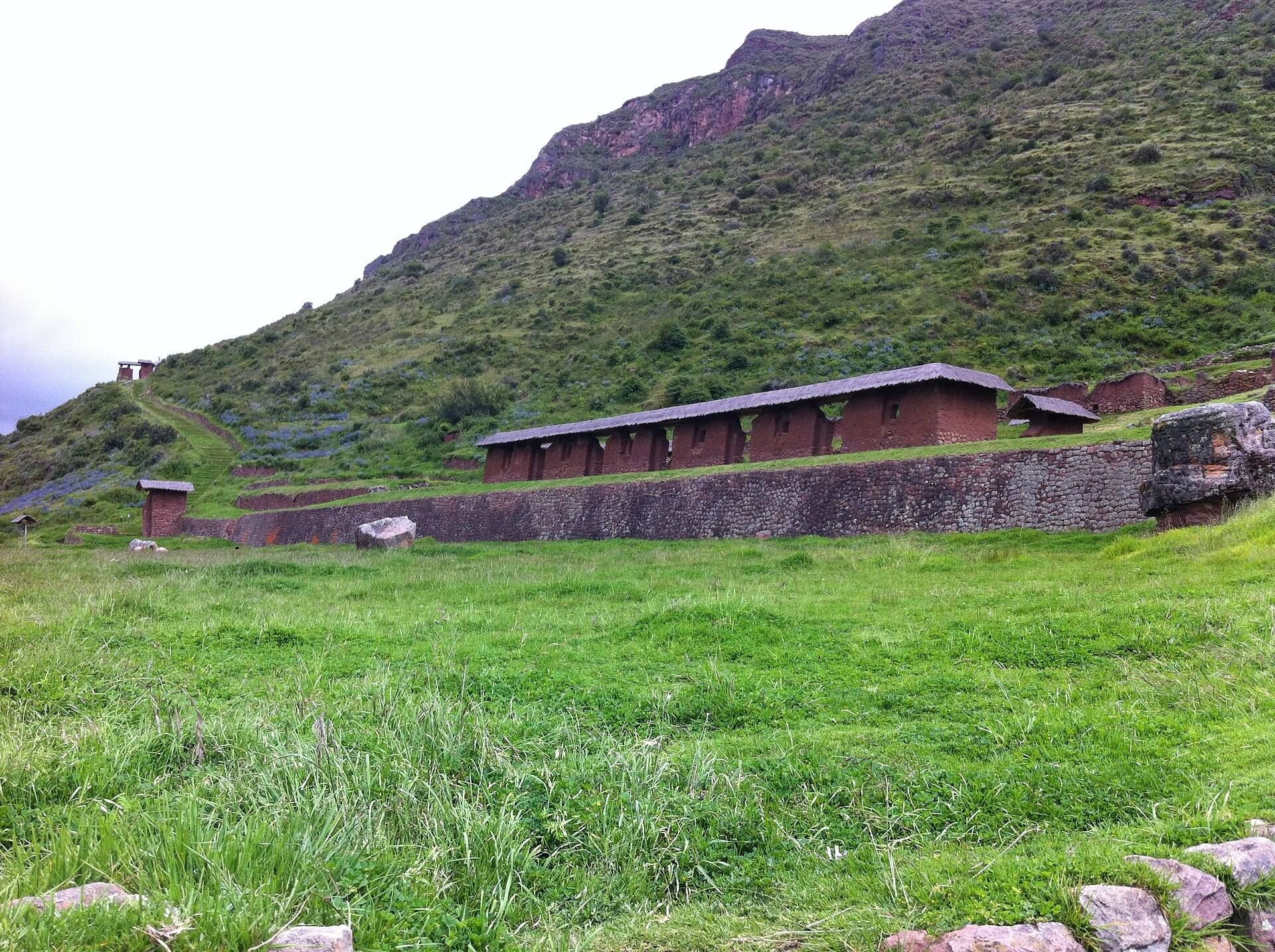
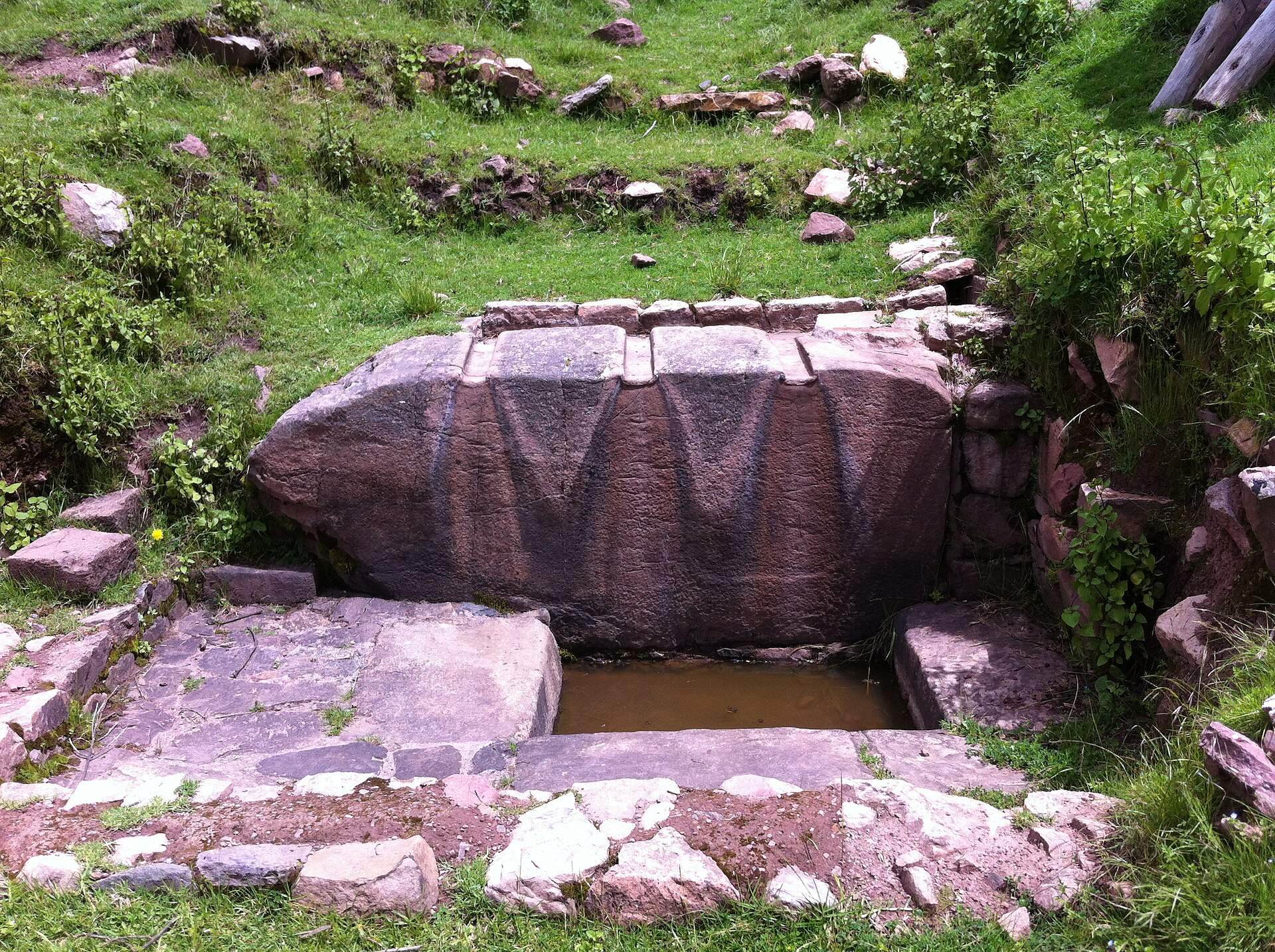
The site’s kallanka, a large Inca hall for gatherings and ceremonies, measures approximately 40 meters in length. A stone-lined irrigation channel carried water to the settlement for about 800 meters. Inca walls and agricultural terraces, known as andenes, formed part of the complex’s built landscape.
Reservoirs and altered structures
Several small irrigation reservoirs were constructed by the Incas. A larger reservoir visible at the site belongs to the Spanish period and was built after some Inca structures were demolished. Its construction therefore records a major alteration to the earlier settlement while preserving part of the later agricultural use of the site.
Storehouses
Two-story qolqa storehouses stand below the main settlement. These storage buildings held dried meat and crops such as maize, potatoes, quinoa, and beans. They contain conjeras, a historical cooling-storage system, and the lower storehouses have been restored.