Sparrsätra Church: A Medieval Parish Church in Sweden
Site at a Glance
- Popularity
- Very Low
- Country
- Sweden
- Primary era
- Medieval
- Eras represented
- Medieval, Early Modern, Modern
- Civilizations
- Swedish
- Site type
- Religious
- Remains
- Church
On this page10 sections
History
Sparrsätra Church is a medieval parish church in Sparrsätra village, about 10 km northwest of Enköping, Sweden. Consecrated in the 13th century, it serves Sparrsätra-Bred Parish in the Diocese of Uppsala, a regional church jurisdiction within the Church of Sweden, an Evangelical Lutheran church.
Medieval origins and additions
The church’s oldest part, its sacristy, a room used to prepare for worship and store liturgical items, was probably built in the 13th century beside an earlier wooden church. The present stone nave, or main church hall, was constructed around 1300. In the 15th century, a porch, an entrance vestibule, was added on the south side, and the sacristy was extended northward. Work began on a tower at the west end late in the century, but it was not completed. Around 1500, the tower room was incorporated into the nave.
Later changes and restoration
Major alterations followed in the 18th century. The roof was rebuilt in 1747-1748, the windows were changed in 1753, and a western entrance was opened in 1767-1768. Interior repairs in 1837 included work on the chancel floor and benches, as well as the making of a new pulpit.
Architect Georg A. Nilsson directed a restoration in 1914-1915, and further restoration took place in the early 1980s. These campaigns altered the interior and brought older decorative work to light. The church’s furnishings and surviving paintings preserve evidence of these changes.
Remains
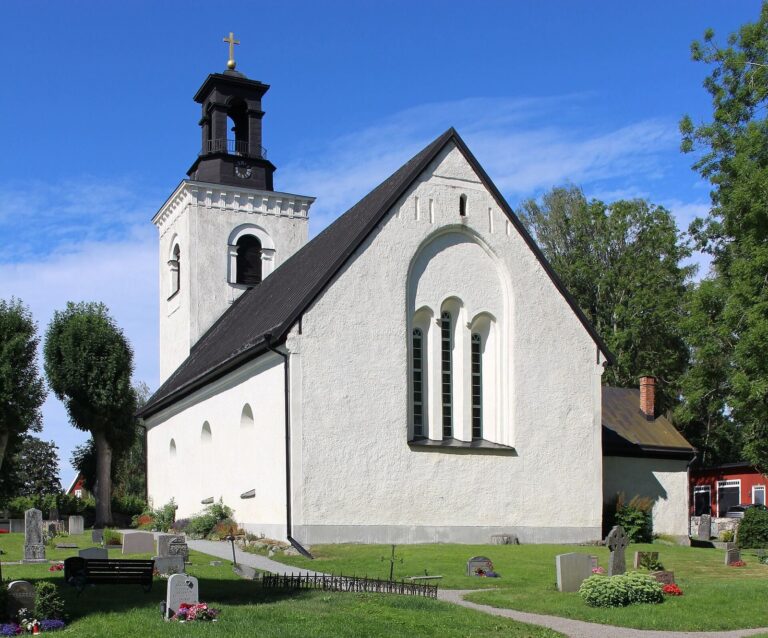
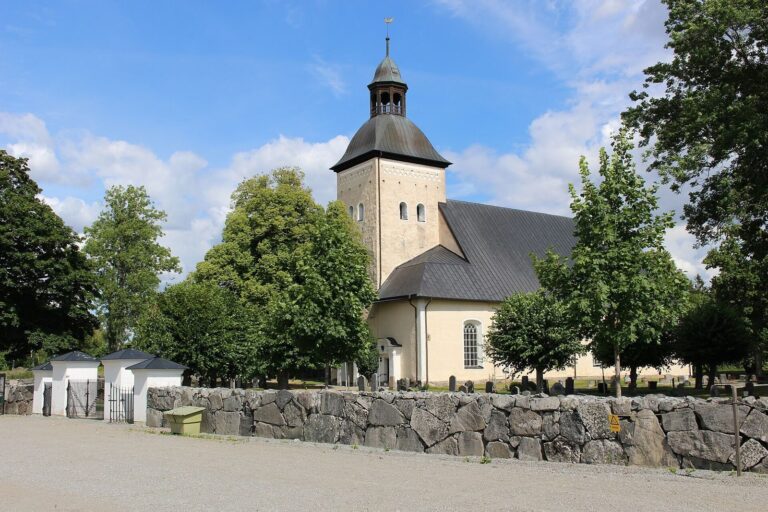
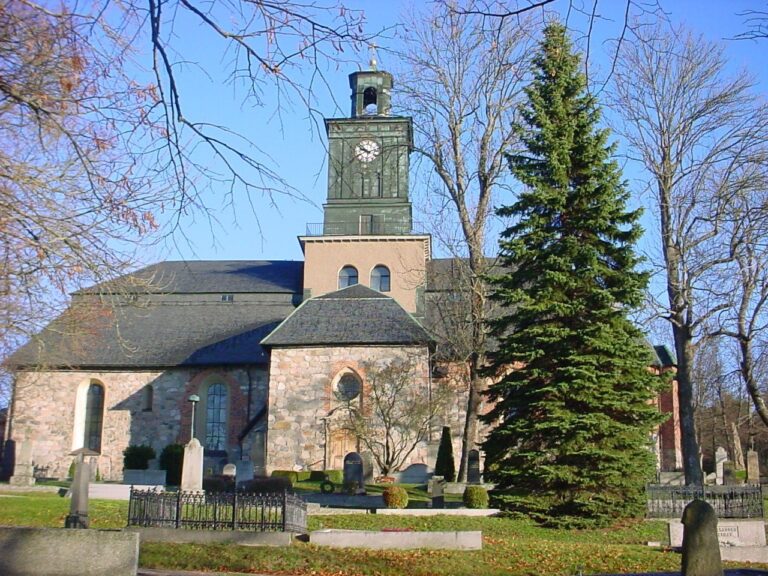
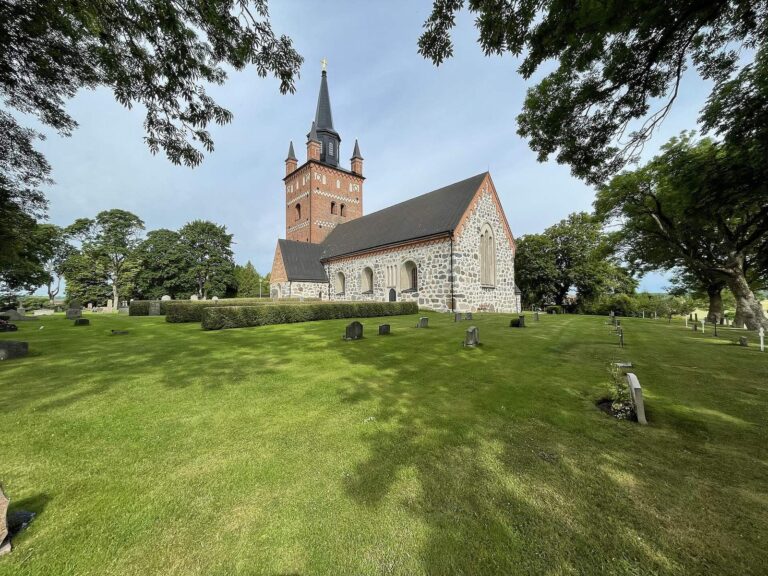
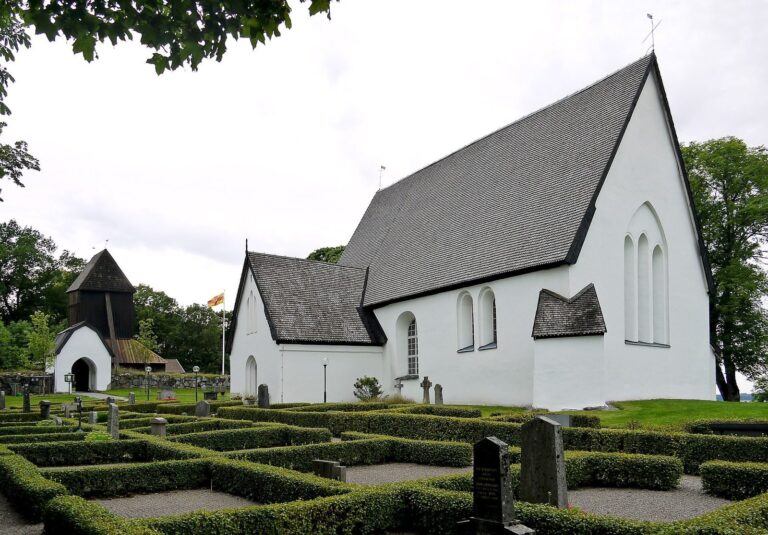
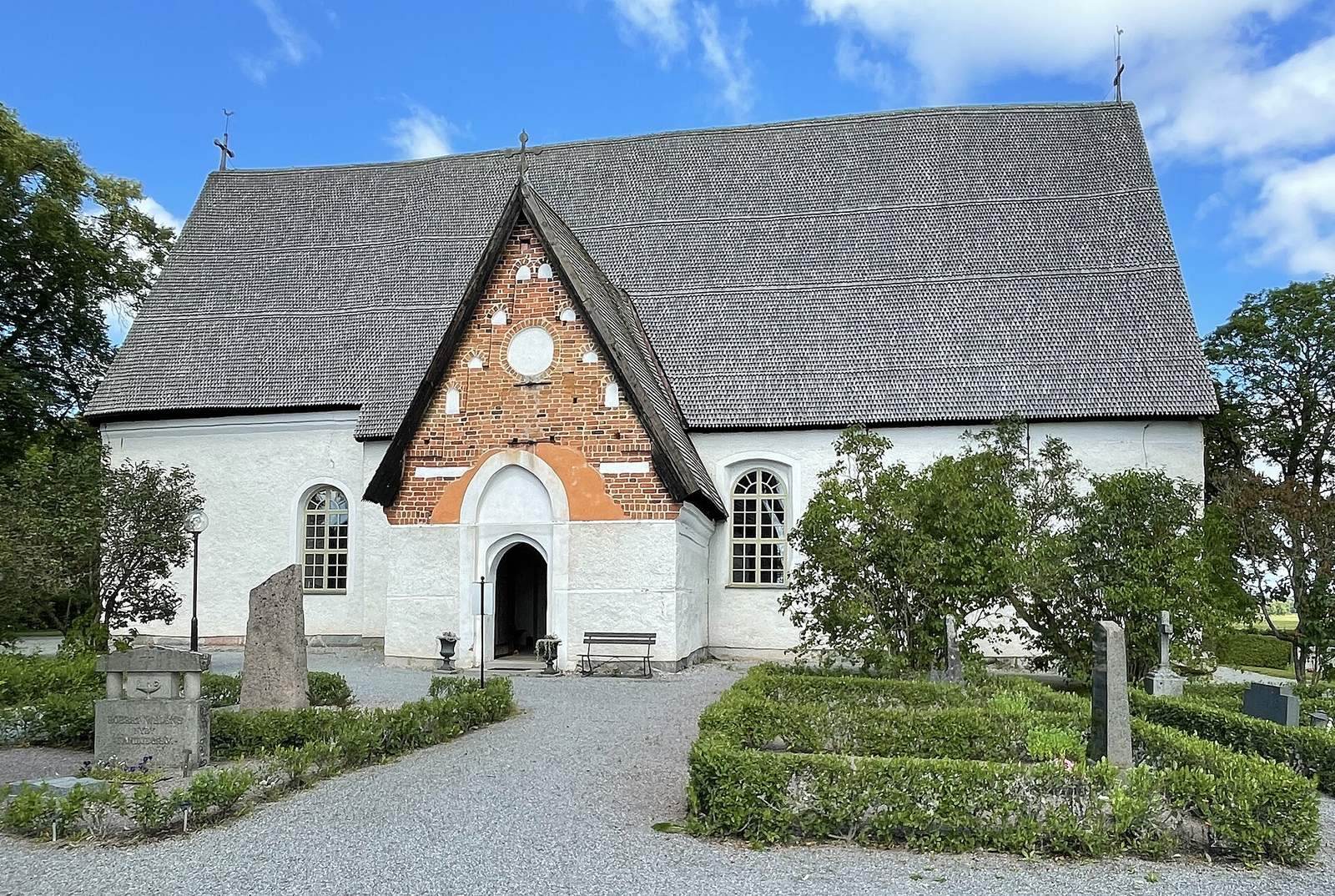
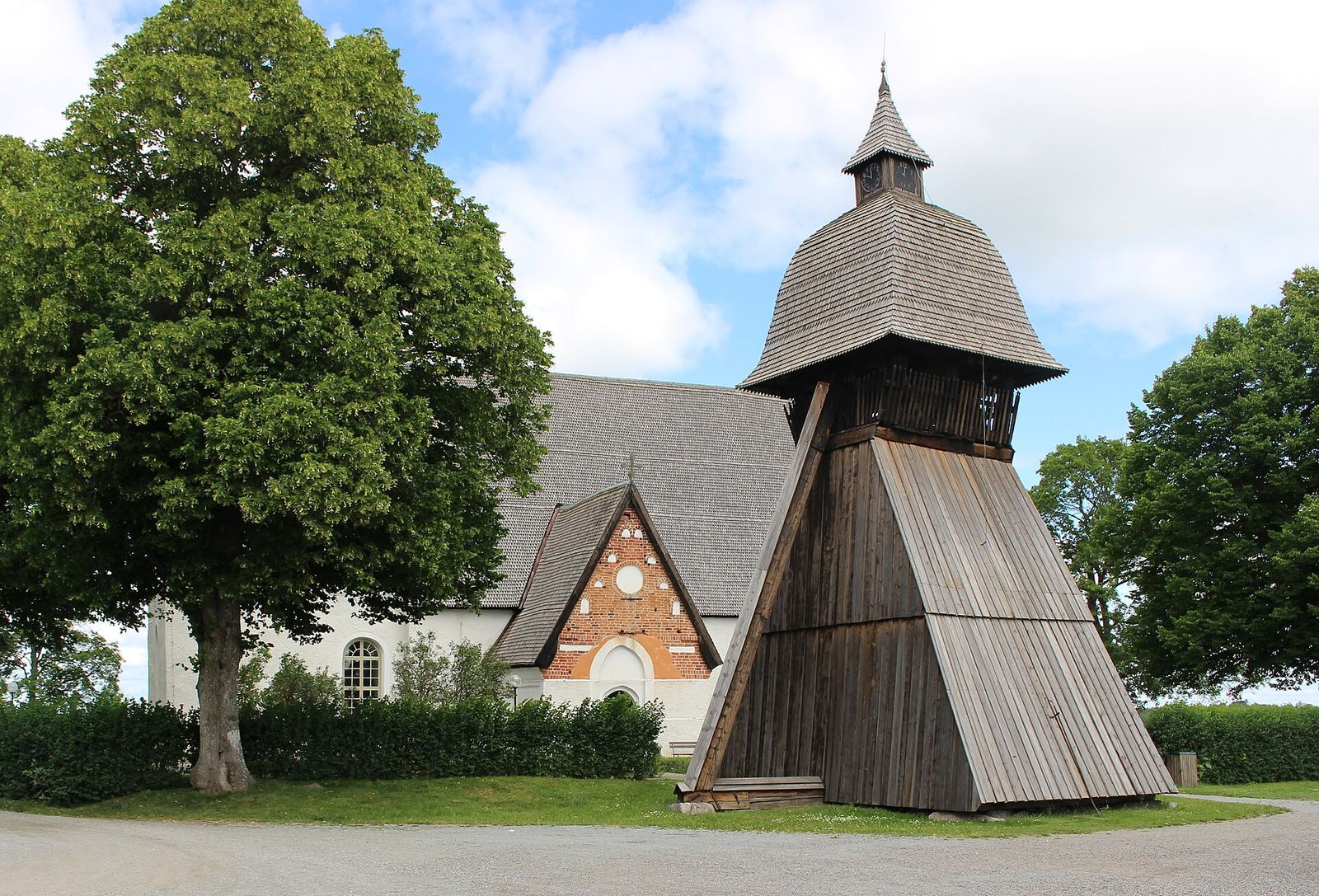
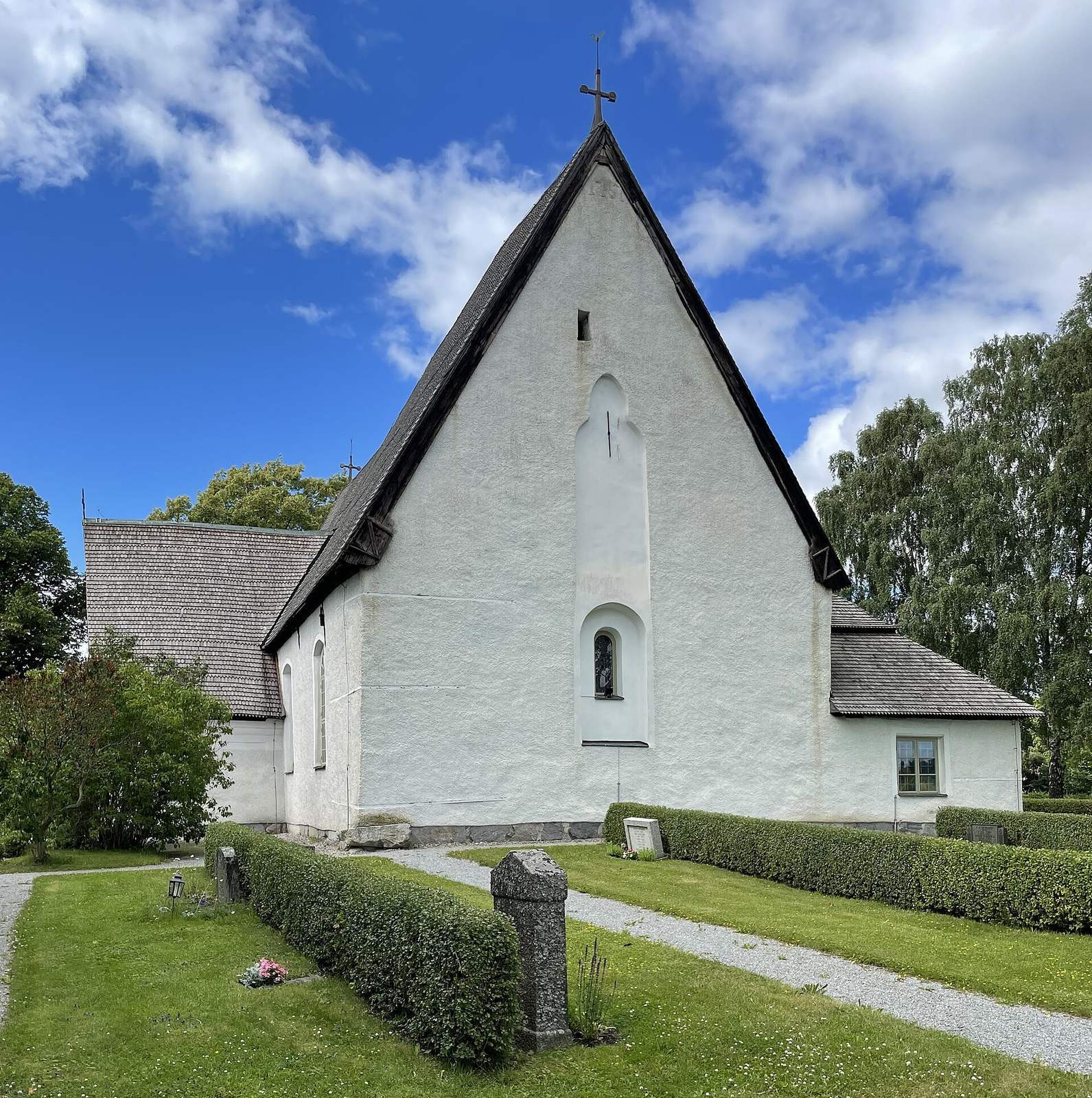
Set on the Enköping Plain, the church has a rectangular nave and an east-end chancel, the area around the altar. A narrower extension marks the unfinished western tower project. The building’s plastered walls combine grey stone with brick, which is also used around openings and in the gable ends. Decorative blind arcading, recessed arches without openings, adorns the gables. A shingle-covered gable roof spans the nave and western section, and the east gable bears the date 1747.
Plan and exterior
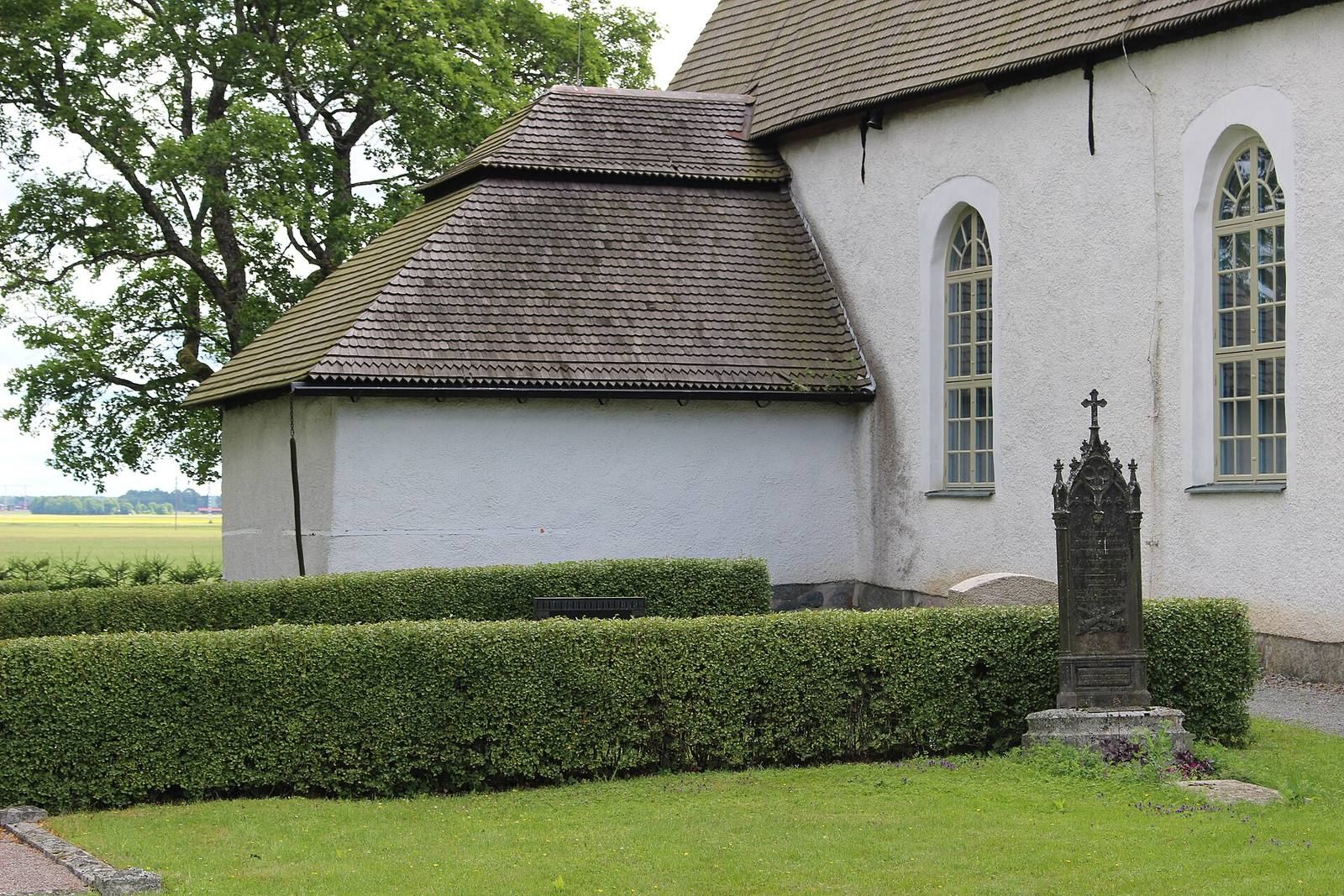
A porch is centered on the south side, while the sacristy adjoins the north wall of the chancel. The sacristy’s western foundation stone projects beneath the nave’s north wall, indicating that the sacristy predates the nave. The present window arrangement reflects the enlargement of older windows and the addition of an opening in the north wall beside the pulpit. The west entrance, opened beside an earlier window, forms the building’s second entrance.
Interior and furnishings
Paintings, gallery, and pulpit
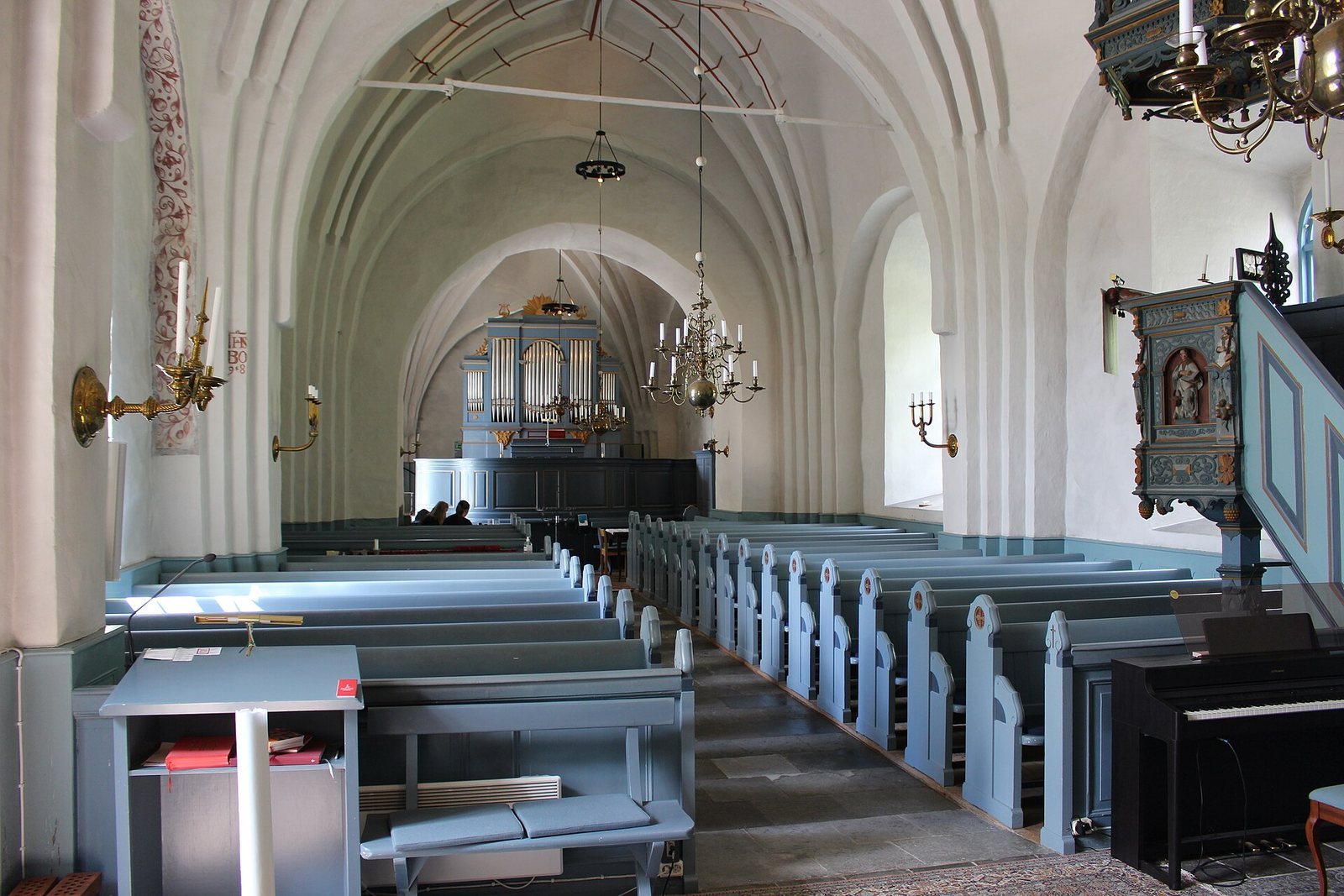
The 1914-1915 restoration rebuilt the gallery, installed open benches in the Art Nouveau style, painted the furnishings, and whitewashed the interior walls. It also revealed Renaissance-style paintings within an arch in the south wall. During restoration in the early 1980s, paintings dating to the 15th century were found in the sacristy. The chancel window was reduced in size, its surround decorated with paintings, and the opening fitted with stained glass based on a proposal by Swedish artist Yngve Lundström.
The richly carved wooden pulpit was made in 1654 by woodcarver Hans Hebel. A new pulpit replaced it in 1837, but the earlier work was returned to the church during the 1914-1915 restoration.
Crucifix and other furnishings
A processional crucifix, carried in religious processions, dates to around 1300 and stands on the altar table. It was found during the 1914-1915 renovation. Four brass or bronze chandeliers include an eight-arm example bought in 1663 for 100 dalers in copper currency, a historical Swedish denomination, and a twelve-arm example purchased in 1669. Two more eight-arm chandeliers were donated in 1702 and 1742. A poor box dated 1760 stands west of the south entrance.
Belfry and bells
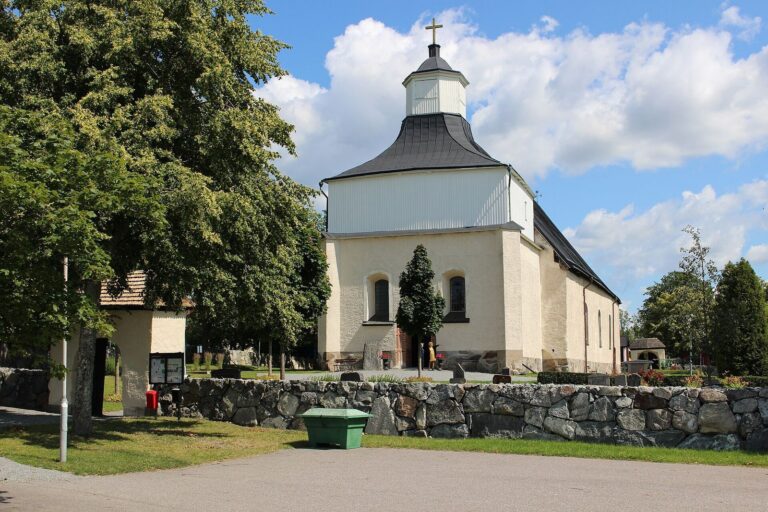
A belfry stands south of the church and was probably built in the late 18th century. Its two bells were recast in 1741 by bell founder Isaac Rockman. An earlier belfry stood north of the church, as shown in a drawing made in 1748 by Swedish topographer Olof Grau.
Organs
A five-stop positive organ, a small organ whose stops control sets of pipes, was in the church by 1642. Another five-stop positive, built in 1644, was moved to a newly built west gallery in 1765. Later instruments included a six-stop organ made by Jonas Ekengren of Stockholm in 1779 and a nine-stop organ built by Daniel Wallenström of Uppsala in 1871-1872. The present organ was made in 1915 by E. A. Setterquist & Son of Örebro. It has pneumatic action, in which air pressure transmits the movement of the keys to the pipes, and Roosevelt wind chests that distribute air to the pipes. Its compass comprises 56 manual notes and 30 pedal notes, with four fixed combinations. Dag Edholm of Trångsund changed its arrangement of stops in 1971, and Grönlunds Orgelbyggeri of Gammelstaden reconstructed it in 1985.