Härkeberga Church: A Medieval Hall Church in Enköping, Sweden
Site at a Glance
- Popularity
- Medium
- Country
- Sweden
- Primary era
- Medieval
- Eras represented
- Medieval, Early Modern, Modern
- Civilizations
- Swedish
- Site type
- Religious
- Remains
- Church
On this page18 sections
History
Medieval origins
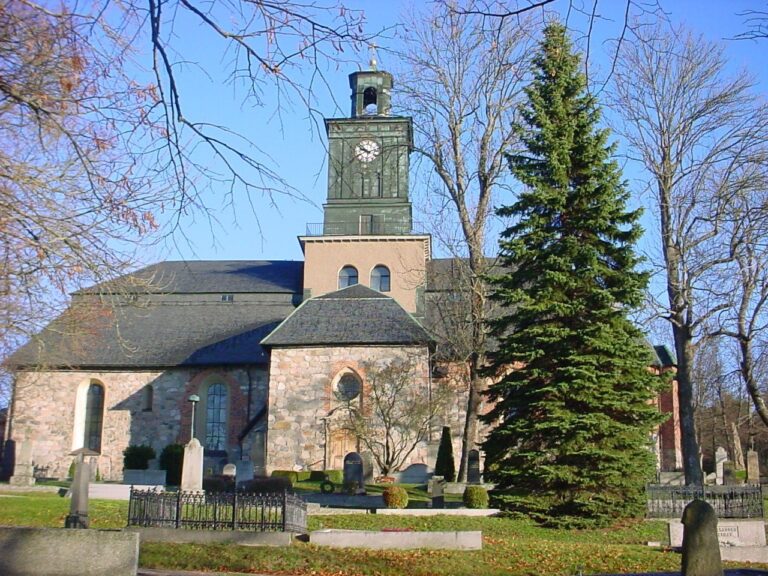
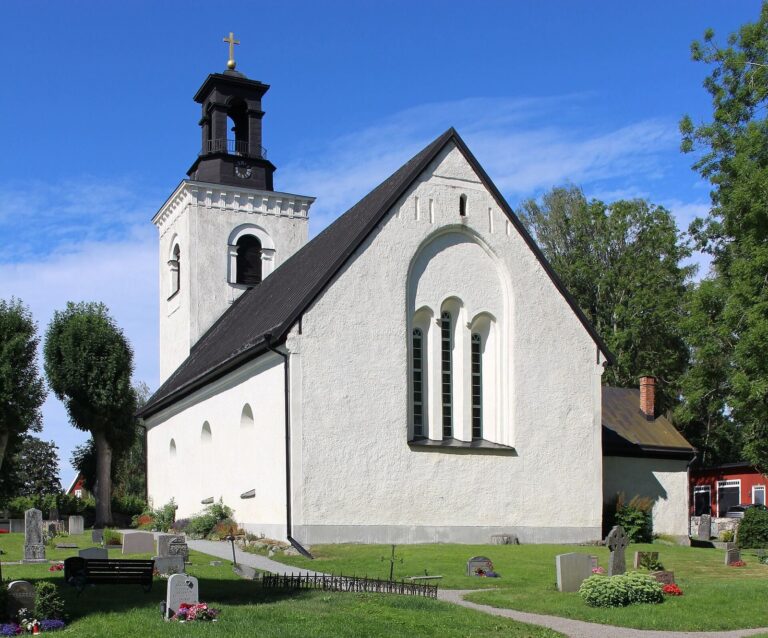
Härkeberga Church is a medieval hall church in Enköping, Sweden, built around 1300. It stands on a ridge in an old cultural landscape where Bronze Age and Iron Age objects have been found nearby.
The nave, chancel, and sacristy were constructed between 1280 and 1310, and the church was consecrated during the fourteenth century. It is affiliated with Villberga Parish and the Church of Sweden’s Archdiocese of Uppsala.
Fifteenth-century additions
In the fifteenth century, builders added a porch and a single buttress, and installed brick vaults decorated with paintings attributed to Albertus Pictor. The porch dates to about 1480, as do the paintings. The church’s original form has remained largely intact.
Later history and restoration
In the eighteenth century, the church’s wall paintings were covered with whitewash. Restoration work in 1935–1936 uncovered them in badly damaged condition. In 2025, the church’s wall paintings were included in Sweden’s Cultural Canon, an official selection of works and achievements regarded as important to the country’s cultural heritage.
Remains
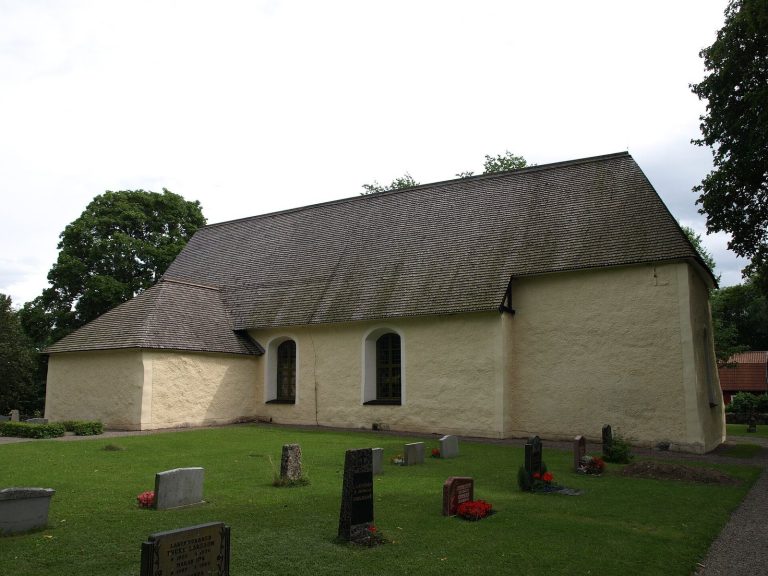
The medieval church is built of grey stone and brick and has a hall plan comprising a nave, chancel, and sacristy. These spaces belong to the original construction and remain part of the church today.
Church fabric and surroundings
Windows and sacristy
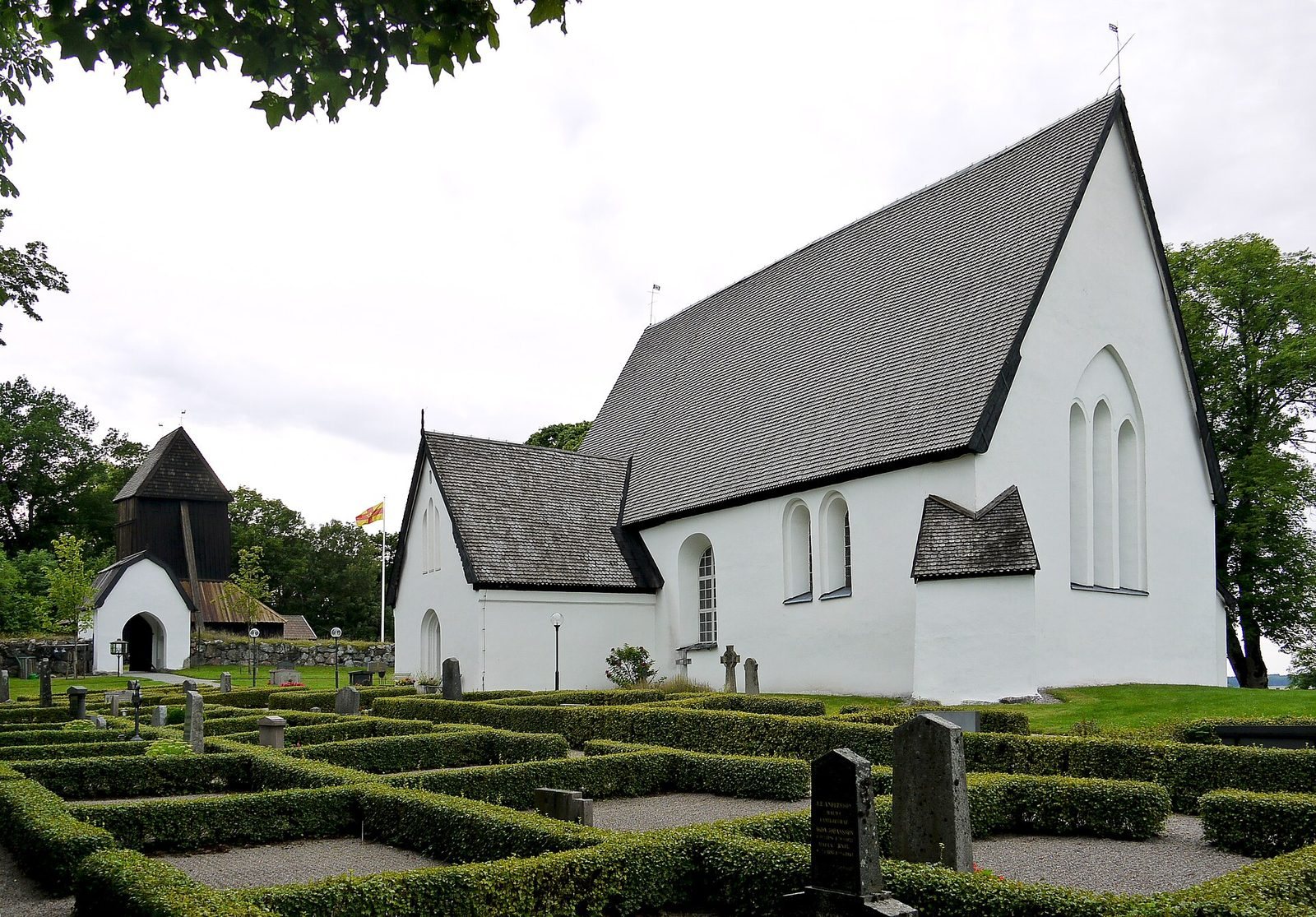
The south wall has two windows, while three are grouped in the east wall of the chancel. The windows are original, though they were enlarged in the eighteenth century. Traces of fourteenth-century paintings in the sacristy imitate masonry.
Porch and entrance
The porch is joined to the church by a doorway with medieval iron decoration. Traces of medieval cloth survive on the entrance door, which was once covered with it.
Bell tower and churchyard
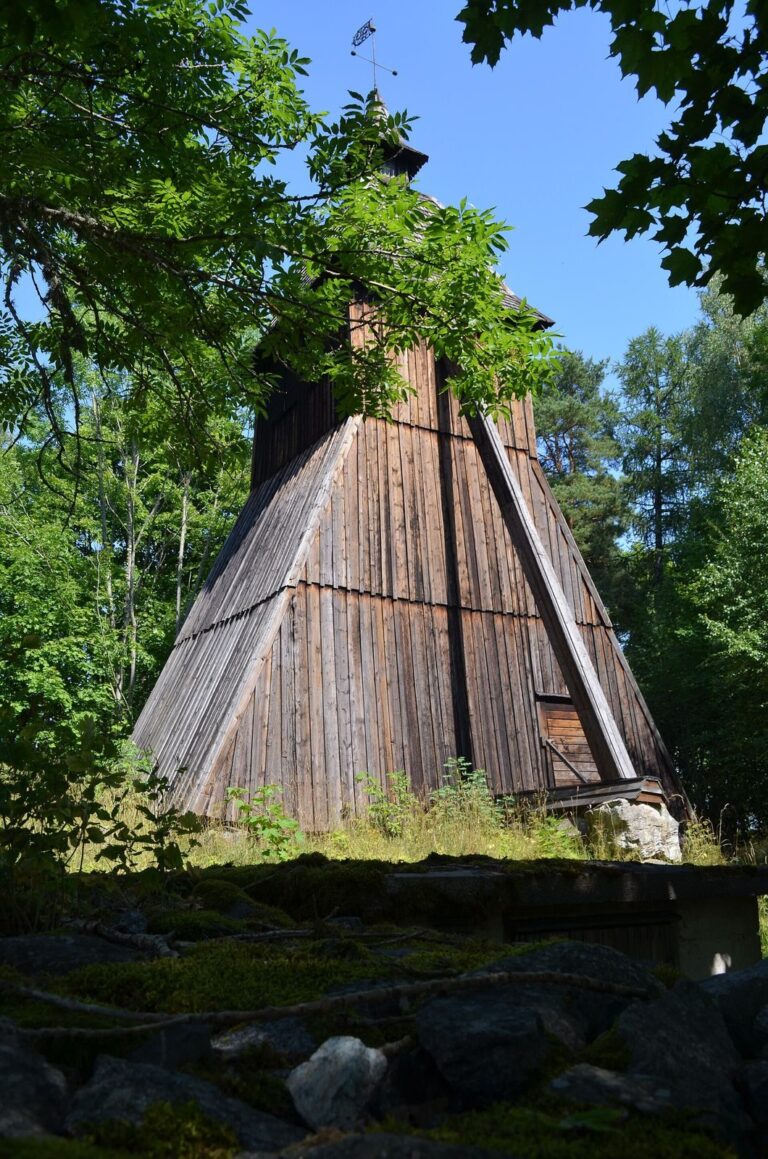
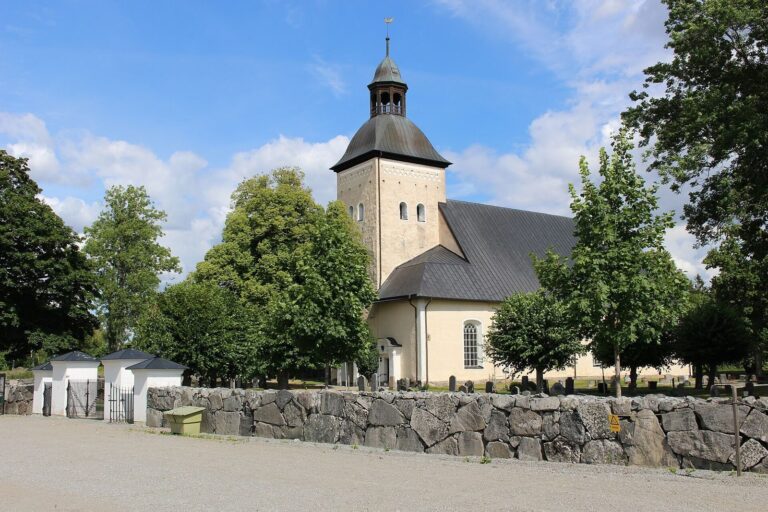
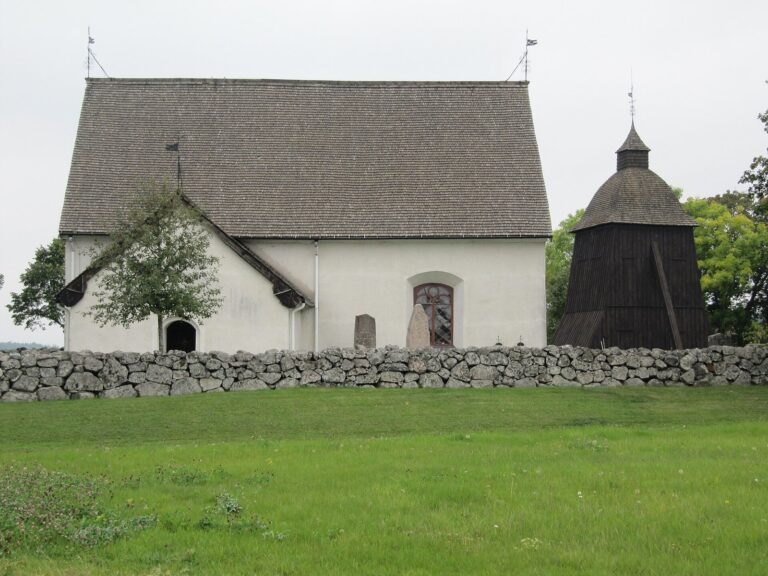
A wooden bell tower dates to the second half of the seventeenth century. A low wall encloses the churchyard. Its gate is probably medieval and was redesigned in the eighteenth century.
Painted surfaces
The brick vaults carry paintings attributed on stylistic grounds to Albertus Pictor, a late-medieval Swedish painter and church decorator. The vault paintings are exceptionally well preserved and have never been whitewashed or retouched. They are regarded as among Pictor’s finest surviving works. The painters applied color to dry lime plaster using al secco (painting on dry plaster). Nearly a third of the subjects draw on the Biblia Pauperum, a picture book of biblical stories; other scenes include secular subjects, demons, imaginary animals, and beasts.
Lead-containing pigments oxidized and darkened, leaving marks on figures’ cheeks. Red lead and cinnabar have reddish hues, while other light colors used for faces have faded, leaving them grey.
Porch paintings
The porch’s east wall depicts the Mass of Saint Gregory, with a probable self-portrait of Pictor at the far right. A similar self-portrait, bearing the painter’s signature, appears in Lids Church. Saint George and the dragon occupy the south wall, while the west wall shows a Wheel of Fortune.
West vault
The upper scenes show Joseph being thrown into a well and sold by his brothers, interpreting Pharaoh’s dream of seven lean cows, and having his bloodied garment returned to Jacob. Images in the corners include Cain before God after killing Abel, Esau before Isaac and hunting, and Jacob before Isaac, alongside the Church Fathers Gregory, Augustine, Ambrose, and Jerome.
The north side combines the Last Judgment with Delilah cutting Samson’s hair. On the east is the Throne of Mercy, a Christian image of the Trinity showing God the Father, the crucified Jesus, and the Holy Spirit. The south side depicts manna falling, Moses striking water from a rock, and the dance around the golden calf. The Last Judgment once faced people entering the nave from the porch; the organ gallery now partly obscures it.
Middle vault
The north side depicts Jonah and the whale and Noah’s shame. On the east are the Coronation of Mary, Elijah’s ascent, and Esther before Ahasuerus, the Persian king in the biblical Book of Esther. The south side shows Elisha mocked by the boys of Bethel, Jesus’ Ascension and the miracle of Pentecost, David killing a bear, and Daniel in the lions’ den. The west side depicts Isaac carrying the sacrificial wood, the Sacrifice of Isaac, David cutting off Goliath’s head, and Abel’s sacrifice.
Chancel vault
At the top of the vault, eight angels hold the instruments associated with the Passion of Jesus. The east side shows the Coronation of Mary, Elijah’s ascent, and Esther before Ahasuerus. The south depicts Jesus as the Man of Sorrows, the evangelists Matthew and Mark, Samson and the lion, the crossing of the Red Sea, and the Baptism of Jesus. Samson carrying the gates of Gaza and the evangelists Luke and Mark appear on the west. The north shows the Apocalyptic Virgin Mary, the Presentation of Mary in the Temple, and the betrothal of Joseph and Mary. Above the altar is Jesus with bleeding wounds.
Furnishings
Triumphal crucifix
The triumphal crucifix, a large crucifix traditionally displayed at the chancel arch, dates to the early fourteenth century. It was probably made for the church when the building was new.
Pews and pulpit
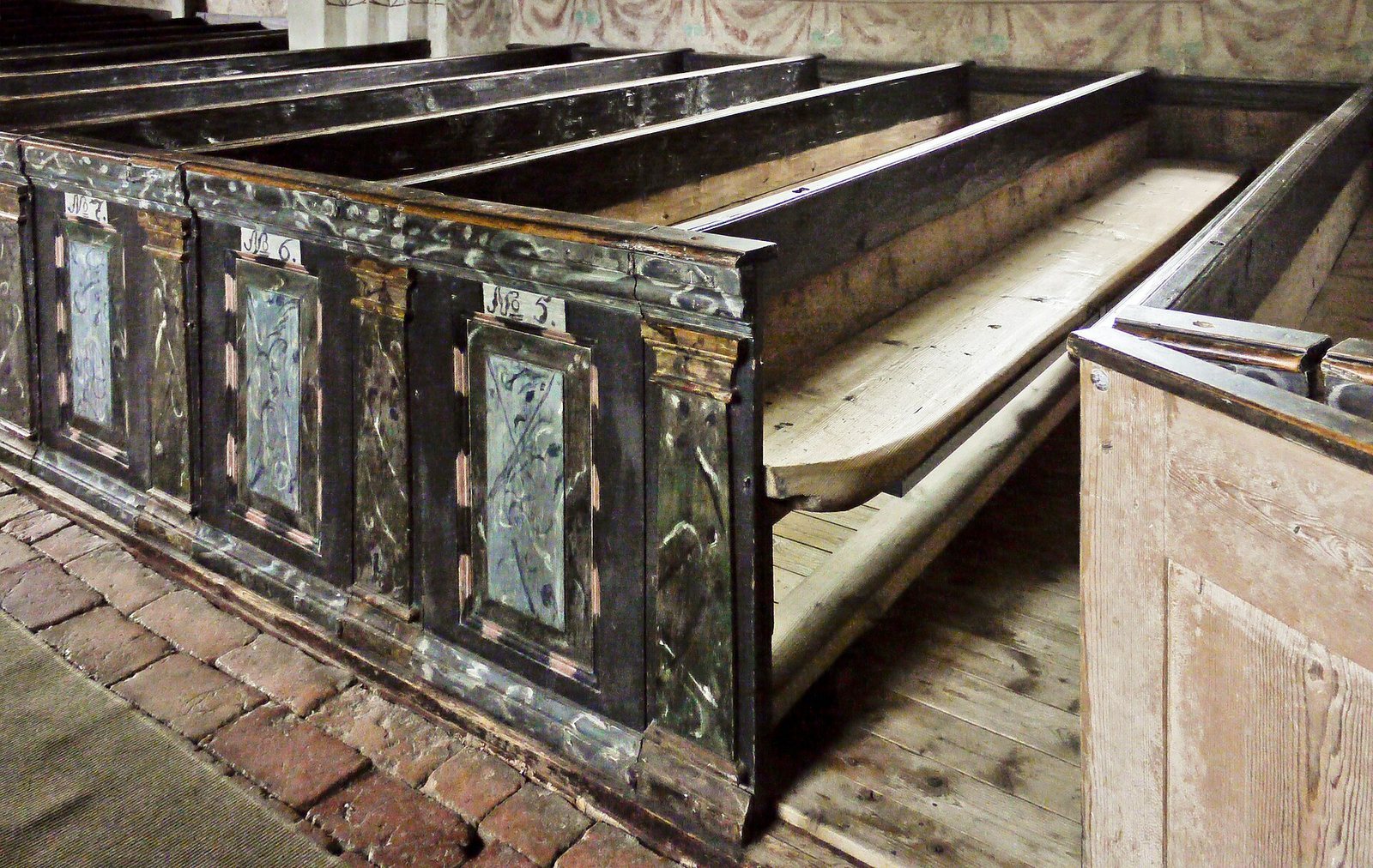
The pews were made in 1755 by the carpenter Strandberg. Several carry carved house marks and the dates 1629 and 1651. The pulpit, an unusually fine example of Gustavian style, was made in 1791 by sculptor Jean Baptiste Masreliez. Gustavian style is a Swedish form of neoclassical design associated with the late eighteenth century.
Organ
The organ gallery was built in 1773. An organ was added in 1811, and the present instrument was made in 1813 by Anders Svanström of Strängnäs. It has mechanical action, in which physical connections link keys to valves, and slider chests, whose sliding boards regulate wind to groups of pipes. Its compass, or range of playable notes, is listed as 51/17. Th. Frobenius & Co. of Kongens Lyngby, Denmark, renovated and rebuilt the instrument in 1954.