Sostra: A Roman Fort and Settlement in Bulgaria


Site at a Glance
- Rating
- 4.1
- Popularity
- Low
- Country
- Bulgaria
- Primary era
- Classical
- Eras represented
- Classical
- Civilizations
- Roman
- Site type
- Military
- Remains
- Fort
On this page11 sections
History
Sostra is an ancient Roman fort and settlement in Bulgaria, first established around AD 100 as a road station and expanded into a fortified site around AD 147 during the Roman imperial period. Located near the village of Lomets, it occupied a strategic position on the Via Traiana, the major Roman road linking Philippopolis and Diocletianopolis in Thrace with Danubian outposts such as Ulpia Oescus and Novae through the Troyan Pass.
Foundation and Roman communications
The first settlement at Sostra was a mansio, a Roman road station that provided facilities for official travelers and transport. The fort was built around AD 147 on the orders of the emperor Antoninus Pius. The cohort II Mattiacorum, a military unit nominally numbering about 1,000 soldiers, was stationed there. It had previously been based at Sexaginta Prista, near present-day Ruse, until AD 145.
A civilian settlement, or vicus, grew on the western and eastern sides of the fort and gradually developed into a town. Sostra’s position on the Via Traiana gave it a military and administrative role along an important regional route. The road had been important during Trajan’s Dacian Wars against the Thracian tribes north of the Danube and later became a major provincial artery.
In AD 175, the road was improved under the emperor Marcus Aurelius, as shown by milestone inscriptions. The work produced a paved carriageway wide enough for movement in both directions, increasing traffic and trade through the settlement.
Military rebuilding and destruction
From AD 235, the cohort I Cisipadensium, nominally consisting of about 500 men, was stationed at Sostra. The Goths captured the fort in AD 249. In AD 254, another cohort was stationed there under the emperor Gallienus and began building a new fort wall. Construction continued until at least AD 282 under Gallienus, Claudius Gothicus, Aurelian, and Probus.
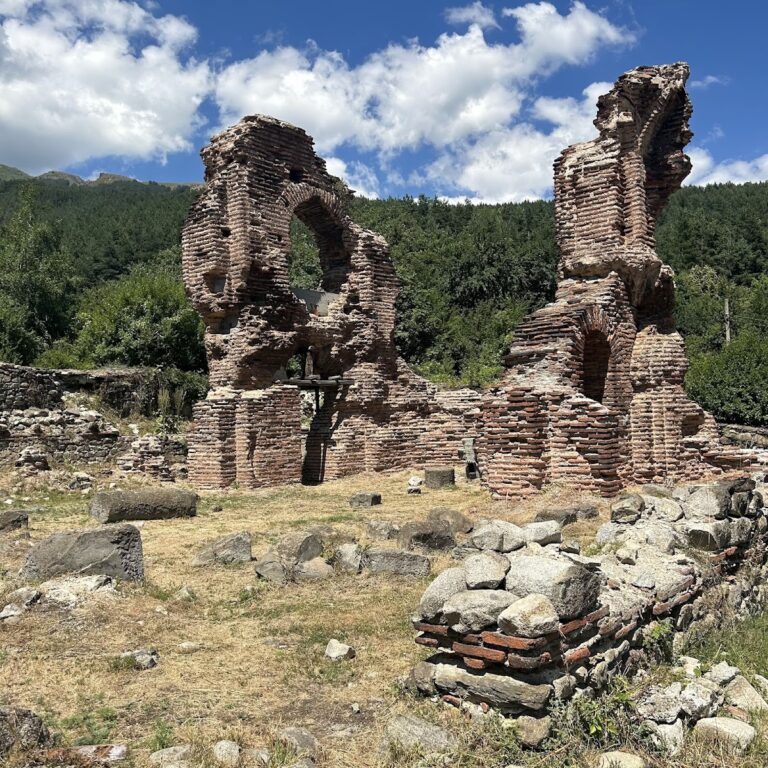
The Goths burned the fort again in AD 378. During the late fourth century, the town gained a Christian basilica dedicated to St. George, a saint widely venerated in Eastern Christianity. In the early fifth century, eastern groups described as barbarians settled at Sostra, while older Thracian mountain strongholds in the surrounding area were restored. The Huns completely destroyed Sostra at the end of the fifth century.
Excavation and preservation
Ivan Hristov of the Bulgarian National Museum of History directed excavations at Sostra from 2002 to 2016. The excavated remains have been partially restored, and finds from the site are held in the museum in Troyan.
Remains
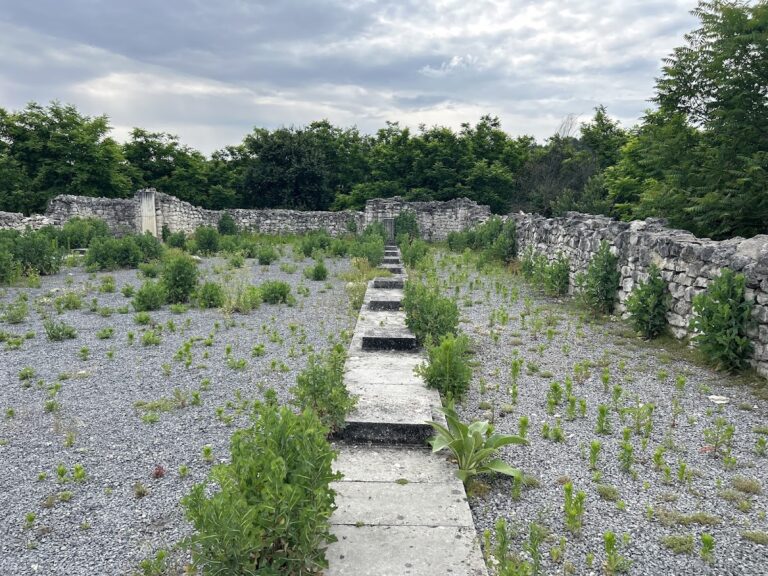
The Roman archaeological site covers approximately 6 square kilometres. Its surviving remains include successive fortifications, the headquarters area, a substantial road station with bathing facilities, and the traces of a settlement that developed around the military installation.
Fortifications
Original Roman fort
The first fort, built around AD 147, had rounded corners and a defensive plan without bastions, which were projecting platforms incorporated into later fort walls.
Rebuilt fort
The fort rebuilt from AD 254 was placed within the walls of the earlier enclosure. It followed later Roman defensive practices and included numerous bastions. The rebuilding formed part of the military response after the fort’s capture by the Goths in AD 249.
Road station and civic features
Mansio complex
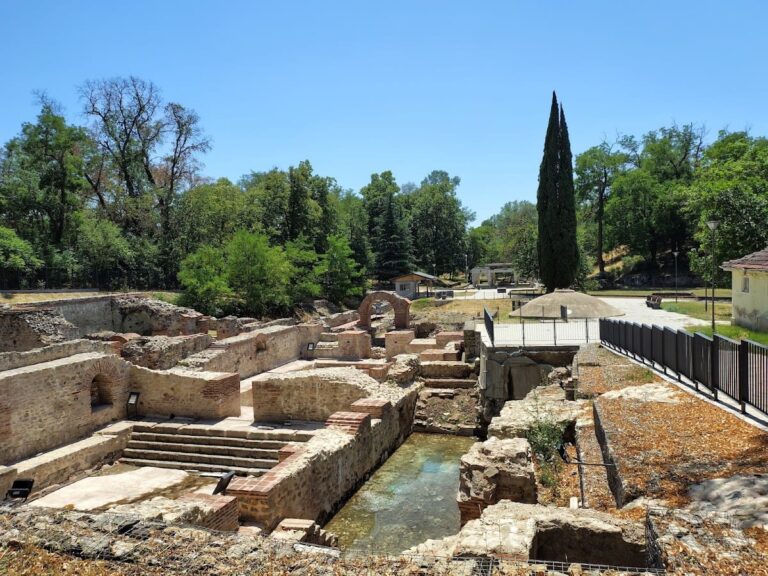
A large mansio near the fort covers approximately 500 square metres, with walls surviving up to 2 metres high. The complex has been interpreted both as a high-quality bathing and lodging facility comparable to a modern spa resort and as a praetorium, an official residence or reception and meeting complex for important visitors.
The building contained Roman thermae, institutional bath complexes, together with a large indoor swimming pool and an adjacent heated jacuzzi. Further swimming pools have also been found, including examples with openings in their floors that may have allowed hot springs to rise into the pools.
Headquarters and road evidence
The fort’s principia, its central headquarters building, contained a statue base naming the cohort II Mattiacorum. Milestone inscriptions found in connection with the road record the improvements carried out under Marcus Aurelius and provide evidence for the continued importance of the Via Traiana to Sostra.
Nearby sites