Skotino Cave: A Sanctuary Used from the Minoan Period to Roman Times
Site at a Glance
- Popularity
- Medium
- Country
- Greece
- Primary era
- Medieval
- Eras represented
- Medieval, Early Modern
- Civilizations
- Venetian
- Site type
- Religious
- Remains
- Sanctuary
On this page12 sections
History
Skotino Cave, a sanctuary in Greece northwest of Skotino, was used from the third millennium BC through the Roman period. Its long religious history spans Minoan, Classical Greek, and Roman times.
Minoan and Classical Greek worship
The cave was an important sanctuary to a female fertility deity, possibly Britomartis, a Minoan goddess. Evidence places sanctuary use specifically from the Middle Minoan period, a phase of Crete’s Bronze Age Minoan civilization, through Roman times.
During the Classical Greek and Roman periods, Artemis, a Greek goddess, or her Roman counterpart Diana took the place of the earlier deity.
Roman and later religious use
During the Roman period, the cave was converted into a Christian sanctuary. In the Venetian period, when Venice ruled or influenced the region, a chapel dedicated to Saint Paraskevi, venerated in Eastern Orthodox Christianity, was built above it. An annual pilgrimage and feast takes place there on 26 July, and pilgrims continue to leave votive offerings at the chapel.
Archaeological investigations
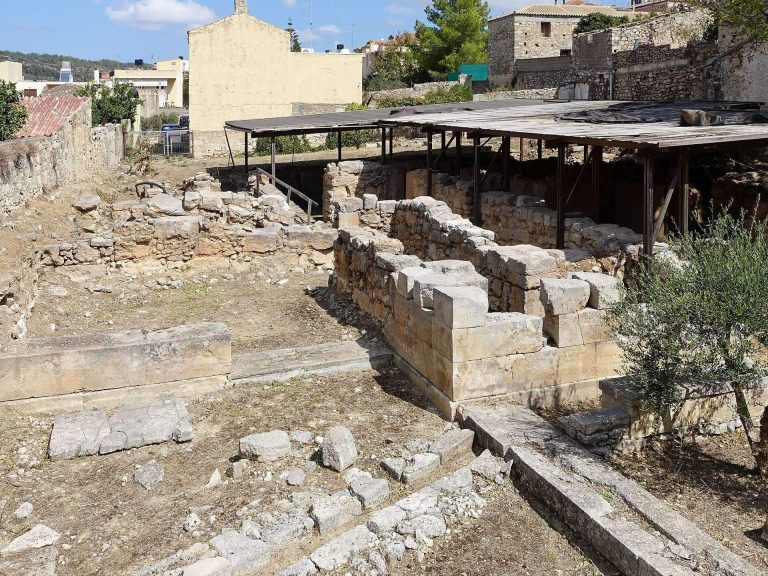
Arthur Evans and John Pendlebury excavated the cave in 1933, followed by Paul Faure in 1953 and Costis Davaras in 1962. Faure proposed that it might have been the celebrated Labyrinth of Crete.
Remains
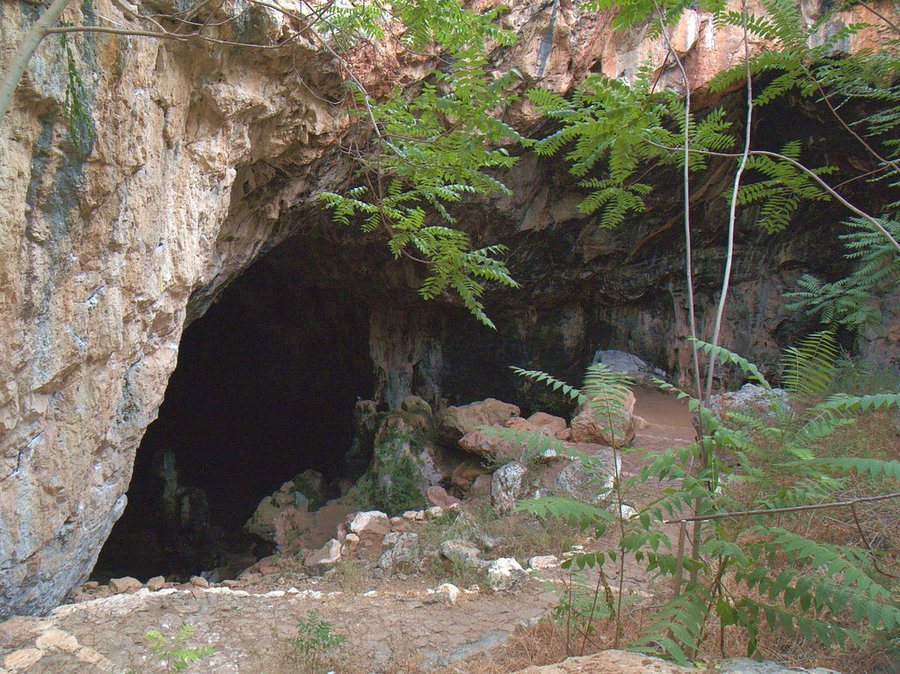
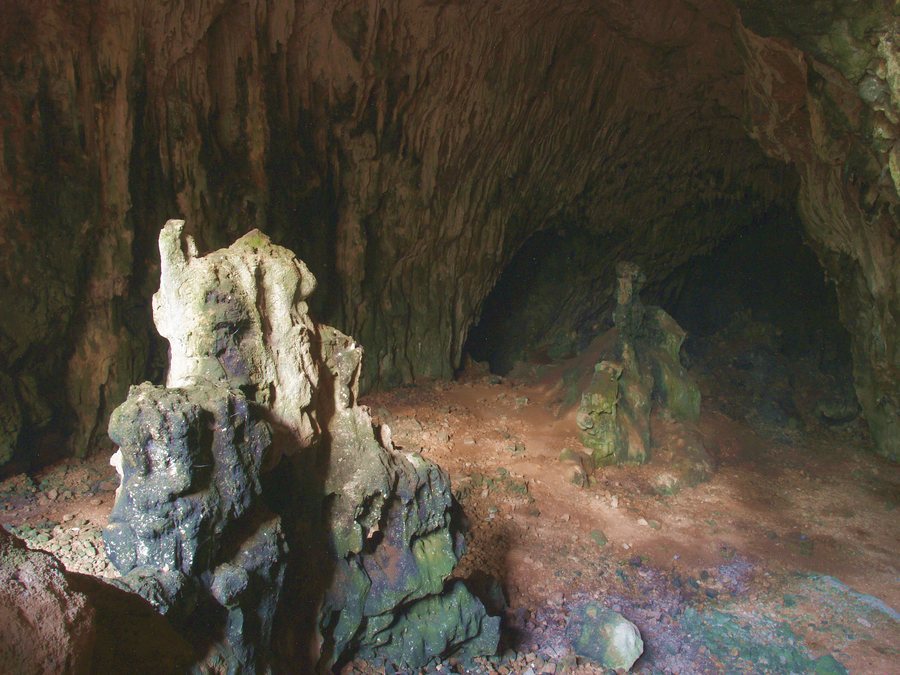
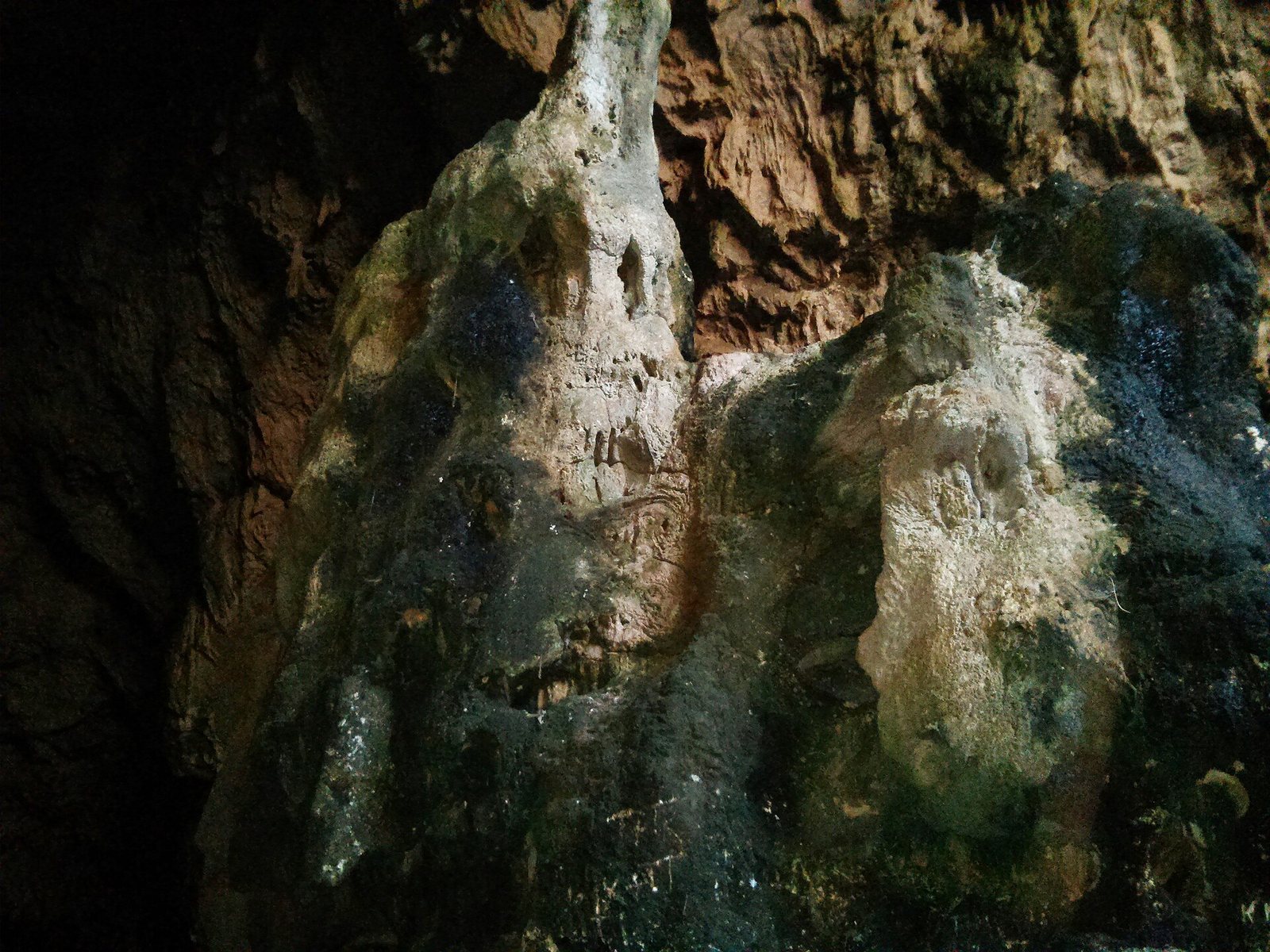
The cave lies on a hill about 225 m above sea level, northwest of Skotino, 1.6 km west of Gouves, and 3.3 km south of the Cretan coast. It covers about 2,500 square metres, reaches 160 m in depth and 36 m in width, and has a traversable route extending 450 m. Its chambers contain intricate formations of stalactites, which hang from ceilings, and stalagmites, which rise from floors; some formations resemble human or animal figures. The chapel dedicated to Saint Paraskevi stands in the northern part of the ravine that contains the main cave entrance.
Interior chambers and finds
Great Temple
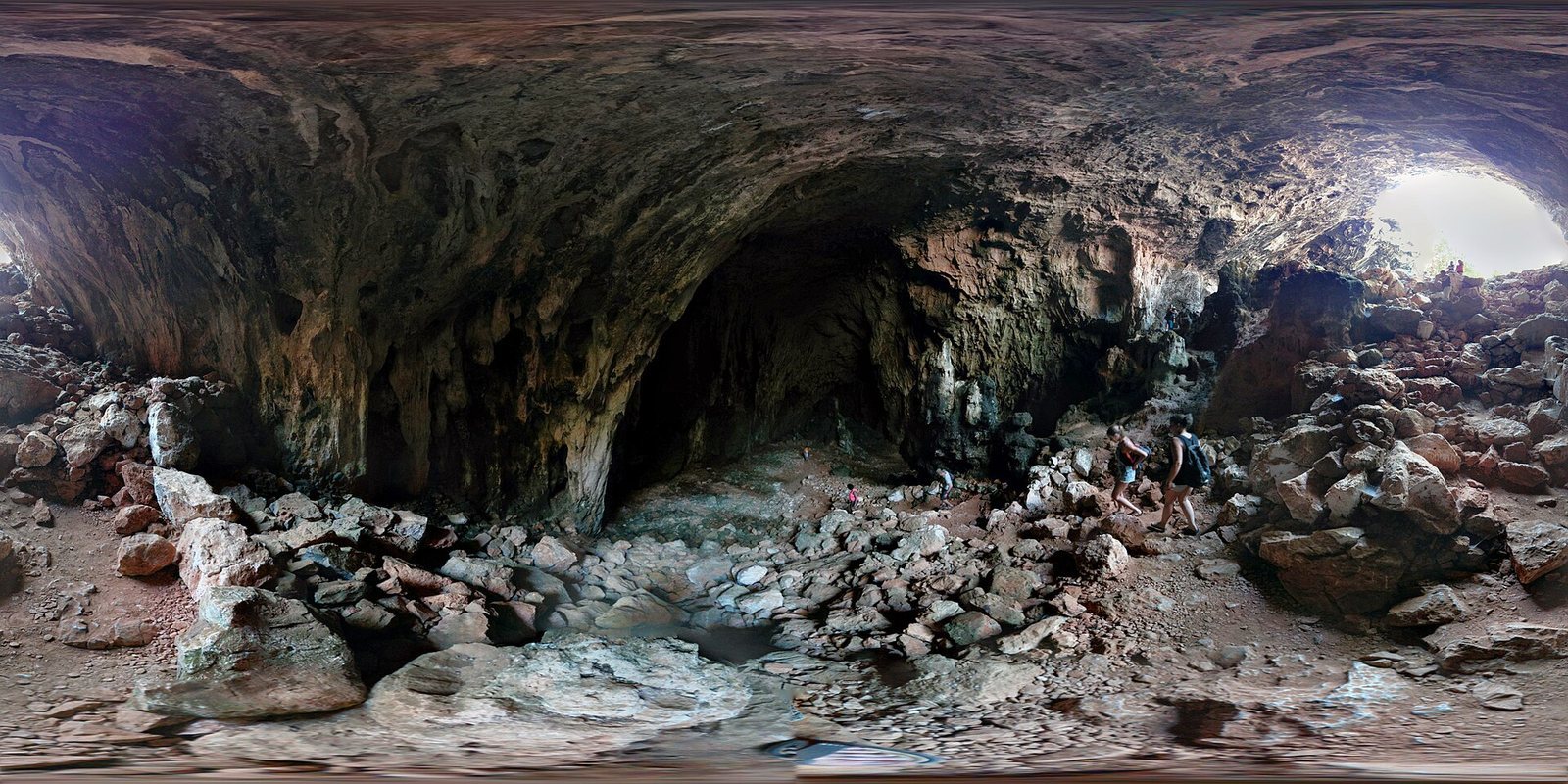
The principal chamber, known as the Great Temple, measures 130 m long, 33 m wide, and 30 m high. Below it and to the right are numerous stalactites, some reaching the floor.
Altar
Farther down, the Altar chamber measures 24 m long, 8.5 m wide, and 25 m high. Sacrifices were performed there. Drains in the floor probably served for liquid offerings, including blood, oil, and wine, to deities associated with the underworld, the realm of the dead.
Adyton
To the left of the first chamber, the Adyton, a restricted inner sanctuary, measures 15 by 8 m and is 2.3 m high. It leads to another entrance.
Worship and Prayer Chambers
The vaulted Worship Chamber lies between the Altar and the Adyton, about 50 m below the entrance level. It measures 12 by 12.5 m and rises 10–15 m. In winter, water reaches about one-third of its height. A corridor 12 m long and 2 m wide leads into it. Above this chamber, the Prayer Chamber measures 7.5 by 5 m, with stalactites and stalagmites forming columns.
Locally Named Chapel Chamber
A separate space known locally as the Chapel measures 12.5 m long and between 1.5 and 5 m wide.
Votive Finds
Excavations recovered numerous bronze and ceramic votive offerings, objects dedicated in religious practice. Some date to the earliest Minoan periods.