Phourni: A Minoan Cemetery near Archanes, Greece
Site at a Glance
- Popularity
- Medium
- Country
- Greece
- Primary era
- Bronze Age
- Eras represented
- Bronze Age
- Civilizations
- Minoan, Mycenaean
- Site type
- Burial
- Remains
- Necropolis
On this page18 sections
History
Phourni is a major cemetery of Minoan civilization, the Bronze Age civilization centered on Crete, on a hill near Archanes, Greece. It was used from Early Minoan II, around 2400 BCE, to Late Minoan IIIC, around 1200 BCE, a span of more than a millennium. Early, Middle, and Late Minoan are archaeological divisions of Minoan chronology. Phourni was the largest cemetery in the Archanes area and among the largest Bronze Age cemeteries in the Mediterranean.
Early and Middle Minoan use
Use of the cemetery reached a high point in Middle Minoan IA, before the palaces at Knossos and Malia had appeared. Its position near the religious centers on Mount Juktas may have helped make it prominent. Burials at Phourni show that bodies were commonly placed in graves and left undisturbed. Rearrangement after burial was less common. In one case in Building 7, after the body had decomposed, the skull was separated from the jaw and placed near the deceased’s feet.
Later Minoan and Mycenaean use
Phourni continued to receive burials after the fall of Knossos, when Mycenaeans, a Bronze Age civilization centered on mainland Greece, became dominant on Crete. The latest burials date to a time when Minoan civilization had largely disappeared. The cemetery’s burials reflect both Minoan and Mycenaean funerary practices. Its northern grave enclosure has been interpreted as belonging to Achaean aristocrats established on Crete. Achaean is an ancient name associated with Greeks, used here in interpreting the burials.
Two richly furnished burials in Tholos Tombs A and D have been interpreted as those of women of royal or comparable status. The sex of Tomb A’s occupant could not be established from the bones. The person may have been a priestess, an interpretation based on religious imagery among the grave goods and animal sacrifices associated with the burial.
Occupation and excavation
During the German occupation of Greece in the Second World War, the visible upper part of Tholos Tomb A served as a concealed store for equipment.
Phourni had been identified by 1957, and excavation continued from the mid-1960s through 1995. Efi and Yiannis Sakellarakis led the work from 1965. The excavators collected all the pottery and much of the skeletal material from the cemetery.
Remains
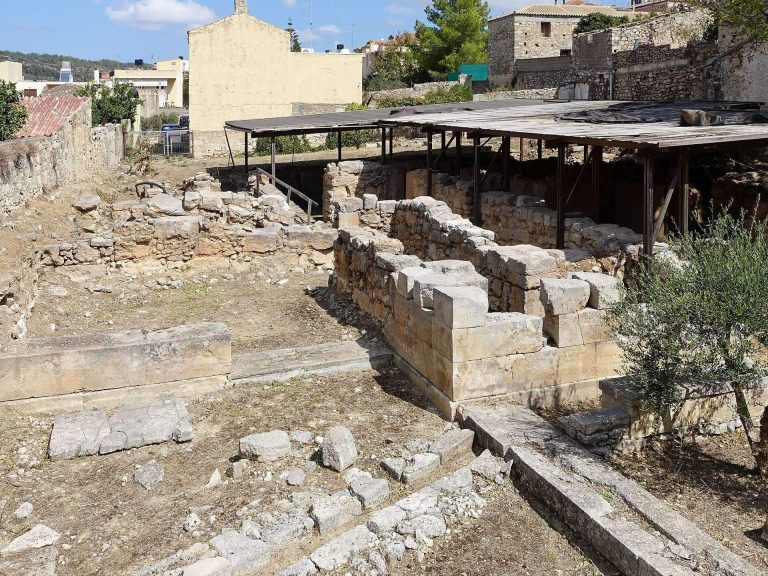
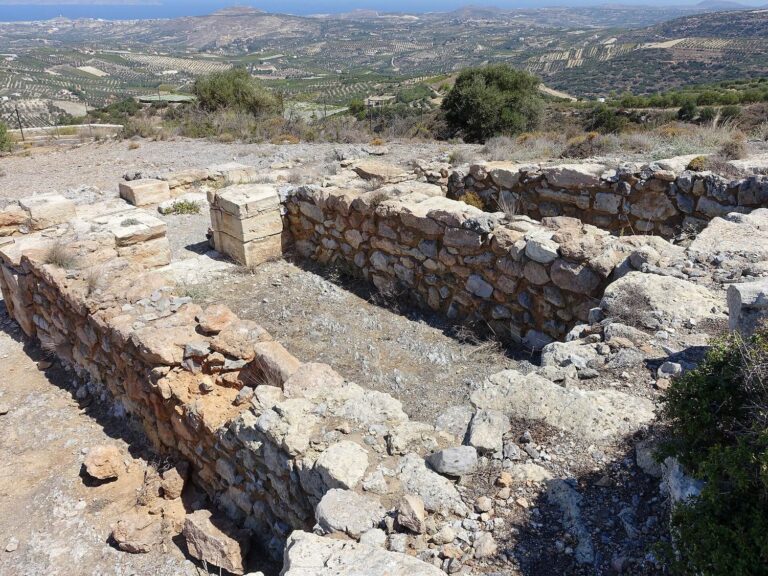
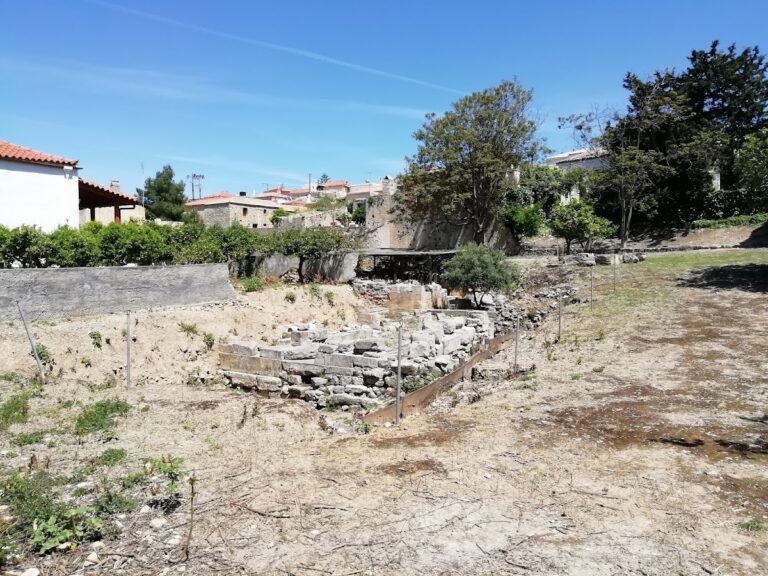
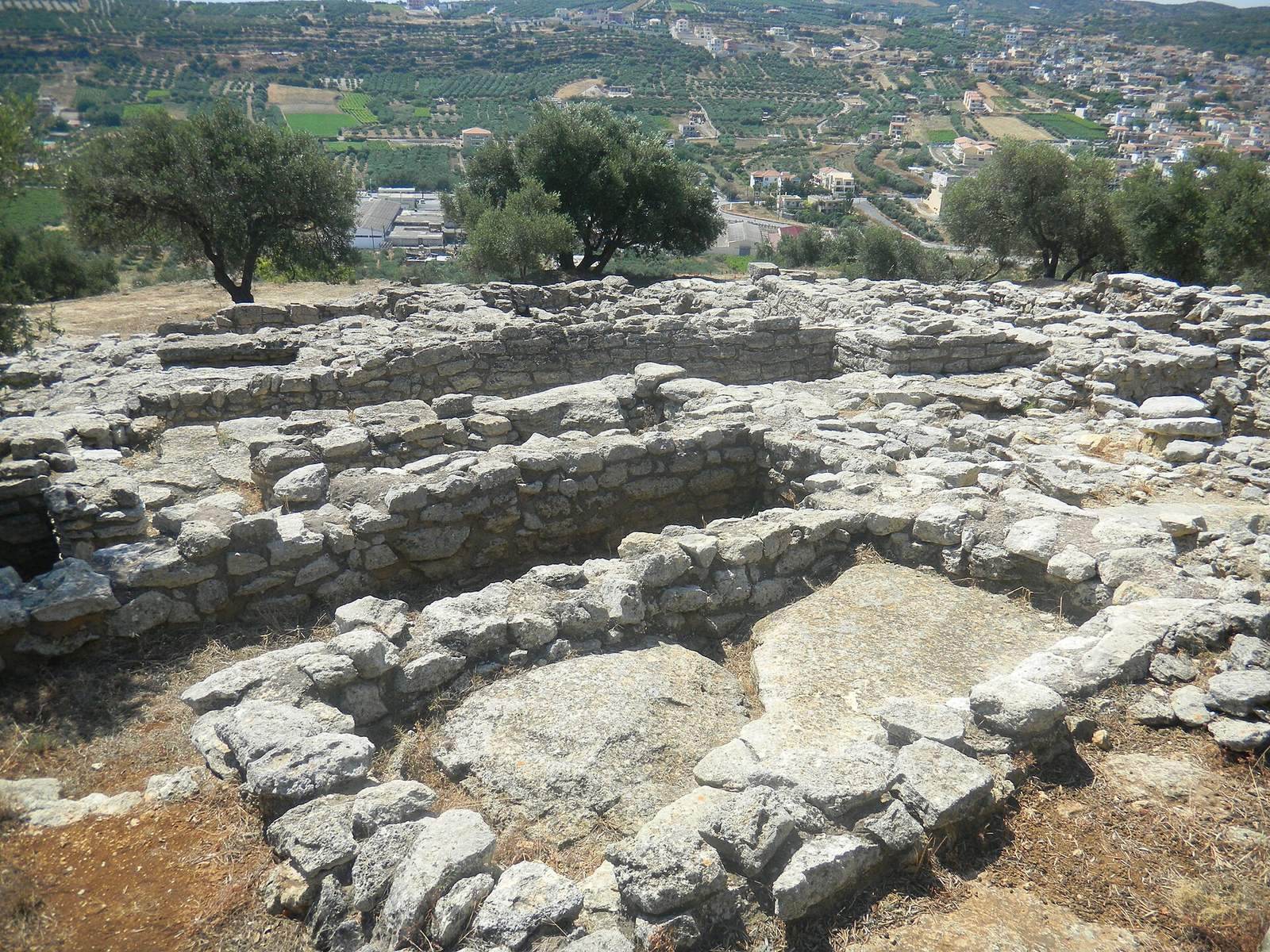
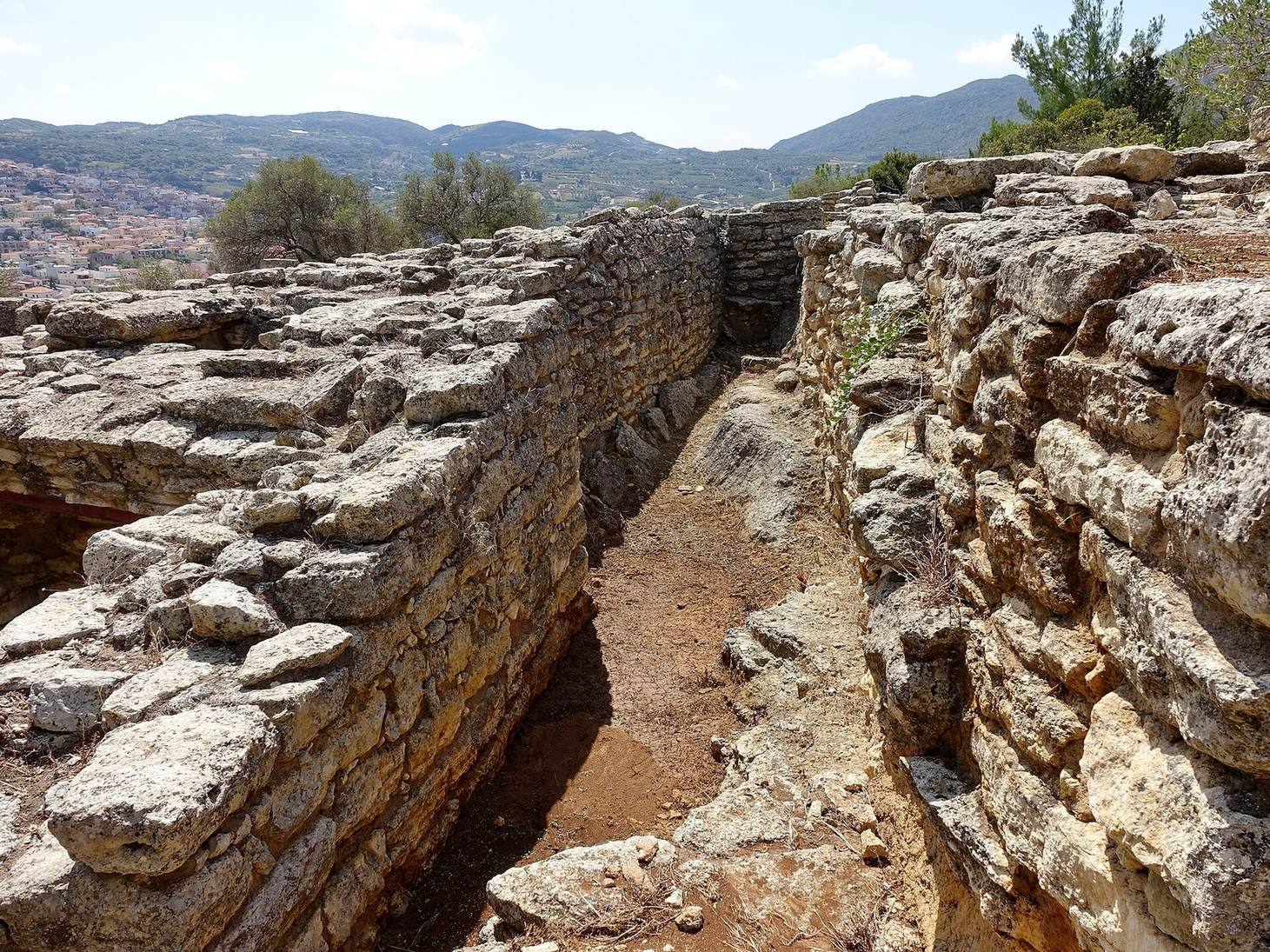
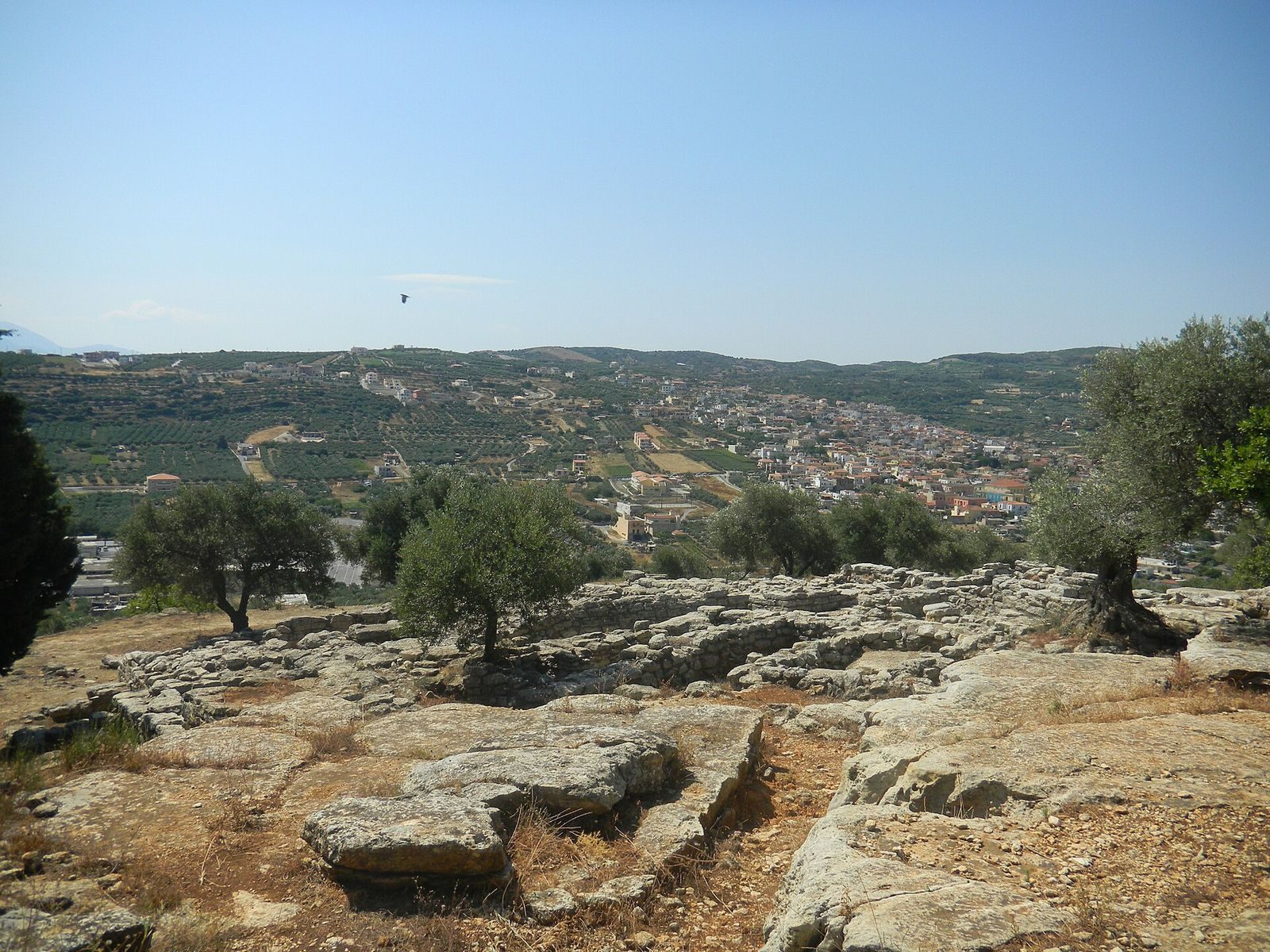
The cemetery occupies an elongated hill covering about 6,600 square metres. It faces Mount Juktas across a ravine, where a Minoan peak sanctuary stood; below Phourni, the plain includes the site of a Minoan palace beneath the present village of Archanes. The cemetery contains 26 funerary buildings of varied sizes and forms, hundreds of burials, a bone repository, a ritual cave, and remains of an administrative and commercial building dating to around 1300 BCE. House tombs were long, narrow rectangular chambers. Five other tombs were tholoi, round, domed burial structures.
The northern enclosure and other buildings
Mycenaean grave enclosure
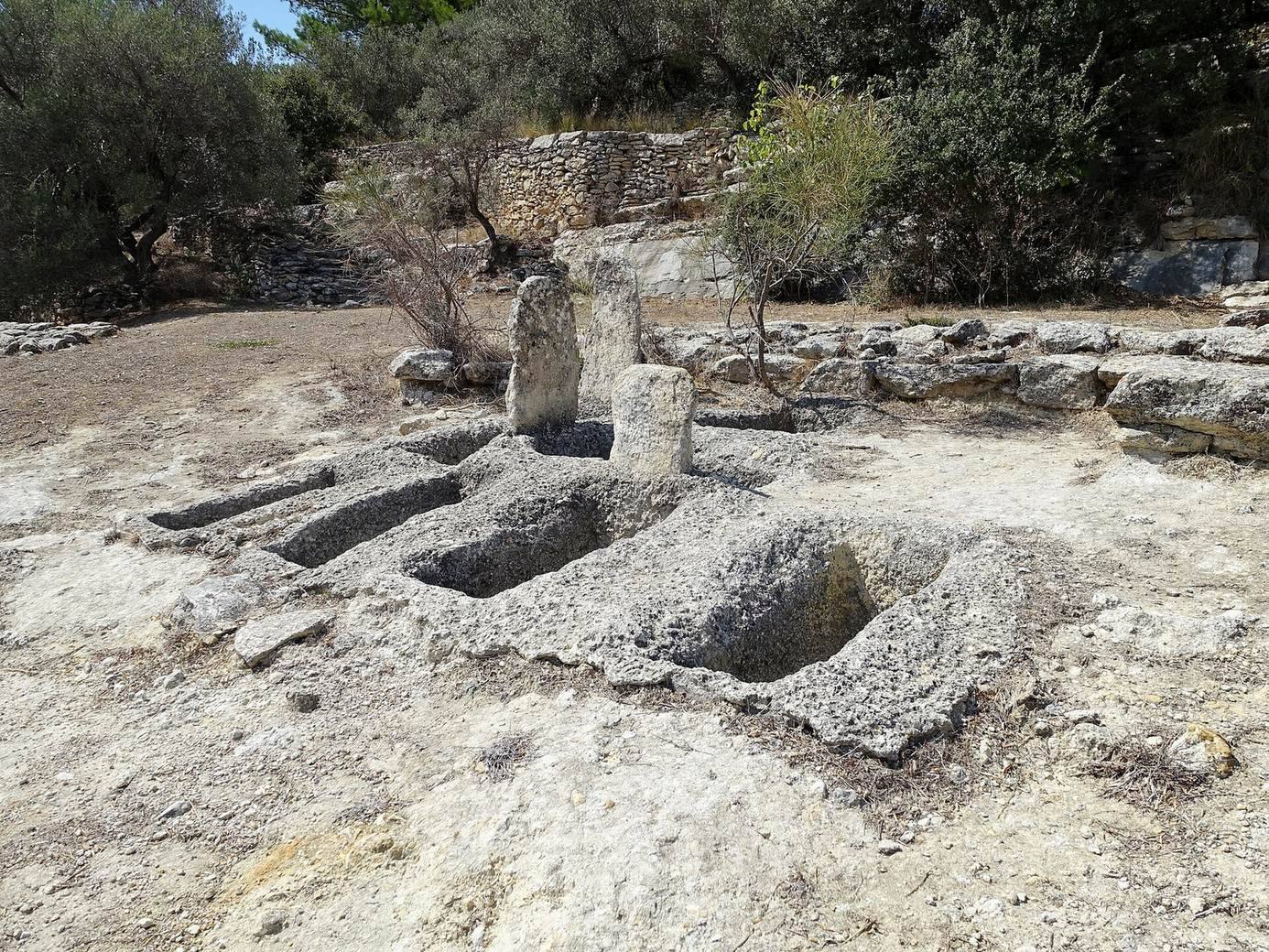
At the cemetery’s northern end, an enclosure held seven graves arranged in three rows. Each grave contained a larnax, or coffin, and grave goods were also found in the graves. Markers placed above them had fallen inward. Such markers are rare on Crete and are associated with Mycenaean Greece. The enclosure has been compared with Grave Circles A and B at Mycenae. A nearby pit, 2.70 metres deep, may have been used for offerings. Finds from the graves include bronze and stone vessels, mirrors, ivory, and seals.
Building 4
Building 4 stood on the cemetery’s eastern side between Tholos Tombs A and B. It was used during Late Minoan IA, around 1550–1500 BCE, and had eastern and western wings at different levels. The eastern wing included an upper floor. Forty-six loom weights were found after falling into rooms below during destructive episodes. Knives, a cutter, a balance weight made of lead, and a bronze piece ready for working also point to manufacture on that floor.
On the ground floor, one room may have stored grape must, or juice before fermentation, while another served as a wine press. The western wing was built over bedrock and had no separate rooms. Three column bases may indicate an open-sided, paved area. Finds there included remains of a ritual offering table, fragments of two bell-shaped figurines, and about 250 cups, some upright and others inverted. The building may have been used to prepare objects for funerary rites; whether priests controlled the production is uncertain.
Tholos tombs and associated buildings
Tholos Tomb A
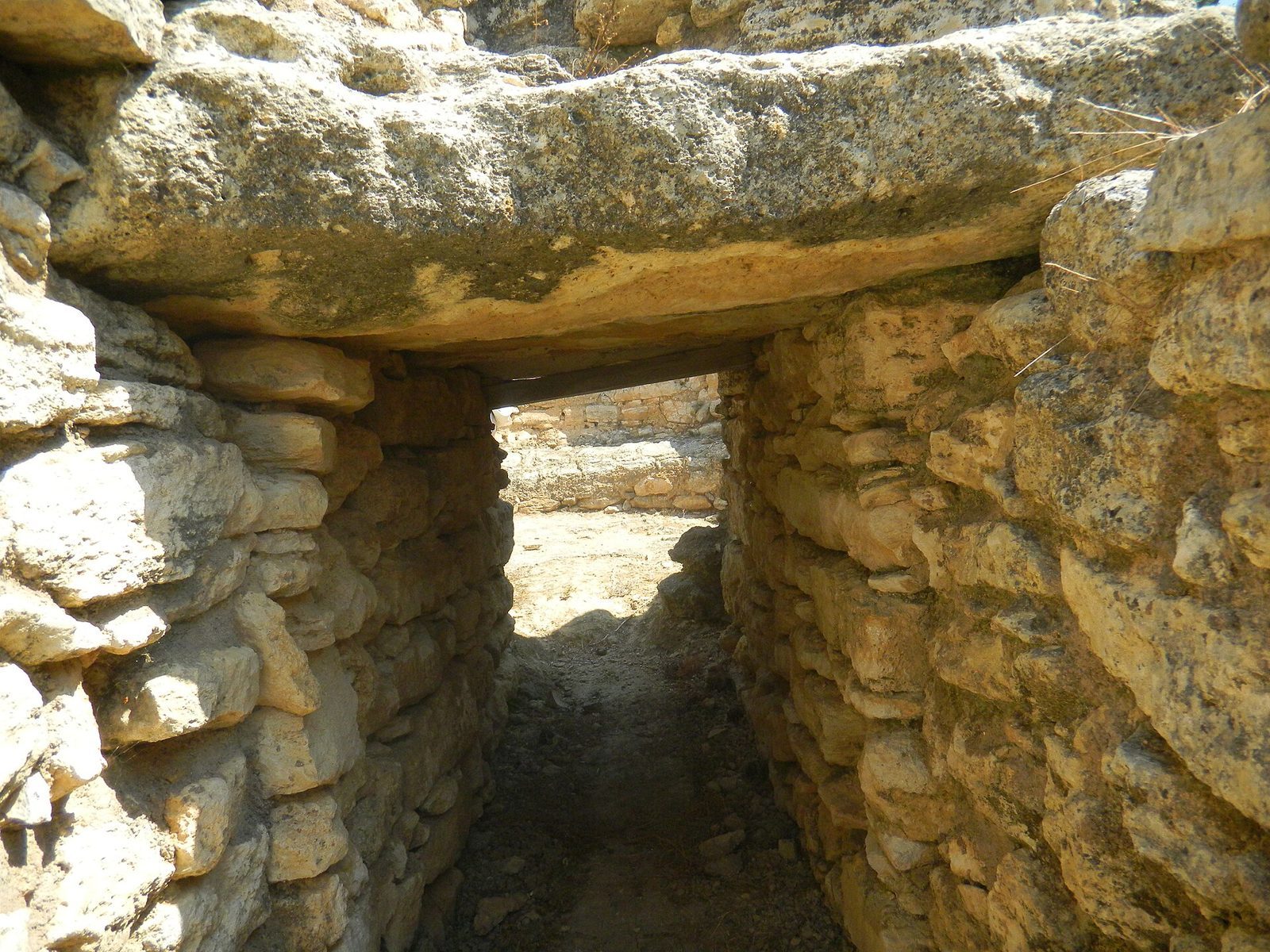
Dating to the 14th century BCE, Tholos Tomb A was cut into bedrock along with its long dromos, or entrance passage. Its main chamber measures 4.31 metres across, and its side chamber covers 3.67 square metres. The entrance lintel was found fallen on the ground. The side chamber held a sealed, decorated clay coffin, an ivory-decorated footstool, and pottery and bronze vessels. The body had been placed facing west in a curled position. Its burial goods included gold objects, necklaces, seals, beads, and a gold ring engraved with a religious scene. The main chamber had been looted; a dismembered horse and a bull’s skull were found near the side chamber.
Tholos Tomb B
Tholos Tomb B was built before 2000 BCE and received burials until Late Minoan IIIA, around 1400–1330 BCE. Its complex had 12 spaces in an essentially rectangular arrangement, with the round tomb at the center and an entrance passage approaching from the southeast. Chambers lay to the east and west, although neither survives. At a later, uncertain date, the tomb’s floor was raised, a bench was built around its wall, and a new entrance was opened into the eastern chamber. The entrances to the tomb and western chamber were blocked.
A southwestern chamber appears to have been built around the coffin it contained. The coffin served as a bone repository for 19 people, including two children; many of the dead were younger than 35. A pillar crypt, an underground chamber organized around a pillar, was added southeast of the western chamber during a second phase in Middle Minoan IA, around 2000–1900 BCE. The complex then had two storeys. Human remains and a silver pin bearing an inscription in Linear A, an undeciphered Bronze Age script used on Crete, may have fallen into the crypt from the upper floor. Its plastered walls were decorated with frescoes. A passage south of the crypt descended five steps to a corridor on its west. Holes for wooden supports indicate where a staircase connected to the upper storey. Two chambers northwest of the tomb contained a violated burial and, in the northern chamber, two burials at different levels, including a coffin with two bodies.
Building 7
Remains of the pre-palatial funerary complex around Tomb B extend west, south, and east of it. Tomb B was built over Building 7, an earlier structure that originally had six rooms and extended south and east. Although badly damaged, one room yielded six coffins containing 14 skulls, with 15 more skulls found between them. Room 6, west of Tomb B, served as a bone repository. Four of the rooms were aligned north to south and appear to have been added as further burial space was needed. Some had no doors and may have been entered from above.
Tholos Tomb C
In the cemetery’s southwest, Tomb C was built above ground and is among the best-preserved pre-palatial round tombs in Crete. Fallen roof stones indicate that it had a dome. Building 9 provided support on its eastern side. The burials date to Early Minoan III, around 2250–2100 BCE. Eleven coffins and a burial in a large storage jar held the remains of 18 people; another 24 bodies lay among the coffins and three at the entrance, making 45 burials in all.
Although the tomb’s finds came from burial contexts, 269 objects were recovered, including 164 beneath coffins and 95 beneath bodies on the floor. The finds include the richest assemblage of figurines known from the Aegean, among them several Cycladic figurines.
Tholos Tomb D
Tomb D, the cemetery’s southernmost building, contained a single undisturbed female burial dating to Late Minoan IIIA2, after 1350 BCE. The body’s position and the placement of its ornaments could be reconstructed.
Tholos Tomb E
Tomb E is probably the cemetery’s earliest funerary building. It was built above ground during Early Minoan II, around 2400–2300 BCE. The structure is poorly preserved, but two massive entrance stones remain visible. Two layers of burials belong to different periods: an earlier Early Minoan II layer and a later Middle Minoan IA layer, around 2100–2000 BCE. The later reuse disturbed the earlier burials. Eight seals from the earlier layer include some of the earliest securely dated examples of their type in Minoan Crete.
The later layer provides evidence for 56 burials. Thirty-six people were placed in 29 coffins and two large storage jars, with the rest on the floor between coffins. The earliest coffins stood against the tomb walls; later ones were placed closer to the centre and stacked as many as four high. Seals were also among the finds from this layer.
Seals and other finds
Seal stones
The cemetery yielded 136 seal stones, the largest collection from a single site in northern Crete. These engraved objects, used to make impressions, are made of stone, hippopotamus ivory, bone, metal, and boar’s tusk. They were found with human remains and have been interpreted as jewelry or as tools for identification, ownership, and record-keeping, as well as expressions of religious and social identity. The collection is divided into four chronological phases spanning Early Minoan I to Middle Minoan IA. Its study has helped clarify the sequence and forms of the seals, the periods in which different materials were used, and their possible social meaning.
Other finds
Other finds from the cemetery include an Egyptian diorite vase, ivory seals and amulets, pottery and stone vessels, tools, weapons, and jewelry. Most of the finds are now in the archaeological museums of Heraklion and Archanes.