Lyctus: An Ancient Greek City-State on Crete
Site at a Glance
- Popularity
- Medium
- Country
- Greece
- Primary era
- Classical
- Eras represented
- Bronze Age, Iron Age, Classical, Medieval, Modern
- Civilizations
- Ancient Greek, Byzantine, Minoan, Ottoman, Roman
- Site type
- City
On this page22 sections
History
Lyctus, also known in antiquity as Lyktos and Lyttos, was an ancient Greek city in Crete, Greece. Its foundation is debated: ancient tradition described a settlement of Dorians from Sparta around 1000 BC, while archaeological interpretation has proposed origins as early as the 13th century BC. Lyctus became one of Crete’s influential city-states.
Early names and foundation traditions
An Egyptian place-name list associated with the mortuary temple of Amenhotep III names a trading place of the Keftiu, or Cretans, as Rikata. Linear B, a script used to write Mycenaean Greek, records a place called ru-ki-to on tablets from Knossos. These names have been considered in discussions of Lyctus’s early identity. Lyktos is the older form of the city’s name, used by Homer and many ancient manuscripts, while coins and inscriptions more often give Lyttos.
Ancient tradition called Lyktos Crete’s oldest city and attributed its foundation to Dorians, an ancient Greek people, who had come from Sparta. Greek accounts connected this migration to the legendary early ruler Tektamos, two generations before Minos. Homer also names Dorians among Crete’s inhabitants, while modern research places a major Dorian migration to the island around 1000 BC. Another proposal holds that Minoans, the people of a Bronze Age civilization centered on Crete, moved to the site from Malia. In this interpretation, Lyktos may have been an earlier name for Malia. Pottery survey findings led archaeologist Krzysztof Nowicki to suggest that the city’s foundation could reach back to the 13th century BC.
Myth also connected Lyktos with Zeus’s birth. In Hesiod’s account, Zeus’s mother Rhea gave birth to him there and hid him in a cave in the nearby mountains. Other traditions place his birth in Arcadia and say that Gaia brought him to Crete, where he was hidden near Lyktos and raised by Amalthea. The cave associated with these stories was identified in the 19th century as Psychro Cave. A separate tradition explained the city’s name through Lyktos, a son of the mythical Arcadian king Lykaon.
Homer included Lyktos in the Iliad’s list of cities that sent ships to the Trojan War. He also described Koiranos, the charioteer of Meriones, as a man of Lyktos killed by Hector. The city’s inhabitants presented themselves as descendants of Spartan colonists, and the worship of Apollo appears to have held an important place there.
Civic life and rivalry in the Archaic and Classical periods
Lycurgus, traditionally regarded as Sparta’s lawgiver, was also considered Lyktos’s lawgiver and was said to have spent time on Crete. Fragments of Lyktian laws survive from the 6th and 5th centuries BC. Citizens belonged to civic associations and shared communal meals paid for through taxation. The city’s festivals included the Periblemaia, which was associated with young men undergoing civic training.
Lyktos held territory that at times reached from Crete’s north coast to its south coast and eastward to Minoa. Arsinoe was also connected with its territory, while Chersonesos and Milatos served as harbors on the northern coast. A treaty between Lyktos and Lindos on Rhodes was concluded shortly before 411 BC.
In 344 BC, Knossos captured Lyktos with help from a Phocian force led by Phalaecus. Archidamus III, king of Sparta, intervened while travelling to Tarentum. He defeated the attackers and restored the city to its inhabitants.
Hellenistic alliances and the Lyttian War
During the 3rd century BC, Lyktos allied with the Seleucid king Antiochus I and his successor, as well as with Malla and Praisos. The city later came under Gortyn’s influence and continued to oppose Knossos. Philip V of Macedon supported Lyktos.
Around 220 BC, Lyktos’s refusal to submit to a coalition of Knossos and Gortyn led to the conflict known as the Lyttian War. Lyktos raided Knossian territory as Polyrrhenia, Keraia, and Lappa broke away from the coalition and fighting erupted within Gortyn. Knossos sent troops to support its allies there. After the fighting at Gortyn ended, the coalition took advantage of the absence of those troops and attacked Lyktos. It captured and destroyed the city, and enslaved the women and children. Lyktians who returned went into exile at Lappa.
Lyktos was rebuilt soon afterward, reportedly with Spartan support; help from Gortyn may also have aided its recovery. It was active again shortly before 200 BC, when it allied with Hierapytna. In 184 BC, Lyktos and Gortyn captured the Knossian settlements of Lykastos and Diatonion. The following year, Lyktos was mentioned in connection with a treaty with Eumenes II of Pergamon. During the 2nd century BC it joined an alliance of 30 Cretan cities associated with Eumenes II, and later formed alliances with Olous and Dreros.
Roman rule and later occupation
Lyktos resisted Rome’s conquest of Crete but was captured and sacked in 67 BC by forces led by Quintus Caecilius Metellus Creticus. The city nevertheless continued to flourish under Roman rule and remained inhabited in Strabo’s time. Strabo placed it 80 stadia, about 15 km, from the Libyan Sea.
In Late Antiquity, the transition from the ancient world to the medieval period, Lyktos became a bishopric and was fortified. It remained occupied into the early Christian period, but was abandoned at the beginning of Venetian rule on Crete.
Recording and archaeological investigation
Antiquarian Onorio Belli recorded Lyktos’s ruins in the late 16th century. Later visitors included Robert Pashley and Thomas Abel Brimage Spratt; Lucio Mariani and Antonio Taramelli described visible remains in 1894. Before excavating Knossos, Arthur Evans had hoped to investigate Lyktos but could not obtain permission.
Angeliki Lebessi began the first systematic excavations in 1971. Giorgios Rethemiotakes excavated the city council building from 1981 to 1986. In the 1990s, Nowicki surveyed ground west of the elevated city center; his finds informed his proposal for a foundation as early as the 13th century BC. A five-year archaeological research program began in 2021. By 2022, systematic excavation had covered only a limited part of the site. The modern village of Xidas below the ancient city was renamed Lyttos after it and belongs to the municipality of Kastelli.
Remains
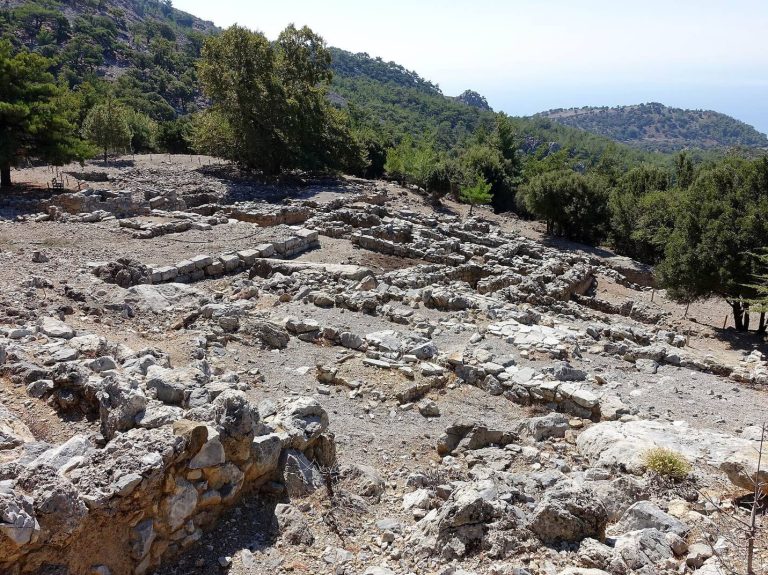
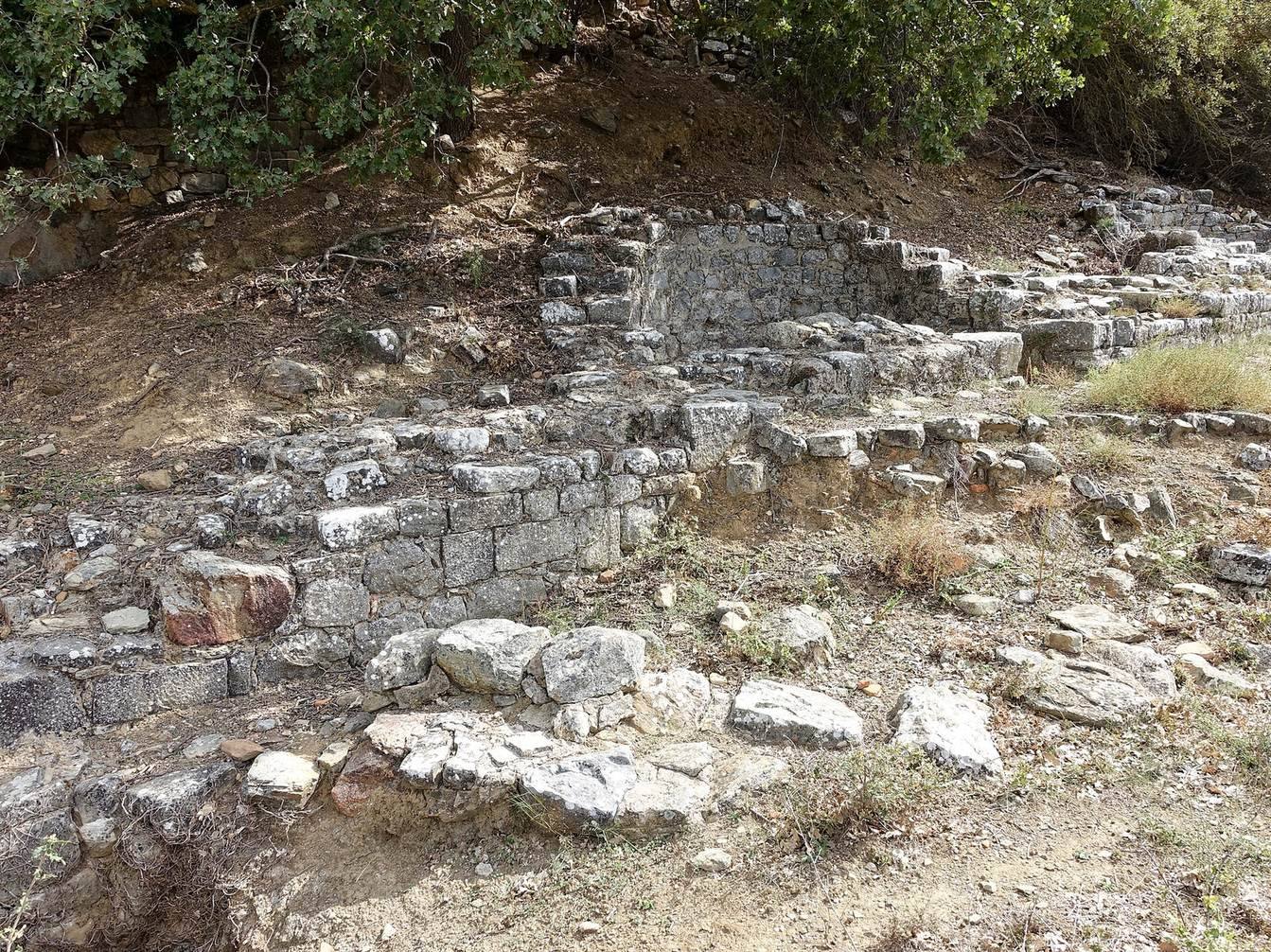
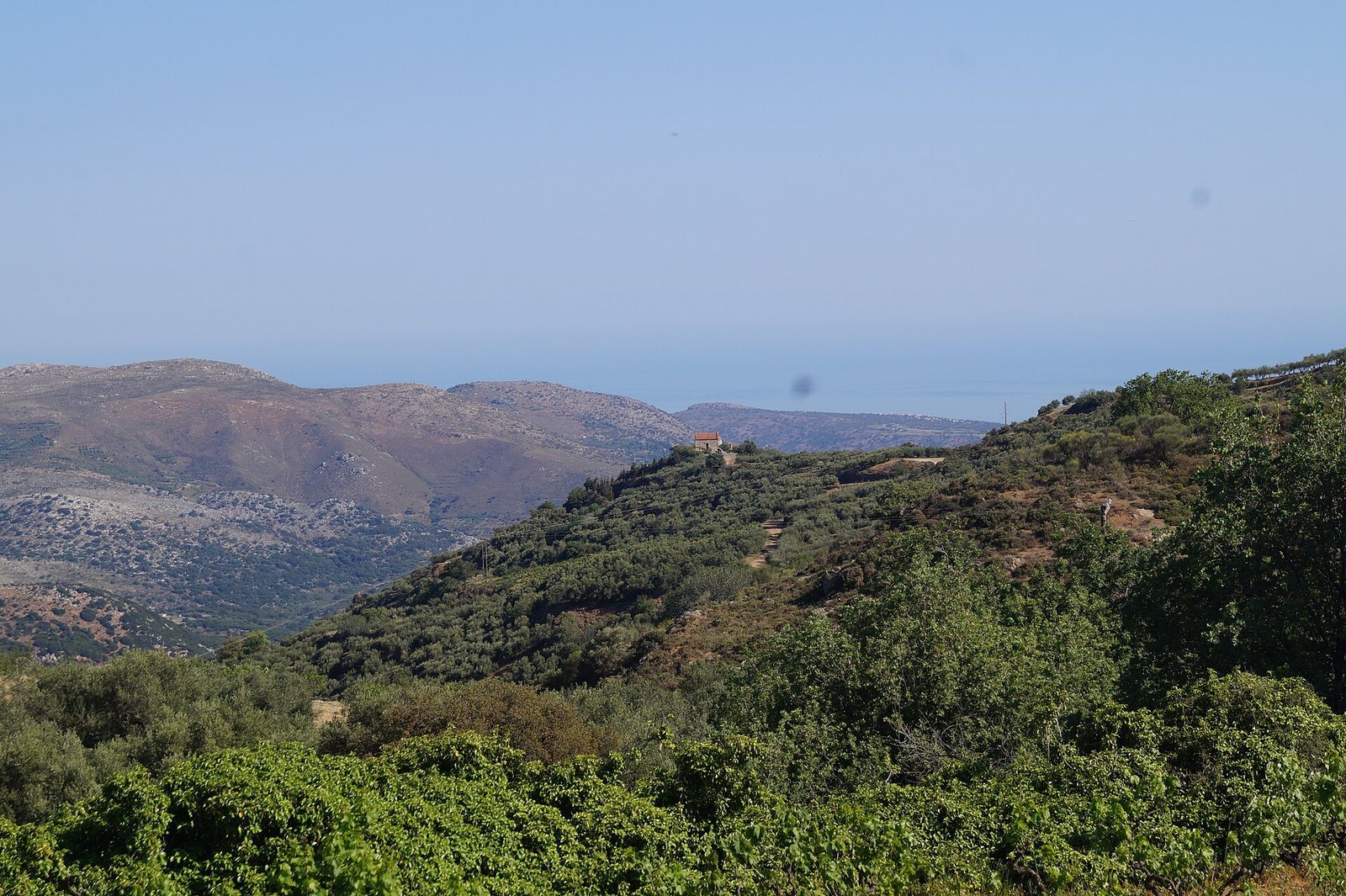
The site occupies the western lower slope of Mount Dikti, about 600 to 650 m above sea level. The ancient city followed the slope in a semicircular plan, with retaining walls arranged across three terraces. Tombs, broken marble, and ruins of ancient buildings survive among the remains.
City plan and defenses
A fortification wall is dated to the 7th century BC. Sixteenth-century Venetian manuscripts describe the city’s walls, circular bastions, and other defenses on a high mountain. The surviving remains extend across the terraces of the sloping site.
Churches and civic buildings
Saint George Church
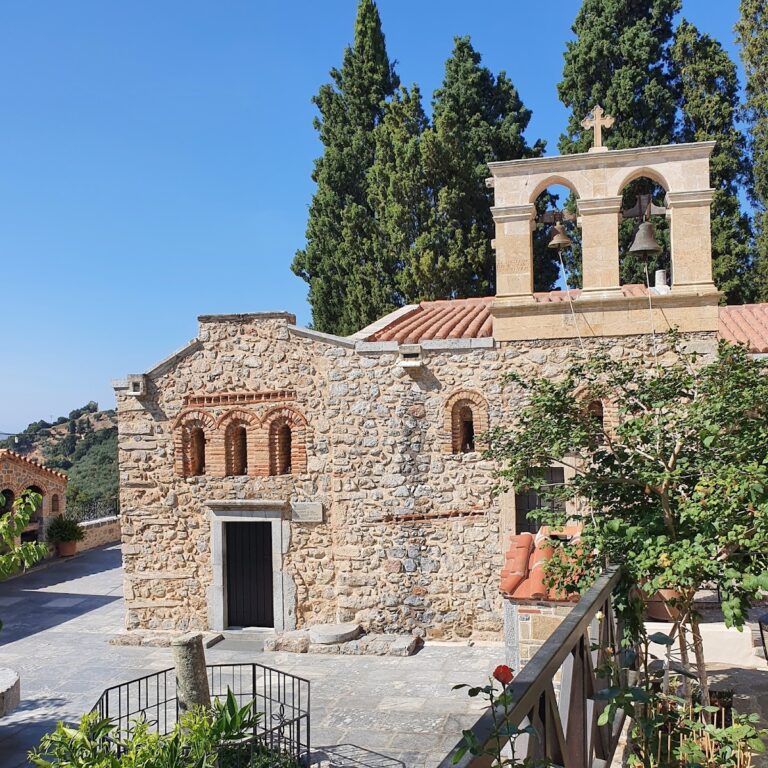
The highest point of the elevated city center, or acropolis, is occupied by the small late Byzantine Church of Saint George. The Byzantine Empire was the medieval continuation of the eastern Roman Empire. An inscription dates the three-aisled church to 1321. It measures about 7 by 6 m, with an entrance on the west, a semicircular recess at the east end, one support on the north wall, and two on the south. Small sections of its frescoes survive. Ancient building material, including material from an earlier structure, was reused in the church. A stone bearing a 2nd-century inscription is built into its northeast corner; a cross on its side indicates its later reuse as a column capital in the church.
The council house
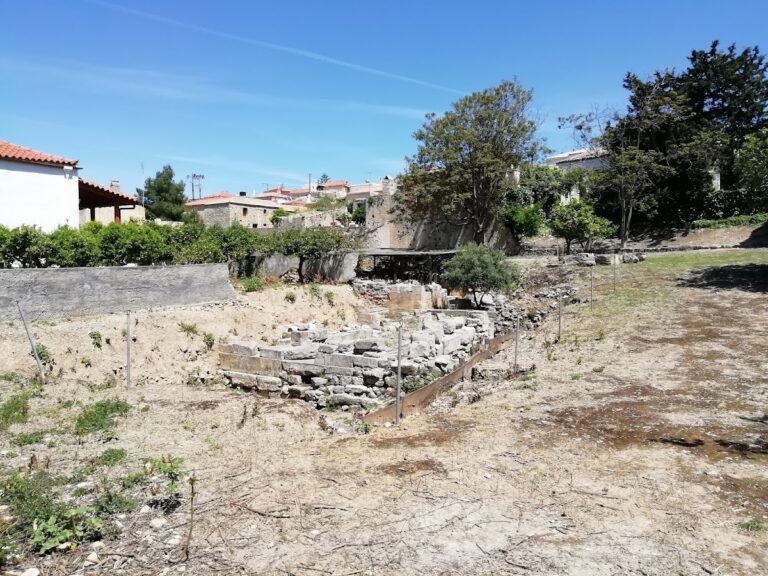
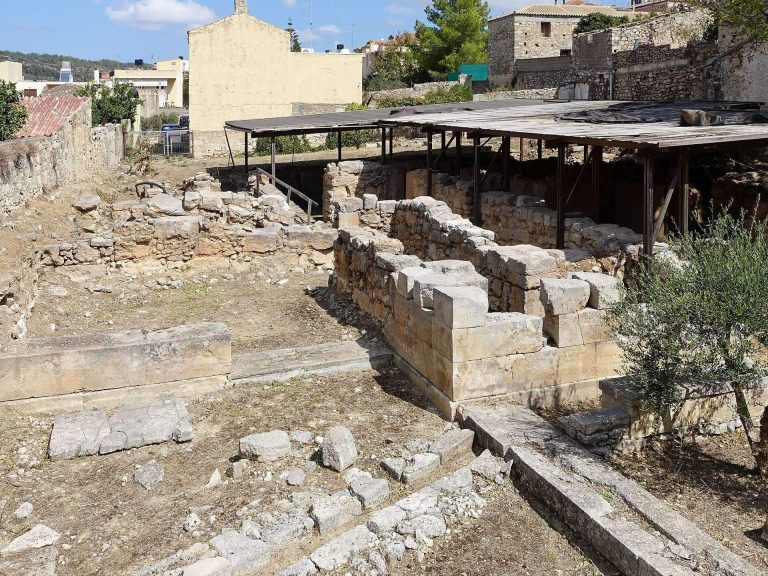
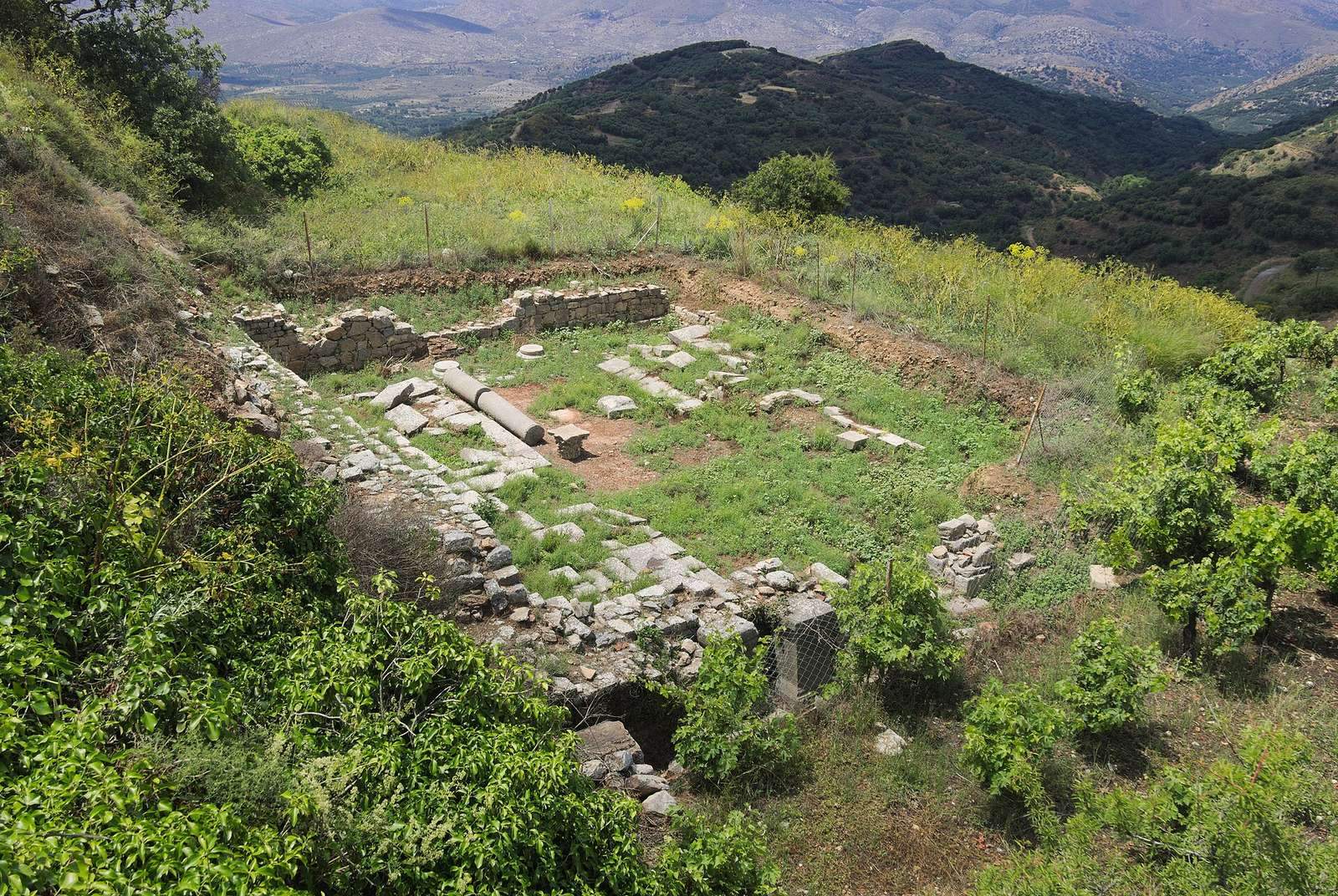
The foundations of Lyctus’s council house lie on a lower plateau about 30 m northwest of Saint George Church. The building measured 13.9 by 11.4 m and had a floor of white-grey marble slabs. A speaker’s platform stood at the west end, with two rows of seats along each of the north and south long sides. Columns with Corinthian capitals, similar to examples from the Villa of Dionysus at Knossos, support a date in the early 2nd century AD. The building now survives at foundation level.
A small altar for the imperial cult, the civic religious practice of honoring a Roman emperor, was found in the council house. Two inscriptions dated between 10 December 124 and 9 December 125 are now set upright to the left of its entrance. One honors Vibia Sabina, Hadrian’s wife, and the other honors Hadrian.
Holy Cross Church
About 180 m northeast of Saint George Church stands Holy Cross Church, built in 1843 on the site of an early Christian basilica, a church organized around a central hall and side aisles. The single-aisled building measures about 12 by 5 m, with a semicircular recess at the east end and an entrance on the south. A stone beside the entrance carries a 2nd- or 3rd-century inscription referring to the festivals Theodaisia and Belchania.
Structures beyond the acropolis
Windmills
A ruined windmill with a curved, apsidal plan stands about 60 m east of Saint George Church. Farther east of the acropolis are foundations of other windmills, both apsidal and round in plan.
Possible oracle sanctuary
About 40 m west and below Holy Cross Church are the ruins of a shell-shaped building. Foundations of nine round rooms lie roughly 20 m farther west. Pottery fragments and bones from sacrificed animals found in this area have prompted its interpretation as a possible oracle sanctuary, a place where people sought divine guidance.
Water and civic spaces
Aqueduct
A 22 km aqueduct brought water from a spring near Krasi, about 10 km east of the city. Its course followed the mountain contours to Kastamonitsa and then ran broadly along the ridge toward Lyktos. At Toichos, about 1.4 km southwest of the city, the aqueduct rises to 14 m as it crosses a deep valley. A large marble channel carried the water across the valley.
Cisterns, agora, and temple
Roman cisterns survive southeast of the acropolis. The city also had an agora, a public gathering place and marketplace, and a temple dedicated to Athena Polias, the goddess Athena in her role as protector of a city.
Theater
Onorio Belli drew the city’s theater and described it as the largest on Crete. His record gives it a width of about 180 m and a capacity of 80,000 spectators. A later proposed location is about 200 m east of Holy Cross Church.
Finds and inscriptions
Pottery
Pottery collected west of the acropolis includes a small quantity of Late Helladic IIIC sherds, a phase of the Late Bronze Age. Other pieces belong to the Protogeometric, Geometric, and Archaic periods, followed by larger groups from the Classical, Hellenistic, and Roman periods.
Coins and sculpture
Coins issued by Lyktos around 450 BC show an eagle and a wild boar. The eagle also appears regularly with an inscription meaning “of the Lyttians.” Statues of the Roman emperors Marcus Aurelius and Trajan found at the site are now in the Archaeological Museum of Heraklion. A headless marble statue of Hadrian was among the finds from the first year of the archaeological program that began in 2021.