Saint Anne Church in Niemysłowice: A Roman Catholic Parish Church
Site at a Glance
- Popularity
- Very Low
- Country
- Poland
- Primary era
- Early Modern
- Eras represented
- Early Modern, Modern
- Civilizations
- Habsburg, Holy Roman Empire, Kingdom of Prussia
- Site type
- Religious
- Remains
- Fortified Church
On this page6 sections
History
Foundation and confessional change
Saint Anne Church in Niemysłowice is a Gothic-Renaissance church in Poland, built in 1568 as a Protestant place of worship during the Reformation, the sixteenth-century movement that established Protestant churches distinct from the Roman Catholic Church. A wooden church stood on the site by 1447. Countess Magdalena of Vrbna, a Silesian noblewoman, financed the new building at a cost of 400 thalers, large silver coins used in central Europe.
Catholics took control of the church in 1629. It was attached to the parish of Ścinawa from 1663 and to that of Rudziczka from 1666. A visitation in 1679 noted that only a few Catholics attended, while many non-Catholics came at their own discretion. The church’s caretakers were Mateusz Otte, a Protestant, and Mateusz Rober, a Catholic.
During the First Silesian War, an eighteenth-century conflict between Prussia and the Habsburg monarchy over Silesia, Prussian General Gröben presented Frederick II with a Protestant petition concerning the church’s confessional allocation. A protest by the bishop of Wrocław kept the church Catholic. Frederick II then provided funds for the Lutherans to build a church in Szybowice.
Parish development and renovation
In 1851 a new altar was made, and the bell cast in 1688 was melted down. During the tenure of priest Wilhelm Vogt in the second half of the nineteenth century, two galleries were added to address a shortage of seating. The parish of Niemysłowice was established on 16 March 1896, serving Niemysłowice, Włóczno, and Włókna.
At the initiative of priest Jan Kollibay, the roof was repaired in 1919. An altar was renovated in 1925, and the interior was painted in 1929. In 1938 the church underwent a thorough renovation in preparation for consecration. Cardinal Adolf Bertram, archbishop of Breslau, consecrated it on 19 October that year.
After the war, Józef Błotnicki served as the first Polish parish priest in Niemysłowice, from 1945 to 1946. The church has been protected as a historic monument since 1955. In 1963, Polish painter Janusz Tarabuła created painted decoration for its interior. Today, it is the Roman Catholic parish church of Saint Anne, traditionally identified as the mother of Mary, within the Prudnik deanery, an ecclesiastical district of the Diocese of Opole.
Remains
Plan and interior
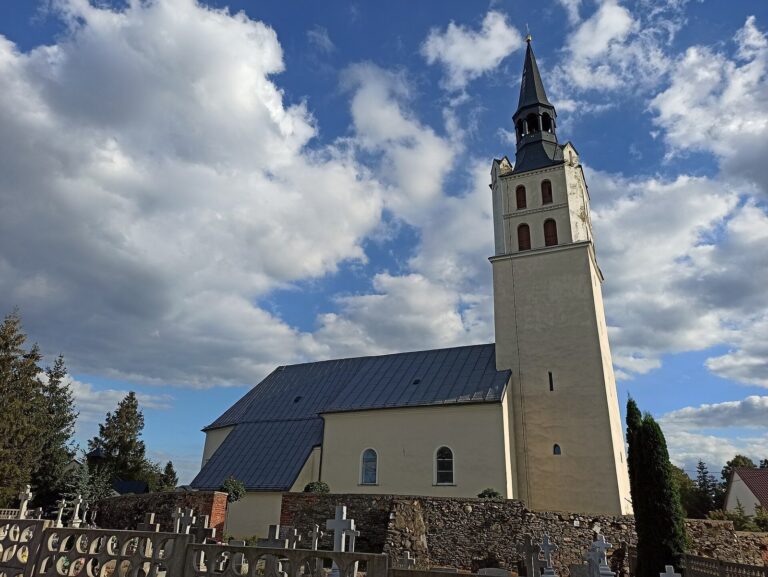
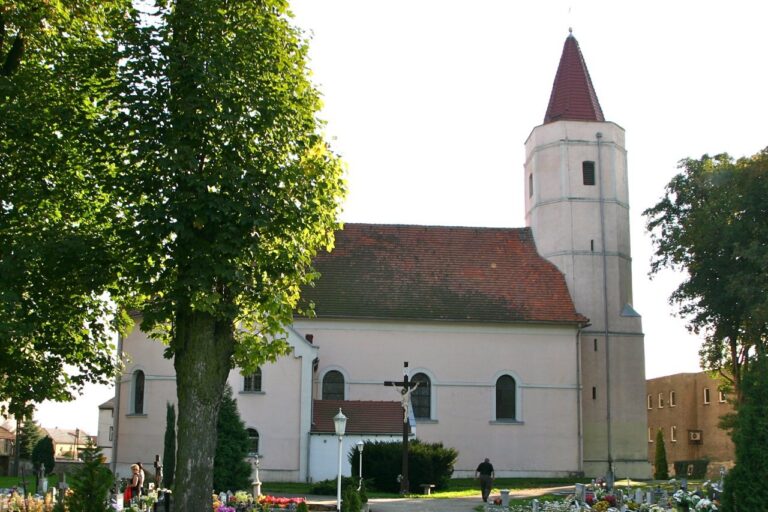
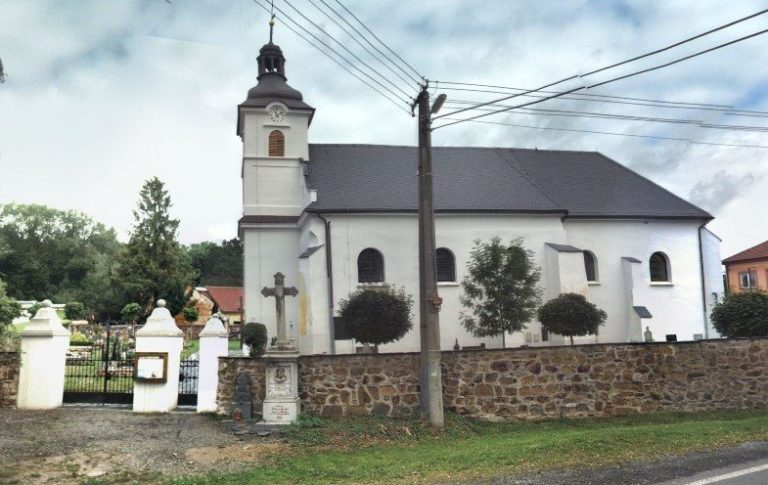
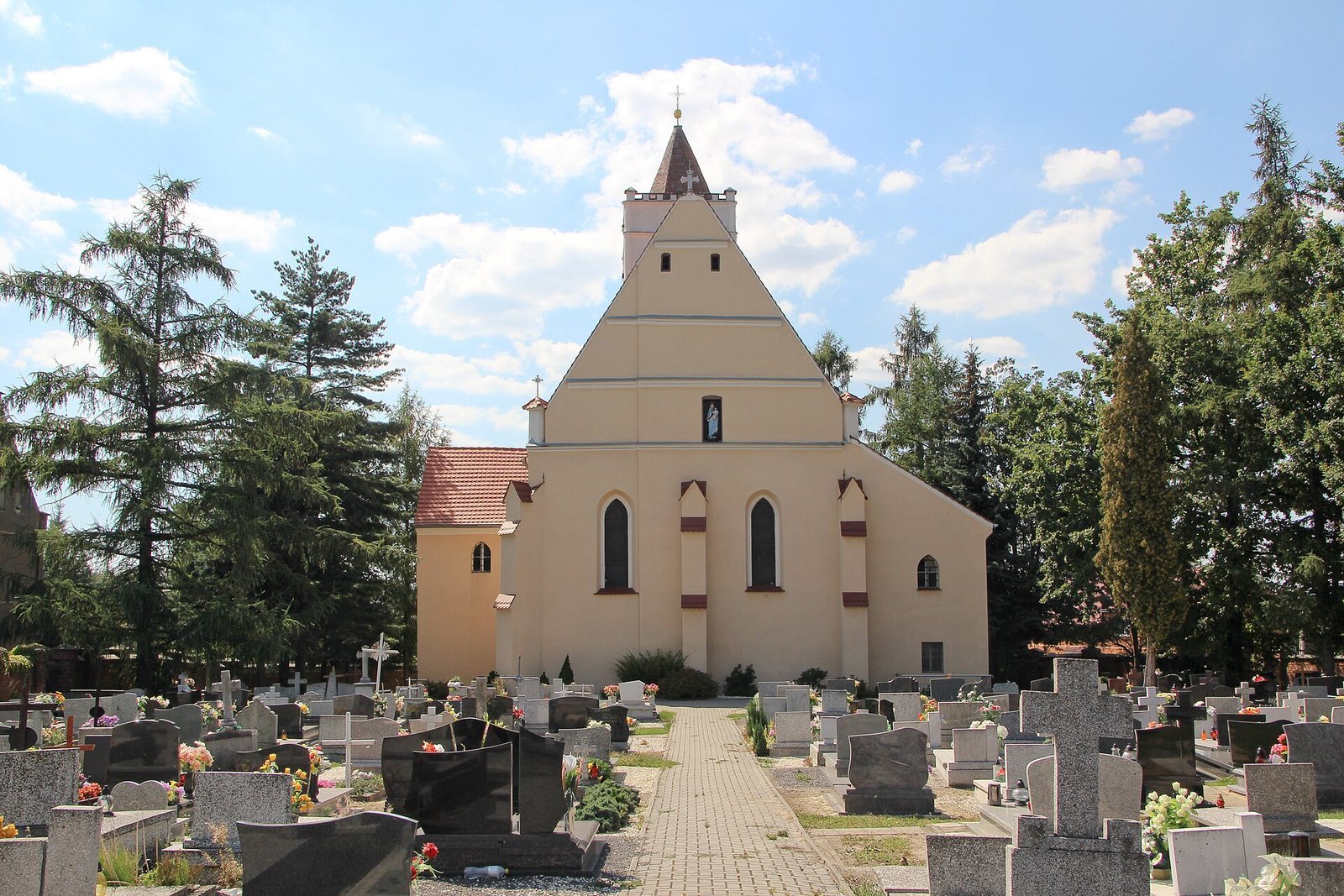
The church stands in the center of Niemysłowice beside the main road, with a cemetery nearby. Its rectangular plan contains a two-aisled interior, where vaulted ceilings with intersecting ribs rest on two pillars. The south-side vestibule holds a choir gallery, an elevated platform often used by singers or organists. Another gallery sits above the sacristy, the room where clergy prepare for services and keep vestments and vessels. Painted decoration is also present inside.
West tower
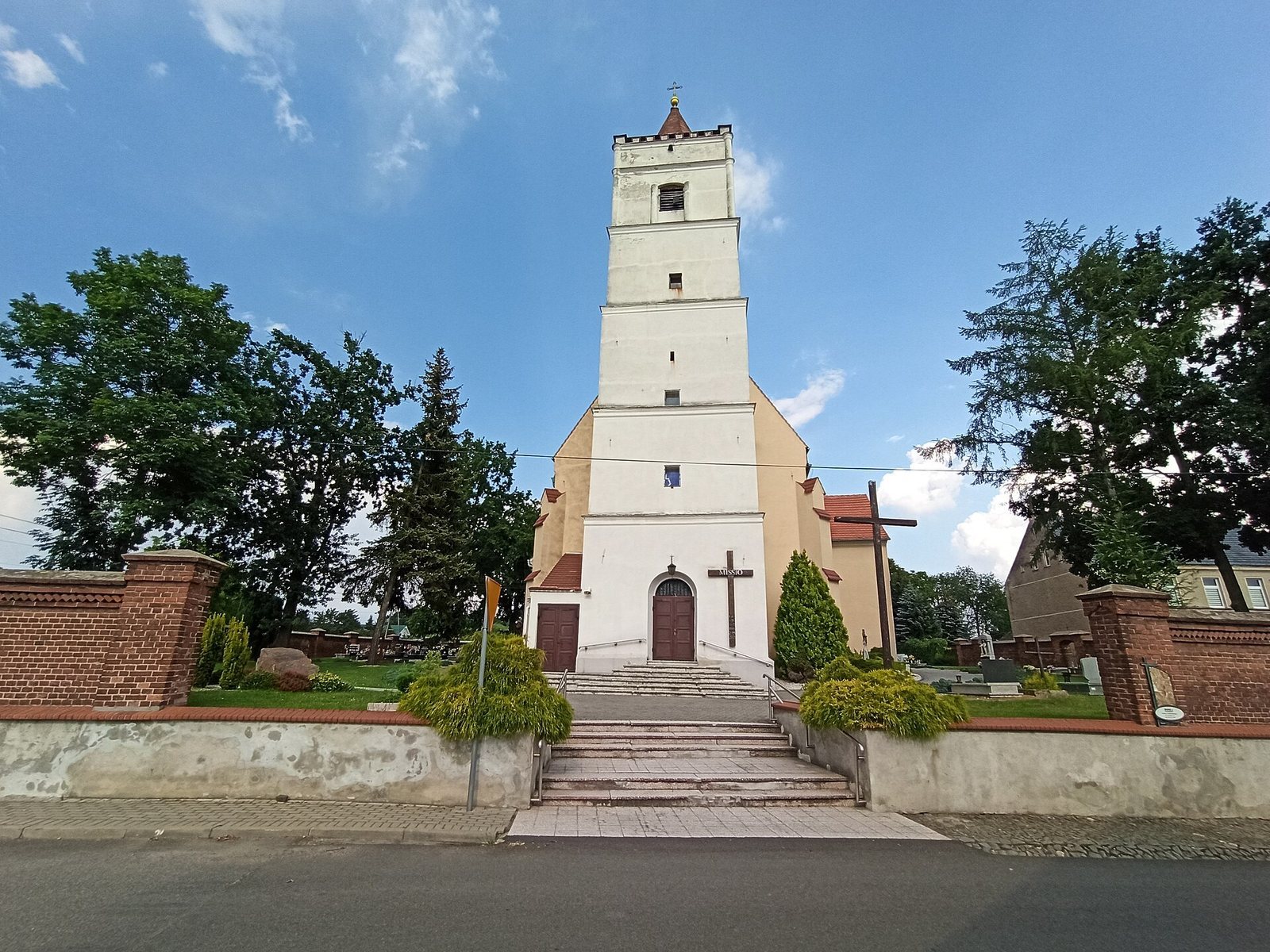
A square tower rises at the church’s west end. Its five levels are marked by setbacks, and the upper stories have small rectangular windows and narrow firing slits. Half-columns and non-opening semicircular arches articulate the top level. Above it, a simple attic with later notched crenellations supports an octagonal roof tiled with brick.