Suwa Shrine, Tachikawa: A Shinto Shrine and Center of Local Tradition


Site at a Glance
- Rating
- 4.2
- Popularity
- Low
- Country
- Japan
- Primary era
- Early Modern
- External website
- Open
- Eras represented
- Early Modern, Modern
- Civilizations
- Japanese, Tokugawa
- Site type
- Religious
- Remains
- Sanctuary
On this page12 sections
History
Suwa Shrine, Tachikawa, is a Shinto shrine in Tachikawa, Japan, whose foundation tradition dates to July 27, 811. Its principal deity is Takeminakata no Kami, a deity of the Suwa religious tradition associated with warfare and agriculture. Also known as Tachikawa Suwa Shrine or “Osuwasama,” it began as a village shrine in Shibasaki and remains closely connected with the religious and communal history of the area.
Foundation and Early History
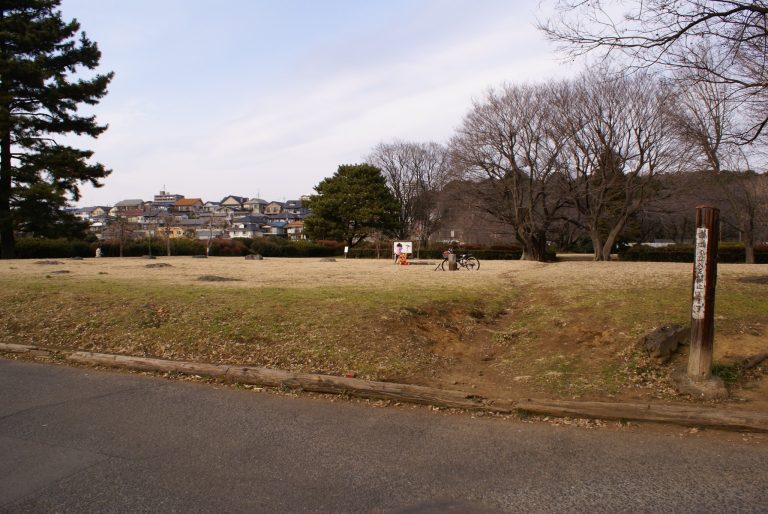
The shrine’s foundation tradition holds that a Suwa deity was invited from Shinano Province and enshrined at the exit of Shibasaki Village in 811. The original location is identified with present-day Suwa no Mori Park, where a stone monument marks the former shrine site. This early sanctuary established the religious focus from which the later Suwa precinct developed.
Hachiman Shrine was founded on August 15, 1252, as the ujigami, or tutelary deity of a community or lineage, of the Tachikawa clan. The clan exercised local influence and supported the shrine for generations. Hachiman, a deity traditionally associated with the protection of warriors and ruling houses, therefore became an important part of the religious history of Shibasaki.
Fires, Relocations, and Rebuilding
A wildfire in Musashino on November 9, 1586, destroyed the Suwa buildings, treasures, old records, and the chief priest’s genealogy. Hachiman Shrine was also destroyed in the same fire. The Hachiman sanctuary was rebuilt before Suwa Shrine, then lost again in a fire in 1824 and reconstructed in 1841.
In 1670, the Suwa precinct was moved from its former location and its main sanctuary was rebuilt. The sanctuary was subsequently constructed or renewed in 1741 and 1750, and it underwent repairs after damage in 1804. Hachiman Shrine remained at its original site in Shibasaki until the early twentieth century. Its former sanctuary stood at Shibasaki 1-7-17, where the shrine had been established in 1252.
Hachiman Shrine’s buildings became difficult to maintain because it had no resident clergy. In November 1907, its sacred object was enshrined at Suwa Shrine, and the former main sanctuary was moved to the Suwa precinct on November 27. The Hachiman deity was thereby combined with Suwa worship, while Tsushima Shrine was established as a subordinate shrine within the precinct. As the local silkworm industry expanded during the middle of the Meiji period, Hachiman’s traditional August 15 festival was transferred to September 15.
Reorganization of the Precinct
Other shrines were incorporated into this developing complex. Asama Shrine was combined with Suwa Shrine in 1910 after its worship had lapsed following the Meiji Restoration. It had formerly stood at a Fuji mound in Kamiko-Shinden, now part of Fujimi, Tachikawa, and during the Edo period had been affiliated with Myokakuji, a temple of the Enryakuji branch of the Tendai tradition. In 1930, Otori Shrine was transferred to and combined with Tsushima Shrine.
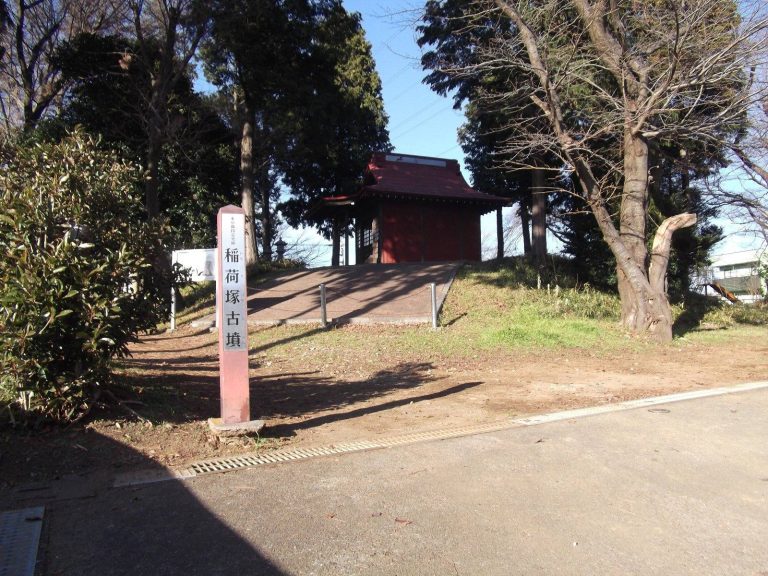
The precinct also includes Inari, Hie, Konpira, a smallpox shrine, and an eye deity shrine. Inari Shrine was founded in June 1819, Hie Shrine’s sanctuary was built in 1787, and Konpira Shrine was founded in 1853. Inari, Hie, and Konpira were renovated in 1914. Suwa Shrine became a religious corporation in 1954.
Fire and Reconstruction
In the early morning of October 26, 1994, a fire suspected of having been deliberately started destroyed Suwa Shrine, Hachiman Shrine, the shrine office, and the wedding hall. A reconstruction committee was established soon afterward. Earlier architectural surveys, together with an investigation of the fire-damaged timbers, provided evidence for reconstructing the main sanctuary in a form based on its pre-fire structure.
The Suwa, Hachiman, and Inari sanctuaries were rebuilt in 2002. They were arranged for worship in parallel beneath a single protective building, with Suwa understood as the principal deity, Hachiman as an ancestral deity, and Inari as a land deity. Inari’s sanctuary had been rebuilt in 1914 in the form of its earlier building, but it too burned in 1994. Its present form was completed with the reconstructed main sanctuary at the end of July 2001.
Festival Traditions and Local Identity
The principal annual festival takes place on the fourth Saturday and Sunday of August. Its traditional lion dance is performed as a dedication during the joint Suwa and Hachiman festival and has been transmitted since approximately the Genroku era, an early Edo-period era generally dated to 1688–1704. A preservation society was founded in 1963, and the tradition is now maintained by the Tachikawa Lion-Dance Performing Arts Preservation Society. Local elementary and junior-high schools have also provided instruction to encourage younger practitioners.
The lion dance and the shrine’s sumo tradition are central parts of Suwa Shrine’s local identity. The approach road, Suwa-dori, is now a shopping street. It was also called Yakuba-dori when the Tachikawa Village office stood south of the shrine until 1913, and Shogakko-dori after the First Elementary School moved beside the shrine in 1914. In 2013, shrine priests performed a Shinto ritual prayer at the groundbreaking ceremony for the Tachikawa Station North Exit West District redevelopment, which was completed as Tachikawa Tacross.
Several elements associated with the shrine have received municipal protection. These include the lion heads and drum bodies, the lion dance as an intangible folk cultural property, the Hachiman sacred tree as a natural monument, and the former site of Hachiman’s main sanctuary.
Remains
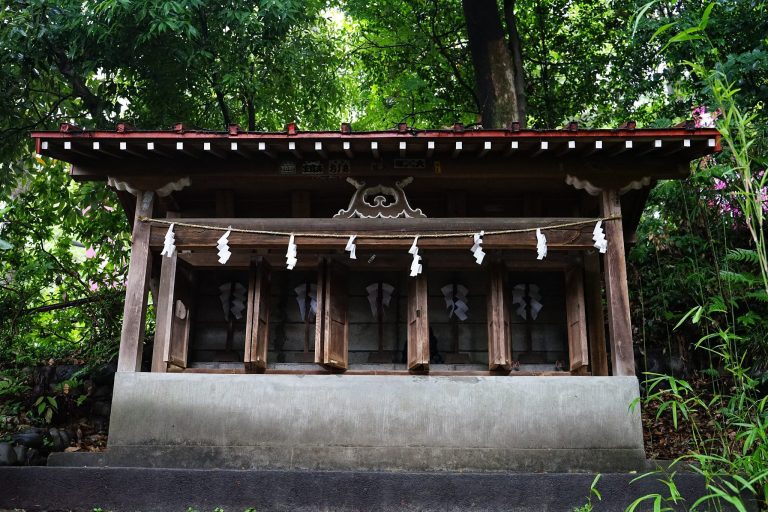
The present complex places Suwa Shrine at the front, Hachiman Shrine on the left, and Inari Shrine on the right. The three principal sanctuaries are architecturally separated from the other subordinate shrines but stand together beneath one protective structure. This arrangement reflects the post-1994 reconstruction and gives the precinct a clear three-sanctuary organization.
Principal Sanctuaries
The Suwa main sanctuary was rebuilt using pre-fire architectural surveys, surviving structural evidence, and a dismantling investigation of the burned timbers. Its reconstructed form follows the shape identified through those investigations. Hachiman’s former sanctuary, transferred from Shibasaki 1-7-17 in 1907, was lost in the 1994 fire and rebuilt afterward as part of the renewed precinct.
Inari Shrine was rebuilt in 1914 according to the form of its former sanctuary. After the 1994 fire, its present structure was completed at the end of July 2001. Hie Shrine retains a sanctuary dating from 1787 and was rebuilt in 1914, while Konpira Shrine, founded in 1853, was also rebuilt in 1914.
Subordinate Shrines
Asama Shrine formerly stood at a Fuji mound in Kamiko-Shinden, now Fujimi, Tachikawa, before its combination with Suwa Shrine in 1910. Within the present precinct, the smallpox shrine is associated with protection from or appeasement of smallpox. The eye deity shrine is linked by local tradition to the veneration of a large fir tree that formerly stood at the site.
Halls and Sacred Tree
The shrine’s kagura hall, a building for sacred music, dance, and related Shinto performances, was completed in 1929. A typhoon caused it to collapse in 1966, and a new hall replaced it in 1968. A shrine office was first established in 1909.
The Hachiman zelkova is traditionally said to have been planted when Hachiman Shrine was founded. At the time of its 1955 designation, it measured 6 meters in circumference and 28 meters in height. An observation in 2000 estimated that the tree was more than 300 years old, with the same circumference and a height of 9 meters. The former Hachiman main-sanctuary site remains at Shibasaki 1-7-17, where the sanctuary stood before its transfer to the Suwa precinct.
Opposite the Hachiman zelkova stands the Shiba-ichi Hachiman Public Hall, also called the “lion-dance lodging.” It is used for rehearsals and preparations for the August festival. On the festival day, performers form a procession from the hall to the Suwa and Hachiman precinct.
Lion-Dance Equipment and Performance
The surviving ritual equipment consists of one male lion head, one female lion head, and three drum bodies. Made around the Genroku era, these objects were used in lion dances transmitted in Shibasaki and Fujimi. They survived the 1994 fire because they were kept in the treasure hall.
The dance is divided into twelve named sections, traditionally described as “twelve rounds.” Each section includes a song, while a staff performer calls “Yaato.” Two male-lion dancers, one female-lion dancer, and one tengu dancer perform with a conch player, several flute players, and several singers. Staff performers lead the procession. The Igarashi family of Yamanaka in Fujimi is traditionally said to have learned the staff art in Mikawa Province.
Associated Material Heritage
The Hachiman Shrine honji-butsu statue, a Buddhist image once understood as the manifestation of a native Japanese deity, is preserved at the Tachikawa History and Folklore Museum rather than at the shrine. It is regarded as important for understanding the Tachikawa clan during Japan’s Warring States period, an era of prolonged political and military conflict before the Tokugawa shogunate.