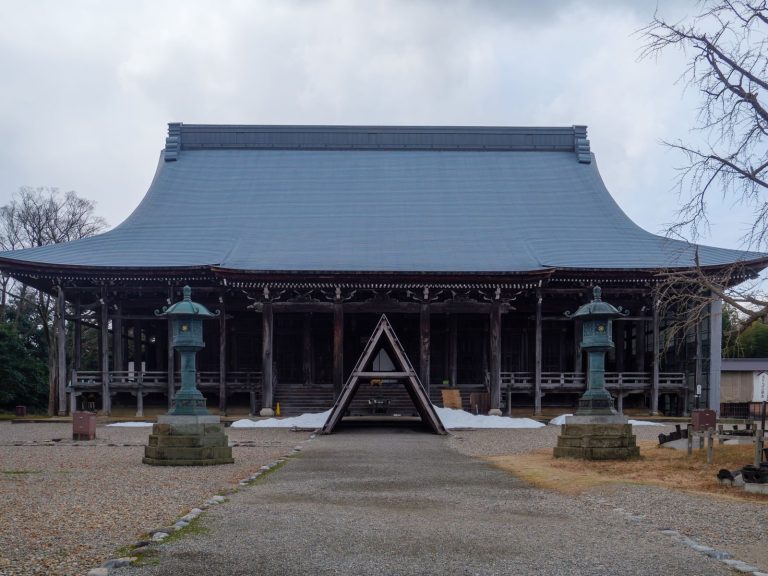
Zuisen-ji Temple: A Jōdo Shinshū Temple in Nanto, Japan


Site at a Glance
- Rating
- 4.3
- Popularity
- Low
- Country
- Japan
- Primary era
- Medieval
- External website
- Open
- Eras represented
- Medieval
- Civilizations
- Japanese
- Site type
- Religious
- Remains
- Temple
On this page7 sections
History
Zuisen-ji Temple in Nanto, Japan, is a Jōdo Shinshū Buddhist temple founded in 1390 by Shakujō, the fifth head of Honganji. Jōdo Shinshū is a major Japanese Buddhist tradition centered on reliance on Amida Buddha, the principal Buddha of Pure Land Buddhism and the central object of worship in the tradition.
Foundation and Sengoku-period conflict
During the Sengoku period, an era of intense warfare among competing military and territorial powers, Zuisen-ji became a base for the Etchū Ikkō-ikki. These movements brought together Jōdo Shinshū communities and their allies. In 1581, the temple fought the forces of Sassa Narimasa, commander of Oda Nobunaga’s army in the Hokuriku region. The attack ended with the temple burned and its halls destroyed.
Honganji affiliations
The temple’s institutional affiliation changed after Honganji divided in 1602. Zuisen-ji first belonged to the organization headed by Junnyo, whose institutional successor is the Jōdo Shinshū Honganji-ha, based at Nishi Hongan-ji. In 1649, it transferred to the organization headed by Kyōnyo, whose successor is the Shinshū Ōtani-ha, based at Higashi Hongan-ji. Zuisen-ji remains an affiliated temple of the Shinshū Ōtani-ha.
Fire and reconstruction
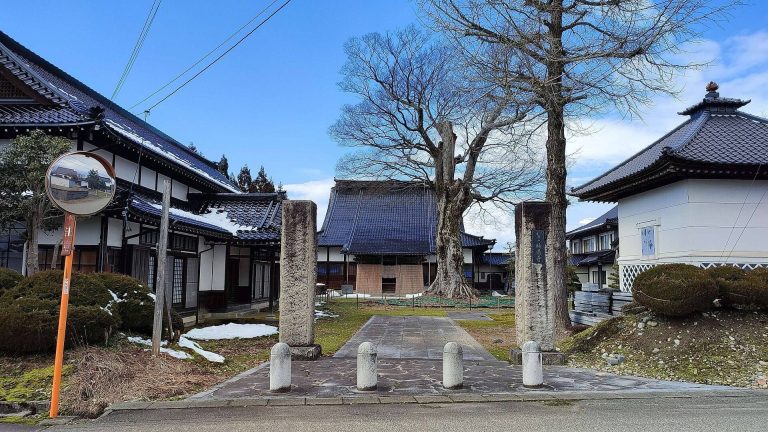
A fire in 1879 destroyed the principal temple buildings, while the main gate and some other structures survived. The main hall was rebuilt in 1885, and the Prince Shōtoku Hall followed in 1918. The precincts are designated as a historic site by Nanto City. Toyama Prefecture recognizes the main gate and a wooden standing image of Amida Buddha as cultural properties. The temple is also associated with an imperial handwritten letter by Emperor Go-Hanazono, a petition seeking contributions by Shakujō, and an illustrated biography of Prince Shōtoku, all connected with designated cultural and artistic properties.
Prince Shōtoku was an early Japanese imperial prince traditionally associated with the establishment and promotion of Buddhism in Japan. Emperor Go-Hanazono was a fifteenth-century Japanese emperor, placing the temple’s associated materials within the wider religious and imperial history of Japan.
Remains
Zuisen-ji is enclosed by substantial stone walls, a physical feature connected with its former role as a fortified base during the Sengoku-period conflicts. Its surviving and reconstructed buildings are decorated with wood carvings made by craftsmen from Inami, an area of Nanto known for its wood-carving industry.
Gate and principal halls
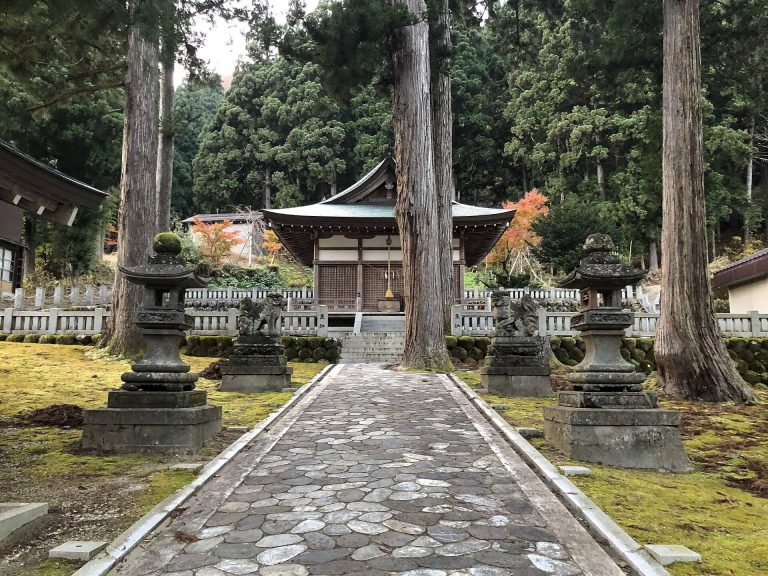
The main gate, also called the temple gate, survived the 1879 fire that destroyed most of the principal buildings. Behind it, the main hall represents the major rebuilding of 1885, while the Prince Shōtoku Hall was reconstructed in 1918. These structures form the principal surviving architectural elements of the post-fire temple precinct.
Wisteria trellises
The precincts contain two wisteria trees transplanted around 1960 by officers of the temple-support organization Zuisen-ji Nijūhachinichi-kō. One produces pale-purple flowers and the other white flowers, and each was trained over a separate trellis. Heavy snow in February 2025 damaged and collapsed both trellises. One tree suffered particularly severe damage, and its regeneration was expected to take four or five years.