Shibuya Hikawa Shrine: A Shinto Shrine in Tokyo


Site at a Glance
- Rating
- 4.3
- Popularity
- Medium
- Country
- Japan
- Primary era
- Early Modern
- External website
- Open
- Eras represented
- Early Modern
- Civilizations
- Tokugawa
- Site type
- Religious
- Remains
- Sanctuary
On this page9 sections
History
Shibuya Hikawa Shrine is a Shinto shrine in Japan, located in the Higashi district of Tokyo’s Shibuya area. Its foundation is dated to 1092, and it is counted among the 59 Hikawa shrines. The principal deities are Susanoo, a kami associated with storms and the sea, Inada-hime, Okuninushi, and Amaterasu, the sun kami of Shinto.
Foundation and Sacred Tradition
A tradition preserved in the Hikawa Daimyōjin Hōsenji engi, written in 1605 by the monk Hōen of Hōsenji, links the site with Yamato Takeru, the legendary imperial prince traditionally regarded as the son of Emperor Keikō. According to this tradition, Yamato Takeru encountered Susanoo at the site. It also states that En’nin founded Hōsenji in 1713 following the encounter. This account places the shrine within a religious landscape shaped by connections between local worship and older imperial legends.
Precinct and Parish
The shrine precinct was constructed on February 25, 1693. Plans dated January 1, 1748, measured the grounds at 6,840 tsubo, using a traditional Japanese unit of area. A document issued by temple magistrates in 1749 confirmed the same measurement, which the precinct retained into the twenty-first century.
The shrine’s former parish territory covered much of present-day southern Shibuya. Its northern boundary met the territory of Kon’ō Hachimangū and the Kamakura Highway. Many daimyō, powerful territorial lords in premodern Japan, initially lived in the area and visited the shrine. The district later urbanized rapidly, and after the Second World War it contained more than 16,000 households. The shrine is also affiliated with Hachiman, Itsukushima, Inari, and Akiba shrines.
Renovation and Sumo Tradition
The shrine underwent several renovations, including relocations on November 3, 1938, and May 25, 1945. Sumo had been practiced in the region since antiquity and became an important part of shrine activity. The Shibuya Hikawa Shrine sumo festival, together with those at Kajima Shrine and Setagaya Hachimangū, was regarded as one of the three most important sumo festivals in the suburbs of Edo.
The historic sumo festival took place annually on September 29 and drew visitors from throughout the city. Tradition holds that the shogunate, the military government headed by the shogun, also attended. Although the festival is no longer organized, local people continue to use the shrine grounds as a sumo ground. The shrine’s annual festival takes place on September 16.
Remains
The surviving shrine precinct lies in Higashi 2-chome and covers 6,840 tsubo, the area preserved in the eighteenth-century plans and administrative record. Its physical remains include the worship hall, a preserved piece of an old pine, and ground that continues to serve local sumo use.
Precinct Structures and Sacred Remains
Worship Hall
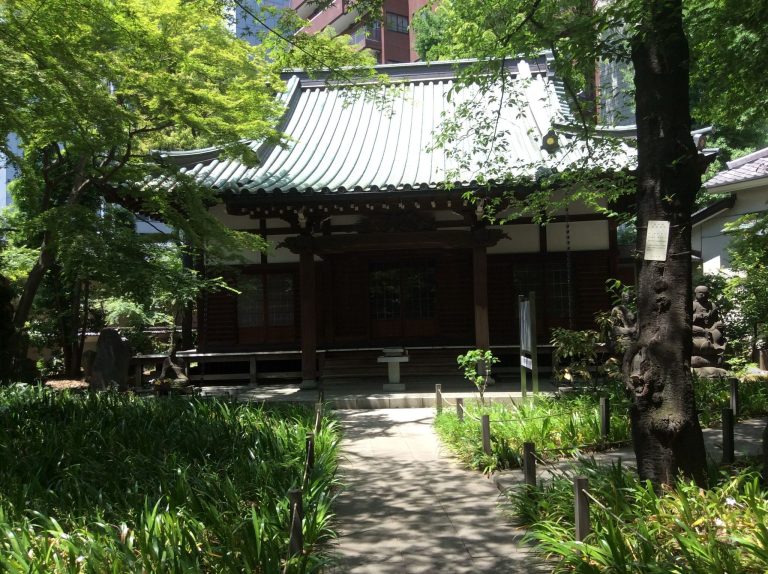
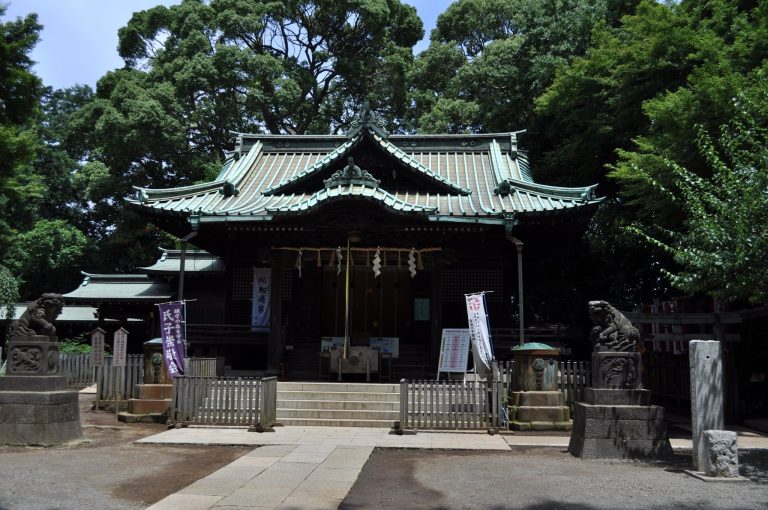
The worship hall forms part of the shrine precinct and remains the principal recorded architectural feature of the site. Its appearance is shown in a 2015 photograph, while the documented extent of the surrounding grounds remains 6,840 tsubo.
Tokiwamatsu Pine
An old pine known as Tokiwamatsu was traditionally believed to have been planted by Tokiwa Gozen, a twelfth-century woman associated with the Minamoto clan. The tree died 780 years ago, but its wood is preserved in one of the shrine’s halls, retaining a physical part of the shrine’s sacred tradition.
Sumo Ground
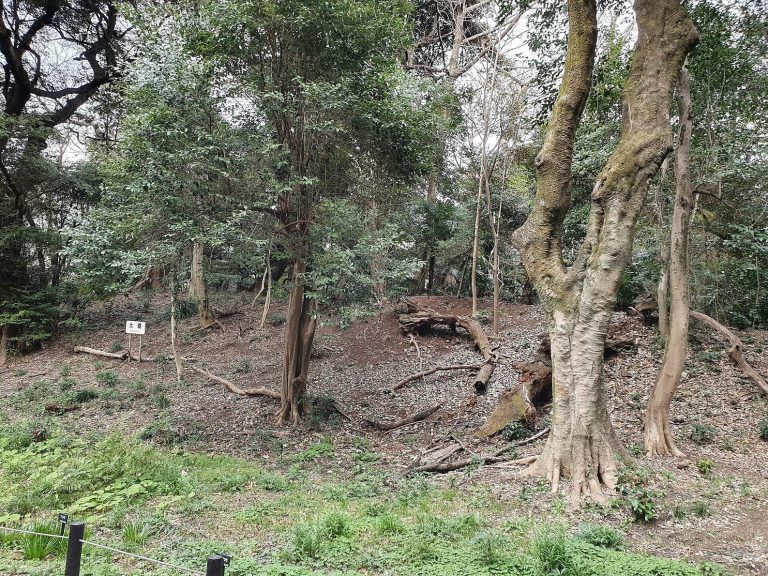
The site remains available for use as a sumo ground. This continuing function preserves a physical setting associated with the shrine’s historic sumo festival, which was held annually on September 29 before the festival organization ended.