Konnō Hachimangū: A Historic Hachiman Shrine in Shibuya, Tokyo


Site at a Glance
- Rating
- 4.3
- Popularity
- Medium
- Country
- Japan
- Primary era
- Early Modern
- External website
- Open
- Eras represented
- Early Modern
- Civilizations
- Tokugawa
- Site type
- Religious
- Remains
- Sanctuary
On this page11 sections
History
Konnō Hachimangū is a Hachiman shrine in Japan, located in Shibuya, Tokyo, and traditionally founded in 1092 by Taira no Taketsuna, also known as Kawasaki Motoya. Hachiman is a major Japanese Shinto deity traditionally associated with Emperor Ōjin, whose worship became especially prominent among warrior families. The shrine occupies the site identified with Shibuya Castle and preserves traditions connected with the origins of the Shibuya clan.
Origins and the Shibuya clan
Taira no Taketsuna is said to have fought in the Former Nine Years’ War and the Later Three Years’ War alongside Minamoto no Yoriyoshi and his son Minamoto no Yoshiie. These eleventh-century conflicts in northeastern Japan involved competing warrior families and the expansion of warrior power. Taketsuna’s son Shibuya Shigeie received the surname Shibuya from Emperor Horikawa, a grant traditionally understood as an imperial bestowal of status or identity.
Shigeie is traditionally credited with building Shibuya Castle on the site now occupied by the shrine. He became the ancestor of the Shibuya clan, a medieval Japanese warrior lineage associated with the area. The shrine was originally called Shibuya Hachiman. Its later name, Konnō, is traditionally linked to Shigeie’s eldest son, who prayed there and was believed to have been born as an incarnation of Kongō-yasha Myōō, a Buddhist Wisdom King and wrathful protective deity. He consequently received the name Konnō-maru.
Medieval and early modern traditions
One tradition states that Minamoto no Yoritomo visited the shrine in 1189 while returning from his northern campaign. Yoritomo, the founder and first shogun of the Kamakura shogunate, is said to have dedicated a sword, visited the memorial hall of Konnō-maru, and transplanted a cherry tree from Kamegaya in Kamakura.
Another tradition connects the later history of the tree with Tokugawa Yorinobu, an early Edo-period member of the Tokugawa family and lord of Kii Domain. His mother is said to have grown a tree from one of the transplanted cherry’s seeds. After the original tree died, a Shibuya retainer described as a descendant of Konnō-maru replanted a cherry at the site of the old tree.
During the Edo period, the Tokugawa shogunal family devoted itself to the shrine. Kasuga no Tsubone, wet nurse of the third shogun Tokugawa Iemitsu, and his guardian Aoyama Tadatoshi are traditionally credited with constructing the shrine gate and buildings. Until the end of the Edo period, the adjacent Tōfukuji, a temple of the Tendai Buddhist tradition, served as the shrine’s associated administrative temple. Under Japan’s premodern system of combined Buddhist and kami worship, such a temple could oversee or manage a Shinto shrine.
Subsidiary shrines and modern recognition
Konnō Hachimangū has affiliated subsidiary shrines including Tamatsukuri Inari Shrine, Ontake Shrine, dedicated to Kushimachi-no-Mikoto, and Toyosaka Inari Shrine. Toyosaka Inari was traditionally founded by the Shibuya clan near Shibuya Station before being moved to its present location in 1961.
Shibuya Ward designated the shrine buildings and gate as tangible cultural properties in 1976, and added the attached connecting corridor to the designation in 2010. The Konnō Cherry received designation as a natural monument in 1982. A natural monument is a legally protected natural feature recognized for historical, scientific, or cultural value.
Remains
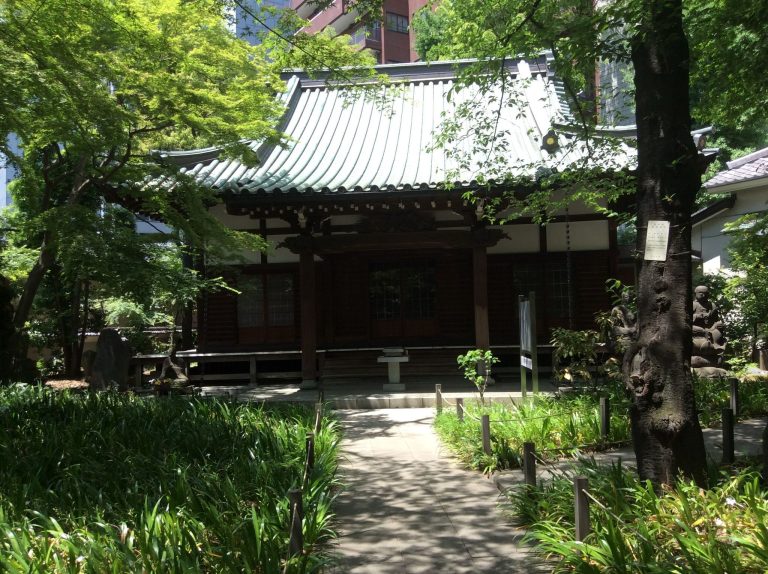
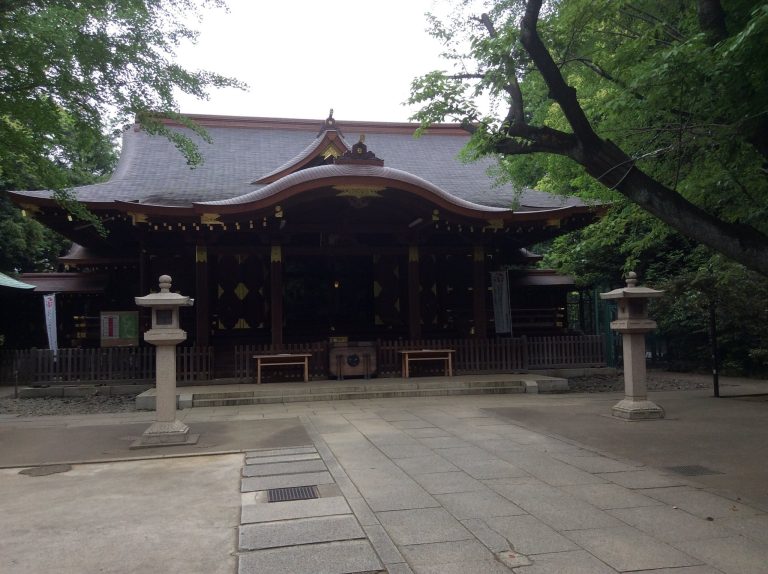
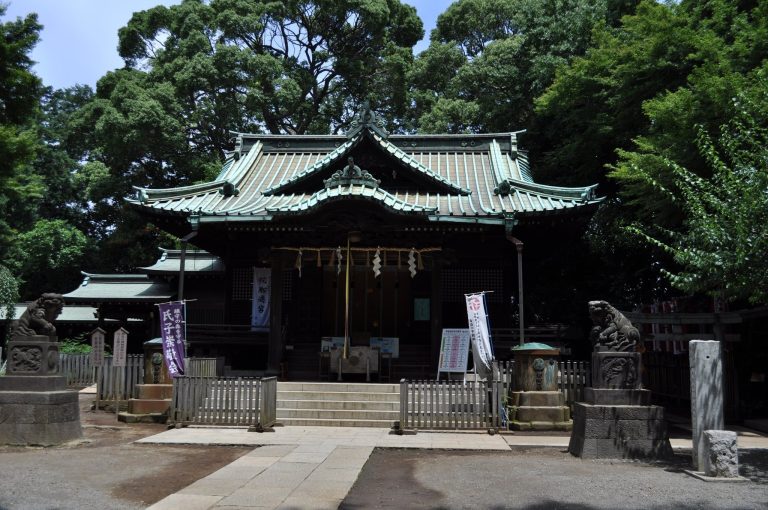
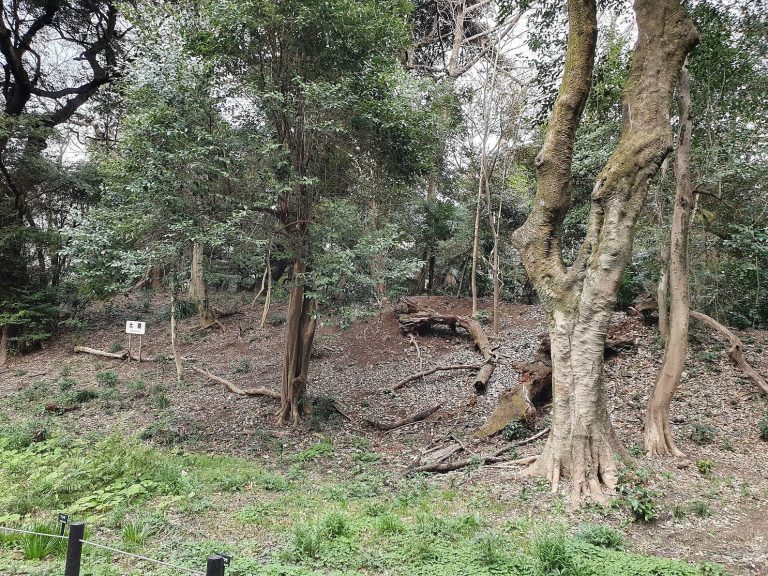
The physical complex occupies the site identified with Shibuya Castle and consists of the main shrine buildings, a shrine gate, and an attached connecting corridor. The grounds also include an associated cherry tree and an area of subsidiary shrines, while Toyosaka Inari stands across a road from the main shrine.
Main shrine complex
Shrine buildings
The shrine buildings form the central architectural group of Konnō Hachimangū. Together with the gate, they were designated tangible cultural properties by Shibuya Ward in 1976. Their historical setting is tied to the traditional identification of the grounds with Shibuya Castle, the stronghold attributed to Shibuya Shigeie.
Shrine gate and connecting corridor
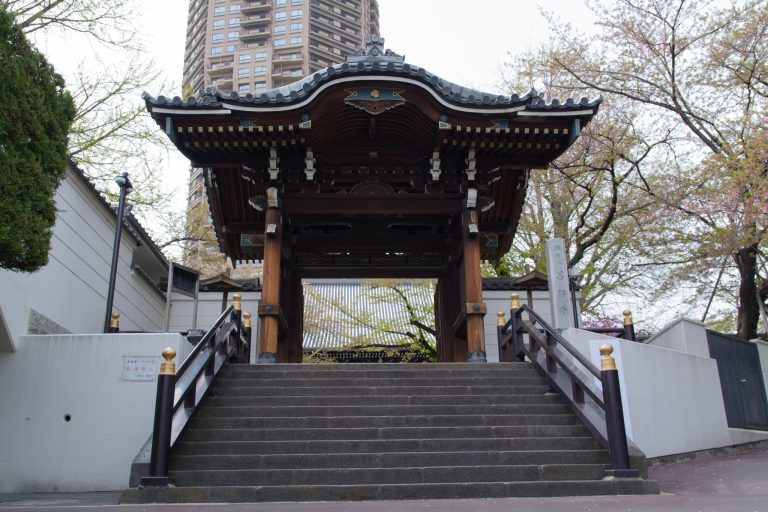
The shrine gate is part of the designated complex and is traditionally associated with construction during the Edo period under the patronage of Kasuga no Tsubone and Aoyama Tadatoshi. An attached connecting corridor forms another part of the complex and was added to Shibuya Ward’s cultural-property designation in 2010.
Subsidiary shrines and Konnō Cherry
Affiliated shrines
The subsidiary-shrine area includes Tamatsukuri Inari Shrine and Ontake Shrine, which is dedicated to Kushimachi-no-Mikoto. Toyosaka Inari Shrine is also affiliated with Konnō Hachimangū, although it is physically separated from the main shrine by a road. It was moved to its present location in 1961.
Konnō Cherry
The Konnō Cherry is an associated natural feature of the shrine grounds and was designated a natural monument by Shibuya Ward in 1982. Local tradition links it to the cherry tree that Minamoto no Yoritomo is said to have transplanted from Kamegaya in Kamakura. The tradition further relates the present tree to later replanting at the site of the original tree after that earlier tree died.