Sheykh Babi Yagub Mausoleum: A Medieval Monument in Azerbaijan


Site at a Glance
- Rating
- 5
- Popularity
- Very Low
- Country
- Azerbaijan
- Primary era
- Medieval
- Eras represented
- Medieval
- Civilizations
- Ilkhanate
- Site type
- Religious
- Remains
- Tomb
On this page7 sections
History
Construction and Inscription
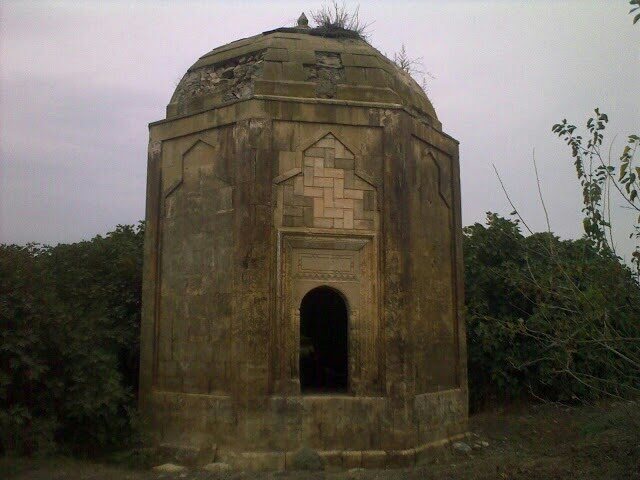
Sheykh Babi Yagub Mausoleum is a medieval mausoleum in Babi village, Azerbaijan, built in 1272 in the architectural tradition of the Ajami school, a medieval tradition associated particularly with Azerbaijan and northwestern Iran. A Kufic inscription, using an early angular form of Arabic script common on monumental buildings, states that construction was ordered for the ascetic sheikh Babi Yagub ibn Ismail Gur Har in 672 AH.
The monument was once assigned an earlier date. A. I. Brozgul placed the complex in the twelfth century, but that attribution was later judged incorrect. I. P. Sheblykin also referred to the mausoleum mistakenly as “Shah Babali.” The inscription drew the attention of N. V. Khanikov in the mid-nineteenth century. His reading included omissions and errors, and the text was later fully deciphered and incorporated into a corpus of Arabic-, Persian-, and Azerbaijani-language inscriptions from Azerbaijan.
Associated Religious Complex
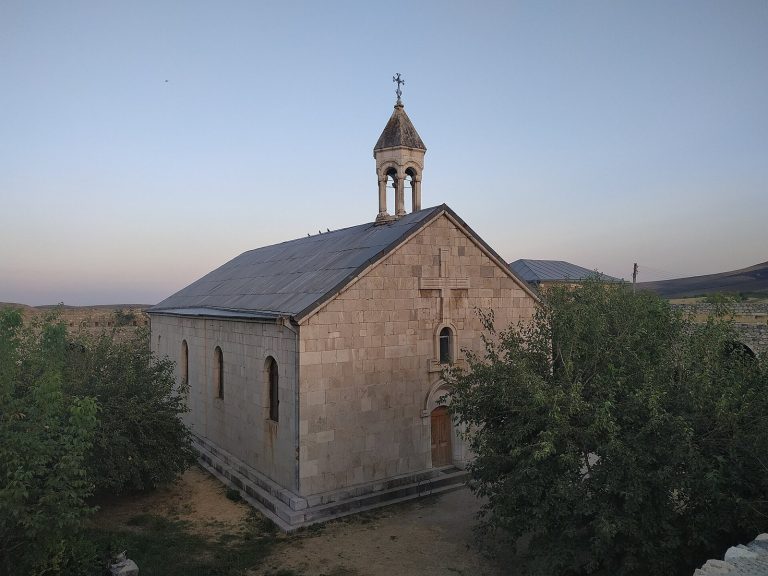
Archaeological excavations began in summer 2011 on the orders of Azerbaijan’s Ministry of Culture and Tourism under the direction of Khagani Almammadov. They revealed the ruins of a khanegah, a Sufi religious complex connected with residence, worship, teaching, and communal life. The complex near the mausoleum is thought to have first functioned as a caravanserai and later to have been converted into a mosque.
Six stone graves were found near the complex and were probably those of warriors. One grave contained a headless skeleton, while another held a skeleton together with arrowheads. Restoration was planned after the excavations were completed.
Conflict and Damage
The associated complex was damaged or destroyed during feudal conflicts and the Russo-Iranian War. The mausoleum itself was heavily damaged on 29 September 2020 during clashes between Azerbaijani and Armenian forces. The surviving remains therefore preserve only part of the former religious complex and its surrounding features.
Remains
Mausoleum Structure
The mausoleum has an octagonal plan, with each outer facet measuring 3 metres. Dressed limestone, also described as white stone, forms the structure. Above it is an octagonal spherical dome made from thin stone slabs. The building reflects the influence of the Ajami school and survives as the principal tomb structure within the damaged complex.
Khanegah Ruins
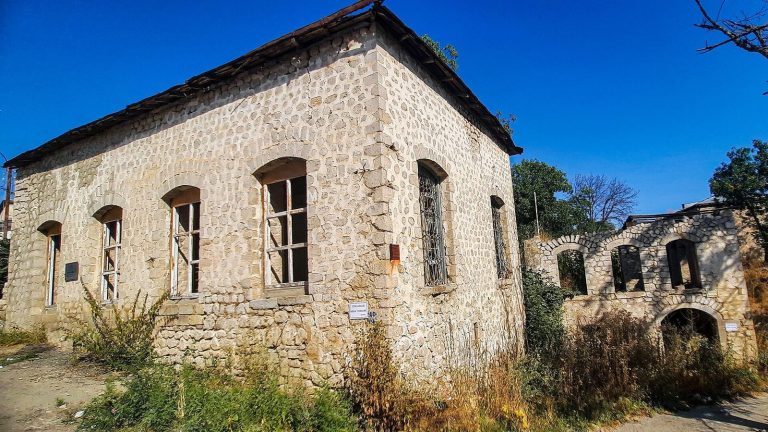
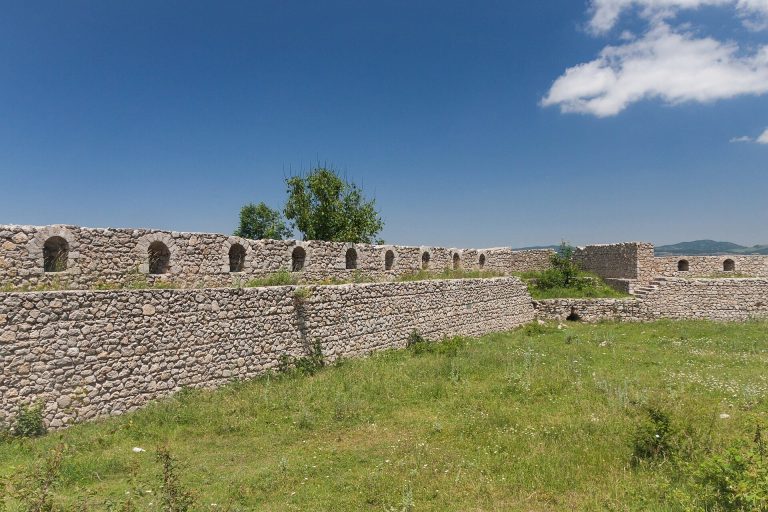
The nearby khanegah ruins include underground passages or routes, a minaret, a mosque built beside the minarets, and several cells faced with coloured stone. The cells have been interpreted as suggesting that the complex could also serve as a fortified place during conflicts with outside enemies, although that interpretation remains qualified.
The wider complex is severely damaged. The tomb and one minaret remain, while the other elements of the khanegah survive in a more fragmentary condition. The graves and arrowheads found during excavation add archaeological evidence for the site’s religious and military associations.