Église protestante de Balbronn: A Lutheran Church in France
Site at a Glance
- Rating
- 4.3
- Popularity
- Very Low
- Country
- France
- Primary era
- Medieval
- Eras represented
- Medieval
- Civilizations
- Holy Roman Empire
- Site type
- Religious
- Remains
- Church
On this page7 sections
History
Medieval origins
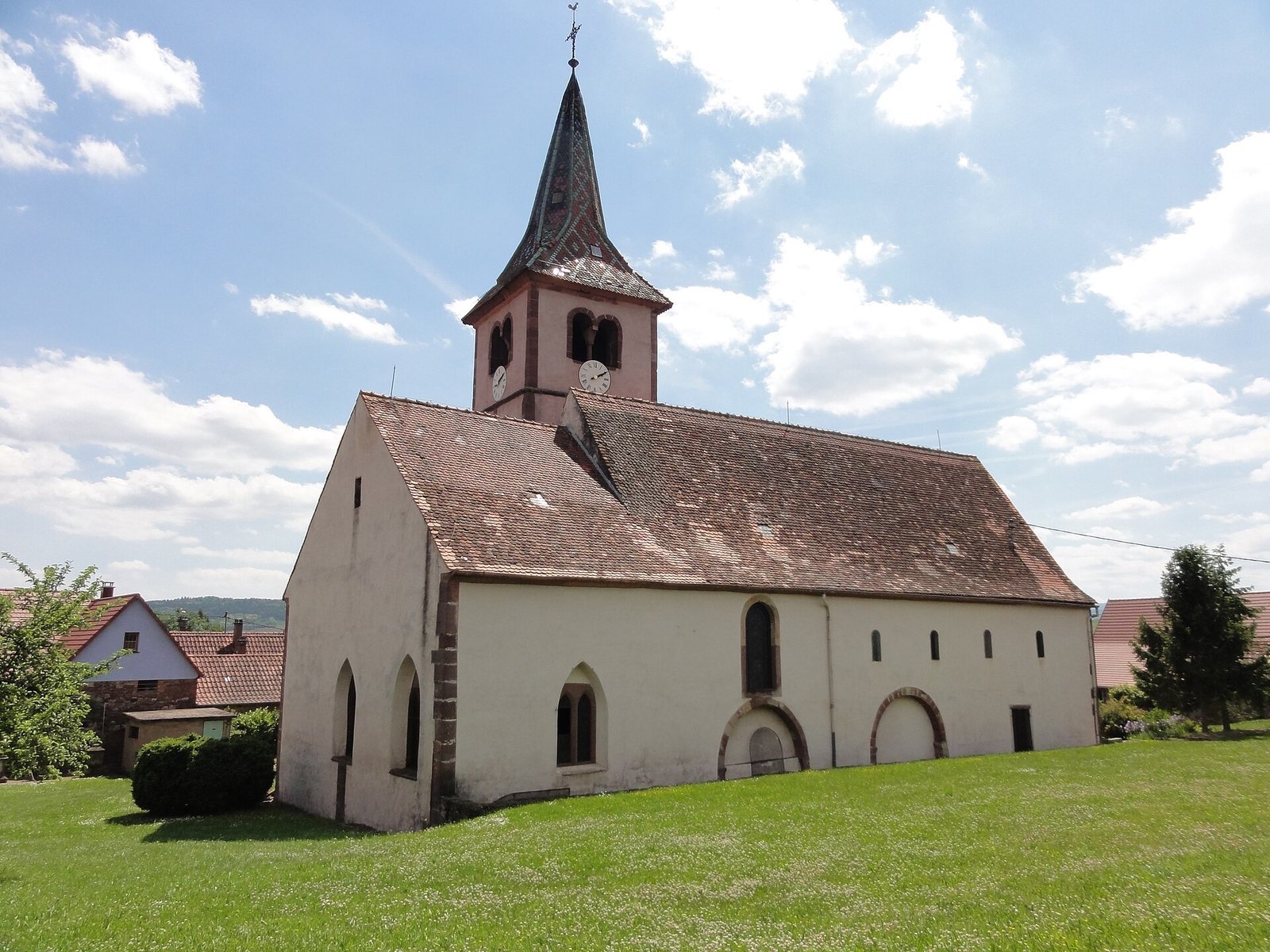
Église protestante de Balbronn is a Lutheran church in Balbronn, France, affiliated with the Protestant Church of the Augsburg Confession of Alsace and Lorraine. Its architectural chronology remains uncertain, although the church is cited in the twelfth century and its construction is broadly dated to the eleventh or twelfth century. Its dominant Romanesque character belongs to a medieval style known for massive construction, rounded arches, and restrained sculptural decoration.
Shared worship and restoration
In 1687, Protestant and Catholic congregations began using the church together in a simultaneum, the shared use of one building by different Christian confessions. The old church received a complete restoration in 1907–1908 under the direction of architect Gustave Weigend. Its surviving remains and the land beneath them were entered into the supplementary inventory of French historic monuments by decree on 20 September 1990.
Remains
Church structure
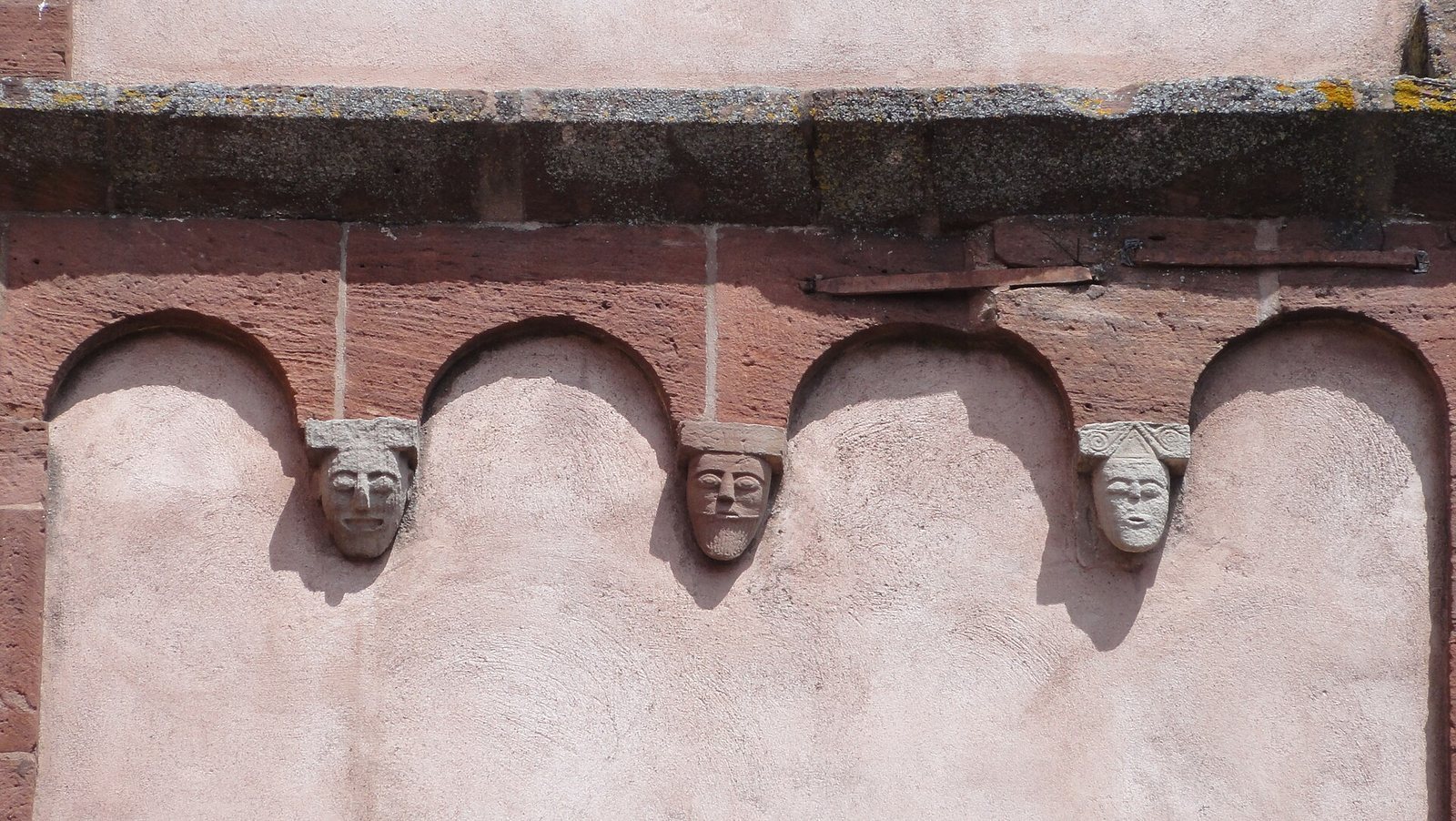
The church is oriented northeast and follows an elongated plan with a single nave ending in a flat chevet, the straight eastern termination around the sanctuary. The nave stands on a possibly pre-Romanesque base, while a keep-like bell tower gives the building a strong vertical element. Twelfth-century Romanesque corbels, projecting supports often used to carry structural elements, are carved in the form of heads. A twelfth-century pilaster also survives as part of the church.
Bells and interior furnishings
Two bronze bells belong to different periods, one dated 1552 and the other 1846. A copy of a prosthetic hand and arm dated 1552 is preserved inside the church. The furnishings include an organ from 1747, a fifteenth-century Protestant begging trunk, and a pastoral chair from the twentieth century. Liturgical objects comprise a chalice, paten, and Protestant host box dated 1895; another Protestant chalice and paten from the nineteenth century; two communion ewers from the eighteenth century; and a baptismal basin and ewer dated 1887.
Stained glass and funeral monuments
Two stained-glass windows date from the 1907–1908 restoration: one depicts Frederick Barbarossa, the twelfth-century Holy Roman Emperor, and the other shows Christ in Glory, an image of Christ in heavenly majesty. Funeral monuments commemorate Pastor Johannes Haüss from the seventeenth century, Euphrosine von Schauwenburg in 1605, Anna Maria Fasco in 1773, and Catharina Muller in 1828.