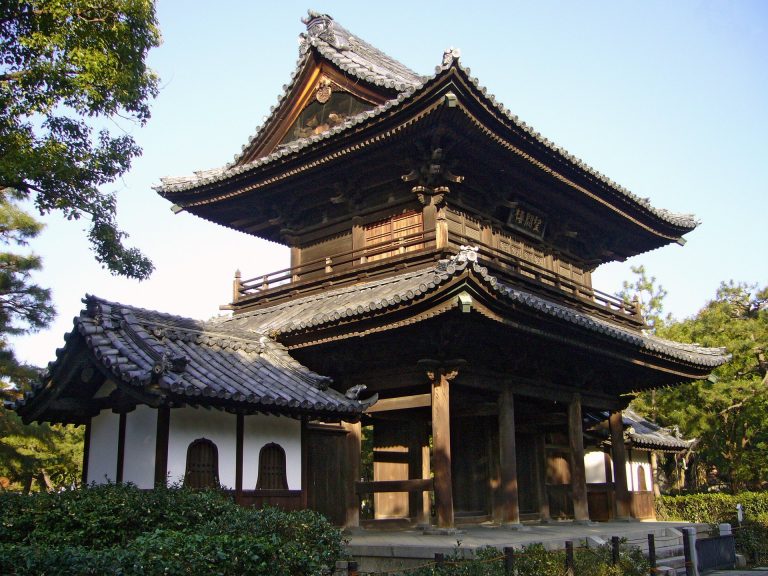
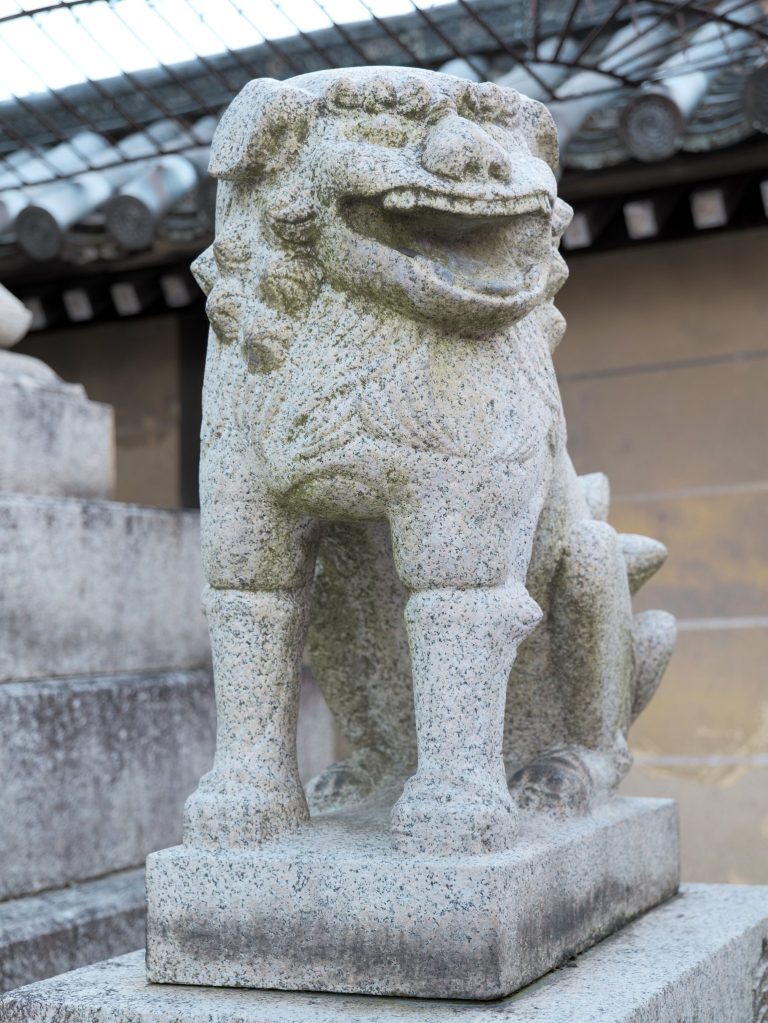
Seigan-ji Temple: Head Temple of the Nishiyama Fukakusa Tradition in Kyoto


Site at a Glance
- Rating
- 4.3
- Popularity
- Low
- Country
- Japan
- Primary era
- Early Modern
- External website
- Open
- Eras represented
- Early Modern
- Civilizations
- Toyotomi regime
- Site type
- Religious
On this page13 sections
History
Seigan-ji Temple is a Japanese Buddhist temple in Kyoto, Japan, traditionally founded in Nara in 667 as a seven-hall complex during the reign of Emperor Tenji. It began as a temple of the Sanron school, a Buddhist tradition based on Madhyamaka teachings concerning the nature of reality, and later became the head temple of the Nishiyama Fukakusa branch of Jodo Buddhism, which teaches rebirth in the Pure Land through devotion to Amida Buddha.
From Nara origins to the Jodo tradition
The temple was established by order of Emperor Tenji and founded by the monk Eon. It was later transferred to the Hosso school, a Buddhist tradition especially concerned with consciousness and perception, and came under the ownership of Kofuku-ji, one of that school’s major Japanese institutions. During the Heian period, the poetesses Sei Shonagon and Izumi Shikibu were among Seigan-ji’s devotees. The temple consequently became associated with the rebirth of women.
A Hosso monk eventually transferred Seigan-ji to Honen, the founder of Japan’s Jodo school. The temple was moved to Ichijo Ogawa in Kyoto, near what is now Moto-Seiganji Street. Honen’s disciple Shoku entered the temple and spread the Nishiyama interpretation of Pure Land teaching. This lineage later developed into the Nishiyama branch of Jodo Buddhism. Shoku’s disciple Risshin, also known as Enku, founded Shinshu-in in Fukakusa and further developed the Fukakusa interpretation, which Seigan-ji continues to represent as its head temple.
Relocation and early-modern expansion
A fire devastated Seigan-ji in 1573. In February 1591, Toyotomi Hideyoshi, the military ruler who unified Japan, ordered the temple’s relocation to its present site on Shin-Kyogoku Street. Kyogoku Tatsuko, one of Hideyoshi’s concubines and a member of the Kyogoku family, provided extensive land and helped rebuild the temple buildings.
Fundraising led by Mokujiki Ogo supported the reconstruction, and a completion ceremony took place on 11 March 1597. Fifty monks from Mount Koya attended. After Hideyoshi died, Tatsuko retired at Seigan-ji and held memorial observances for him. Following the Summer Campaign of Osaka in 1615, the remains of Kunimatsu, the executed son of Toyotomi Hideyori, were taken in by Tatsuko and buried at the temple. His tomb was later moved from the subtemple Chikurin-in to Toyokuni Mausoleum in Higashiyama in 1904.
By the An’ei period, Seigan-ji had 18 subtemples. In the eighteenth century, the precincts also contained a three-story pagoda, theatrical booths, and spectacle booths. The temple’s location near the Kyoto Imperial Palace brought it into frequent relations with the imperial court.
Fires, institutional change, and modern lineage
Major fires during the Tenmei, Koka, and Genji periods repeatedly damaged the temple. The Meiji Restoration and the anti-Buddhist movement that followed brought further change. Government acquisition of temple land during improvements to Shin-Kyogoku Street from 1872 considerably reduced the precincts.
The principal image now associated with Seigan-ji was formerly housed at Iwashimizu Hachimangu as the Buddhist manifestation of Hachiman, a Japanese deity whose worship became linked with Buddhist interpretations. It was transferred to Seigan-ji in 1869 after the separation of Buddhism and Shinto, and then became the temple’s principal image.
In 1876, Seigan-ji became the northern head temple of the Nishiyama branch of Jodo Buddhism. When that branch divided in 1919 into the Nishiyama Komyoji, Nishiyama Zenrinji, and Nishiyama Fukakusa branches, Seigan-ji became the head temple of the Nishiyama Fukakusa branch.
Seigan-ji’s religious and cultural associations also extend to the performing arts. The classical masked drama Seigan-ji is linked with the temple, and prayers there became associated with success for performers in storytelling, rakugo, and manzai. Rakugo is comic storytelling by a seated performer, while manzai is traditional comic dialogue performed by a duo. Seigan-ji is also traditionally regarded as the birthplace of rakugo.
In 1754, the physician Yamawaki Toyo conducted Japan’s first medical dissection and held a memorial service for an anatomical specimen at the subtemple Zuishin-an. This practice contributed to the later tradition of anatomical memorial services at medical institutions. A fire caused by accidental ignition on 26 September 1932 destroyed an Amida principal image traditionally attributed to the monk Genshin, along with statues of the Four Heavenly Kings.
Remains
Temple precinct and principal worship
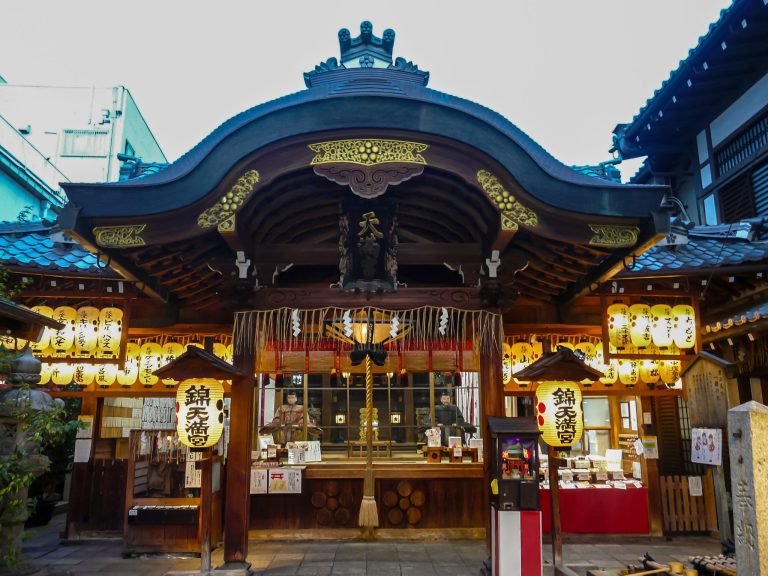
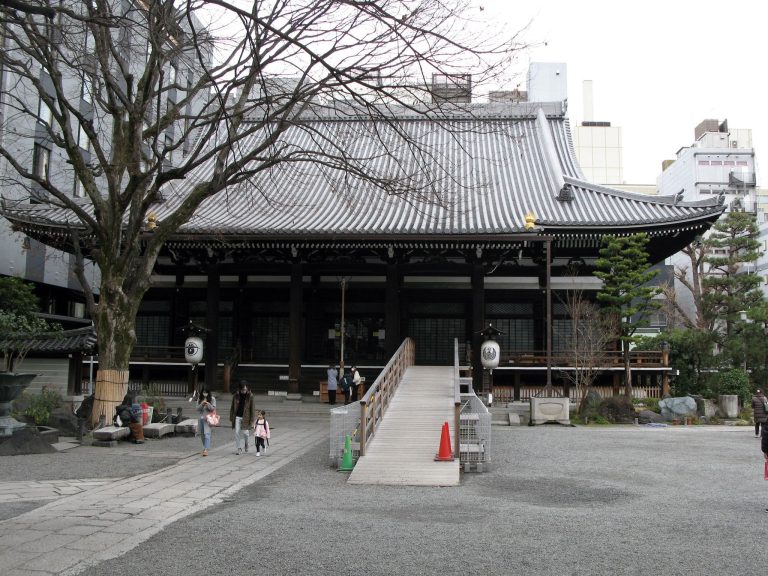
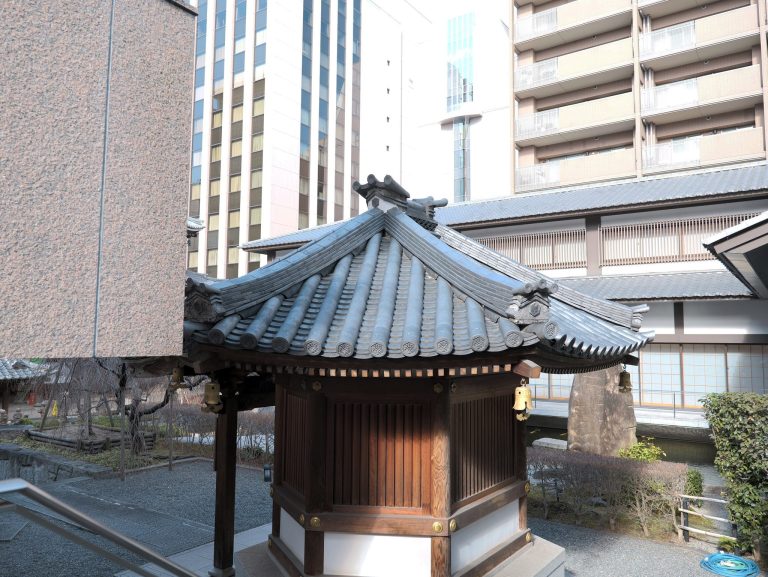
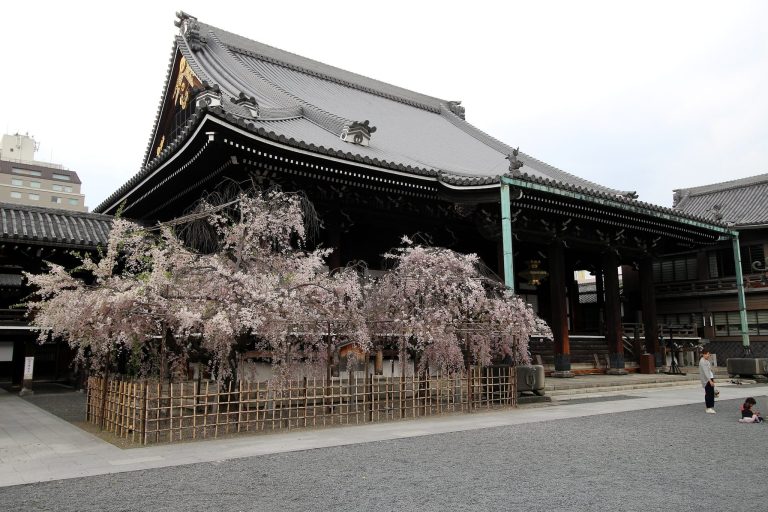
Seigan-ji stands on Shin-Kyogoku Street in Nakagyo Ward, Kyoto. The present precinct consists of the main hall and a small number of other buildings, reflecting the reduction of the larger complex that once included numerous subtemples. The main hall enshrines Amida Buddha as the principal image and also houses an Eleven-Headed Kannon, a form of the bodhisattva of compassion associated with the temple’s pilgrimage affiliations.
Memorial features and cemetery
Ogizuka
Immediately south of the temple gate is Ogizuka, a stone stupa also called the Fan Mound. It commemorates the connection between the temple and the Noh play Seigan-ji, linking a physical feature of the precinct with Seigan-ji’s continuing relationship to the performing arts.
Cemetery monuments
The temple cemetery lies some distance from the main precincts. It contains the grave of Hoida Tadatomo, who compiled a 45-volume edition of documents from the Shosoin, the imperial repository in Nara. It also contains the grave of Yamawaki Toyo, the physician associated with the 1754 anatomical memorial service, together with a Yamawaki family tomb and a memorial monument for specimens connected with Toyo’s descendants.
Sculpture and painted scrolls
Amida and Bishamonten
The original principal image was a seated Amida Buddha measuring sixteen shaku, traditionally said to have been made by the father-and-son sculptors Kenmonshi and Keshikoku on the orders of Emperor Tenji. The later Amida image attributed by tradition to Genshin was destroyed in the 1932 fire. A wooden standing statue of Bishamonten, a Buddhist guardian deity, dates from the Heian period and measures 91.5 centimetres in height. It is held on deposit by the Kyoto National Museum.
Seigan-ji Engi
The Seigan-ji Engi comprises three silk hanging scrolls with colored paintings dating from the Muromachi to Edo periods. The Kyoto National Museum holds them in custody, and they are designated Important Cultural Properties of Japan.
Jizo and the Ten Kings
Eleven hanging scrolls depict Jizo and the Ten Kings, the judges of the dead in East Asian Buddhist tradition. Kyoto Prefecture designates these works as tangible cultural property. Together with the Bishamonten statue and the three Seigan-ji Engi scrolls, they form part of the temple’s associated cultural properties.