Scottish National Portrait Gallery: Edinburgh’s Museum of Scottish Portraiture
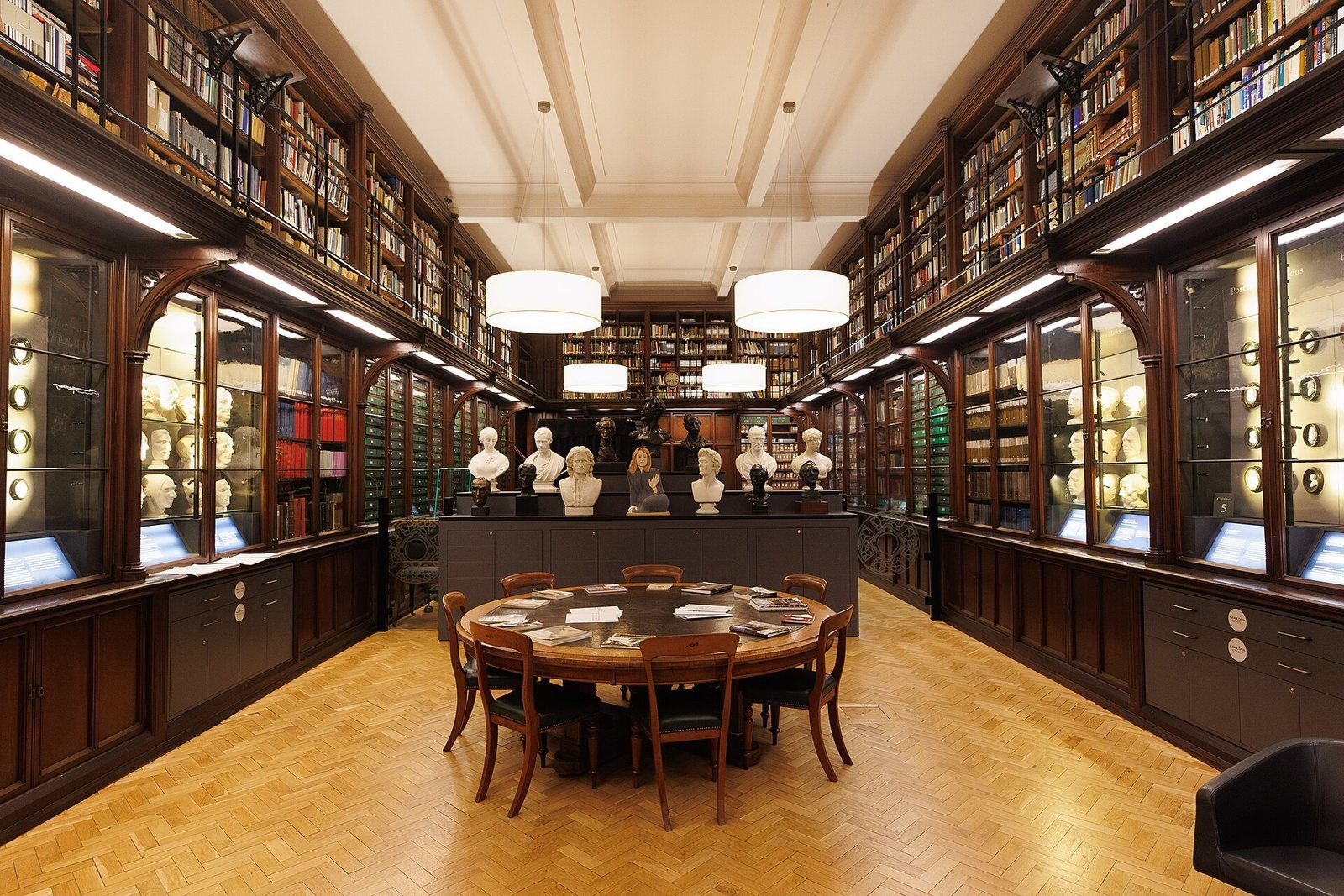
Site at a Glance
- Popularity
- High
- Country
- United Kingdom
- Primary era
- Early Modern
- Eras represented
- Early Modern, Modern
- Civilizations
- Kingdom of Scotland
- Site type
- Museum
On this page17 sections
History
The Scottish National Portrait Gallery is a museum devoted to portraits of Scottish people in Edinburgh, United Kingdom. Established in 1882, it became the first gallery housed in a building designed specifically for portrait display. Its Gothic-style premises opened in 1889; London’s National Portrait Gallery, founded in 1856, did not move into a purpose-built building until 1896.
Establishment and Expansion
The gallery’s roots include a collection assembled in the late eighteenth century by David Erskine, 11th Earl of Buchan, a Scottish peer and antiquary who founded the Society of Antiquaries of Scotland in 1780. Many of the portraits he gathered are now in the gallery. In the nineteenth century, the historian and essayist Thomas Carlyle advocated for a Scottish counterpart to London’s gallery, but the London government declined to fund it. John Ritchie Findlay, proprietor of The Scotsman, then paid the £50,000 construction cost. The gallery opened under curator John Miller Gray.
The National Museum of Antiquities of Scotland also occupied the building until its collections moved in 2009. The gallery then expanded to use the entire premises. It is part of National Galleries of Scotland, the public body that administers several national art galleries, including the Scottish National Gallery and the Scottish National Gallery of Modern Art. The building is listed Category A, Scotland’s highest category for buildings of special architectural or historic interest.
Portraiture from the Renaissance
The collection developed from the Renaissance onward, initially drawing heavily on portrait prints of clergy and writers, as well as paintings by foreign artists employed by Scottish royalty and nobility. Although its subjects are Scottish, not all the artists were. The Scottish Reformation, the sixteenth-century movement that established Protestantism and reshaped religious life, curtailed religious art, and portraiture became the dominant form of Scottish painting. Portrait commissions gradually extended beyond the highest ranks of society, though sixteenth-century examples in the collection chiefly depict royalty and leading nobles. Its oldest work is a portrait of James IV, king of Scotland from 1488 to 1513, dated 1507.
Mary, Queen of Scots and the Stuart Court
Two portraits of Mary, Queen of Scots, who ruled from 1542 to 1567, were painted after her death. One was made around twenty years after her execution in 1587, and the other later still. The collection also includes nineteenth-century paintings of episodes from her life and portraits of her three husbands, among them Lord Darnley and James Hepburn, 4th Earl of Bothwell. Hans Eworth and an unidentified artist each painted a portrait of Darnley.
Arnold Bronckhorst painted James Douglas, 4th Earl of Morton, one of Mary’s opponents. In 1581 Bronckhorst became the first artist in Scotland to hold the title Painter to the King; he spent about three years in the country. The gallery also holds works by his successor Adrian Vanson. Both worked in the Dutch tradition. Their portraits of James VI of Scotland were complemented by images made after he became James I of England and moved to London, where portraits of other Stuart monarchs were produced.
Seventeenth- and Eighteenth-Century Portraiture
George Jamesone, the first significant native Scottish portrait painter, had the opportunity to paint his monarch, Charles I, when the king visited Edinburgh in 1633. The collection includes two self-portraits by Jamesone, portraits of Scottish aristocrats, and imagined likenesses of earlier Scottish heroes. His pupil John Michael Wright is represented by three portraits. Sir John Baptist Medina contributed ten portraits of aristocrats and was the last Painter to the King before the 1707 Treaty of Union, the agreement that united Scotland and England.
Scottish portrait painting flourished in the eighteenth century. The gallery holds thirteen works by Allan Ramsay, many depicting figures of the Scottish Enlightenment, an eighteenth-century period of intellectual and scientific activity. A recently rediscovered portrait of Charles Edward Stuart, leader of the 1745 Jacobite rising, is also attributed to Ramsay. That rising was the last major attempt to restore the Stuart dynasty to the British throne. Henry Raeburn is represented by fifteen works; his career continued into the nineteenth century, and his sitters included Walter Scott.
The largest group of works in the collection by one artist consists of 58 pieces by sculptor James Tassie, who also engraved gems. He made large profile portrait medallions by pressing wax models into heated glass paste. His subjects included Adam Smith, James Beattie, and Robert Adam. Smith disliked sitting for portraits but agreed to Tassie’s because they belonged to the same social circle. Nearly all later images of Smith derive from the gallery’s example.
Tartan Portraits
Tartan, patterned cloth associated with Scottish Highland dress, began appearing in portraits in the late seventeenth century, at first without political meaning. After the 1745 rising, wearing tartan was banned. It reappeared in large portraits some decades later and gained popularity through Romanticism and Walter Scott’s writing. Richard Wilson painted Flora MacDonald in tartan in London after her imprisonment for helping Charles Edward Stuart escape following the rising.
Remains
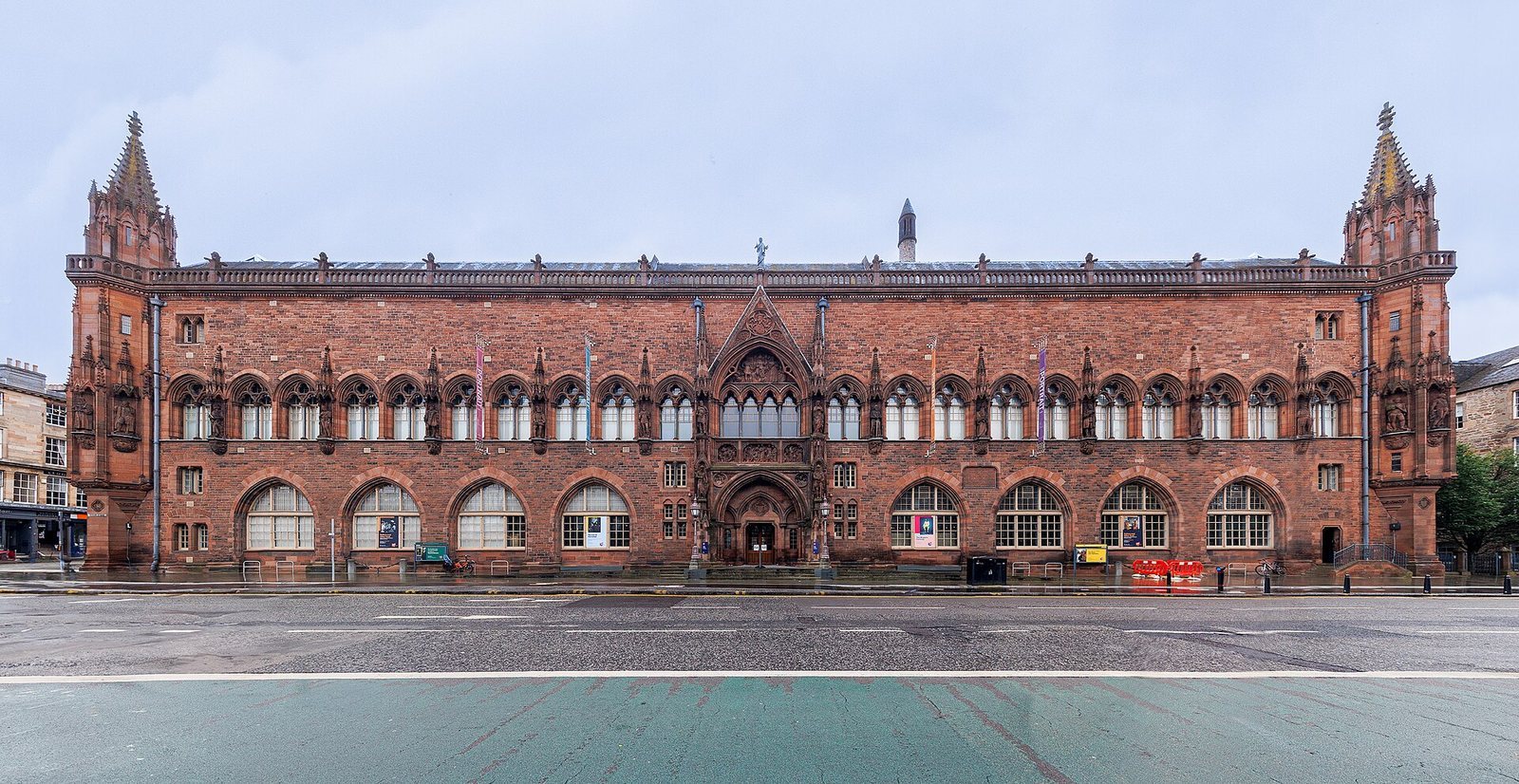
The rectangular building has a total floor area of 5,672 square metres and stands at the eastern end of Queen Street. Built of red sandstone from Corsehill in Dumfriesshire, it combines Neo-Gothic design, a revival of medieval Gothic forms, with Arts and Crafts ideas that valued handwork and traditional workmanship. Its forms draw on thirteenth-century Gothic architecture, and its ornament has also been described as Spanish Gothic.
Exterior and Plan
Building and Facade
The building’s design draws inspiration from the Doge’s Palace in Venice and the work of George Gilbert Scott; comparisons have also been made with Mount Stuart House on the Isle of Bute. Four octagonal towers with Gothic pinnacles mark its corners. The original proposal included a pair of large turrets flanking the facade, but these were replaced at the benefactor’s request. Sculpted pointed arches frame the windows, while a large gabled arch marks the main entrance on Queen Street.
Entrance Hall
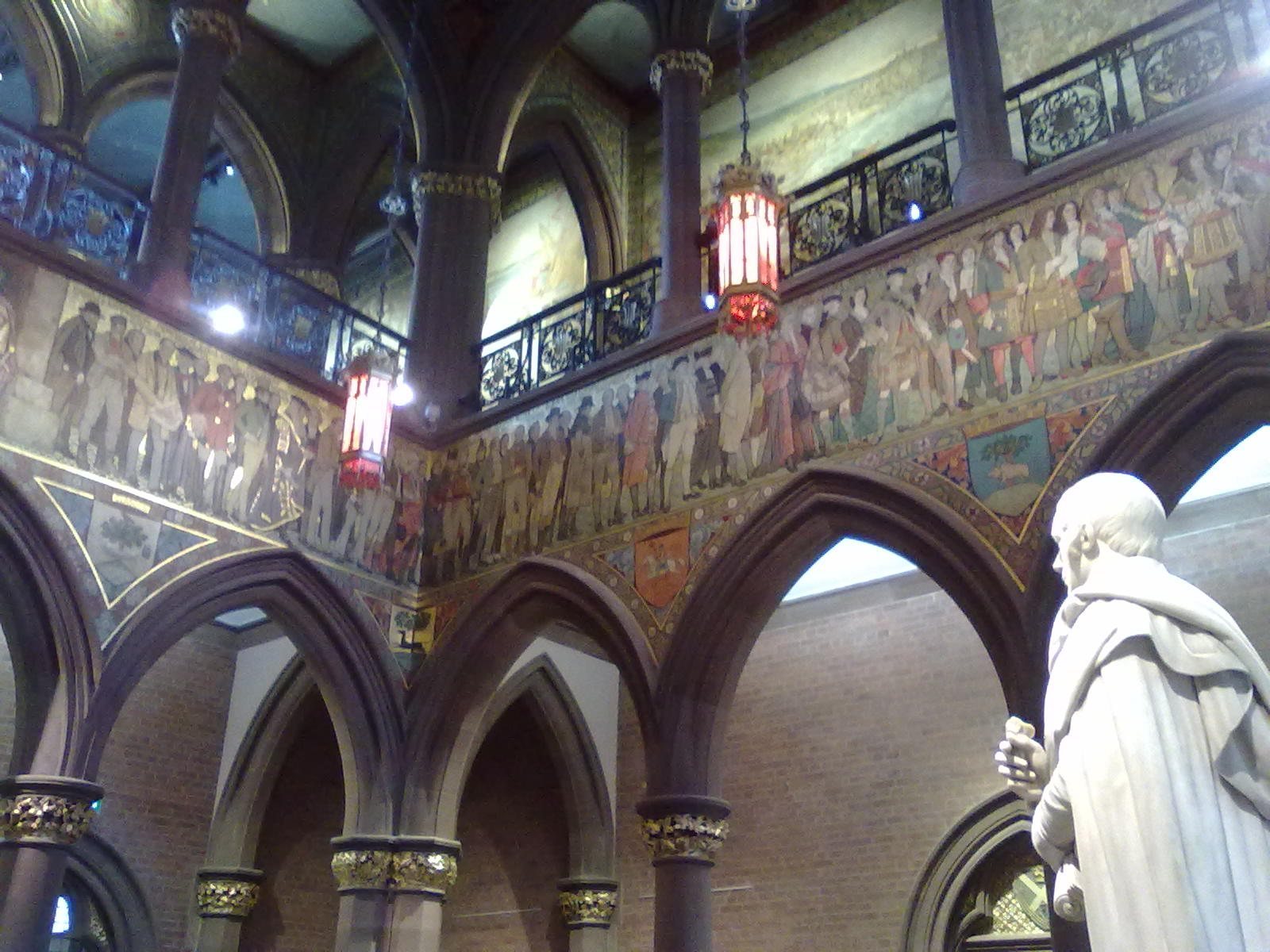
The main entrance leads to a hall with pointed arcades. In the original arrangement, the hall divided the Portrait Gallery on the east from the National Museum of Antiquities of Scotland on the west.
Sculptural Features
Exterior Figures
Niches around the exterior contain sculpted figures of notable Scots. Designed by William Birnie Rhind and added during the 1890s, they form part of the building’s sculptural decoration.
Painted Decorations
The principal entrance hall contains a processional frieze, a horizontal decorative band, painted by William Hole and added in 1898. It depicts notable Scots ranging from Saint Ninian to Robert Burns. Figures were added over subsequent years, and Hole later painted further large narrative scenes on the first floor.
Interior Renewal
Earlier additions and repeated rearrangements had obscured the original organization of the galleries. A comprehensive refurbishment from 2009 to 2011 restored the gallery spaces toward their original arrangement. It also added a glass lift to improve access for disabled visitors, along with spaces for education, a shop, and a café. The gallery’s display area grew by 60 per cent.
Collections on Display
Portrait Holdings
The collections comprise about 3,000 paintings and sculptures, 25,000 prints and drawings, and 38,000 photographs. The portrait holdings include two small-scale portraits dated 1566 of James Hepburn and his first wife, Jane Gordon. A full-length portrait painted in 1683 by John Michael Wright shows Lord Mungo Murray wearing a belted plaid, a length of cloth wrapped around the body and secured with a belt, for hunting. The gallery also holds Alexander Nasmyth’s portrait of Robert Burns.
Photography
The Scottish National Photography Collection forms part of the gallery’s holdings. A gallery is devoted to Thomas Annan’s photographs of Glasgow life, including images of slum districts made between 1868 and 1871. The broader displays also give attention to ordinary people in Scotland.