St Margaret’s Chapel: A Medieval Royal Chapel in Edinburgh Castle


Site at a Glance
- Rating
- 4.7
- Popularity
- Low
- Country
- United Kingdom
- Primary era
- Medieval
- External website
- Open
- Eras represented
- Medieval, Modern
- Civilizations
- Kingdom of Scotland
- Site type
- Religious
- Remains
- Chapel
On this page9 sections
History
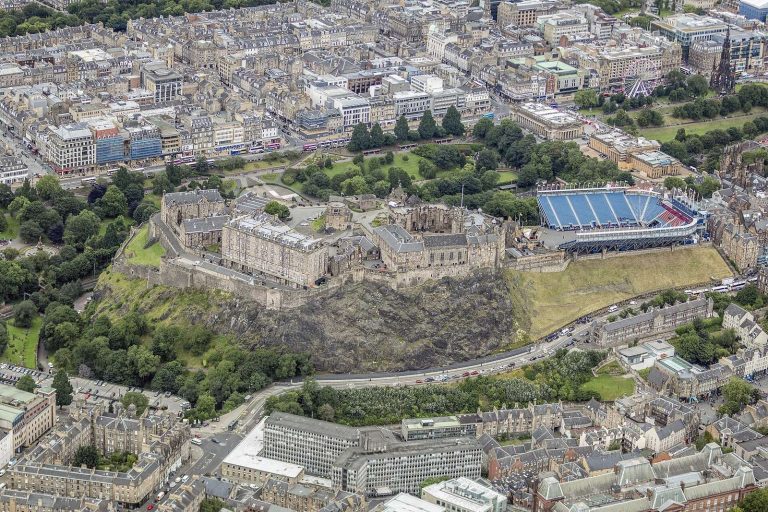
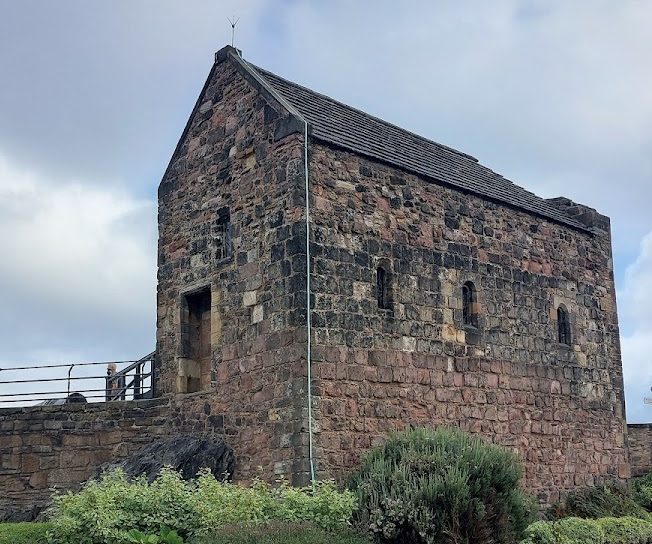
St Margaret’s Chapel is a medieval chapel in Edinburgh, United Kingdom, within Edinburgh Castle. Built in the early twelfth century during the reign of David I of Scotland, it is described as Edinburgh’s oldest surviving building and the oldest surviving part of the castle’s original structure. The chapel was dedicated to Saint Margaret of Scotland and originally served Roman Catholic worship.
Foundation and royal associations
Tradition connects the chapel with Saint Margaret, an English princess of the House of Wessex who married Malcolm III and became known for religious devotion and charitable work. She died in 1093 and was canonised in 1250. Architectural evidence, however, places the chapel’s construction in the reign of her fourth son, David I, who ruled Scotland from 1124 to 1153.
The chapel formed part of a larger building to the north that contained the castle’s royal lodgings. For many years it was called the Royal Chapel in the Castle. Religious services continued there even after a larger chapel had come into use elsewhere within the castle.
Destruction and repair
On 14 March 1314, Scottish forces acting for Robert the Bruce captured Edinburgh Castle under the command of Thomas Randolph, Earl of Moray. The castle’s buildings were destroyed, but the small chapel survived. In 1329, while dying, Robert the Bruce ordered its repair after recalling Queen Margaret’s history. About forty Scottish pounds were assigned to the work.
The chapel later lost its earlier Catholic purpose during the Protestant Reformation, the sixteenth-century religious transformation that established Protestant churches in Scotland. From the sixteenth century until 1845, the building was used as a gunpowder store.
Rediscovery and renewed worship
In 1845, the antiquarian Sir Daniel Wilson drew public attention to the chapel’s importance. The adjacent eighteenth-century garrison chapel was demolished, and St Margaret’s Chapel was restored between 1851 and 1852 with support from Queen Victoria. A later nineteenth-century proposal by the architect Hippolyte Blanc to enlarge the building was rejected.
Further work in 1929 prepared the chapel for renewed worship. After restoration and refurnishing, it was rededicated on 16 March 1934. St Margaret’s Chapel Guild was founded in 1942 under the patronage of Princess Margaret and the leadership of Lady Russell. For the nine-hundredth anniversary of Saint Margaret’s death, Historic Scotland renovated the chapel in 1993, while the Guild refurbished it. A second rededication took place on 16 November 1993.
The chapel is associated with Presbyterian and Church of Scotland worship and is also described as non-denominational. Baptisms and weddings continue to take place there, although the building accommodates approximately twenty people, including officiants. St Margaret’s Chapel Guild cares for it. Membership is reserved for people named Margaret, or whose first or middle name derives from Margaret, and the Guild maintains the custom of keeping fresh flowers inside.
St Margaret’s Chapel has been protected as a Category A listed building, a high-level Scottish heritage designation, since 14 December 1970.
Remains
The chapel is a small, irregularly built stone structure with a rectangular plan. Its interior is approximately 3 metres wide. The nave measures about 4.87 metres in length, and its entrance lies along one side near the rear. The north wall has been renewed, while the three surviving outer walls and the chancel wall are approximately 61 centimetres thick. A nineteenth-century barrel vault covers the nave, designed to harmonise with the earlier medieval fabric.
Romanesque chapel interior
Nave and chancel arch
A round Romanesque, or Norman, chancel arch leads from the nave into the sanctuary. This medieval style is expressed through round-headed arches, strong masonry, and chevron ornament. The arch is approximately 1.52 metres wide, with chevron moulding above columns on either side.
Apsidal sanctuary
The sanctuary ends in an apse, a rounded termination, and is approximately 3 metres long. The apse has a radius of about 1.52 metres. Five small round-headed windows and the round arch above the entrance reinforce the chapel’s Romanesque character. The building also resembles earlier Scottish, Irish, and Celtic chapels.
Later furnishings and memorial imagery
Five stained-glass windows made by Douglas Strachan were installed in 1922. They portray Saint Margaret, Saint Andrew, Saint Columba, Saint Ninian, and William Wallace. The 1993 refurbishment added a new altar cloth, ten bench seats, an alms chest, a flower stand, and a display case containing a facsimile of a book associated with Saint Margaret.