Scottish National Gallery: A National Art Gallery in Edinburgh
Site at a Glance
- Popularity
- Very High
- Country
- United Kingdom
- Primary era
- Early Modern
- Eras represented
- Medieval, Early Modern, Modern
- Civilizations
- Unclassified
- Site type
- Museum
On this page12 sections
History
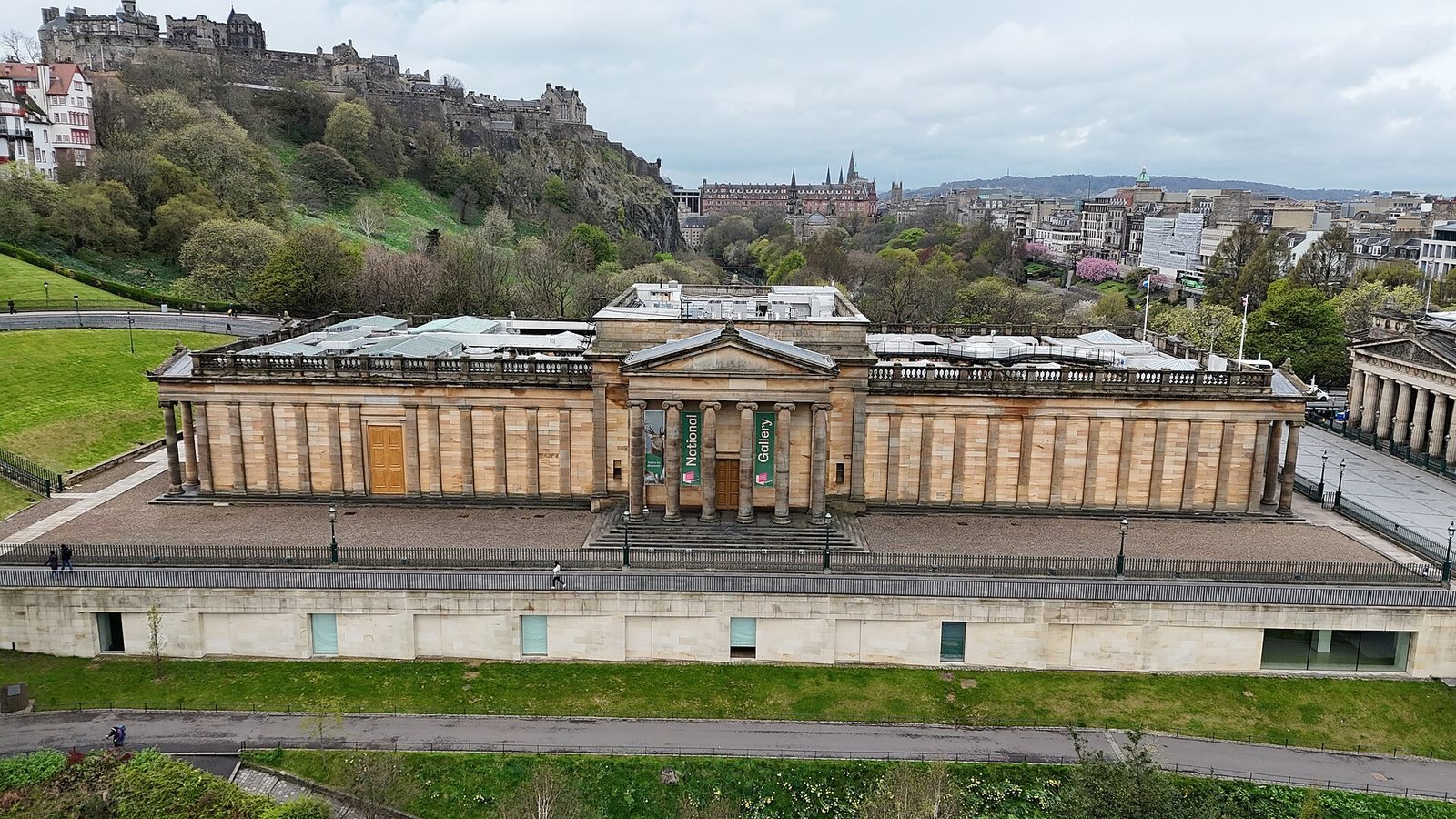
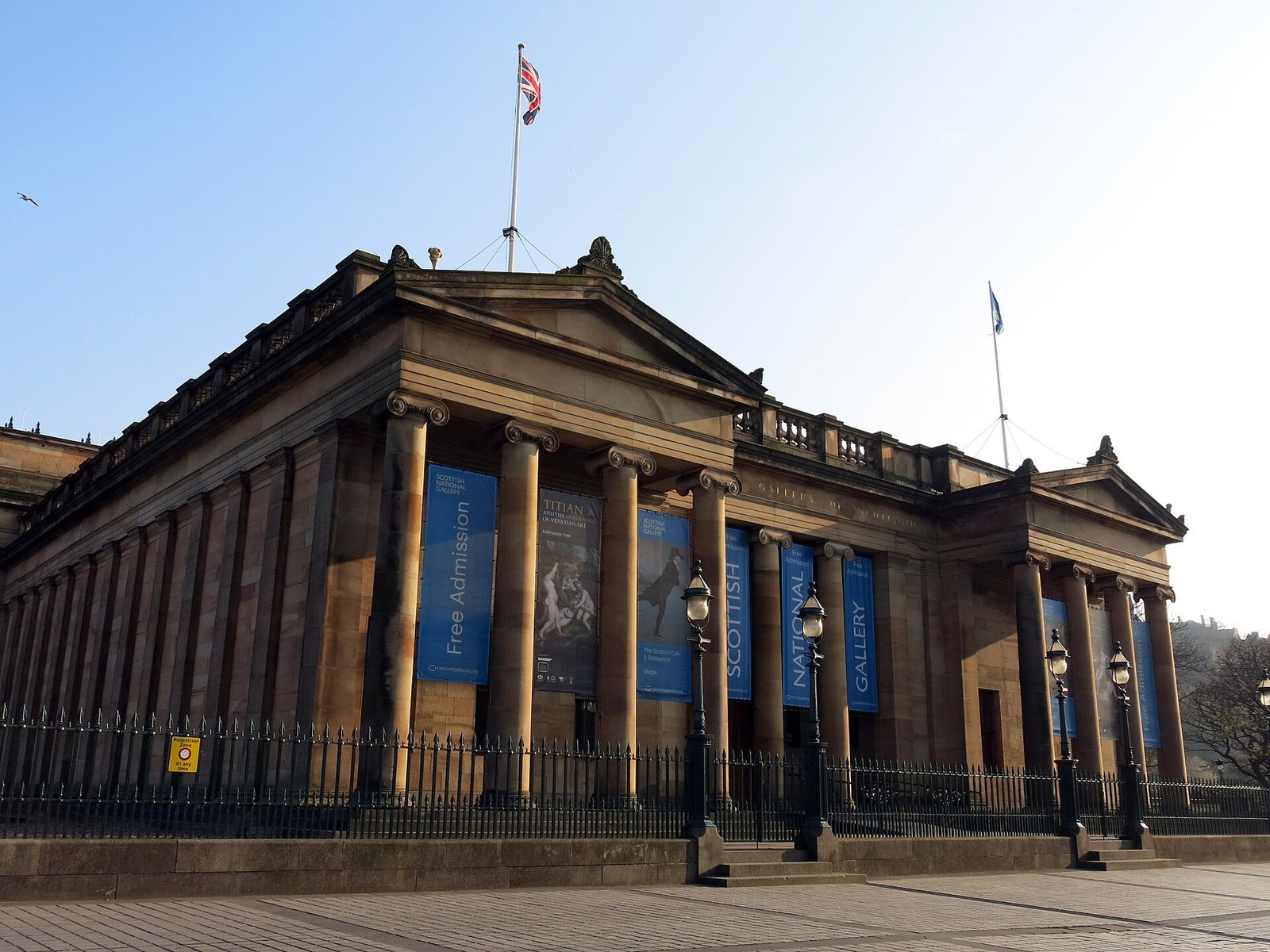
The Scottish National Gallery is a neoclassical art gallery on The Mound in central Edinburgh, United Kingdom. Scottish architect William Henry Playfair designed its building in the 1840s, and the gallery opened to the public in 1859 as a home for a national collection of art.
Institutions and opening
The gallery’s collection grew from the Royal Institution for the Encouragement of the Fine Arts in Scotland, founded in 1819. The institution began acquiring paintings, and its building on The Mound opened in 1828. In 1826, artists who disagreed with its policies formed the Scottish Academy, an artists’ institution that became the Royal Scottish Academy (RSA) in 1838. The RSA rented exhibition rooms in the Royal Institution building from 1835 while pursuing its own national collection.
Plans for a new building were prepared in the 1840s by Playfair, a Scottish architect known for neoclassical design. It was intended to accommodate the RSA’s galleries in the east and a national gallery in the west, drawing on the Royal Institution’s collection. Prince Albert, Queen Victoria’s husband and Prince Consort, laid its foundation stone on 30 August 1850. The National Gallery of Scotland was formally established and opened to the public in 1859.
Collection and later development
In 1912, the RSA moved into the former Royal Institution building. Architect William Thomas Oldrieve, who was associated with Scotland’s Office of Works, remodelled the gallery interior so the National Gallery could display its collection independently. The gallery then focused on building a permanent collection of Scottish and European art for the public. Paintings transferred from the RSA formed part of the collection’s foundation; the gallery did not receive a donation specifically for art purchases until 1903.
During the 1970s, while the gallery was under the Department of the Environment, its exhibition space was expanded. The Playfair Project added an entrance from Princes Street Gardens and an underground connection to the RSA building in 2004. The gallery adopted the name Scottish National Gallery following an organizational rebranding in 2012. Work to expand its lower exhibition areas began in 2019. In 2023, its administering organization took the shorter name National Galleries Scotland, and the gallery was styled National Galleries Scotland: National. The public body also oversees the Scottish National Gallery of Modern Art and the Scottish National Portrait Gallery.
Remains
The gallery occupies Playfair’s neoclassical building, whose cross-shaped plan and columned façades draw on ancient Greek temple forms. It was designed as two institutions under one roof, with the RSA to the east and the National Gallery to the west. Later additions expanded its gallery spaces, while its art and research holdings extend well beyond paintings.
Building and layout
Plan and exterior
The building has a cruciform, or cross-shaped, plan. Its central cross-block rises above the main elevations, which have plain, wall-attached pilasters. The taller central section features six-column Ionic porticoes, or columned entrance porches. Four-column Ionic porticoes stand to the north and south, flanked by pairs of Ionic columns between projecting wall ends. The main entrance has a double portico, and its horizontal frieze bears the building’s original name. The Ionic column style distinguishes the gallery from the neighboring RSA building, which uses the Doric order.
Playfair worked to a more restricted budget for the gallery than for the RSA building, resulting in a comparatively restrained design. He may also have drawn inspiration from Scottish architect Archibald Elliot II’s 1829 proposal for a shopping arcade. Towers planned for the corners of the central block were abandoned during construction.
Interior and additions
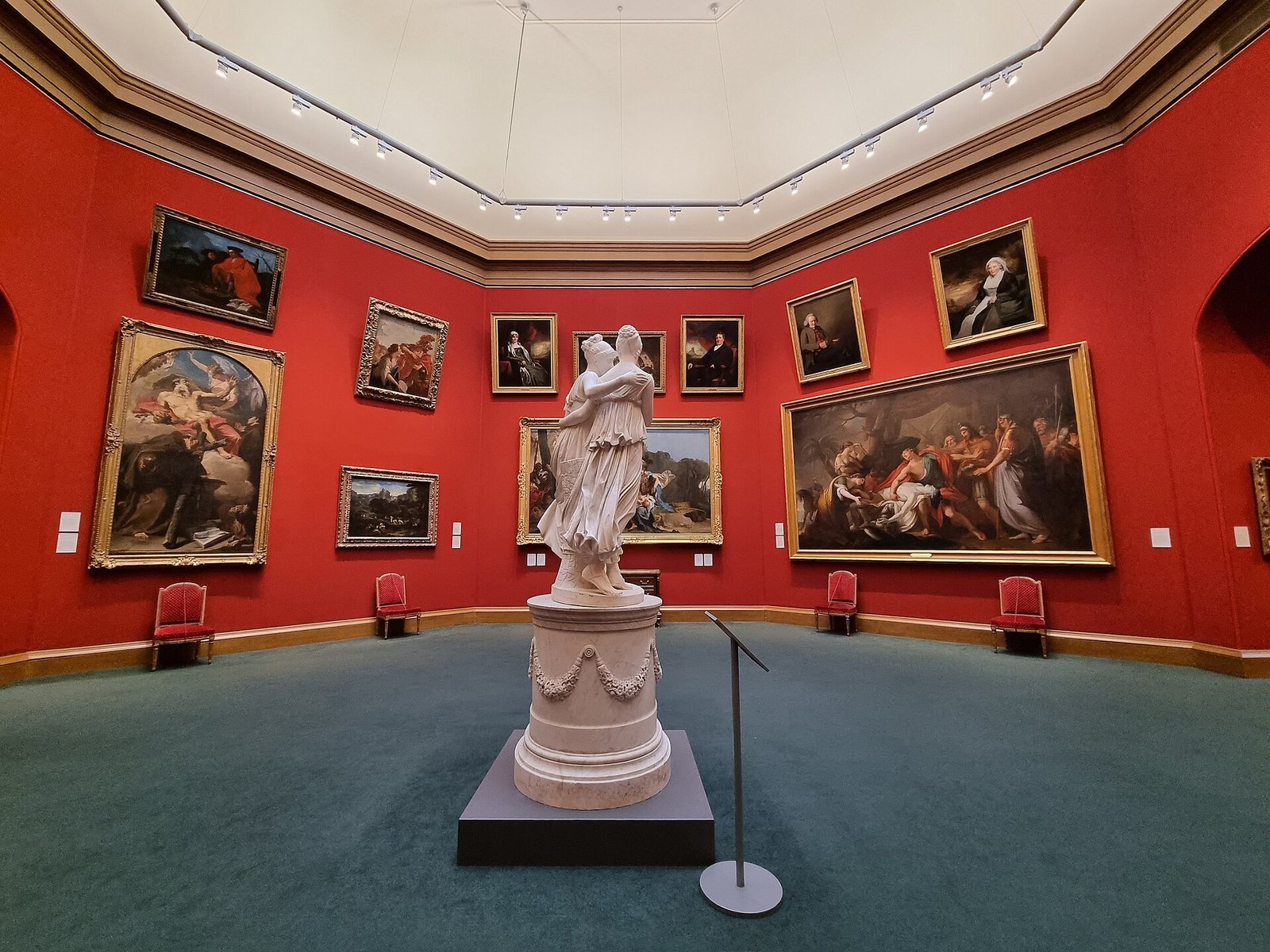
Much of the interior is arranged around octagonal spaces, including Room 11. A third floor added at the south end in 1972 created five galleries, and a basement gallery for the Scottish collection followed in 1978. The entrance from Princes Street Gardens and underground space linking the gallery to the RSA were designed by John Miller and Partners.
Paintings
Works in the main galleries
Works shown in the main galleries include Benjamin West’s Alexander III of Scotland Rescued from the Fury of a Stag (1786) and Peter Paul Rubens’s The Feast of Herod, dated either 1633 or about 1637–38. Titian’s Diana and Actaeon and Diana and Callisto were acquired jointly with the National Gallery in London; the latter is dated 1559 in the gallery’s highlights. The two institutions also jointly acquired Antonio Canova’s sculpture The Three Graces, which is displayed occasionally with the Victoria and Albert Museum in London. Hugo van der Goes’s Trinity Altarpiece is on loan from the Royal Collection.
European and international paintings
The collection ranges from the Renaissance to the early twentieth century. Renaissance works include Raphael’s Holy Family with a Palm Tree (1506) and Bridgewater Madonna, Sandro Botticelli’s Madonna Adoring the Sleeping Christ Child, Gerard David’s Three Legends of Saint Nicholas, and El Greco’s Saint Jerome in Penance, A Fable and Christ Blessing (Saviour of the World). It also includes Van Dyck’s The Lomellini Family, Jean Siméon Chardin’s Vase of Flowers, and works by Paul Cézanne, including Large Trees and Montagne Sainte-Victoire. Other paintings include Degas’s Portrait of Diego Martelli, Thomas Gainsborough’s Portrait of Mrs Mary Graham (1775), Paul Gauguin’s Vision after the Sermon (1888), Vincent van Gogh’s Olive Trees and Francisco de Goya’s El Medico.
Further holdings include Gavin Hamilton’s painting of Hawkins and Wood discovering the ruins of Palmyra; Jean-Auguste-Dominique Ingres’s Mlle Albertine Hayard; Lorenzo Lotto’s Madonna and Child with Saints; Claude Monet’s Haystacks (1891); Joseph Noel Paton’s The Quarrel of Oberon and Titania; and Giambattista Pittoni’s Saint Jerome and Peter of Alcantara. The collection also contains Nicolas Poussin’s The Seven Sacraments, Rembrandt’s Woman in Bed and Self-Portrait, Joshua Reynolds’s The Ladies Waldegrave (1780), Pieter Jansz Saenredam’s Grote Kerk, Haarlem, Georges Seurat’s La Luzerne, St-Denis and John Singer Sargent’s Lady Agnew of Lochnaw.
Other works by Titian include Venus Anadyomene, Madonna and Child with Saint John the Baptist and The Three Ages of Man. The gallery also holds Johannes Vermeer’s Christ in the House of Martha and Mary, Diego Velázquez’s Old Woman Frying Eggs and Antoine Watteau’s Fêtes Vénitiennes.
Scottish and British paintings
Scottish art includes landscapes by Alexander Nasmyth and paintings by Sir Henry Raeburn, among them portraits of Alexander Ranaldson Macdonell and Sir Walter Scott, and The Reverend Robert Walker Skating on Duddingston Loch, dated to the 1790s. James Drummond’s works include The Porteous Mob and A Lady Descending from a Sedan Chair, a study for the former. Allan Ramsay’s Margaret Lindsay and paintings by James Guthrie, associated with the Glasgow School, are also in the collection.
J. M. W. Turner is represented by Somer Hill and 38 works from the Vaughan Bequest, made by Scottish collector and benefactor Henry Vaughan. Turner watercolours are traditionally displayed in January. Other British works include John Constable’s The Dedham Vale (1828), Edwin Landseer’s The Monarch of the Glen (1851) and Frederic Edwin Church’s Niagara Falls from the American Side (1867). Landseer’s painting is regarded as a portrayal of the grandeur of wildlife and landscape in the Scottish Highlands.
Prints, drawings and library
The gallery’s research holdings include more than 30,000 prints and drawings on paper, dating from the early Renaissance to the late nineteenth century. Its reference library covers 1300–1900 and holds about 50,000 volumes, including books, journals, slides and microfiche. The library also contains archival material relating to the gallery’s history, exhibitions and collections.