Schlossmuseum Murnau: A Museum in Murnau Castle


Site at a Glance
- Rating
- 4.5
- Popularity
- Low
- Country
- Germany
- Primary era
- Medieval
- External website
- Open
- Eras represented
- Medieval, Early Modern
- Civilizations
- Holy Roman Empire
- Site type
- Military
- Remains
- Castle
On this page9 sections
History
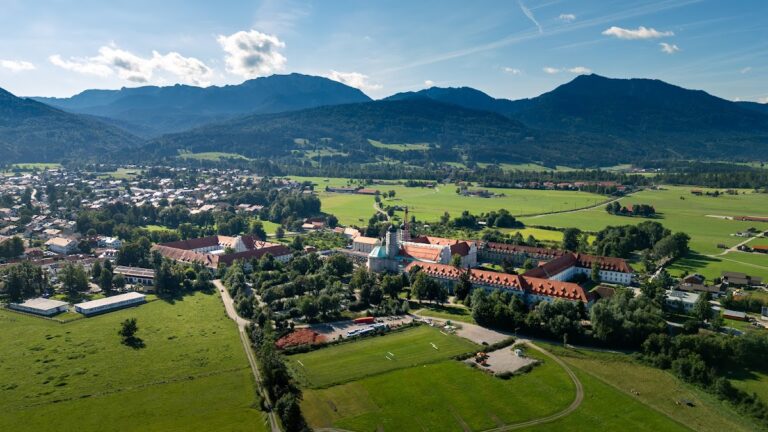
Schlossmuseum Murnau is a museum in Murnau am Staffelsee, Germany, housed in the medieval residential tower of Murnau Castle. Additions made in the sixteenth century gave the castle its present appearance. For more than 400 years, the complex served as the administrative and residential seat of the stewards of Ettal Abbey, a Benedictine monastery in Bavaria. These officials exercised judicial authority there on the abbey’s behalf.
From Abbey Administration to Municipal Museum
After the secularization of 1803, when church property and institutions in the German states were transferred into secular ownership or administration, the castle complex entered a new phase. It continued to be used for residential and educational purposes until 1980.
The market municipality of Murnau converted the complex into a museum in 1991 and 1992, and Schlossmuseum Murnau opened in 1993. The museum is operated by the municipality and belongs to the MuSeenLandschaft Expressionismus, a group of five museums in Bavaria. In 1994, the non-profit public-law Foundation Schlossmuseum Murnau was established to support the museum and safeguard the quality of its work. It assists with acquisitions, publications, special exhibitions, restorations, and conservation, while promoting Murnau’s local cultural history and its contributions to art and literature.
The Friends of Schlossmuseum Murnau association was founded in November 1994 to support the collections and educational work. A private foundation created by individuals followed at the end of 2007, with initial capital intended to provide long-term financial support. The Friends association had more than 800 members in 2018.
Local Economy, Landscape, and Artistic Traditions
The historical departments trace Murnau’s development as a settlement and market. They also examine the traditional economic use of the Murnau Moos, a large nearby moorland landscape with wetland habitats and distinctive plant and animal life, as well as twentieth-century industrial stone quarrying. The museum presents the efforts made to preserve the moorland as an important nature reserve.
Three local domestic industries form another part of this history: regional reverse-glass painting, feather-flower making, and gingerbread production. Reverse-glass painting is created by applying paint to the back of a glass panel, so the image is viewed through the glass from the front. The Dammert and Wilhelm Gartner collections place regional examples within a wider history of the art, bringing together works from Bavaria, the Black Forest, Alsace, Switzerland, Upper Austria, Bohemia, Moravia, Romania, England, the Netherlands, Italy, Spain, Iran, China, India, Indonesia, and Japan.
During the nineteenth century, Murnau developed into a summer resort, or Sommerfrische, where urban residents stayed during the warmer months for recreation and relief from city life. Comfortable country houses were built, and artists gathered in the town. The museum’s nineteenth-century painting section presents the Alpine foothills through works by Munich painters such as Franz Kobell, Eduard Schleich the Elder, Adolf Heinrich Lier, and Carl Spitzweg.
Murnau-born painters represented in this setting include Johann Michael Wittmer and Philipp Sporrer. Wittmer became the son-in-law of Joseph Anton Koch and spent the rest of his life within the circle of German artists working in Rome. Sporrer, who lived from 1829 to 1899, taught at the Munich Academy of Fine Arts.
Murnau and the Development of Expressionism
Gabriele Münter and Wassily Kandinsky made their first joint painting stay in Murnau in summer 1908, together with Marianne von Werefkin and Alexej Jawlensky. Under the stylistic and technical influence of Werefkin and Jawlensky, Münter and Kandinsky moved from relatively Impressionist observation of nature toward abstraction and Expressionism. Expressionism emphasized subjective perception and emotional or conceptual transformation rather than straightforward naturalistic representation.
The idea for the New Artists’ Association of Munich arose in Werefkin’s Munich salon in winter 1908. This early twentieth-century avant-garde artists’ group was founded in 1909 and ultimately became a precursor of the Blue Rider, the influential Expressionist movement associated especially with Kandinsky, Münter, Jawlensky, and Werefkin. From 1908 until the outbreak of the First World War, the artists repeatedly found subjects in Murnau, its inhabitants, and its surroundings.
Local reverse-glass painting, which was still practiced in Murnau by the painter Heinrich Rambold, had a particular importance for the work of Kandinsky and Münter. The museum holds more than 70 paintings, drawings, reverse-glass pictures, and prints by Münter, covering her entire artistic career. She lived with Kandinsky in Murnau from 1908 to 1914. After longer interruptions, she returned in 1931 and remained there until her death in 1962 with her partner Johannes Eichner.
Literary Murnau
The museum also documents the life and work of Ödön von Horváth, a Hungarian-born twentieth-century writer and dramatist whose plays and novels examined social and political life in Central Europe. Horváth came to Murnau for summer stays from 1920 and lived there predominantly from 1924 to 1933. Local life, events, personalities, and places provided important inspiration for his writing.
His Murnau period formed the background for works including Italian Night, To the Beautiful View, and Youth Without God. When Murnau became a stronghold of National Socialism, conflicts between local National Socialists and Horváth forced him to leave the town in February 1933.
Remains
Castle Tower and Archaeological Evidence
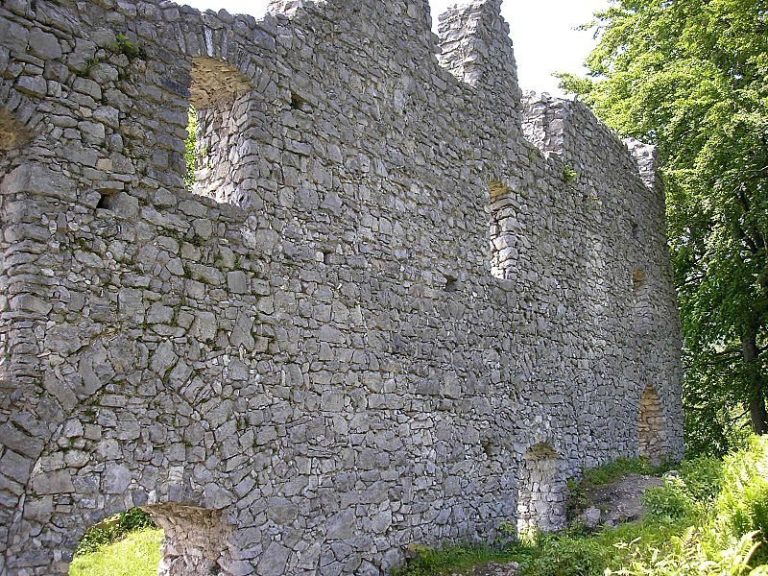
The museum is organized within the medieval residential tower at the core of historic Murnau Castle. Sixteenth-century additions altered the tower and produced the form visible today. Its sliding windows are described as unique in Germany. Together with the tower itself, they provide evidence for castle construction in Upper Bavaria from the thirteenth through the nineteenth century.
Archaeological material associated with the castle includes vessel ceramics, stove ceramics, glass, coins, and animal bones. These finds accompany the surviving building fabric in presenting the long history of the castle’s occupation and use.
Collections and Artistic Features
The museum’s Gabriele Münter holdings comprise more than 70 paintings, drawings, reverse-glass pictures, and prints from across her career. Münter’s house in Kottmüllerallee, which served as a meeting place for artist friends including Arnold Schönberg, Heinrich Campendonk, and Paul Klee, is now accessible as the Münter House.
The Dammert collections of Udo and Hedi Dammert and the Wilhelm Gartner collection contain reverse-glass paintings from major European centers of the eighteenth and nineteenth centuries, alongside works from Iran, China, India, Indonesia, and Japan. Their range connects the regional tradition with examples from a broad geographical area.
The Museum Signet
The museum’s signet is a left-leaning letter “M” derived from Wassily Kandinsky’s oil painting Study for Winter II. Kandinsky depicted the roofs of Murnau Castle from the Münter House in 1910 and 1911 with a few simplifying brushstrokes. The motif appears on the museum’s publications, above the entrance, and on signs and information panels in Murnau.