Schloss Wassertrüdingen: A Former Water Castle and Administrative Seat
Site at a Glance
- Rating
- 4
- Popularity
- Very Low
- Country
- Germany
- Primary era
- Medieval
- Eras represented
- Medieval, Early Modern
- Civilizations
- Holy Roman Empire
- Site type
- Military
- Remains
- Castle
On this page7 sections
History
Oettingen origins and changing lordship
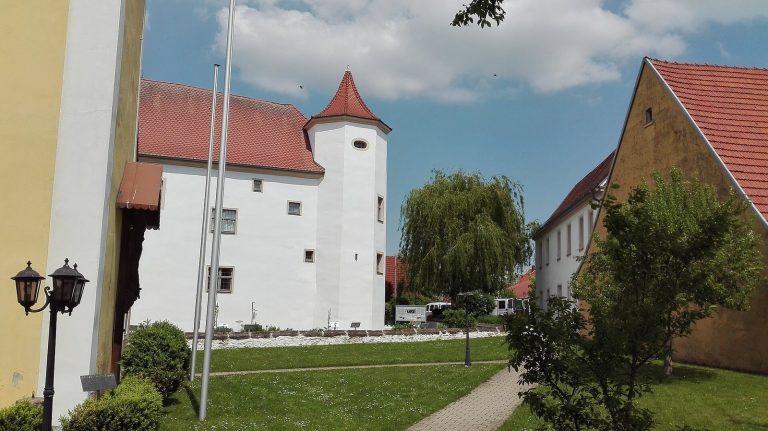
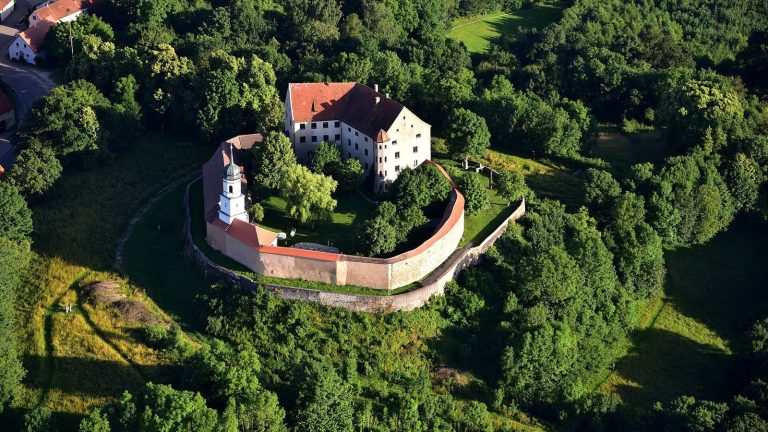
Schloss Wassertrüdingen is a castle in the center of Wassertrüdingen, Germany, with origins as a 13th-century water castle and a later Baroque rebuilding. Its foundation is attributed to the Counts of Oettingen, apparently in opposition to the Counts of Truhendingen, whose ancestral seat was Altentrüdingen. A document issued by the Oettingen counts at Wassertrüdingen in 1242 is the earliest mention of the town; the castle is named explicitly in 1283.
Around 1310, Konrad, Count of Oettingen, opposed King Henry VII, who became Holy Roman Emperor in 1312. Henry deprived Konrad of several possessions, including his freehold property at Wassertrüdingen. In 1313, the castle and town were awarded to the Bishop of Eichstätt; in 1317, the bishop returned Wassertrüdingen to the Oettingen counts as a dependent holding. The counts regained it as freehold in 1362. They sold the castle and town to the Counts of Hohenlohe in 1366, who transferred them in 1371 to the Burgraves of Nuremberg, territorial officeholders who later held the title Margraves of Ansbach.
Administrative center and wartime survival
A higher territorial administrative office was established at the castle in 1371. In later centuries, the complex also housed an estate office managing property and revenue, a margravial district directorate, government and municipal offices, courts, a notary’s office, a tax office, and a prison. The castle survived the town fire of 1388.
During the Peasants’ War, a series of uprisings in German-speaking lands in 1524–1525, administrator Kaspar Schenk von Schenkenstein was based at the castle. Insurgents had burned his ancestral home, Schenkenstein Castle. In 1634, during the Thirty Years’ War, a major European conflict fought from 1618 to 1648, Bavarian troops burned Wassertrüdingen on the orders of General Jean de Werth and under Colonel Du Partel’s command. The castle escaped the fire.
Baroque rebuilding and present use
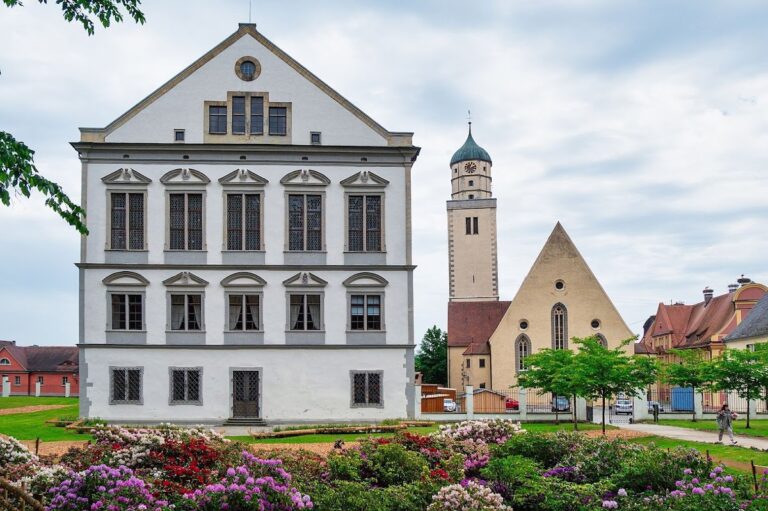
The complex was renewed and enlarged in Baroque style between 1687 and 1690. Remodeling in 1688 included the rebuilding of parts in the late-Baroque style, and the other castle buildings took on their present appearance in the mid-18th century. The site now houses the Christa Maria Stift, which operates a care facility for people with intellectual and physical disabilities.
Remains
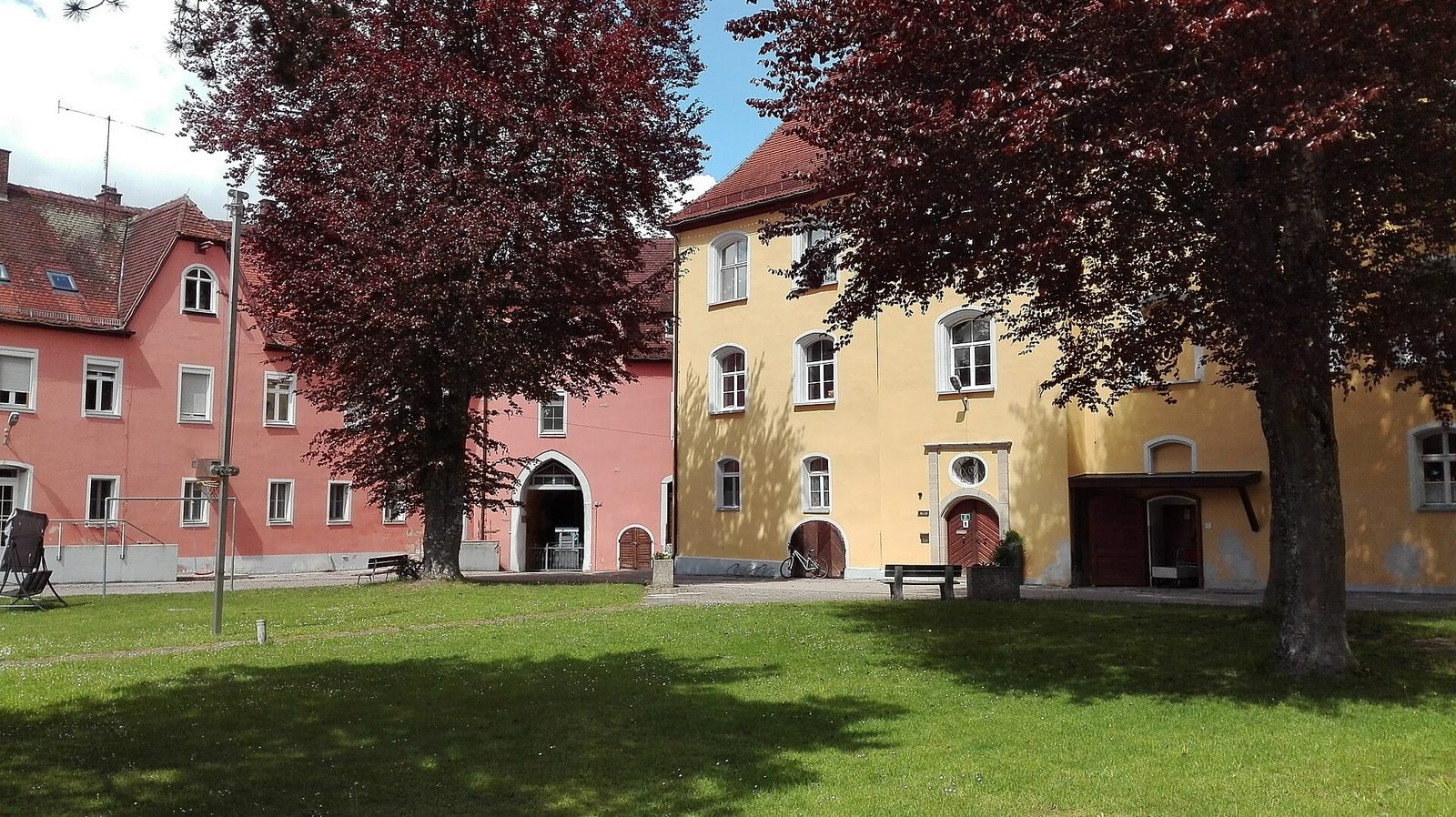
The castle occupies a roughly rectangular site with rounded corners, about 67 by 62 metres. Its surviving fabric combines parts of the medieval fortifications and gate with buildings shaped by later rebuilding, including Baroque additions.
Fortifications and entrance
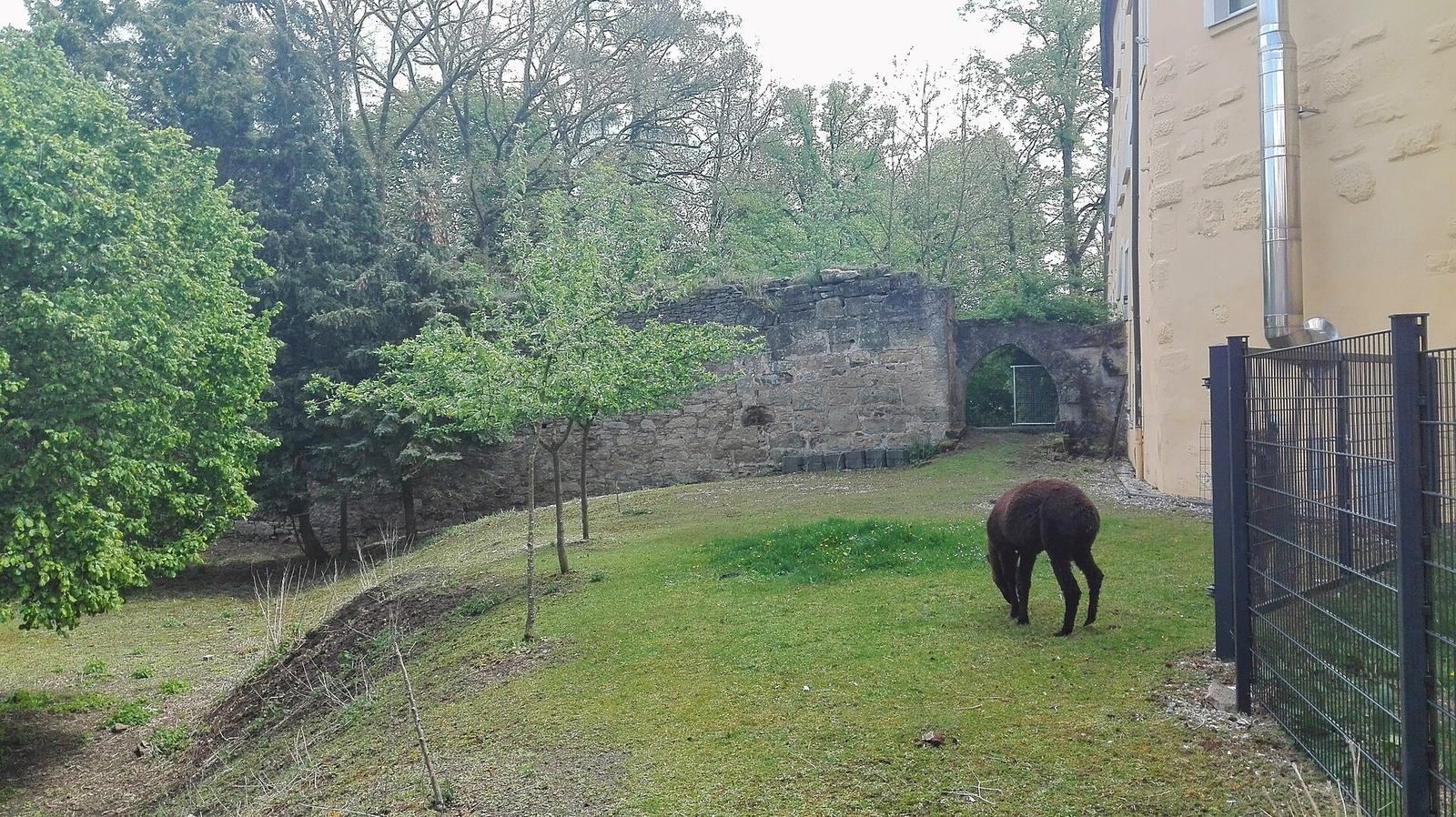
The original water-castle defenses included two broad moats, a substantial earth rampart, and a wall enclosing the complex. The main approach was through a gate on the northwest side. Parts of the enclosing wall survive, together with a dry moat about 20 metres wide and an outer defensive enclosure. To the south, remains of an earth rampart and a second moat can be seen. The Gothic entrance passage and the core of the older fortress also remain.
The three-storey gatehouse at the northwest entrance retains a medieval core, while its present form dates to the 18th century.
Castle buildings and interiors
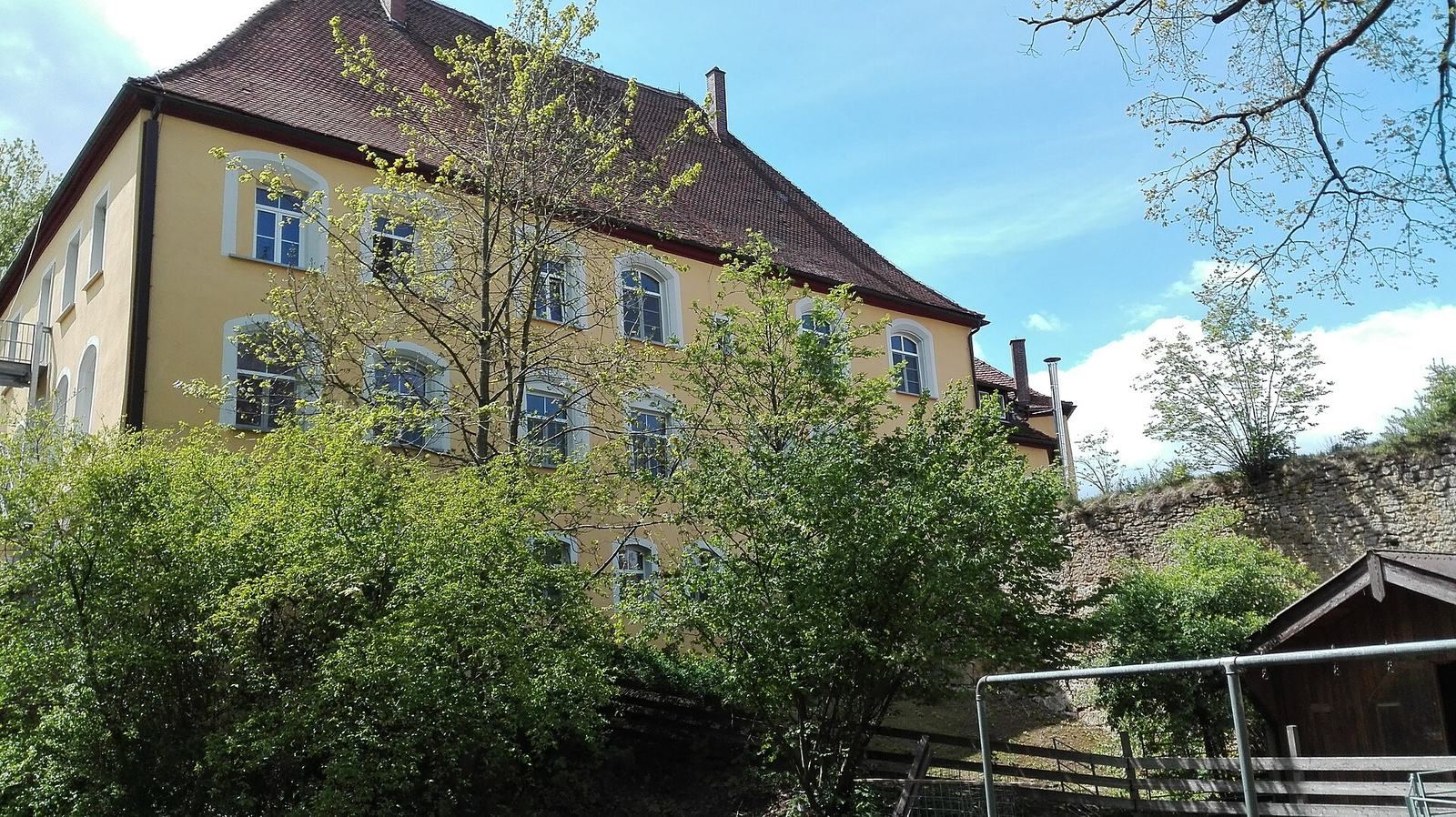
The principal building stands in the northeast. It is a three-storey plastered structure with a hipped roof and a projecting central section. On the north side is a two-storey plastered building with a gable roof and a crosswise gabled projection; a three-storey plastered building with a gable roof is attached to its west. A detached, single-storey ancillary building has a half-timbered gable and a half-hipped roof.
The complex also contains an interior courtyard and a principal residential hall. The Baroque renovation added a spacious staircase and elaborate stucco decoration.